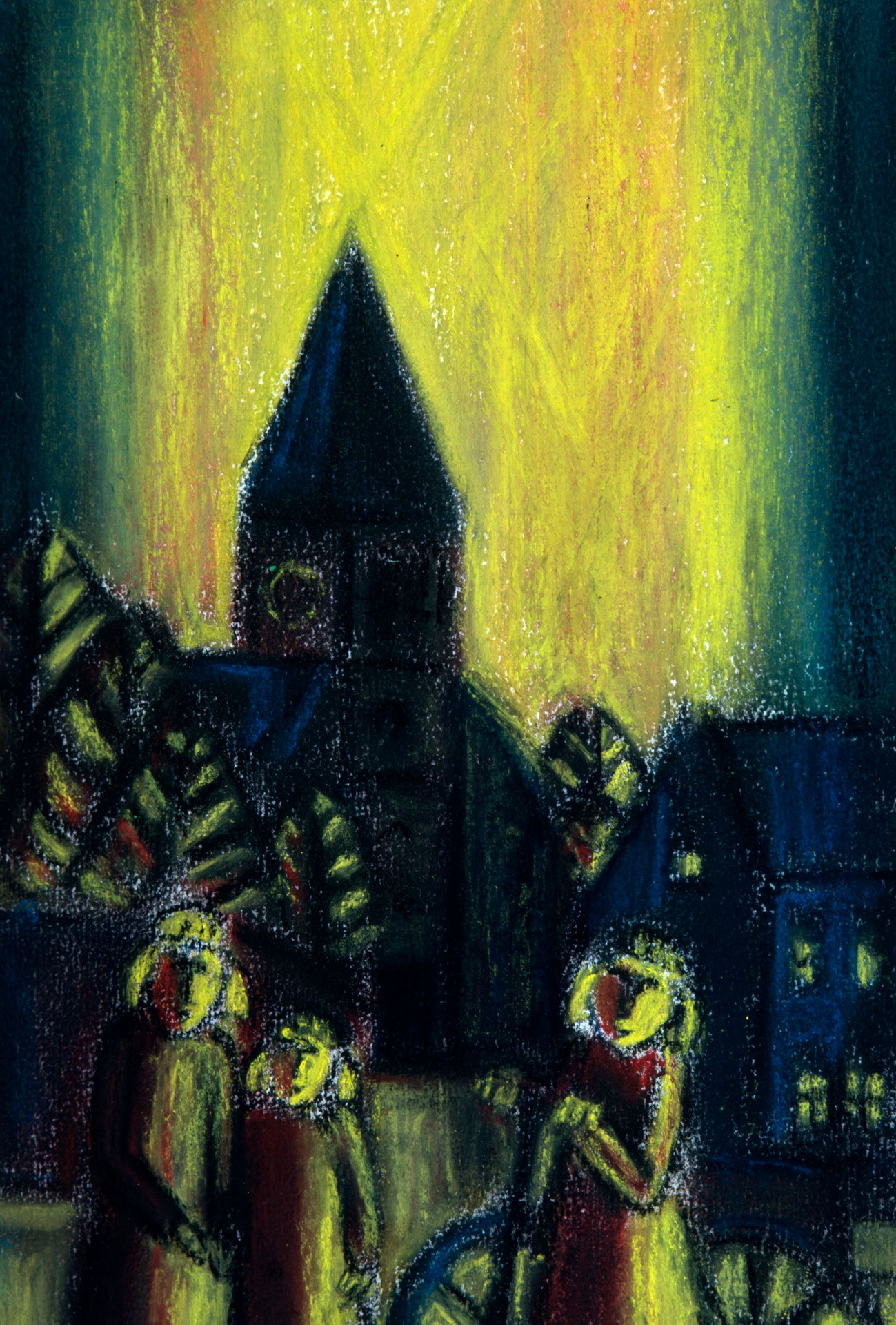
26.5 x 18 cm
pastel
Children in the village.
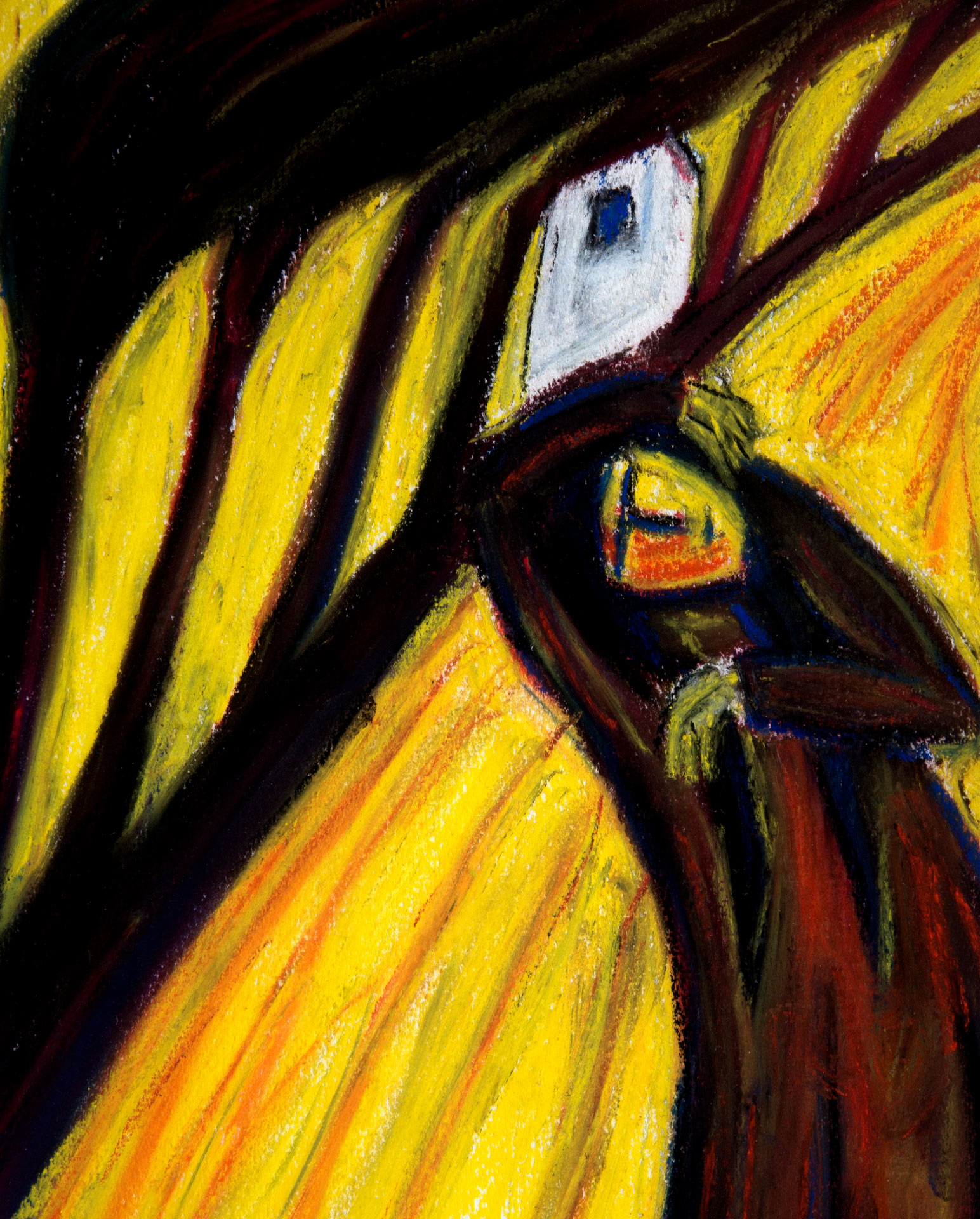
22.5 x 18 cm
Pastel
The storm
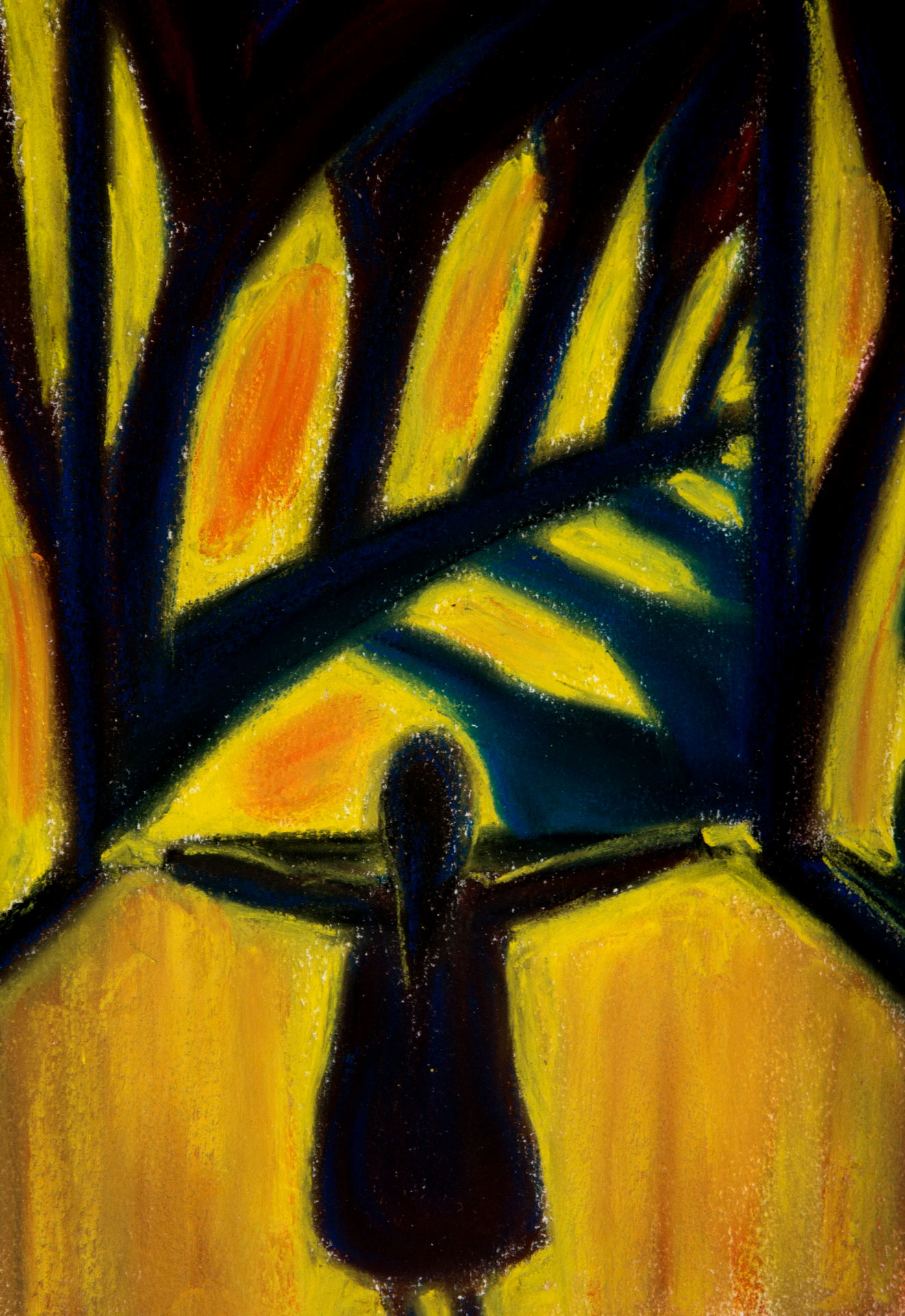
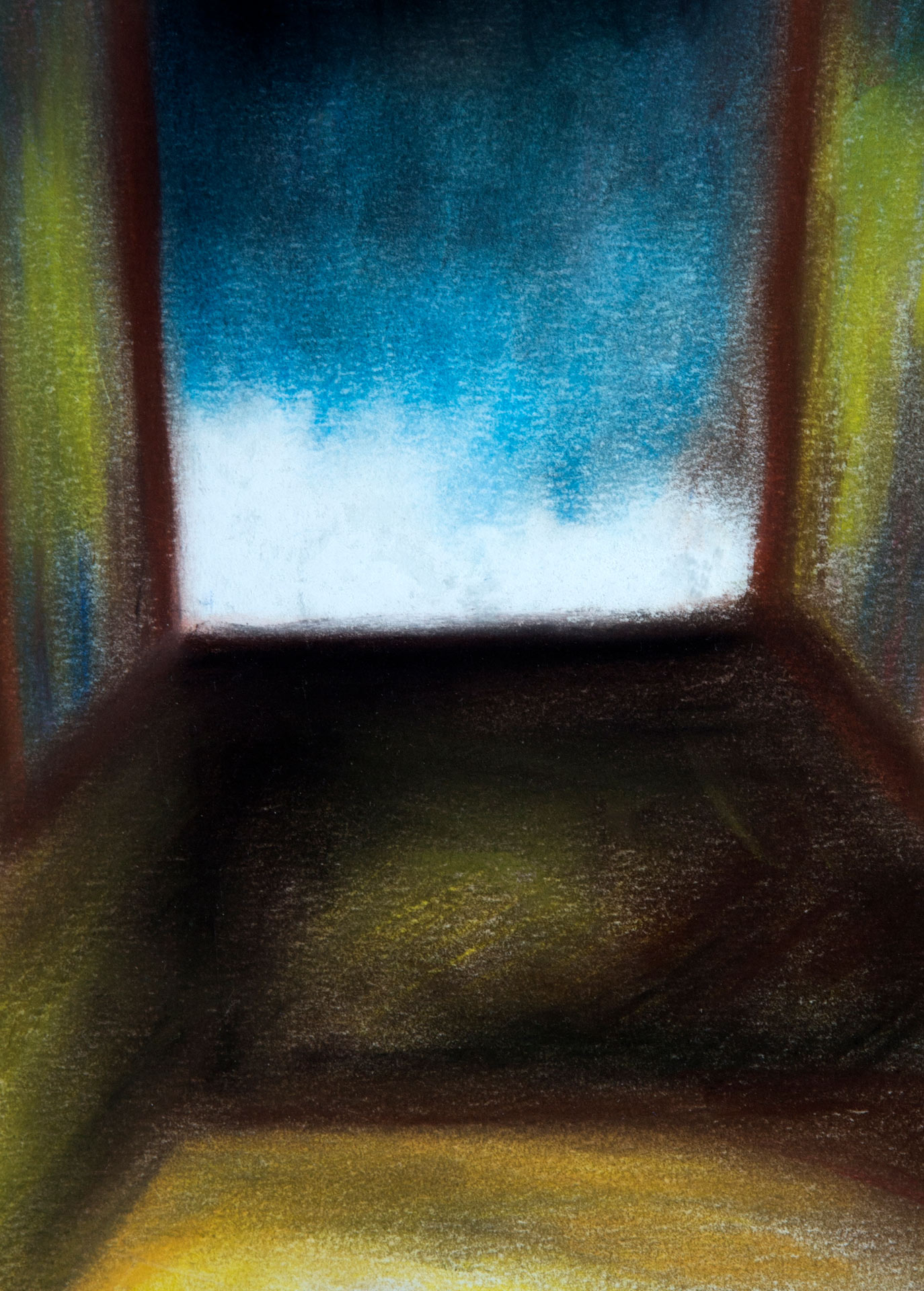
21 x 15.5 cm
Pastel
Child at the window.
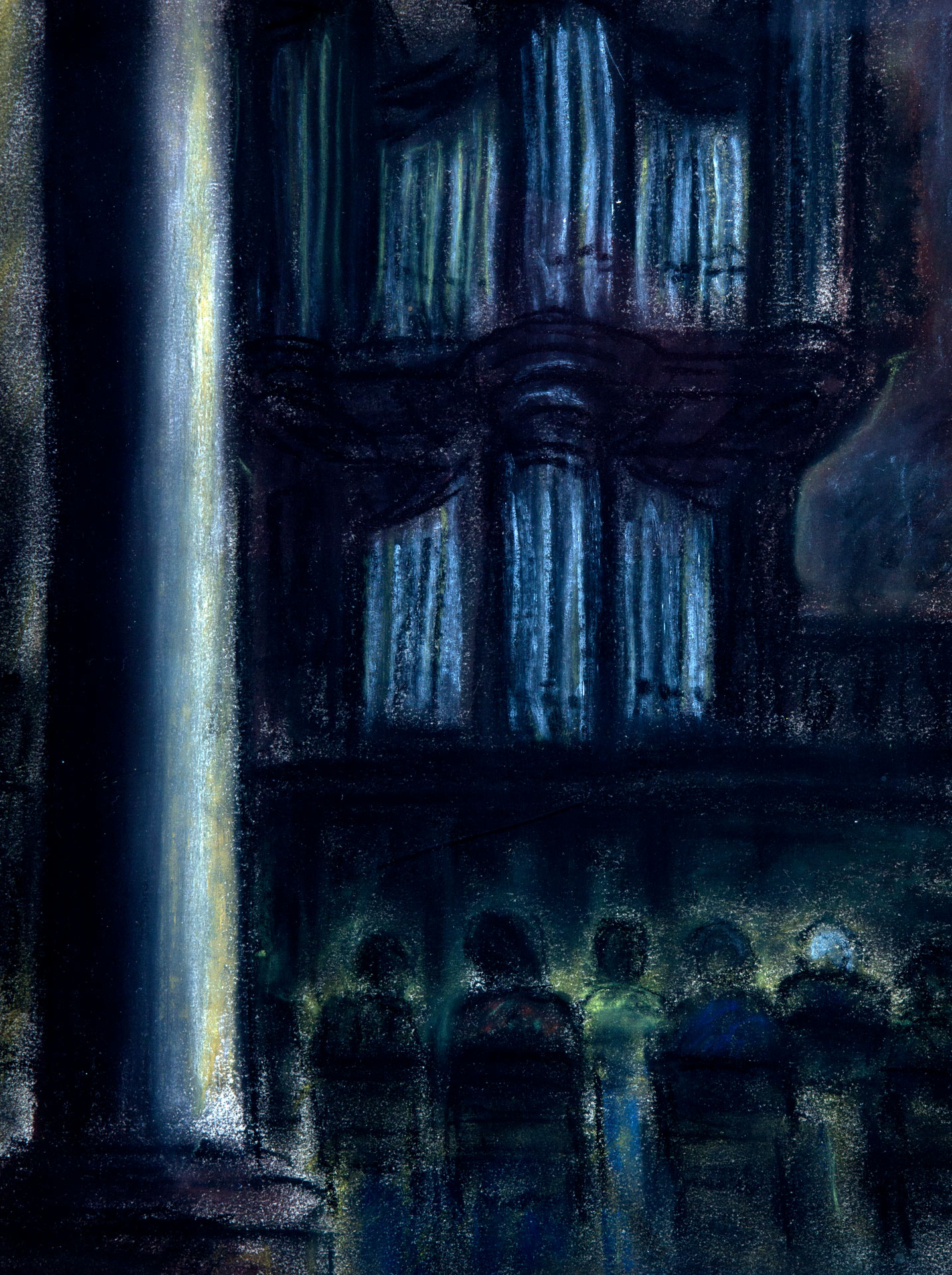
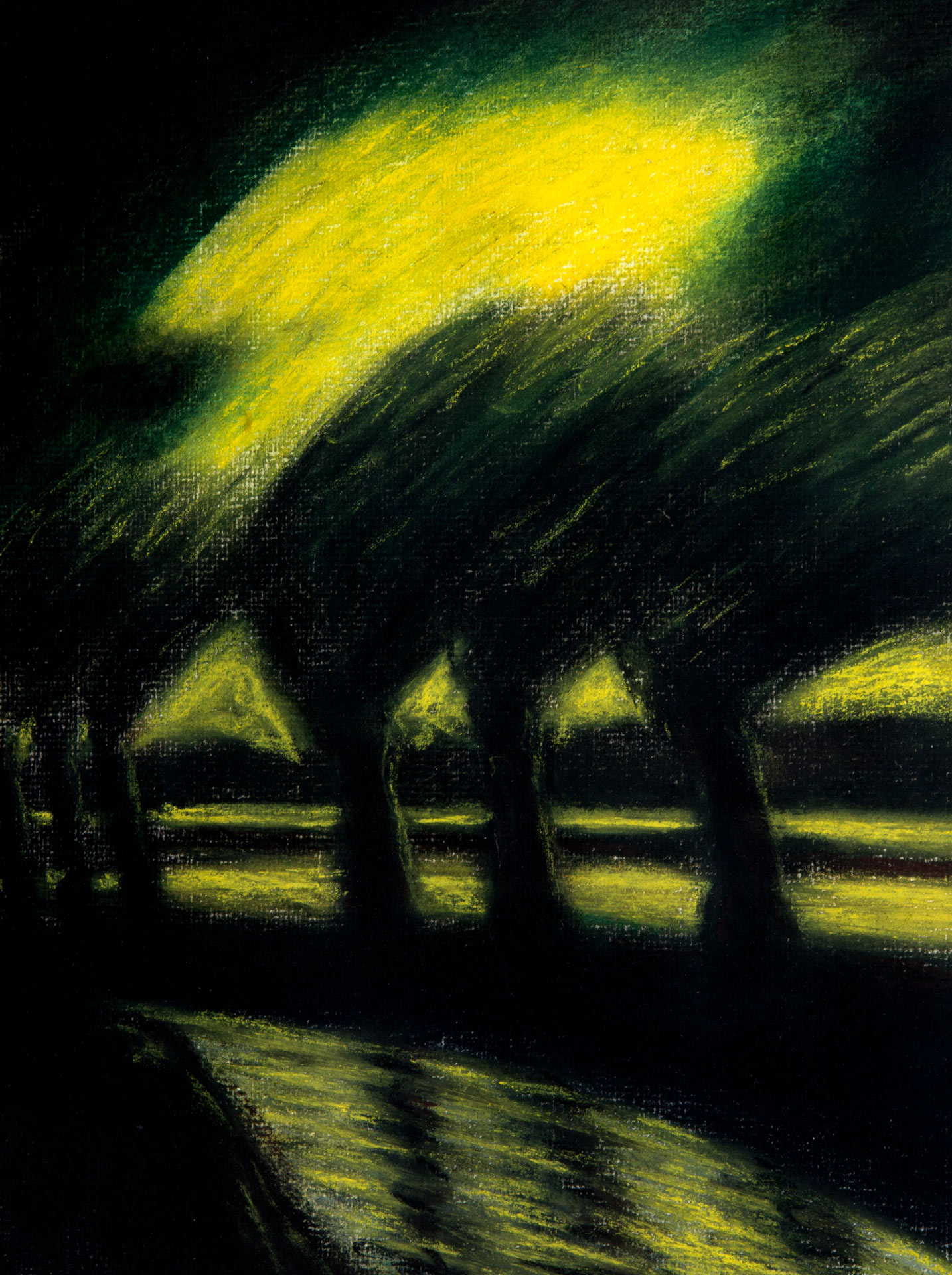
31 x 23.5 cm
Pastel
Organ concert in Langdorp.
19 x 14.5 cm
Pastel
untitled
Long walk
Walking out of the village
Behind me people and houses
By the brook yellow winter cress
A dandelion already fluffy
The sky arched above me
And mirrored in the water
Slow clouds sail by
Clouds of before and after
At walking pace away from the world here
To the land where I once belonged
The earth breathes like a peaceful animal
Breath, still unaware of words.
Albert Patteet
25.5 x 20.5 cm
Pastel
Pollard willows along the brook.
Mother is
I remember it again, from long ago
Mother is a morning field of grain
Red with poppies at the edge
On the horizon tall trees stand
And before my feet a road of sand
The field rustles like the praying of prayers
There is the scent of ripening corn
The harvest comes before the evening dew
And far away I can hear again as then
Mother is the cry of a peacock
When storms come howling over the land
I have trodden the dark road
And I still feel, now so much later
How rains descending flow around me
Mother is a skin of water
Mother, I gave you names through the years
And still remember all we did together
Now I rest at the evening window
In stars the past shivers
I say again all the words that ever were
Mother is, mother is, but find no name
Albert Patteet
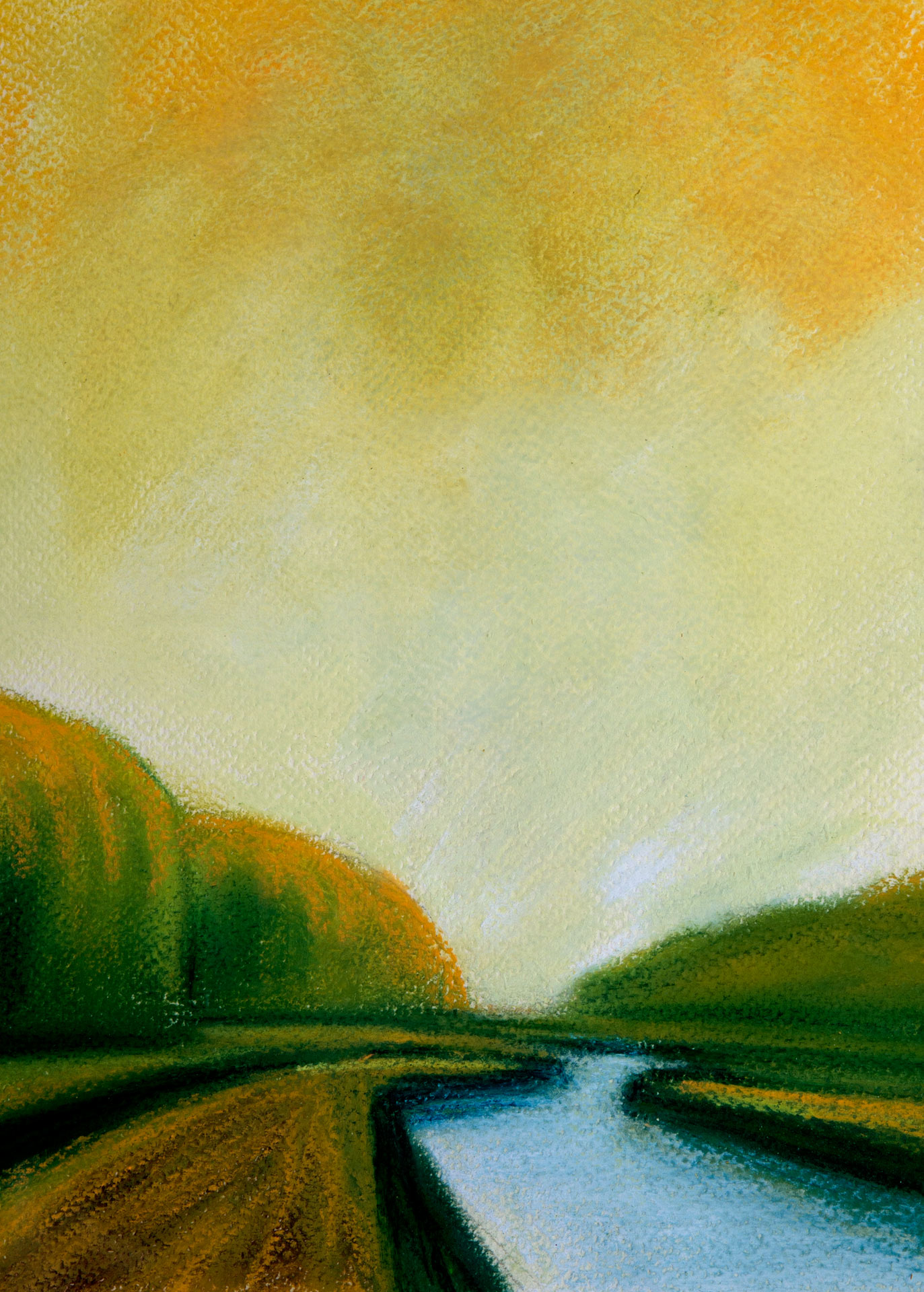
25 x 19 cm
Pastel
Eternal river
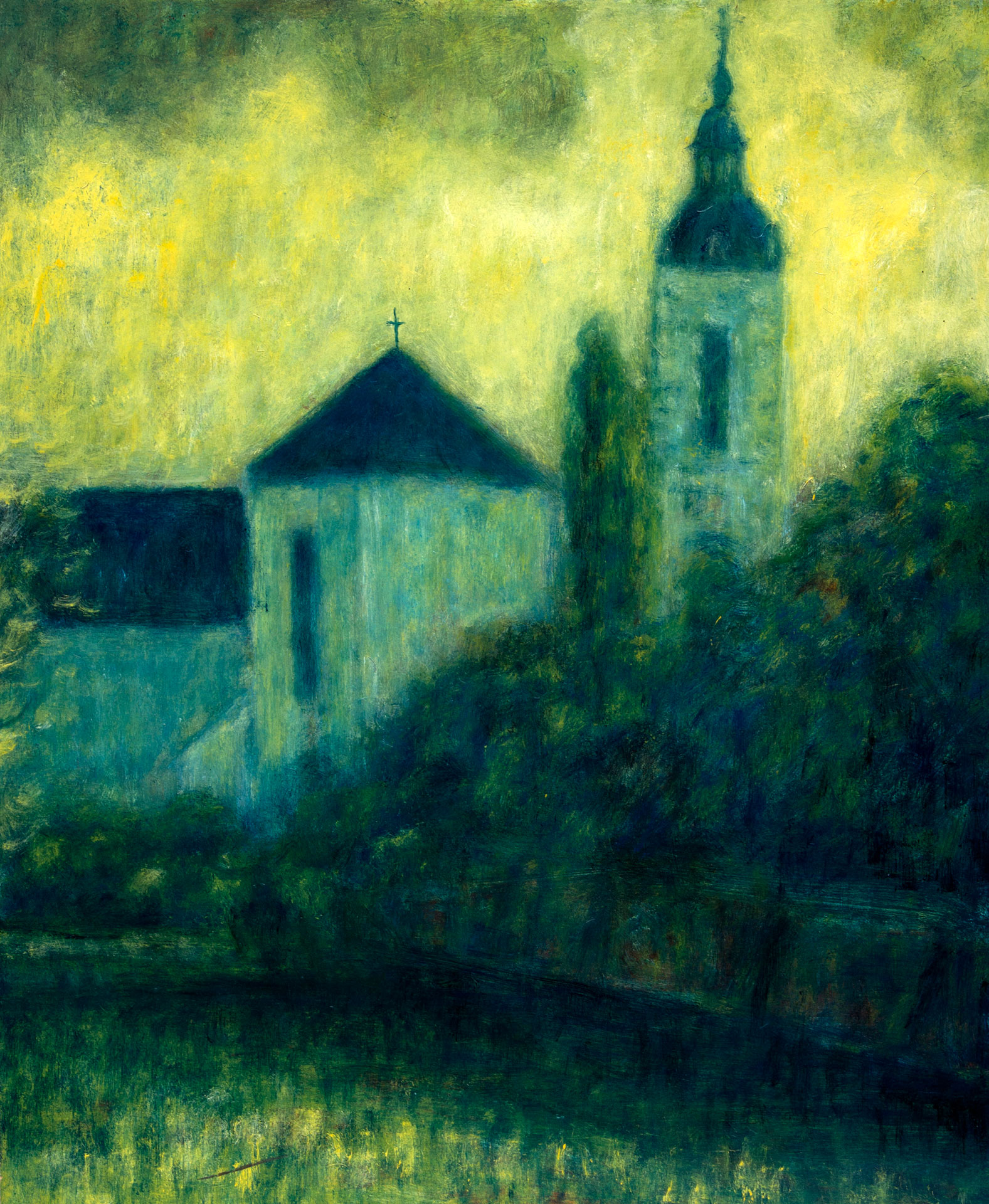
61 x 50 cm
oil on canvas
Abbey of Averbode
Albert Patteet (1944 – 2024) came to painting and drawing spontaneously and at a very young age. A reproduction of Cézanne’s “The Boy in the Red Waistcoat” gave him a shock. He understood at once the hierarchy in images, the great difference between banal depictions and art. He read a lot.
His first paintings on canvas were a disaster. Probably, he said, because of fear. It was immediately clear that he preferred working on panel because he liked putting force into his brush. The panels are “Unalit”, which he had sawn to handy sizes (60/50, for example). His medium was good lacquer paint, not classic oil paint. Besides charcoal he also liked working a great deal with pastel on paper. Very ecologically, he salvaged frames to present the works; these then determined the size.
Albert Patteet preferred to start from reality. A landscape drawn in nature or remembered through careful observation. The village views and landscapes are strongly stylised. The figures that appear in some works are not portraits. They are not anecdotal figures. They have rather a universal character. In the pastels especially, the work is symbolic. It is about sorrow, the insignificance of man, the vulnerability of the child, powerlessness and helplessness in the face of the grandeur of nature. In the larger lacquer paintings, landscapes and views are captured in a simplified form so that they refer to a particular place and, at the same time, transcend that place. Although heavily charged, the works are not gloomy. On the contrary, there is light on the horizon. The work of Albert Patteet radiates calm.
Besides painter and draughtsman, Albert Patteet was a gifted gardener. Around his house reigned an abundance of crops in numerous varieties. It looks like a mini earthly paradise. He preferred to share the fruits of the land with others. He also shared his knowledge. He had become a regular volunteer at the Sint-Pieter School in Langdorp, where he grew and prepared vegetables with the pupils. Along the Demer he made plant walks with the classes, in which the Latin names and the properties of the wild plants were also discussed.
Albert Patteet, forever on his bicycle, was quietly a loyal friend. The sick and elderly confined to their homes could regularly count on his visit. Besides books he came with fresh vegetables. Often accompanied by a warm word. “Leeks, simply out of line”, “Picked a few late beans early in the morning, Enjoy”, “Tomatoes, seeds harvested, sown, grown and ripened in the Diepven”. In all modesty, Albert Patteet preferred to keep his work under the radar. He gave it away or exchanged it for plants and seeds of flowers and vegetables.
Albert Patteet also wrote poems. In these too, calm and quiet confidence in the eternal cycle of life predominate.
Josée Lehon
March 2024.