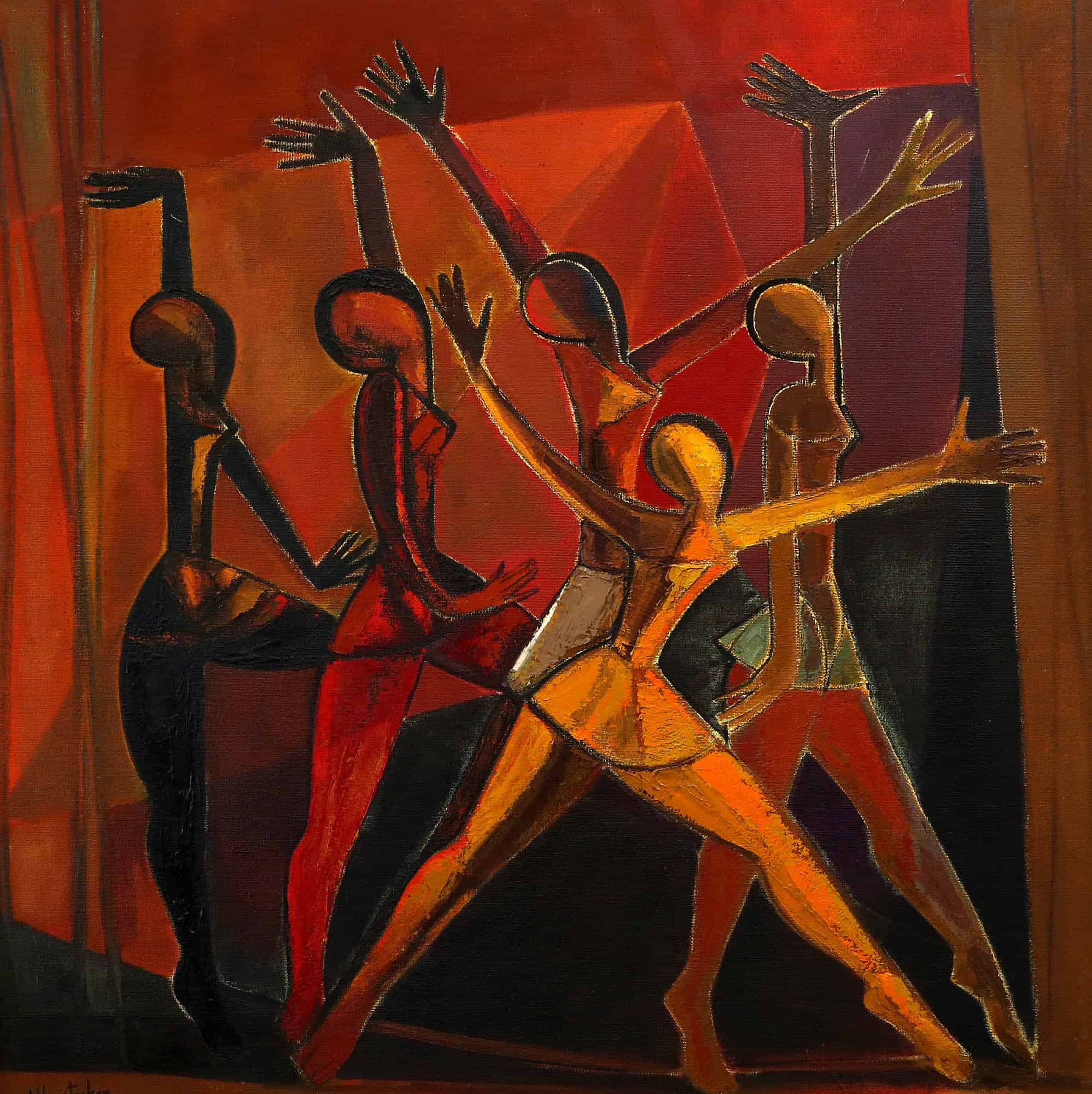
Les danseuses
125 x 125 cm
oil on canvas
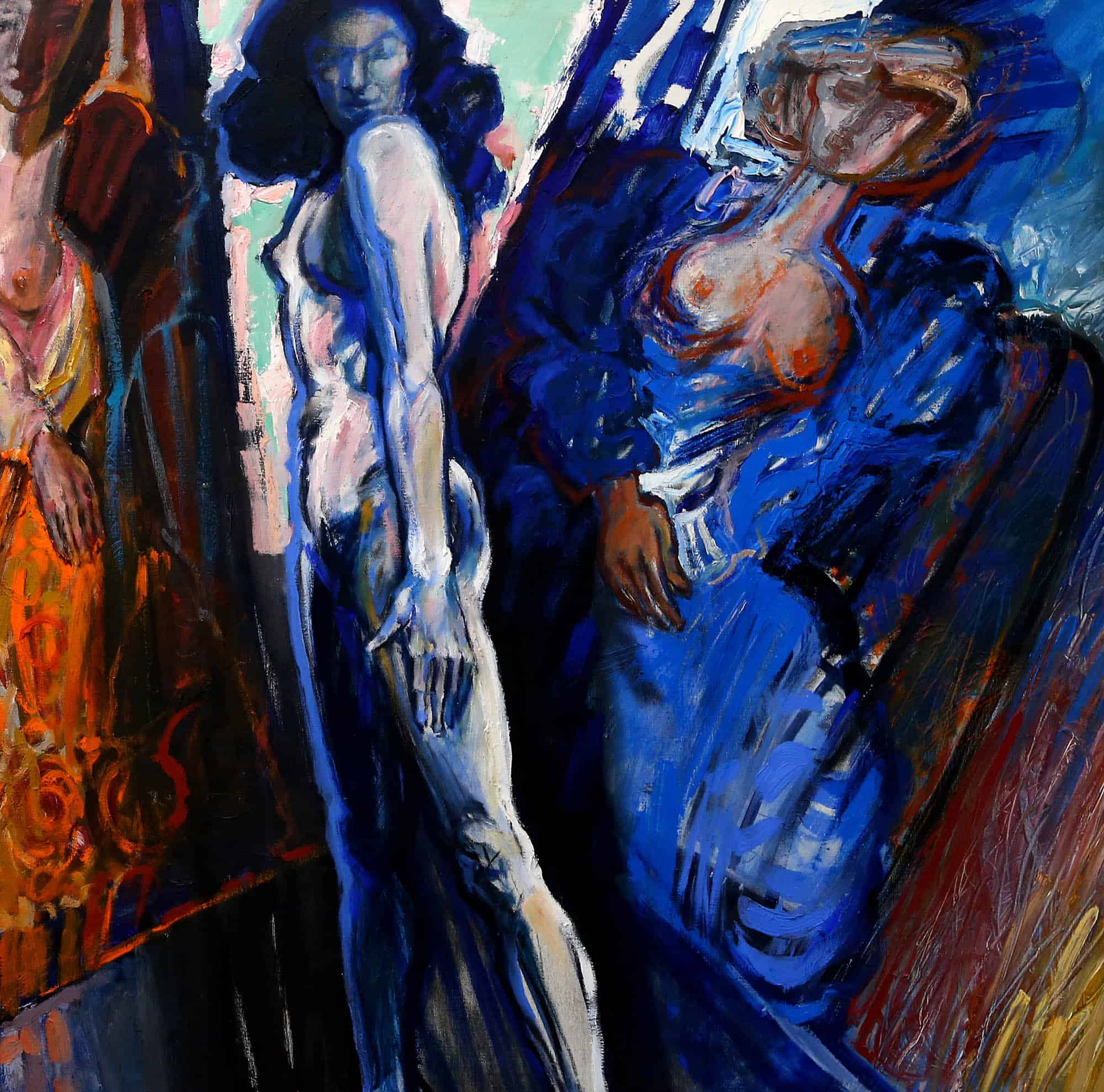
Three women
90 x 90 cm
oil on canvas
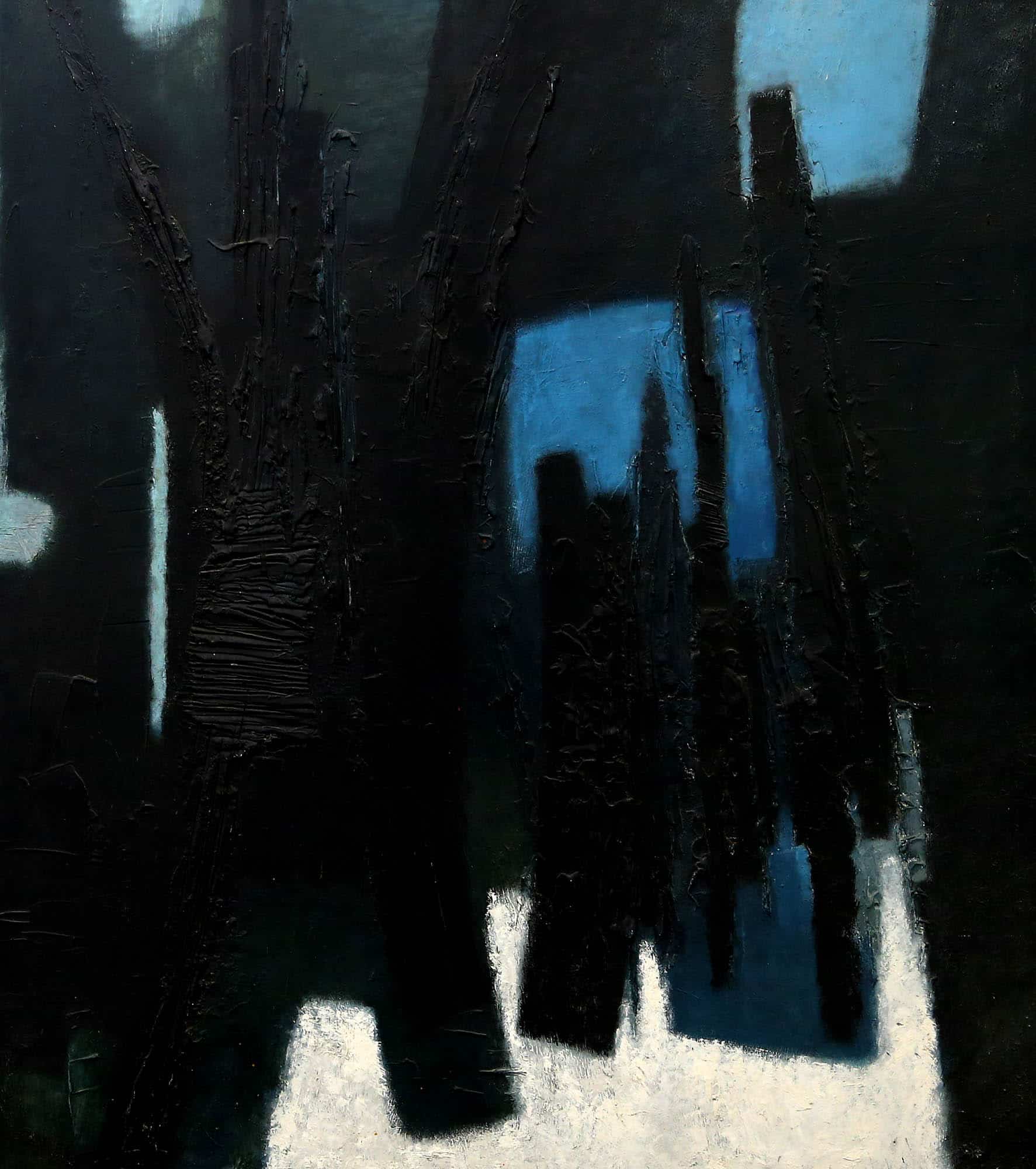
Study 0, 1962
130 x 110 cm
oil paint on canvas
In 1963 Fons Verstreken received the “Prize for Young Belgian Painting”.
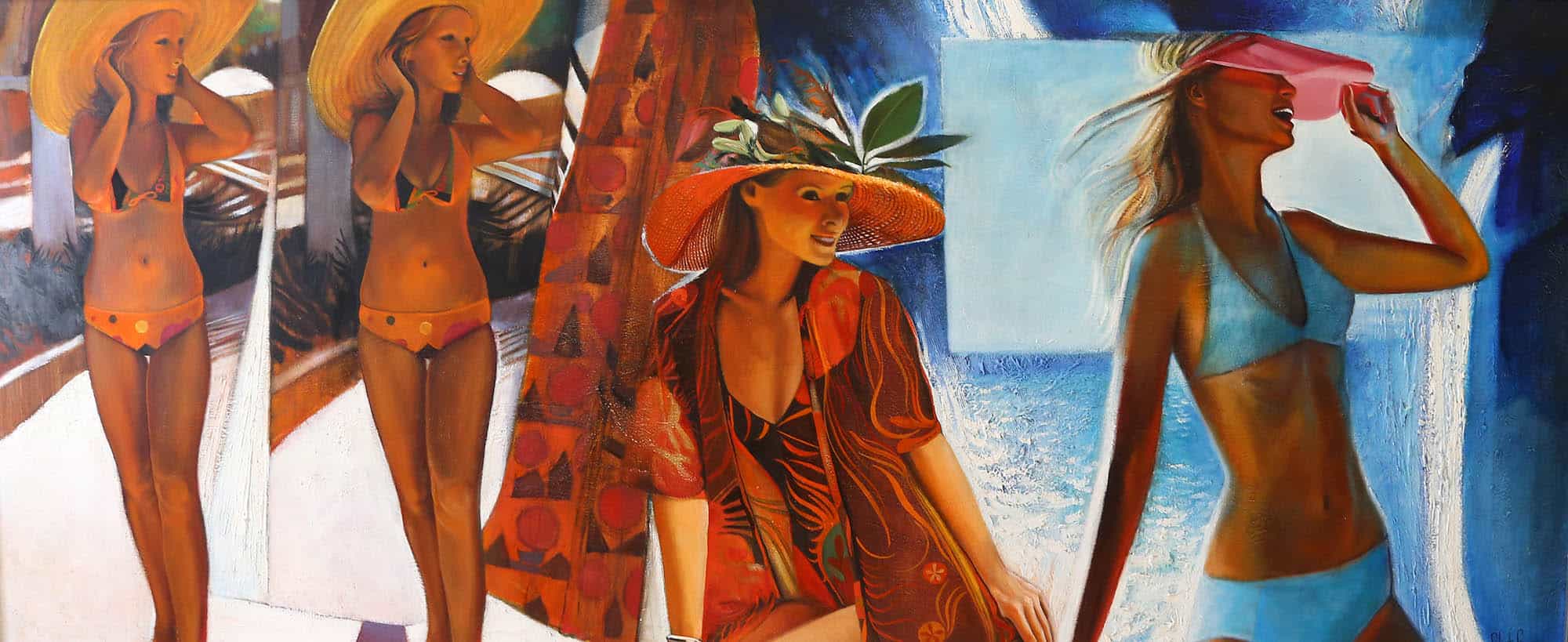
The hat
70 x 170 cm
oil on canvas
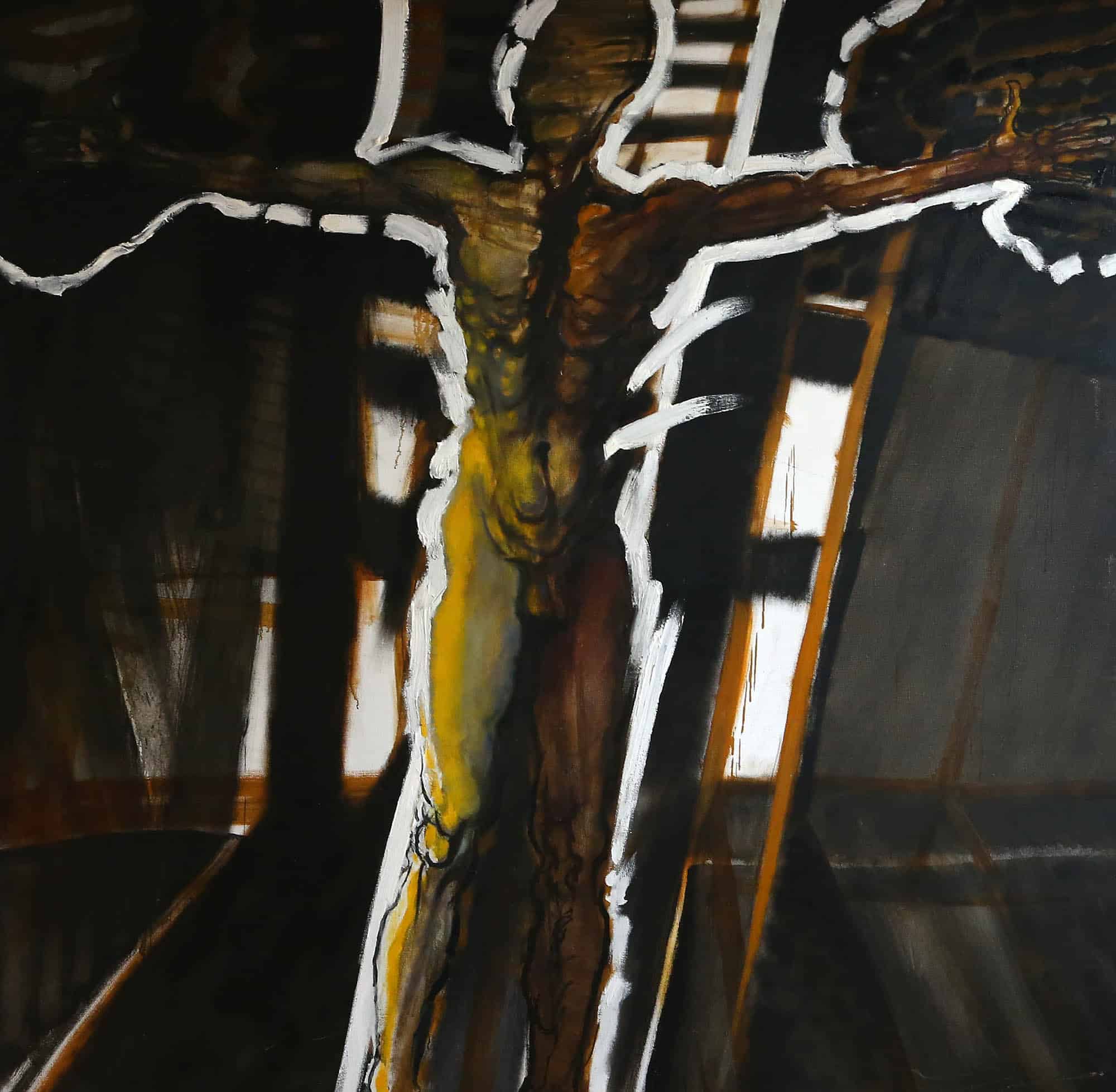
Figure by the river
180 x 120 cm
oil on canvas
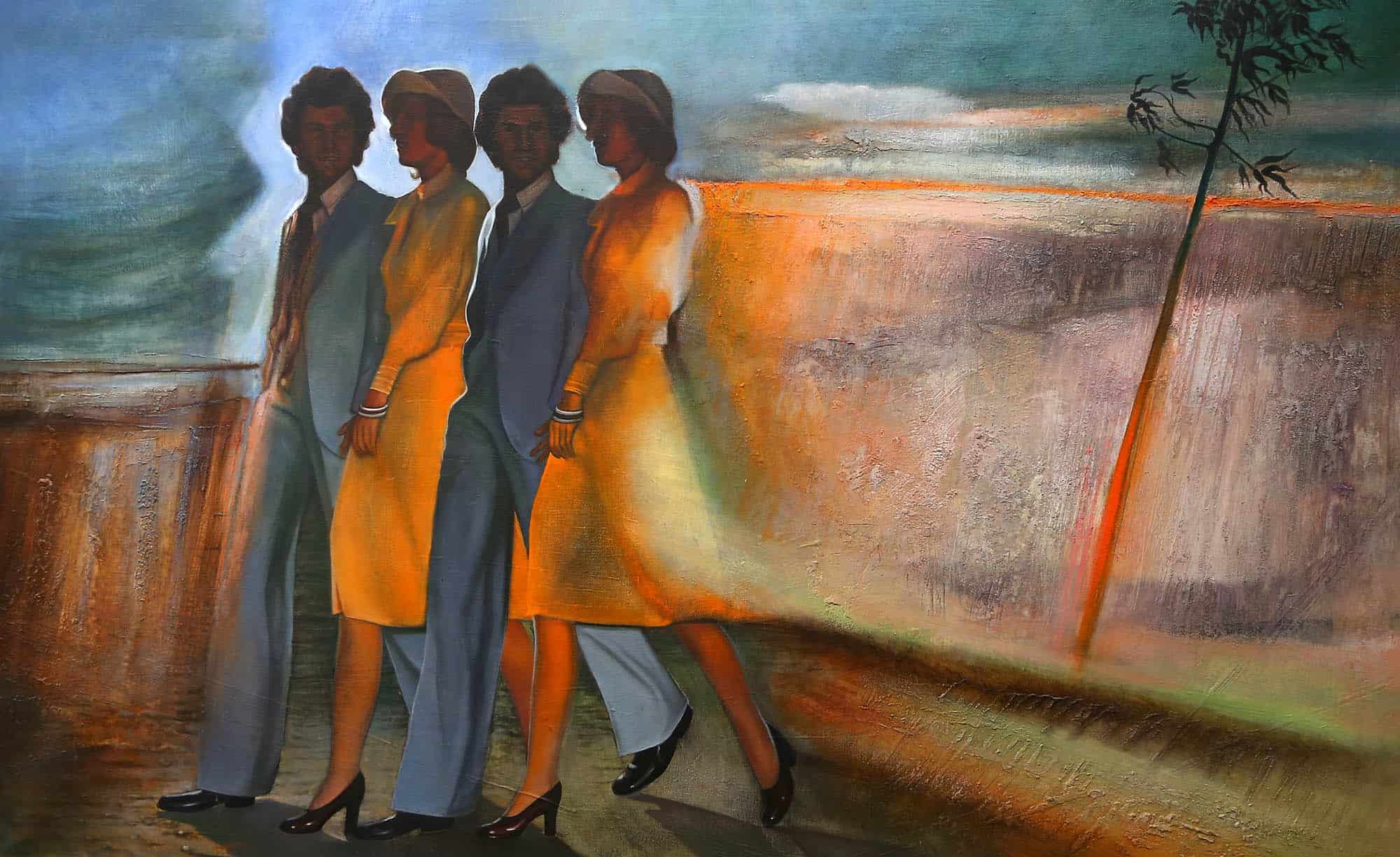
M’as-tu-vu
80 x 125 cm
oil on canvas
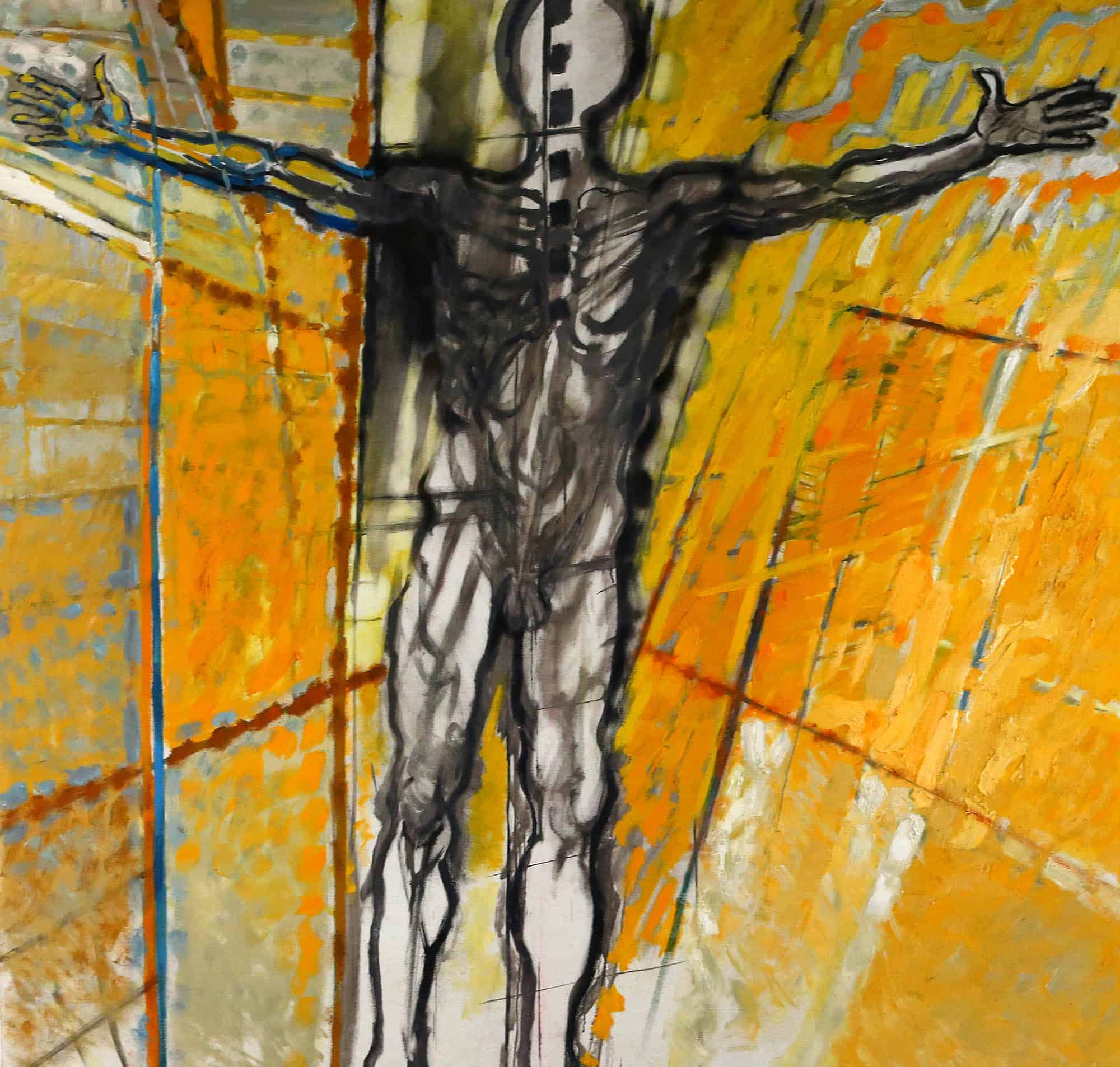
It is finished
200 x 200 cm
oil on canvas
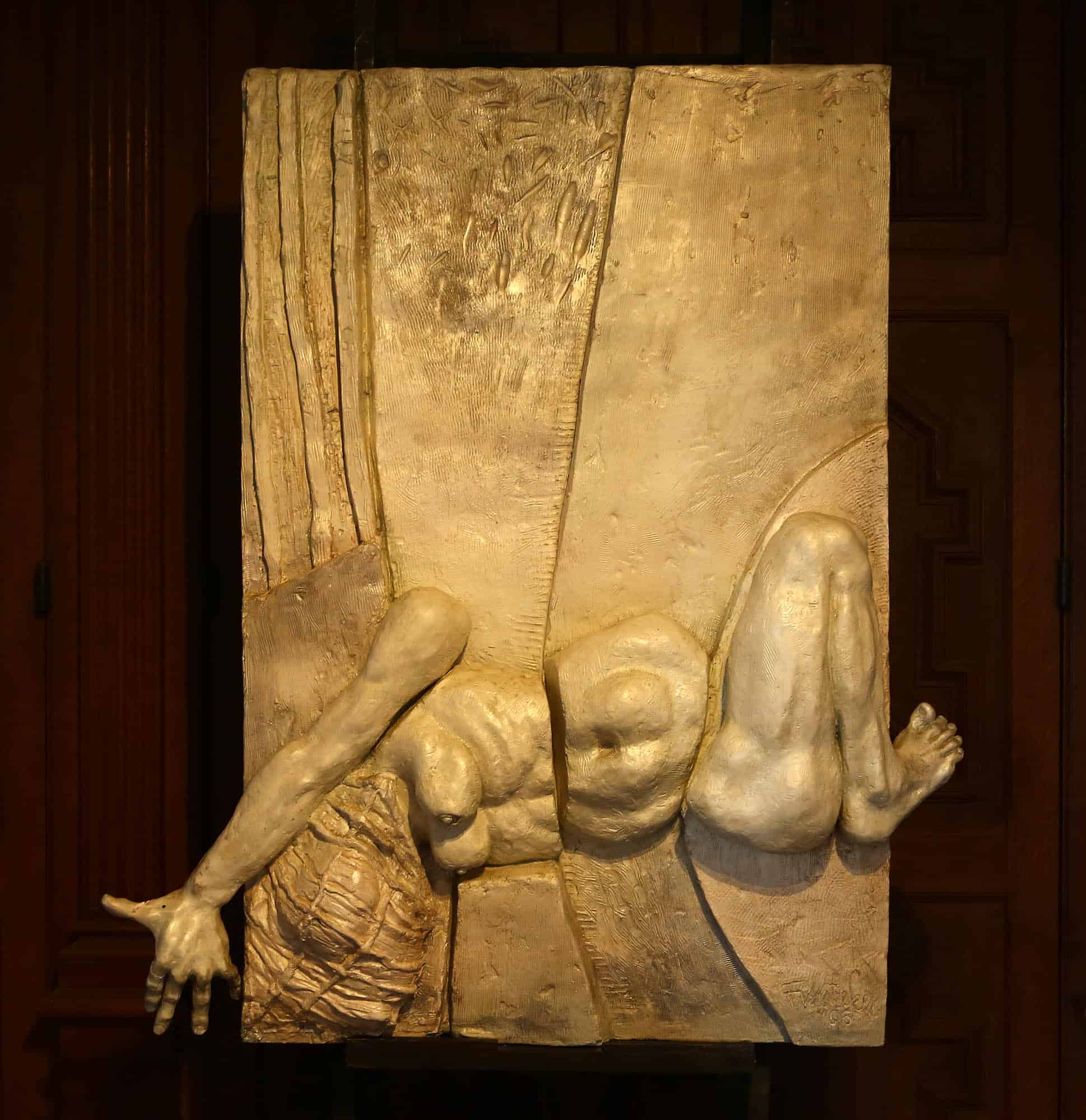
Shackled
120 x 80 cm
plastic
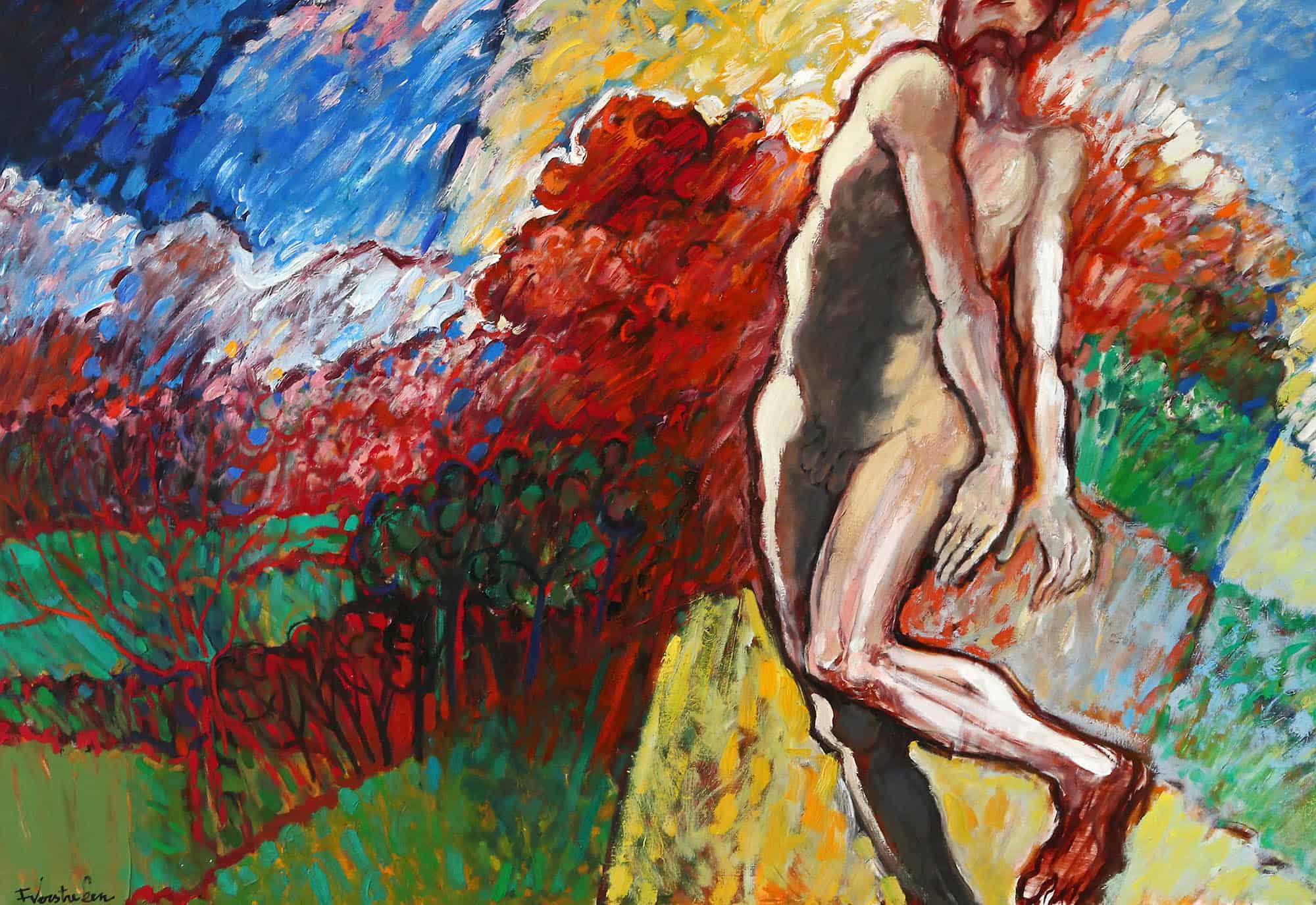
Spring dance in the Hageland
110 x 165 cm
oil on canvas
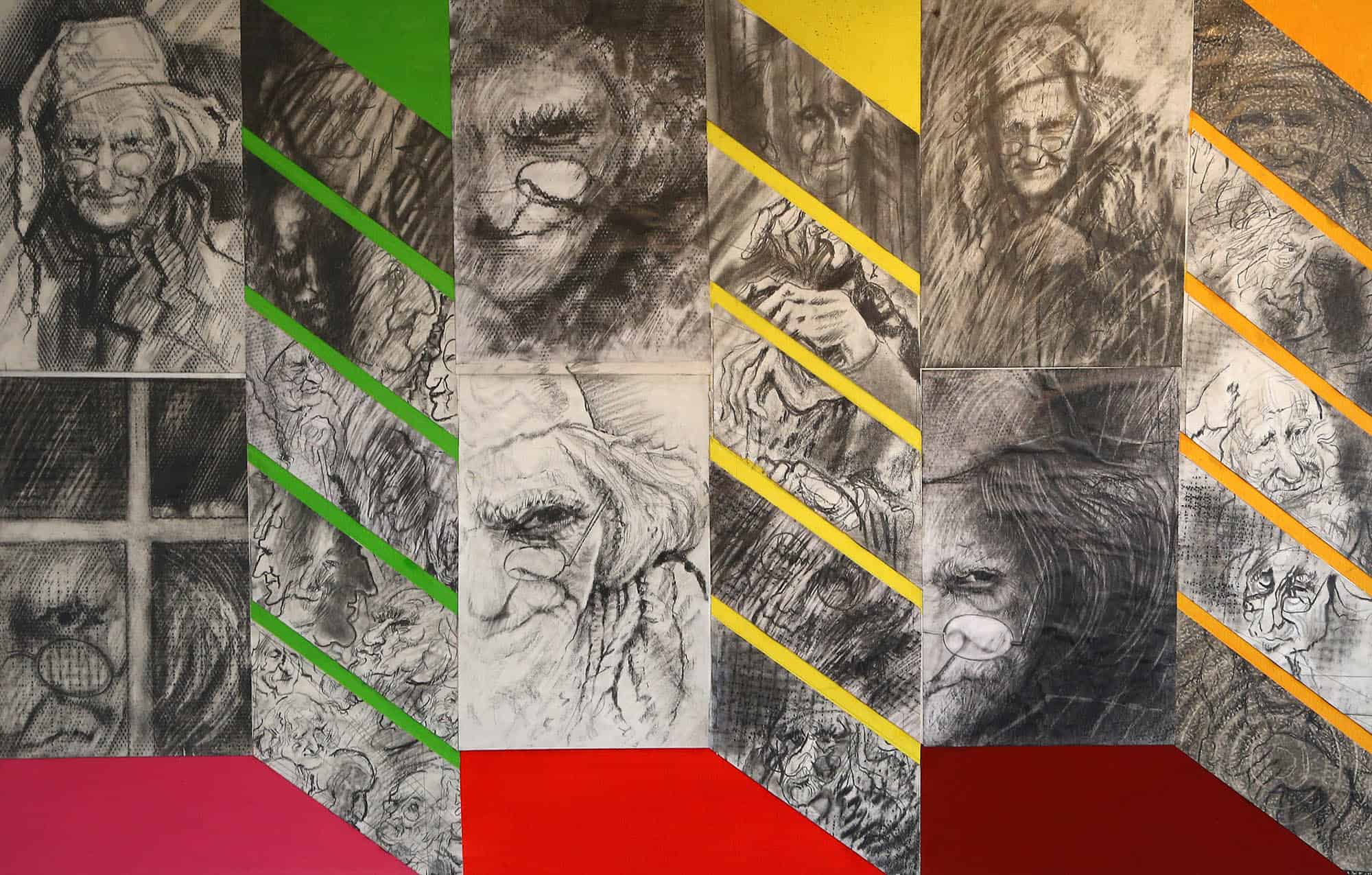
Collage with heads
120 x 200 cm
Mixed media
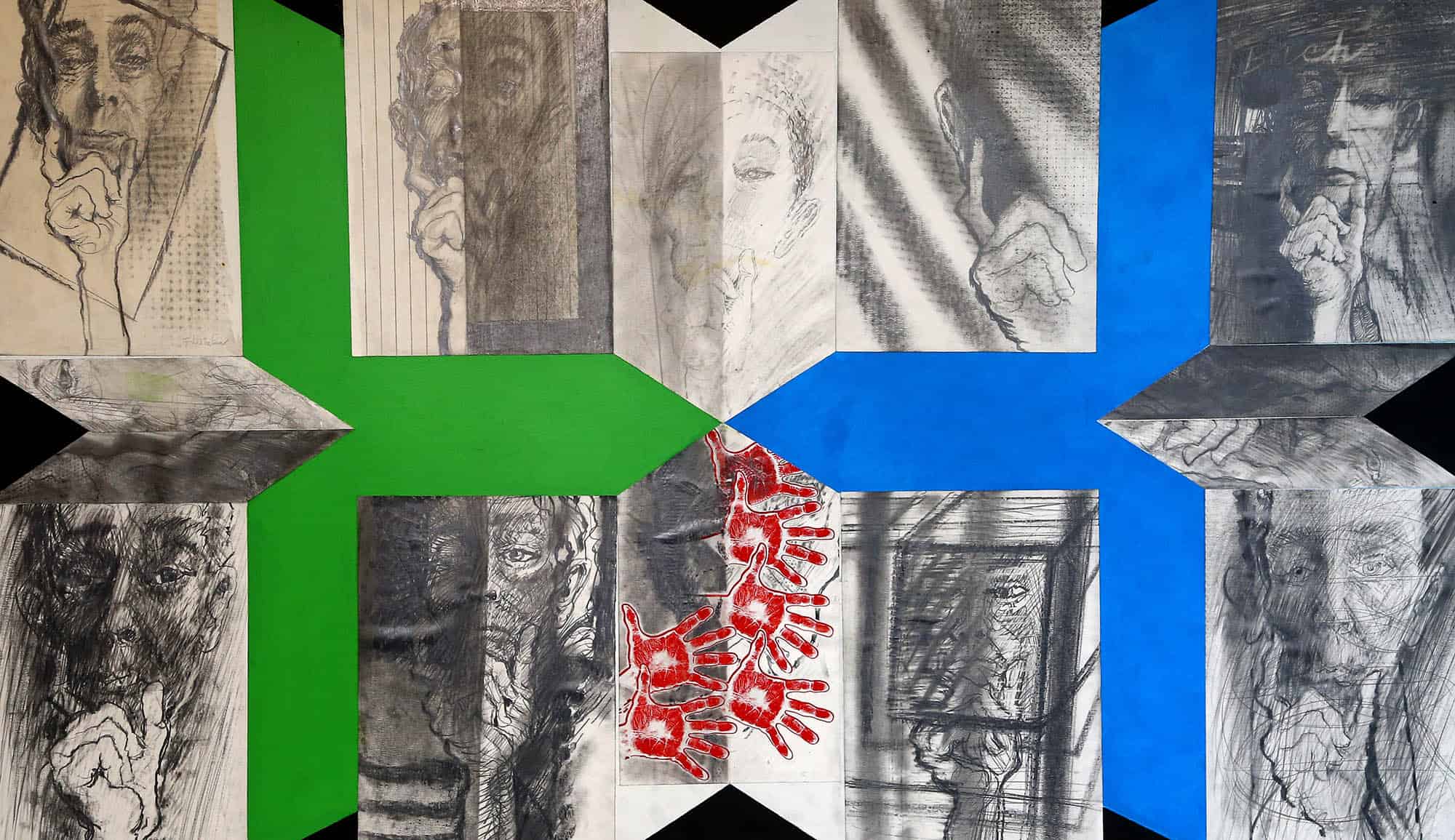
Collage with heads 2
120 x 200 cm
mixed media
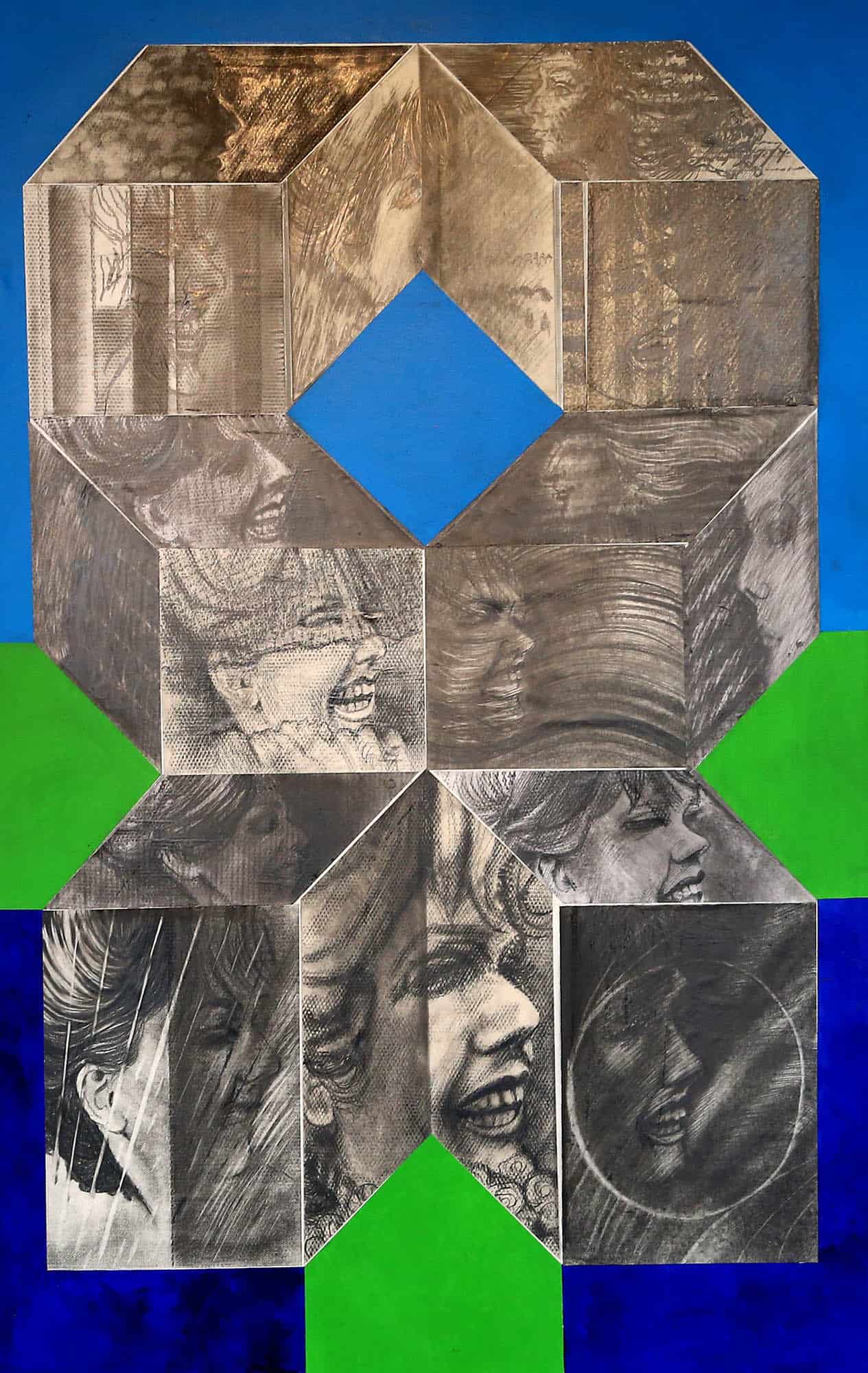
Collage with heads 3
200 x 120 cm
mixed media
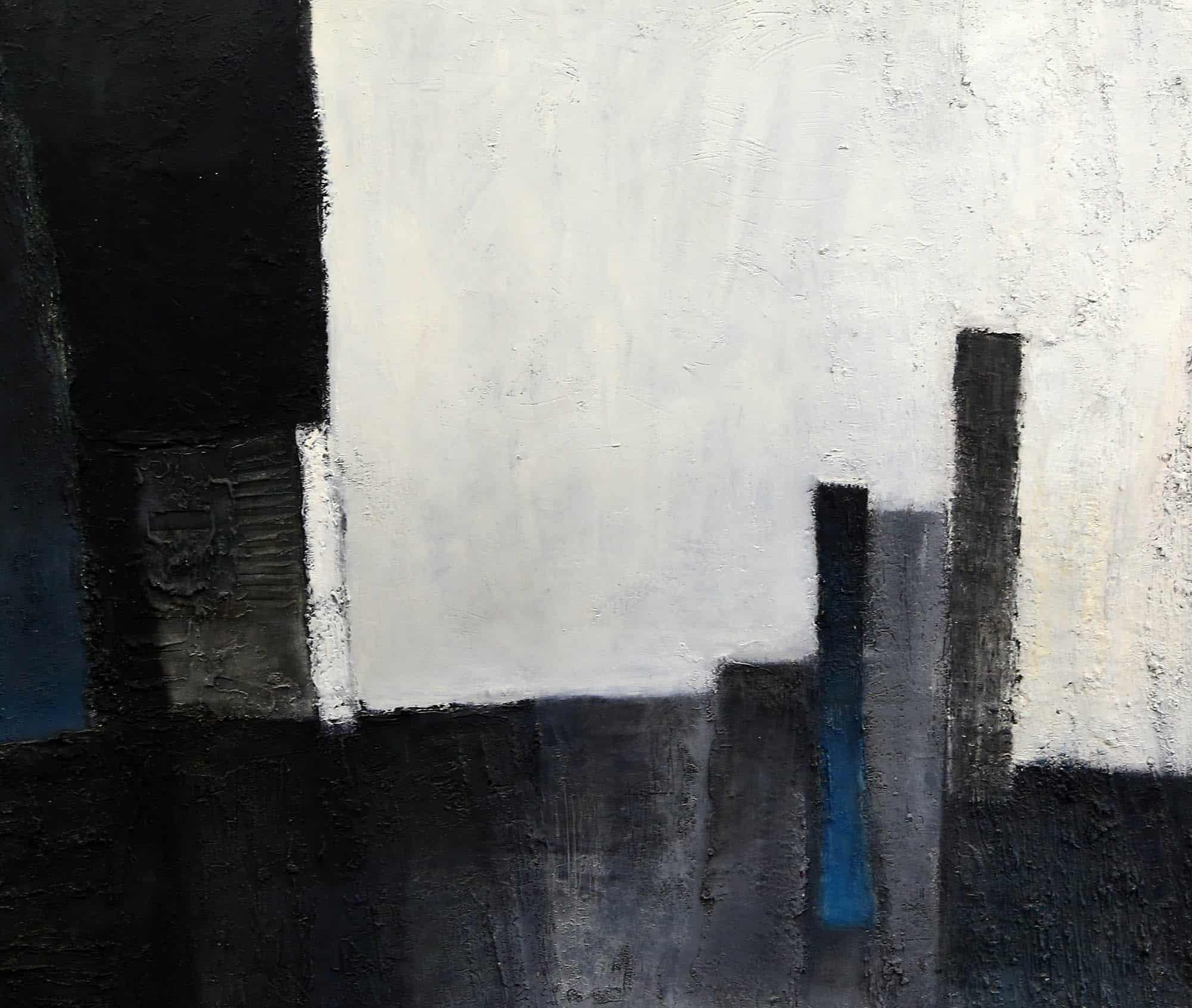
Study R, 1962
121 x 142 cm
oil on canvas
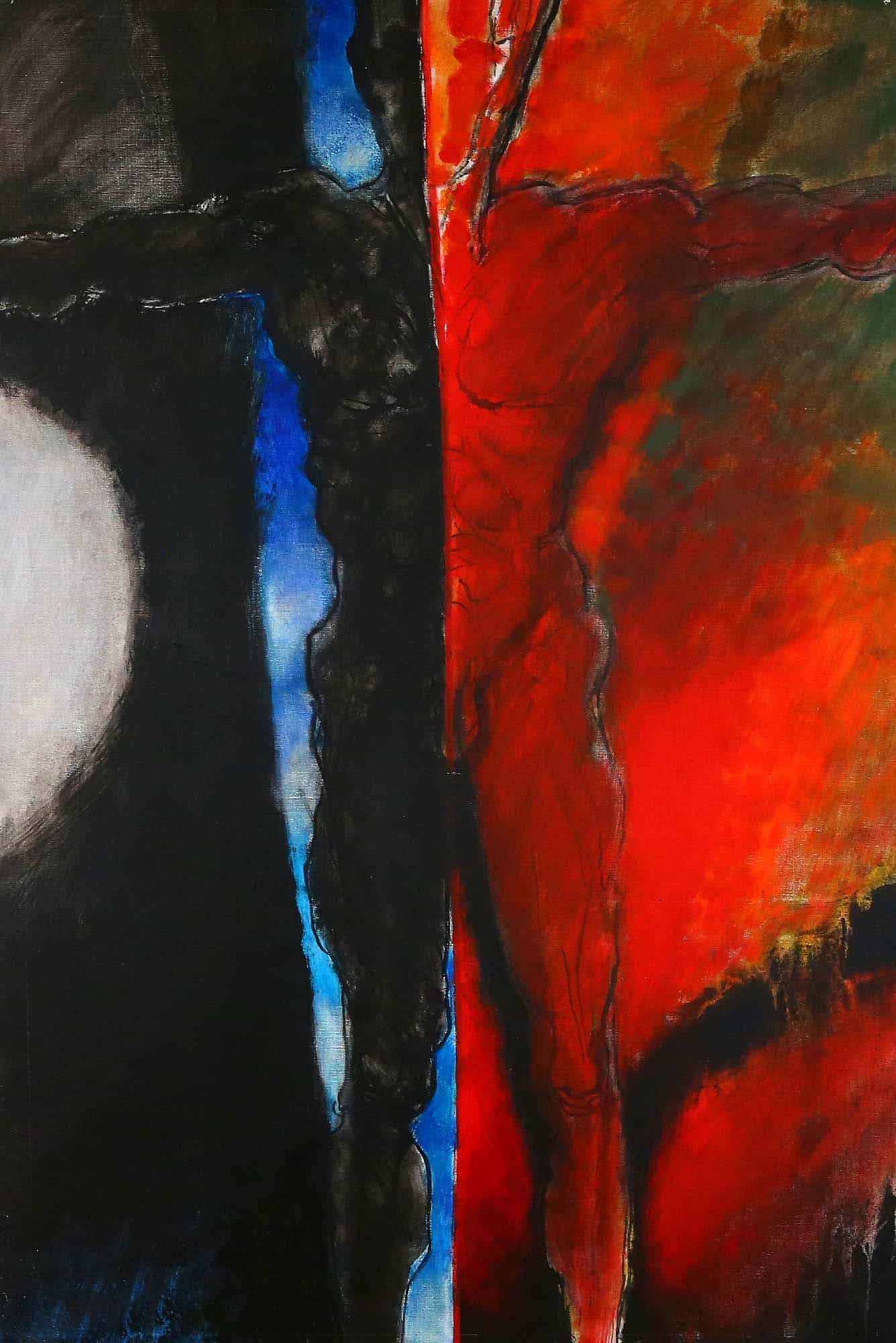
Figure for eternity
180 x 120 cm
oil on canvas
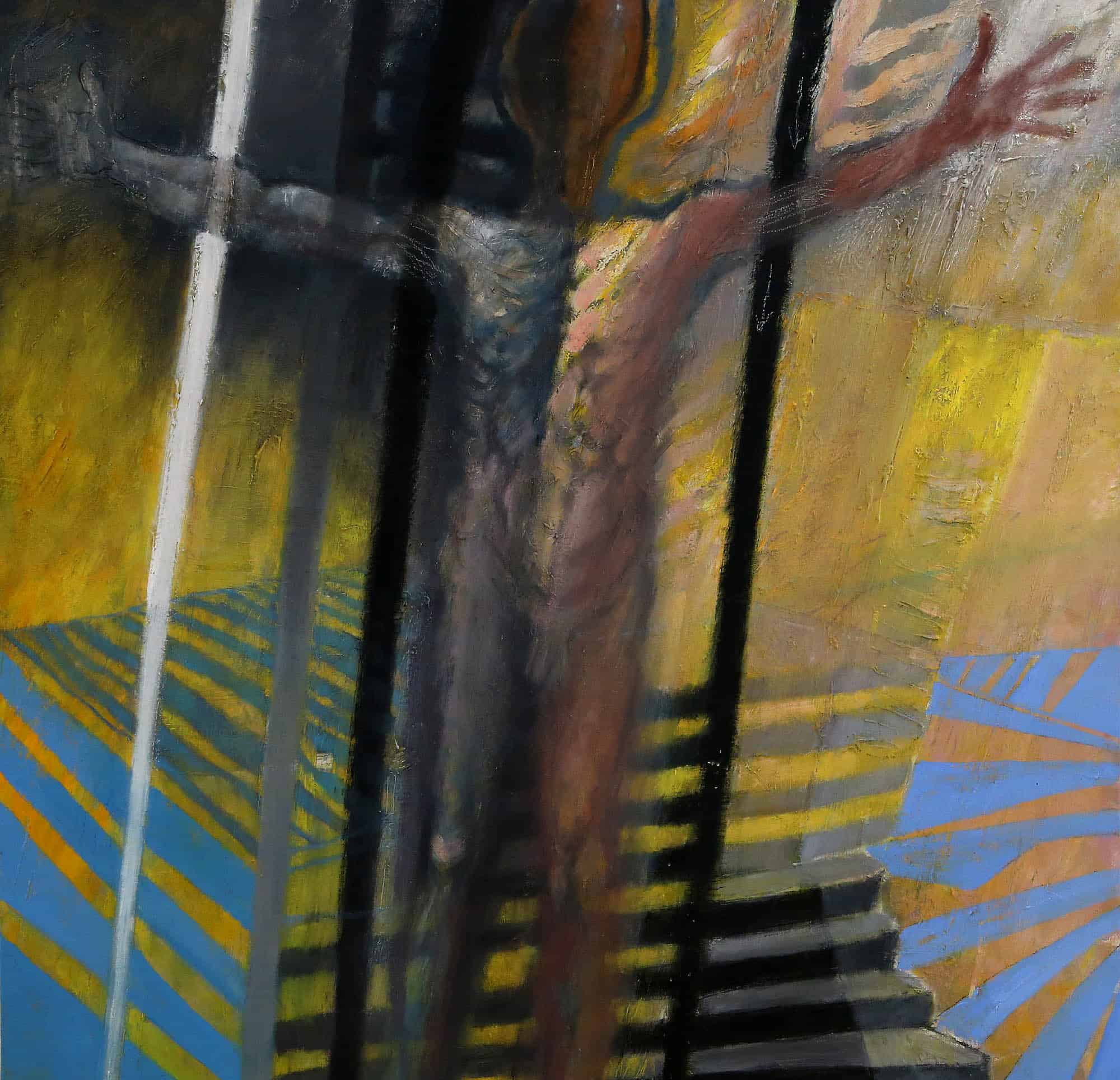
Leaving
115 x 115 cm
oil on canvas
Leaving is something different
from sneaking out of the house
quietly pulling the door shut
behind your existence and not returning. You remain
someone who is waited for.
Leaving can be described as
a kind of staying. Nobody
waits because you are still there.
Nobody says goodbye
because you are not leaving.
Rutger Kopland
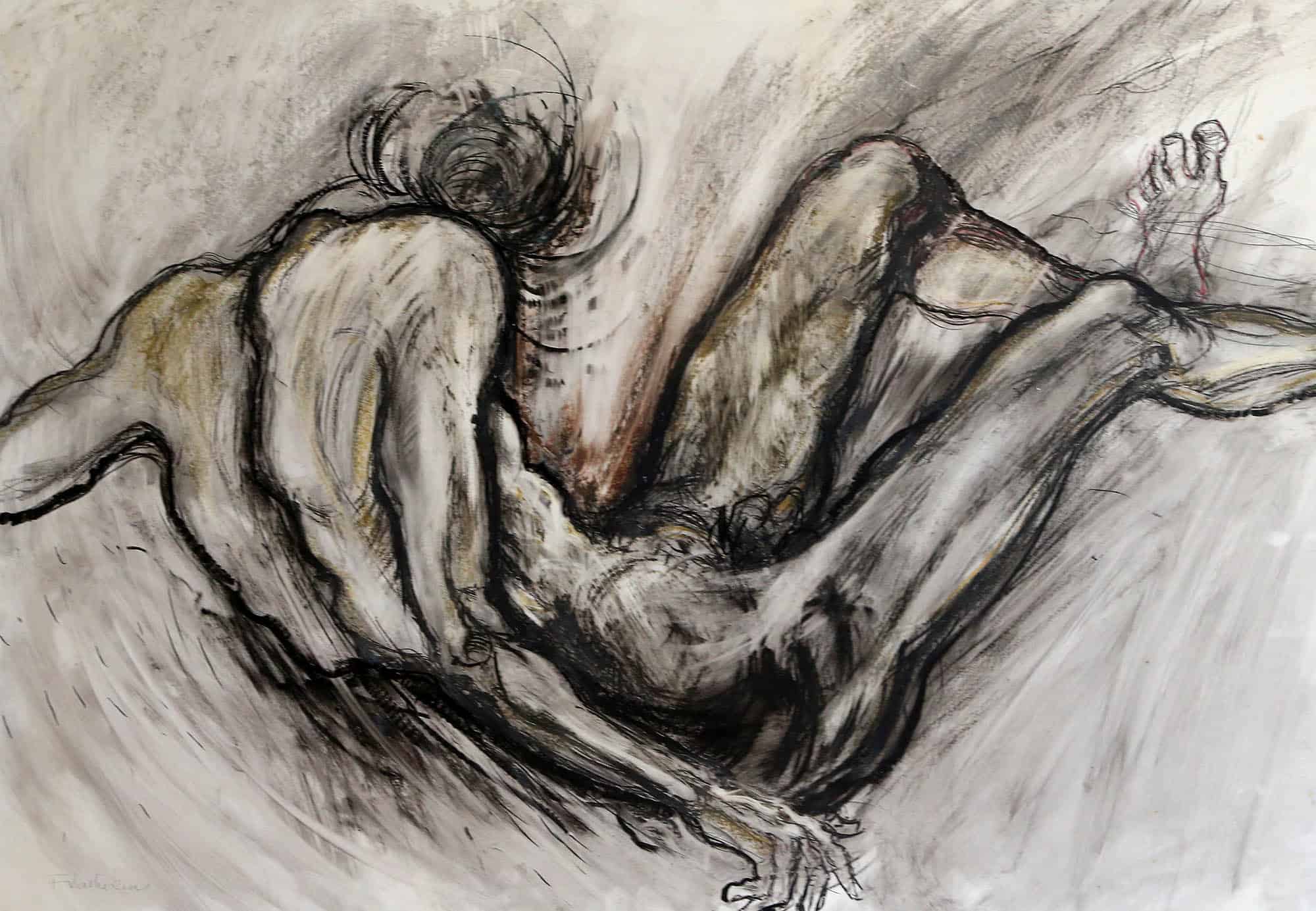
Reclining figure
120 x 170 cm
charcoal
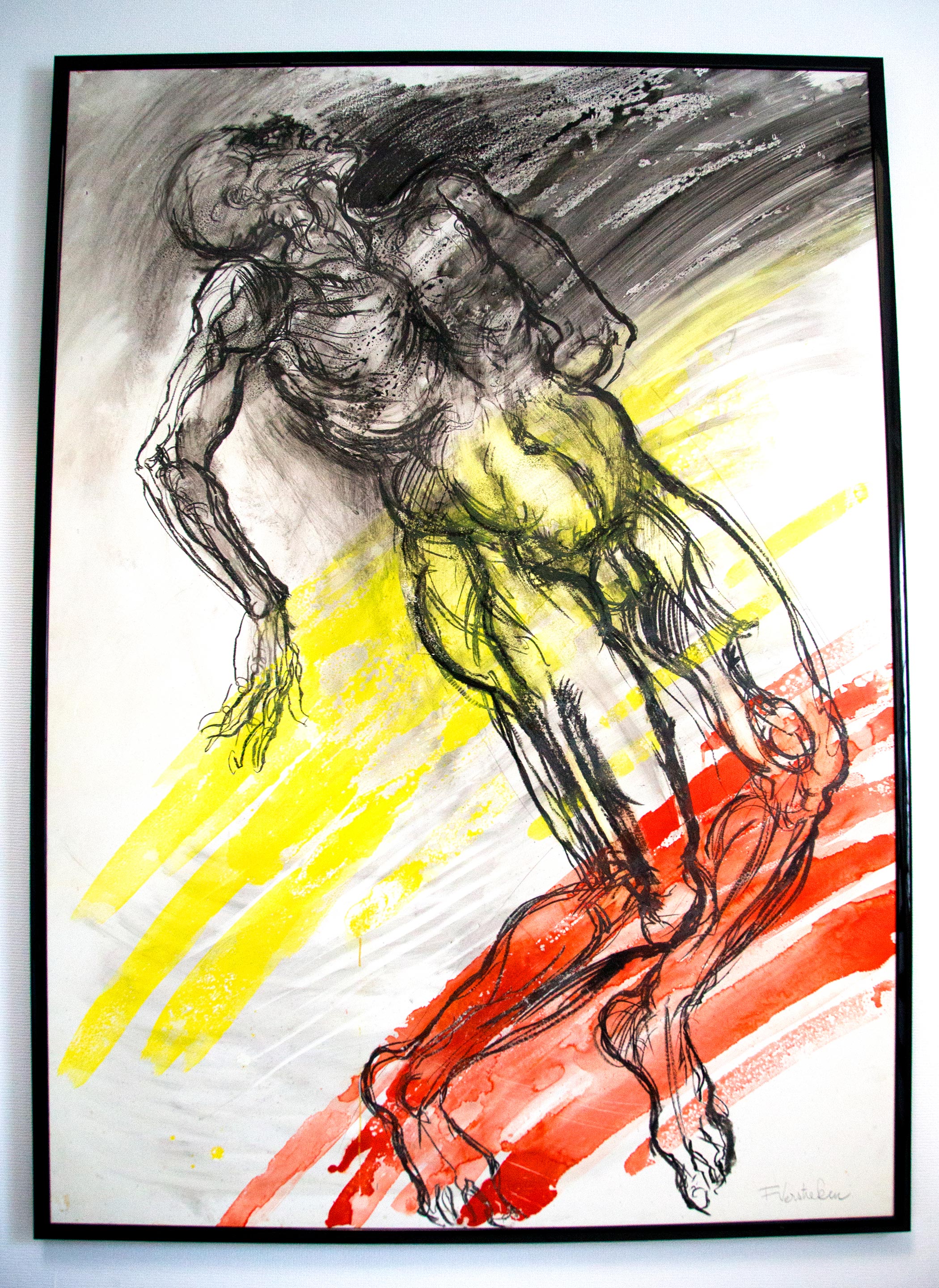
Belgian tricolour
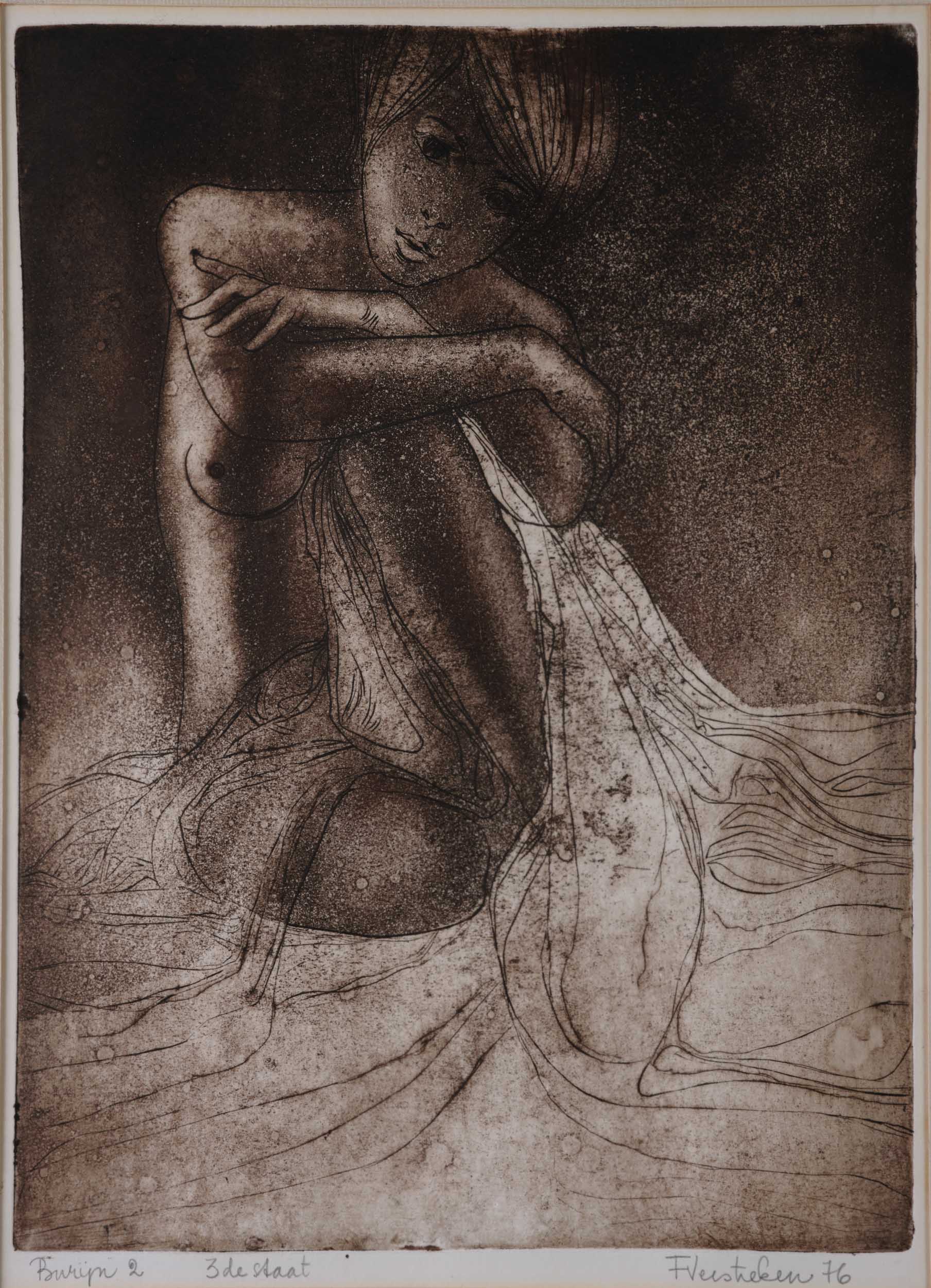
37 x 27 cm
Engraving (engraved directly into the copper with a burin). Fons Verstreken chose to make intermediate prints. ‘States’. As a proof; Épreuve d’artiste. Or state or état. After that he could engrave further.
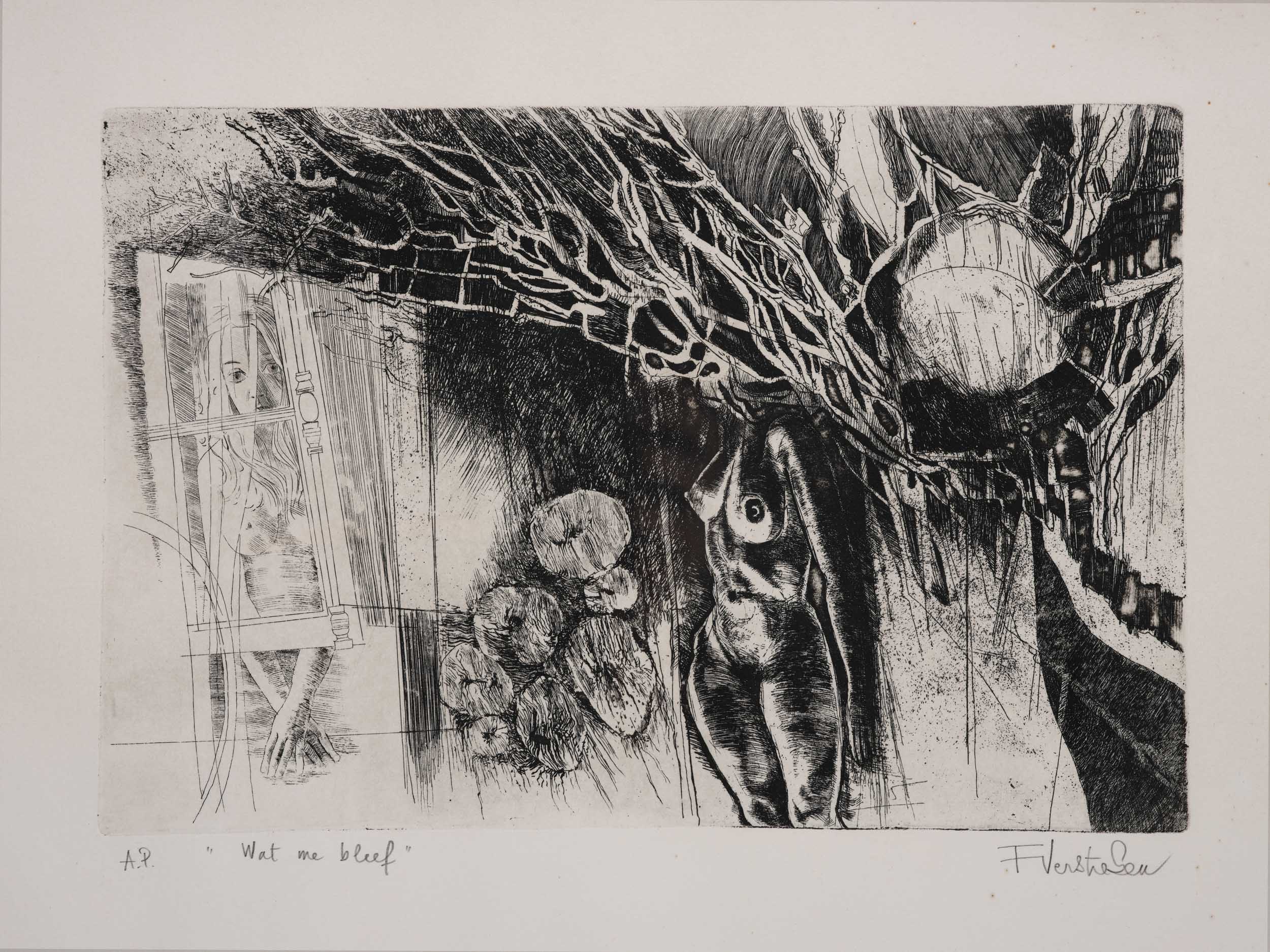
23.5 x 34.5 cm
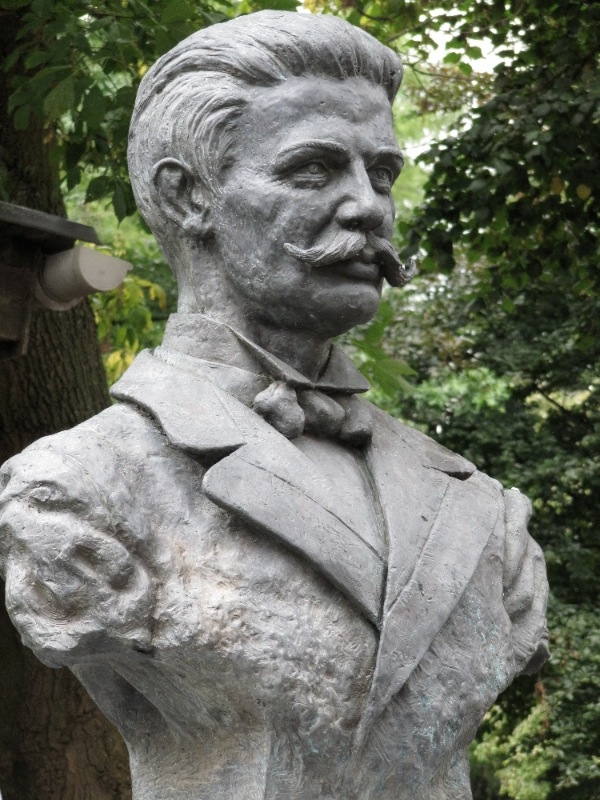
Mayor Joseph Tielemans (1865-1914)
In memory of Mayor Tielemans and more than 170 citizens who were shot dead in Aarschot at the start of the First World War. The statue in front of the town hall points, as it were, to the duty of those in charge to do their utmost for the citizens.
Bronze cast. The original is in clay. Verstreken made a mould (moule) of it for casting. Think of a chocolate Saint Nicholas. Statues are hollow. You can see the seams and casting channels. The artist still has to file those away and join the pieces together. Centuries-old technique.
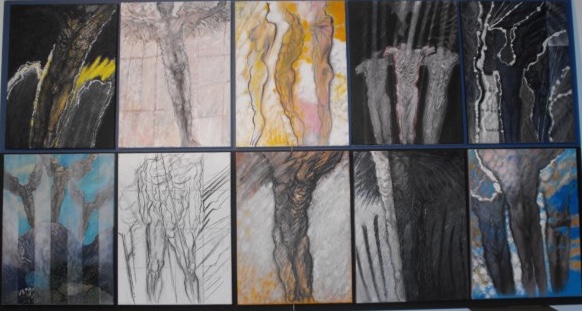
Fons Verstreken was born in Rillaar on 31 January 1929. He died on 31 October 2011.
Studies: Vrije Normaalschool in Tienen, final diploma in 1948.Preparation for the “Drawing Teacher” examination at the Sint-Thomasinstituut in Brussels 1950-1952.Obtained the diploma of the Central Examination Board in 1954.
Teacher of artistic subjects at the Municipal Academy in Aarschot, where he co-initiated the youth studios, the decorative drawing studio, the graphic art studio and the drawing and life drawing studio. As a teacher of art subjects at the Sint-Jozefscollege in Aarschot he was co-founder of the Art Department.
In 1963 he received the “Prize for Young Belgian Painting”.
The work of Fons Verstreken is widely represented in several private collections.
“Besides painting, Fons Verstreken also devoted himself to graphic art. He made etchings and wood engravings, never unambiguous; in etching, for example, he developed various variants such as the mezzotint, which gave his work rich depth and splendid shades of grey. In burin engraving he excelled through bravura and accurately drawn lines that betray the hand and strength of a true master.
Besides a rich oeuvre of paintings and graphic art, Fons Verstreken produced work for advertising, luxury packaging, calligraphy, book illustrations and occasional graphic art.
Fons Verstreken also worked with clay. It is especially in sculptural ceramics that his artistic work takes on a broad momentum, in which many virtuoso elements from his earlier work come together. Large “heads” are at times serious, then again almost caricatures with biting mockery. In his ceramic work Fons Verstreken seems reborn, liberated; something he strives for and seeks his whole life: freedom.” – Josée Lehon – art historian
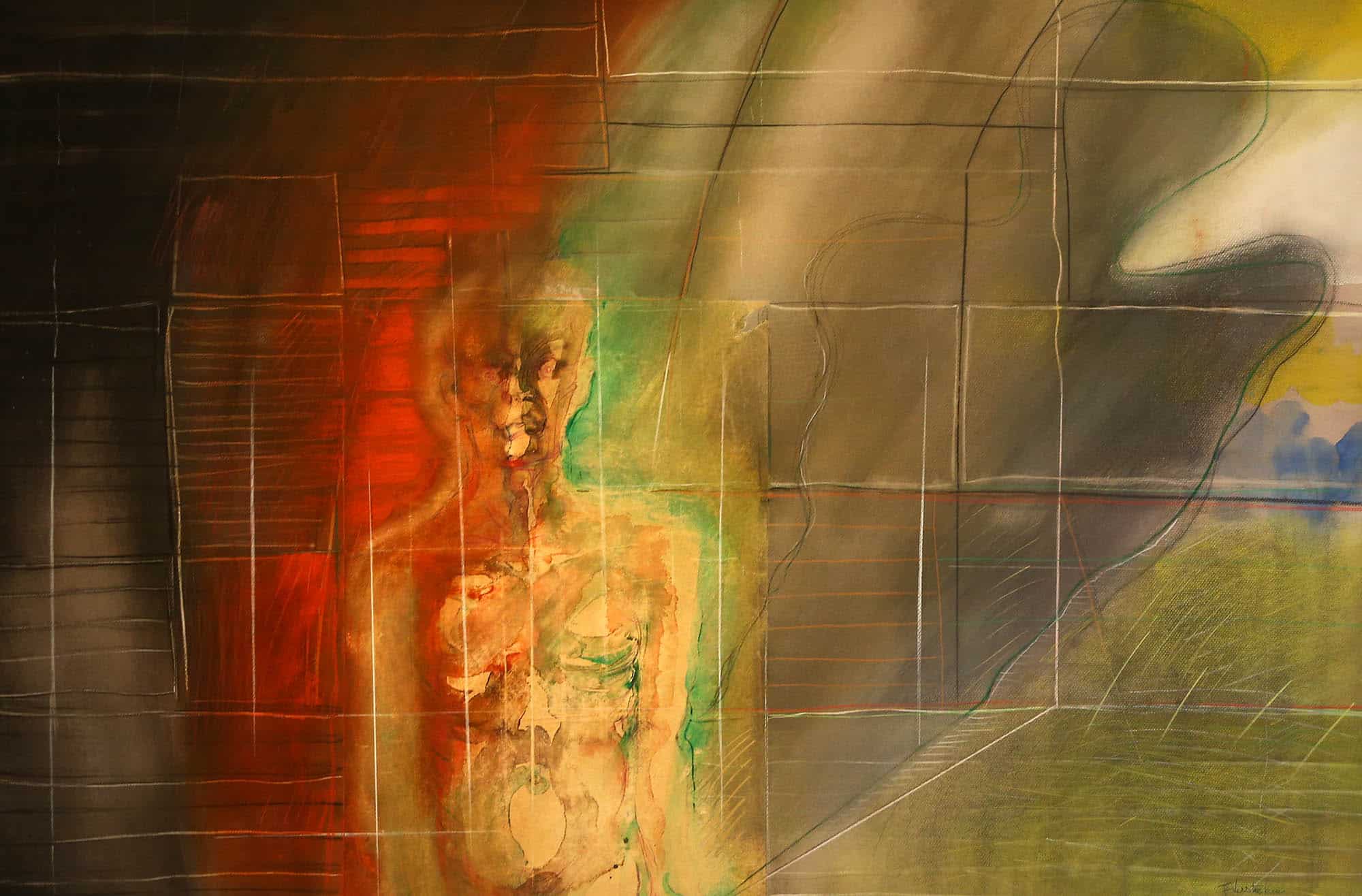
It is finished
80 x 120 cm
self-portrait, X-rayed, pastel on paper
With incredible strength and incredible inspiration he was and is active as a painter, graphic artist (etching, burin, applied graphic art) and sculptor. His drawings and scribbles are preliminary studies for later work, always on the way to a future that is undetermined for him and for the viewer. His work has accordingly been exhibited in numerous galleries at home and abroad. On a visit to his studio, in the company of his inseparable shepherd dog, you are gripped by everything in that interior. You stand humbly silent, looking and listening to a man who, with all his moods, tensions and contradictions, brings art to life. Here and there one recognises in the composition elements from nature, with the all-dominating human figure at the centre.
At first sight one can call this work fascinating, not easy and yet immediately appealing.
In other words, a whole of unresolved questions and states, as befits a true “artiste”.
Every work announces itself as a composition of planes, blotches, streaks, applied quickly and forcefully, nervously, onto the canvas. It is a continuing search for the essential questions connected with our own existence.
Fons does not like so-called artists who use the same “trick” again and again, he experiments constantly, relying on a high level of professional knowledge. Every lived work is preceded by a written word. Everywhere in his studio you can see abbreviated texts hanging that show how emotionally Fons’s creations come into being.
Pure: wistful; I do not exist; cliched; self-affirmation. Themes that are not foreign to him. About “pure” Fons wrote:
“Like a tree in the plain
in the wind and the rain
and the glory of the sun
far from all words
far from all words
far from all words
alone
in a boundless plain
in space and time
once the unsayable
new
to be able to embrace
and nothing more…”
He calls this “poetic texts, alas without poetry”.
“After his day’s work Fons noted down in scribbles what went through his head or what occupied him at that moment. Anyone who knew Fons as a teacher knows that “individuality” came first. For him drawing was not copying things, not copying outward forms. His development as a ceramicist and sculptor runs parallel to all his other work, an importance not to be scorned.
Thanks to his great craftsmanship, Fons can involve us, as viewers, in his inner feelings.
A noble event. In all the materials he works with, he breathes new life into them with his skill. A privilege to have been able to experience and taste all this at close quarters? Keeping company with such a character for many years leaves its mark.” – Edward Moons – painter