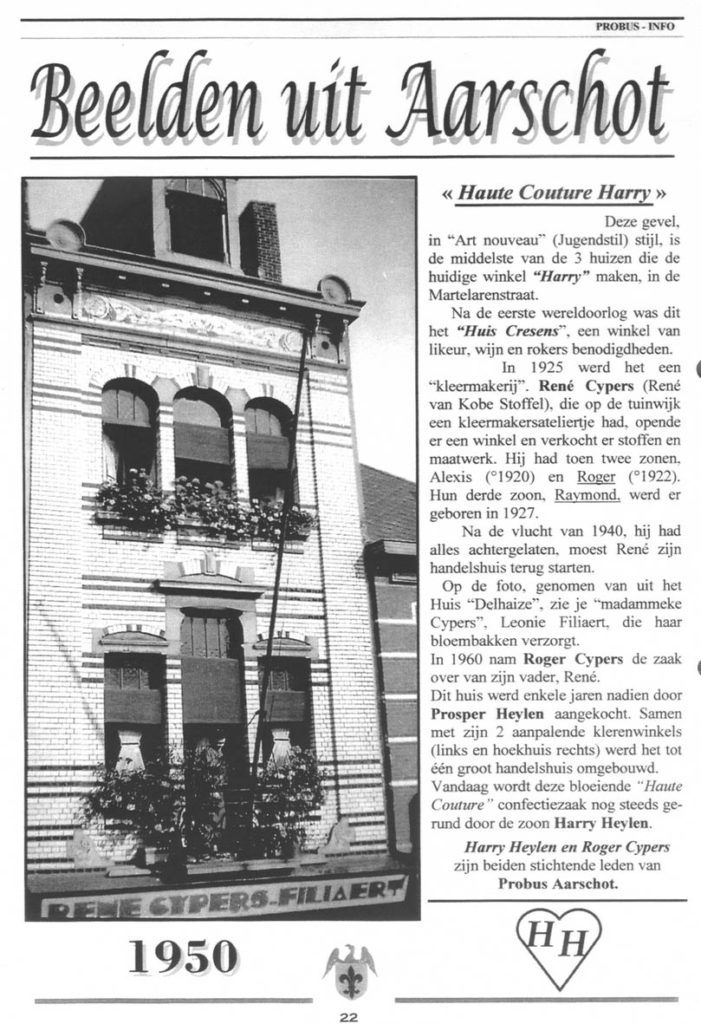
Where until its demolition at the end of 2018 Haute Couture Harry was located, there once lived in Aarschot a remarkable man who had given his name to the classic clothing shop he had transformed into a fairytale bridal store.
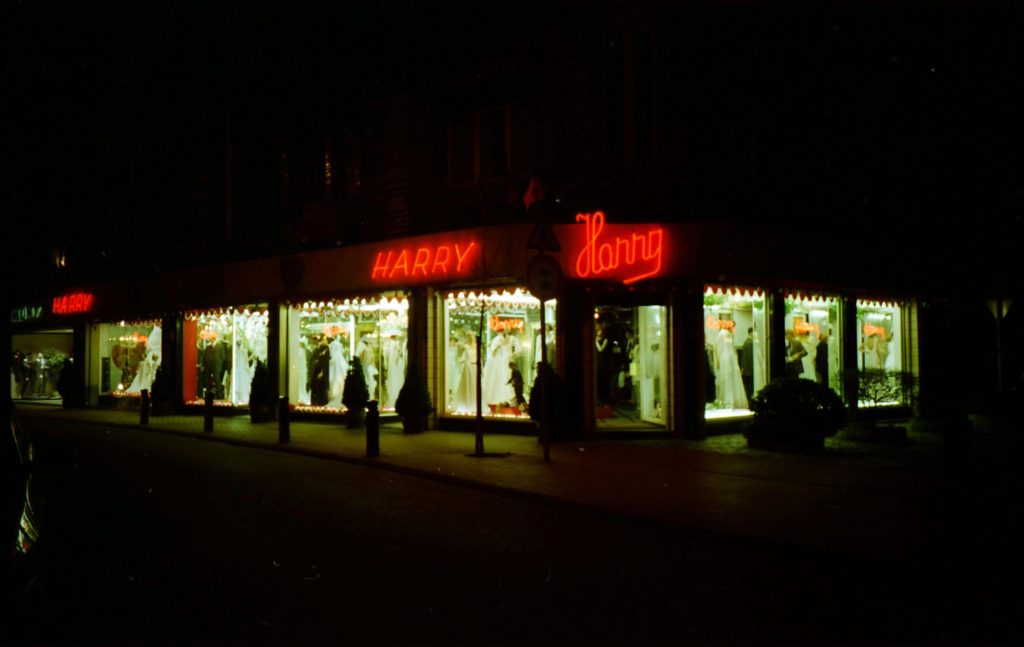
To tempt passers-by, this trained window dresser spared neither cost nor effort. The town’s inhabitants gazed in amazement at thematically arranged display windows. Comparable to the displays of the Parisian ‘Galeries Lafayette’.
Mannequins in Cinderella bridal fashion rotated endlessly on carousels covered in red velvet. Porcelain vases with bouquets of silk flowers and floor lamps decorated the shop.
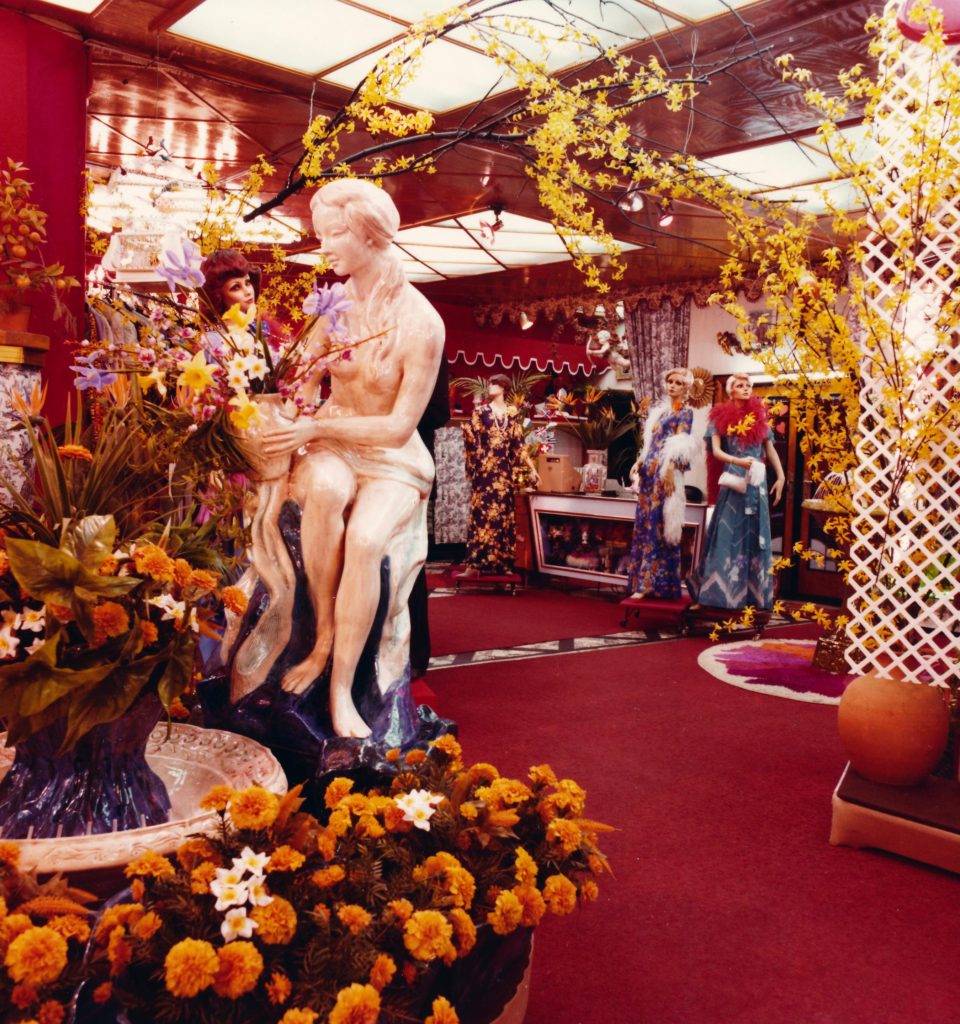
Male mannequins in tuxedos resembled the proprietor himself, others wore a moustache and an earring. The popular bridal boutique stood out and was visible from afar thanks to Harry pennants, strings of red lanterns and illuminated hearts. On the roof a huge Harry flag fluttered next to the Belgian tricolour. The whole was enlivened by soft-sounding James Last music, which you could also enjoy in the street because loudspeakers hung under the awnings. Long after everyone had a CD player, a tape recorder with enormous reels was still doing the job.
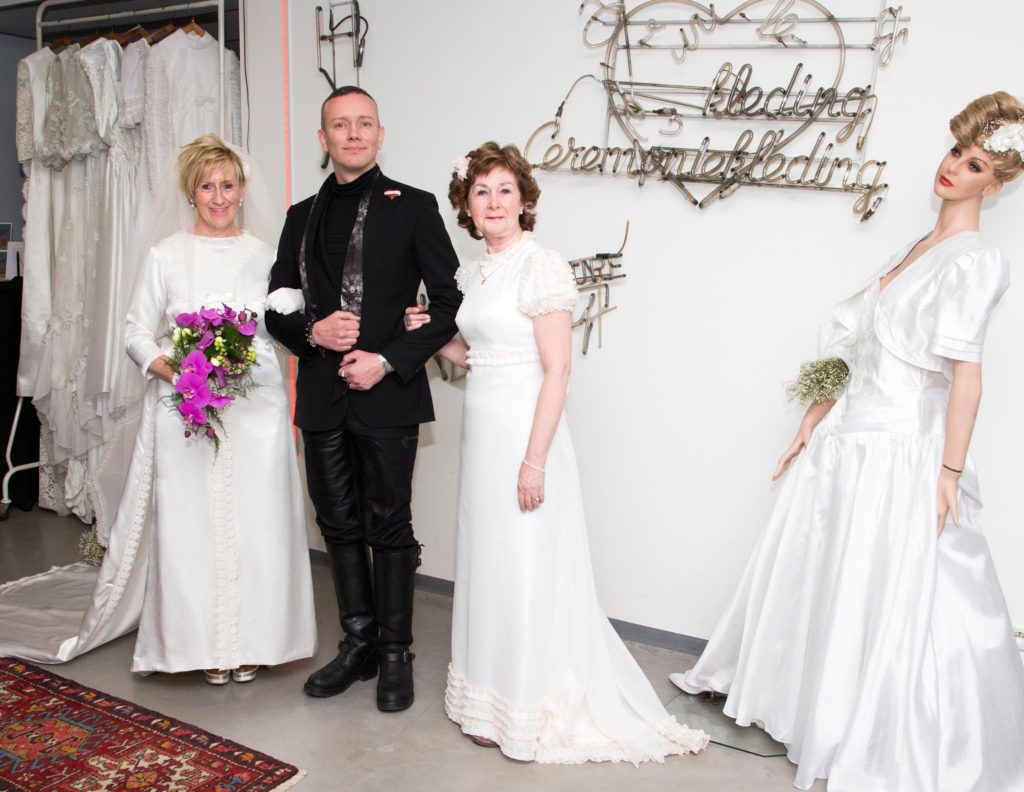
In the early years the wedding gown was made in a ready-to-wear workshop in Liège. The bride-to-be did not try on her dream dress herself. The basic model was shown by a “shop girl”, measurements were taken, after which the wedding dress was put together according to the bride-to-be’s wishes: the colour, the length of the train, the width of the skirt, the amount of embellishment, etc. That way there was only one copy of each model in circulation and it could be offered in all sizes as desired.
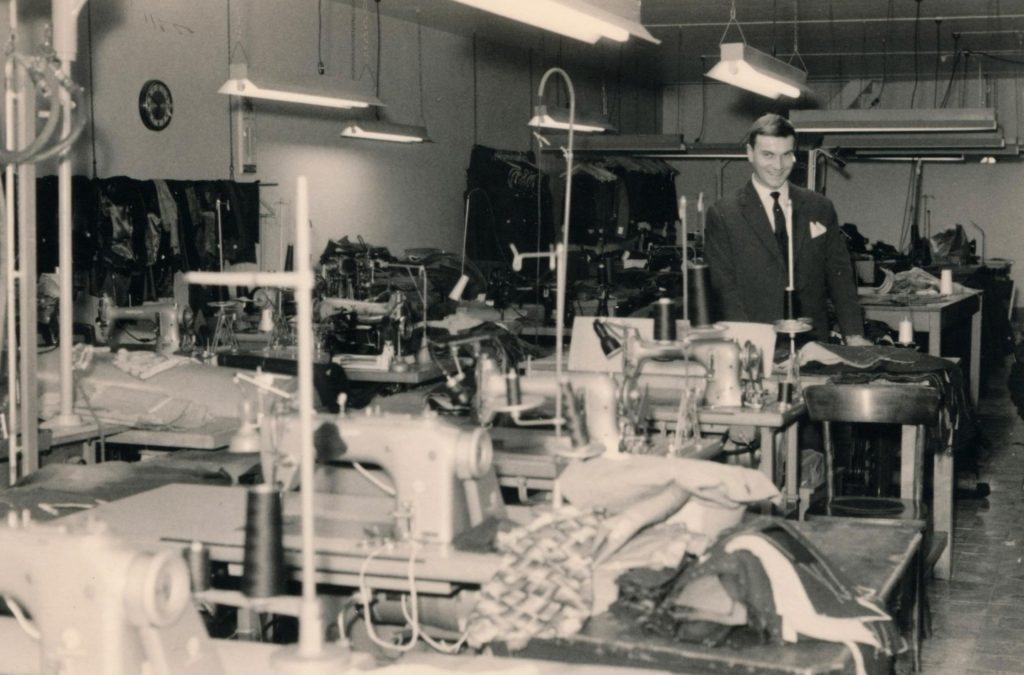
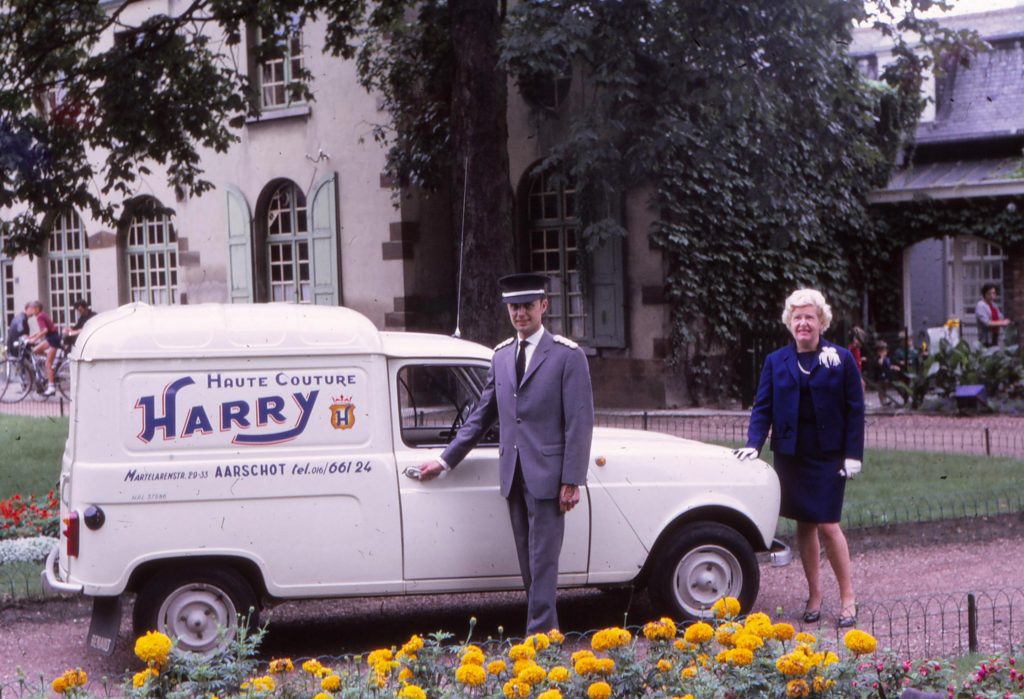
In time, vacuum-packed hyper-romantic dresses from China made their entrance.
“Seriously, the trailing gowns are made of plastic, the girls look all soft like pears with the ironing. What do you think, between you and me?”
With great fanfare, the dandy Harry, who had stayed stuck in the golden sixties, spoke a mix of the Aarschot dialect and French. He was attached to ‘Osschot’ and cherished his ‘empire‘ .
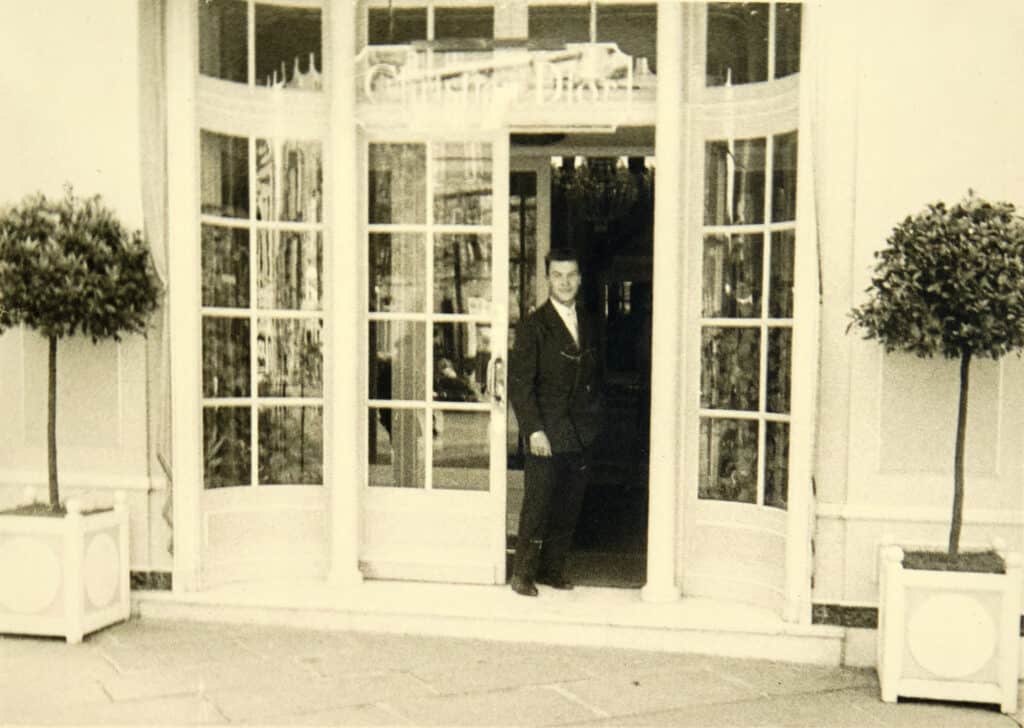
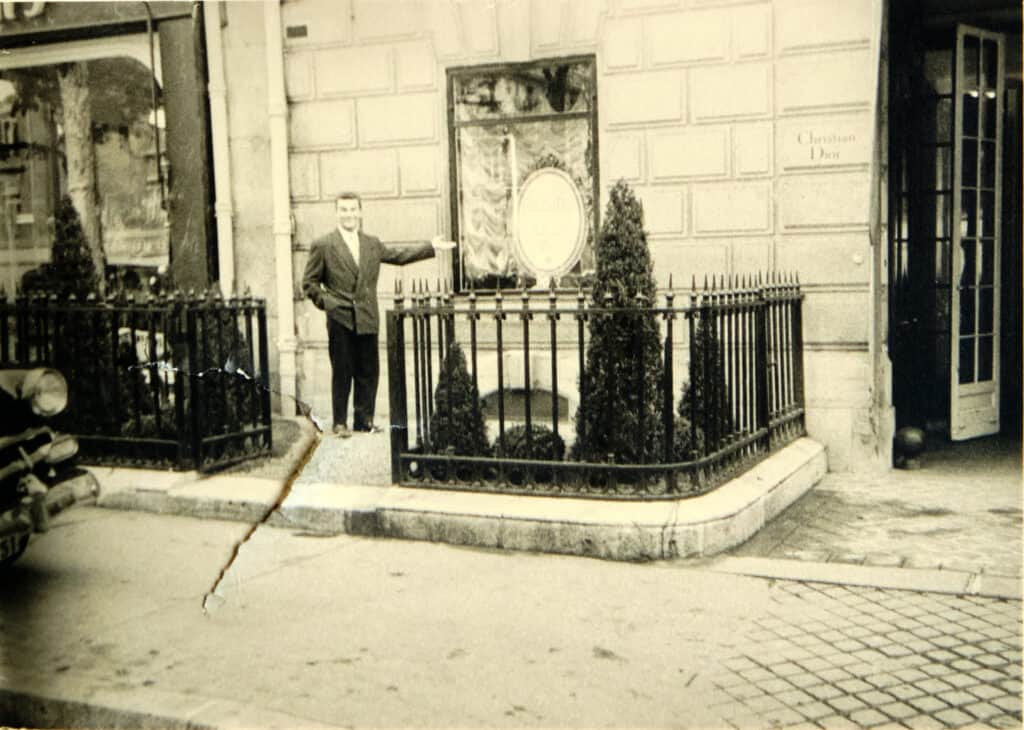
Harry sought inspiration at Christian Dior, Avenue Montaigne in Paris. (1956)
The people of Aarschot thought that Haute Couture Harry’s clothes came from Parisian couture houses, but he bought from Jewish cheap ready-to-wear wholesalers at the Porte Saint-Martin.
In 2018 an exhibition about Harry Heylen was organised in Aarschot. I knew him well and, as a tribute, give him a place in this virtual museum as I remember Harry:
With a whopping great ring that he was only too happy to show off; “ It’s mum’s solitaire (5-carat diamond)”. He wore 3 gold Cartier glasses at once; 1 on his head, a 2nd on his nose and a 3rd hanging from a cord around his neck.
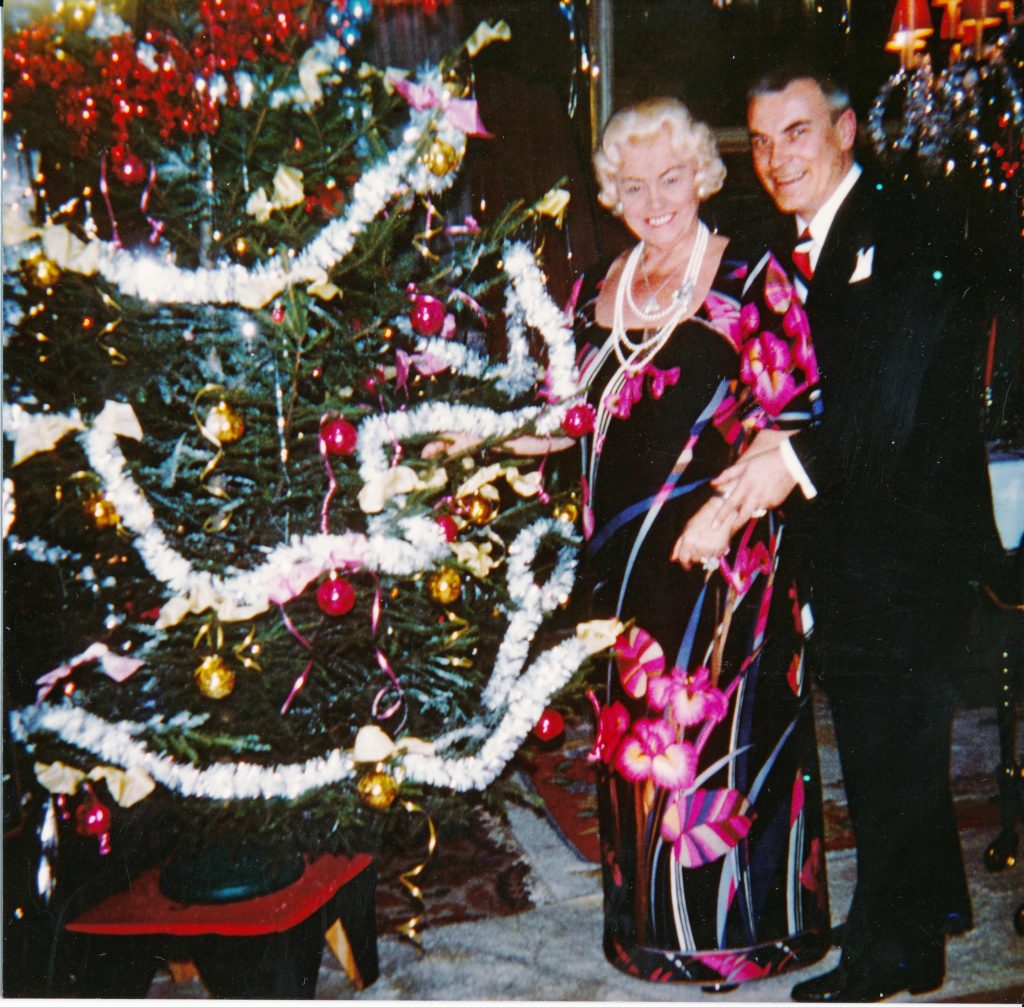
As a young, attractive “notary’s son” I was usually welcome. With great pleasure I let myself be immersed in this wedding wonderland.
I was received with champagne, flan tart, “koekebakken” (pancakes), pain à la grecque (Brussels speciality) but sometimes also sent straight back to the door without ceremony. Then he explained that he was displeased because of factors from the past which made him sometimes behave distantly and arrogantly.
But whether Harry was in a good or bad mood, I always left laughing:
Pieter Van Kerckhoven: “Your behaviour towards me is unbearable.”
Harry Heylen: “It is the poor who apologise. When one is rich, one is disagreeable!”
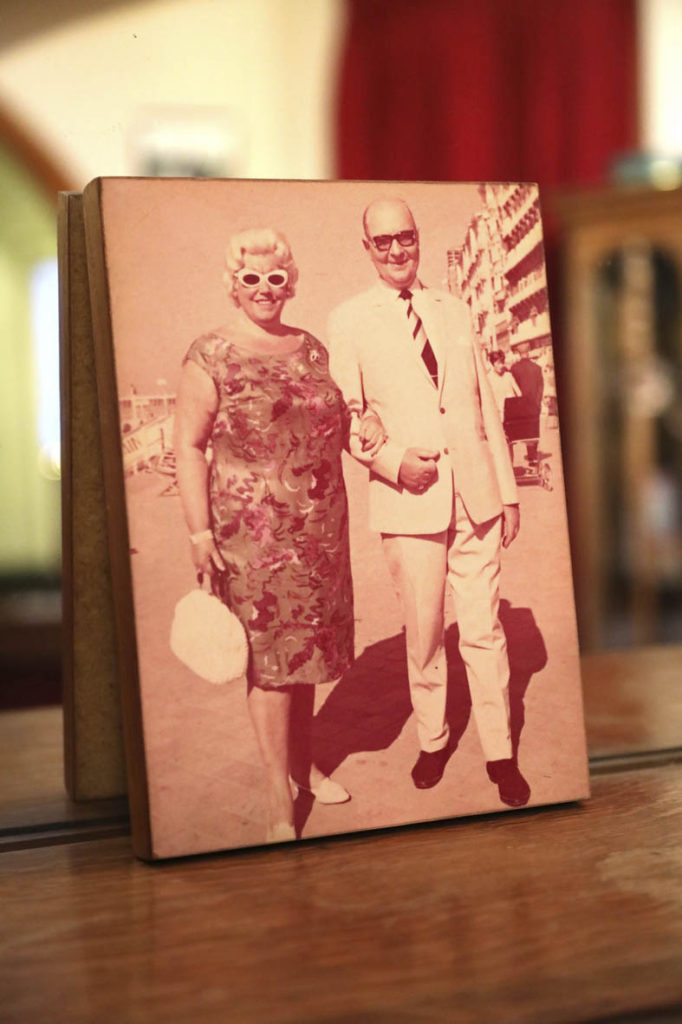
Madame Rachelle would rather have had a girl and had her only child wear girls’ clothes until he was 6. ‘Harryke’ adored his ‘Maman’. She decided who could come over to play. Harry spent a lot of money on gigolos. He knew them everywhere. In Brussels, Ostend, Paris,… . His mother did not want him to have a steady boyfriend. “They only take you for your money and take advantage of you.” And everything ‘maman’ said was sacred. At his mother’s funeral Harry threw himself on the coffin and was inconsolable.
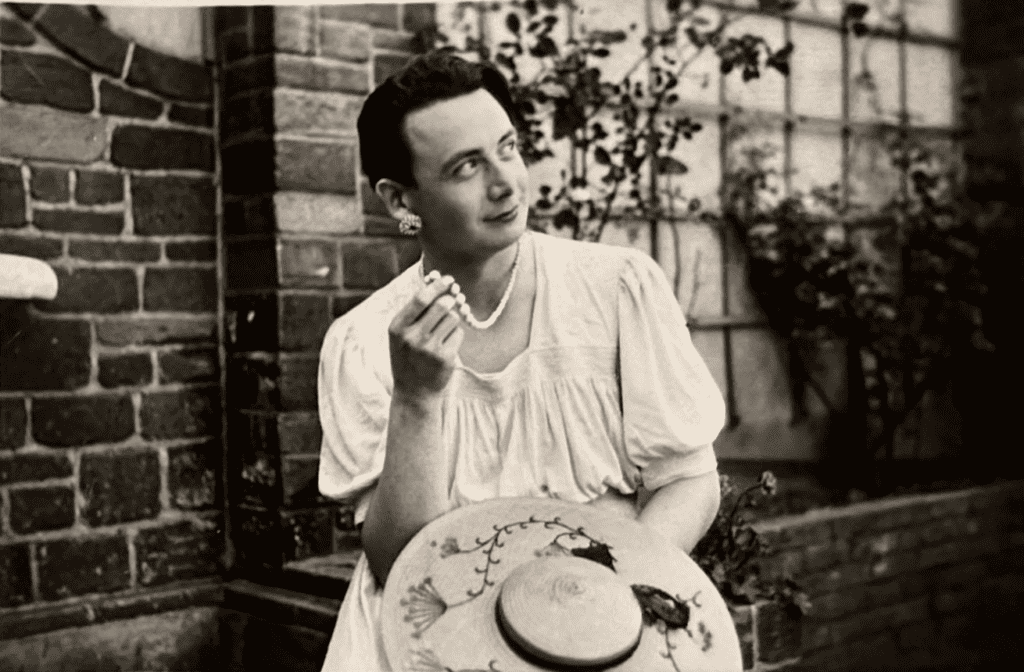
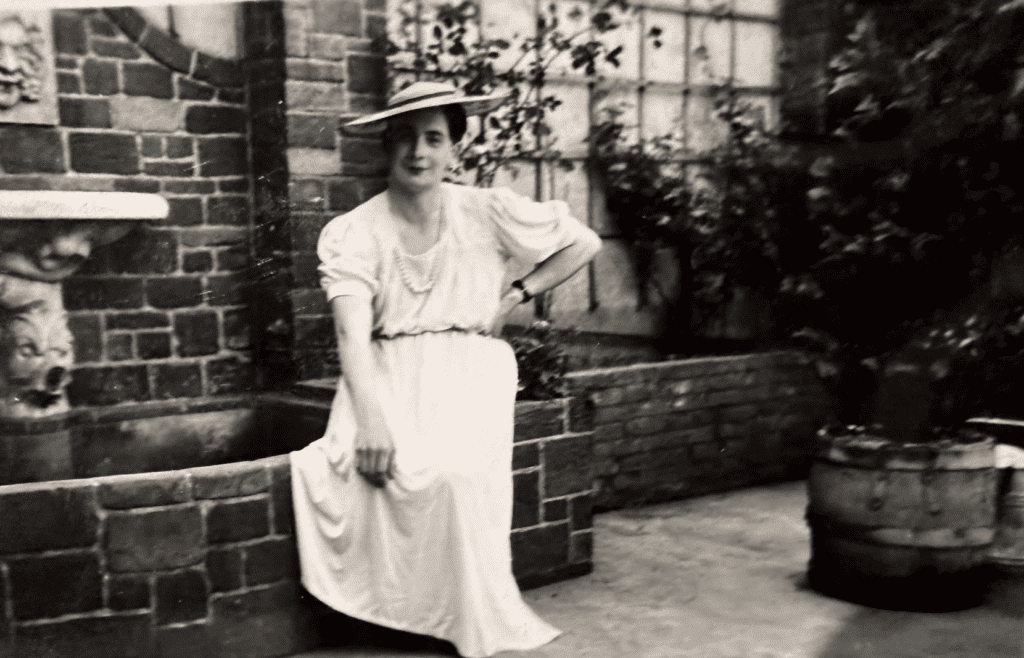
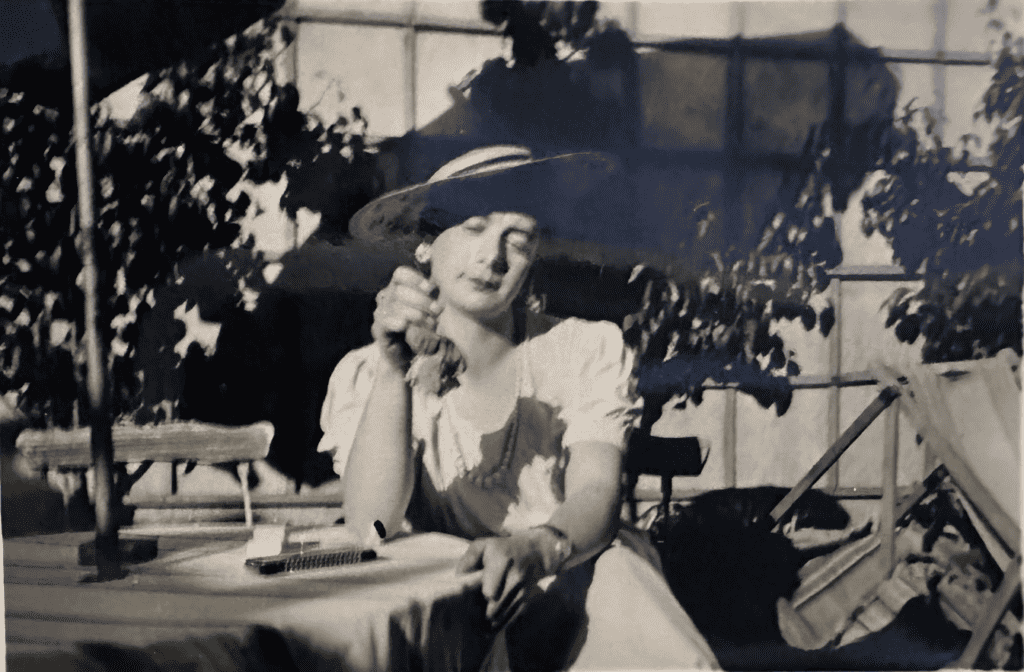
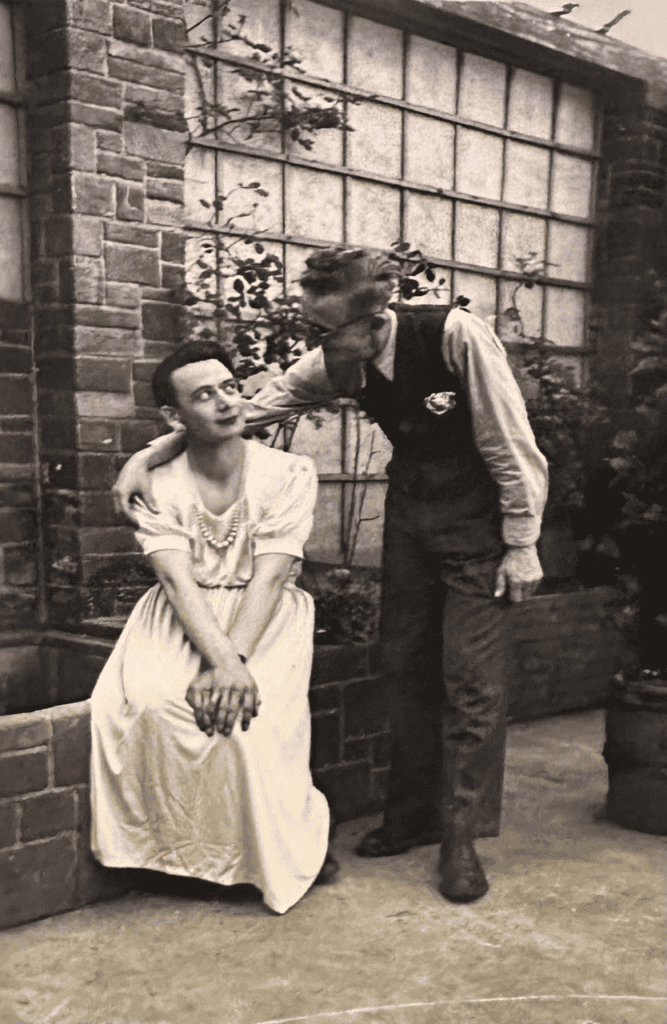
Prosper Heylen in drag
Monsieur Prosper refused to sit at the table with his son because of his sexual orientation. Harry ate separately for years. Even around Christmas, when the staff were invited to the table once a year, Harry had to eat the Christmas meal alone. Christmas was the most important feast of the year for Harry… . After his father’s death Harry demolished the classic ready-to-wear shop with its mahogany wood panelling and turned it into a glamour-kitsch hall of mirrors with rotating dolls.
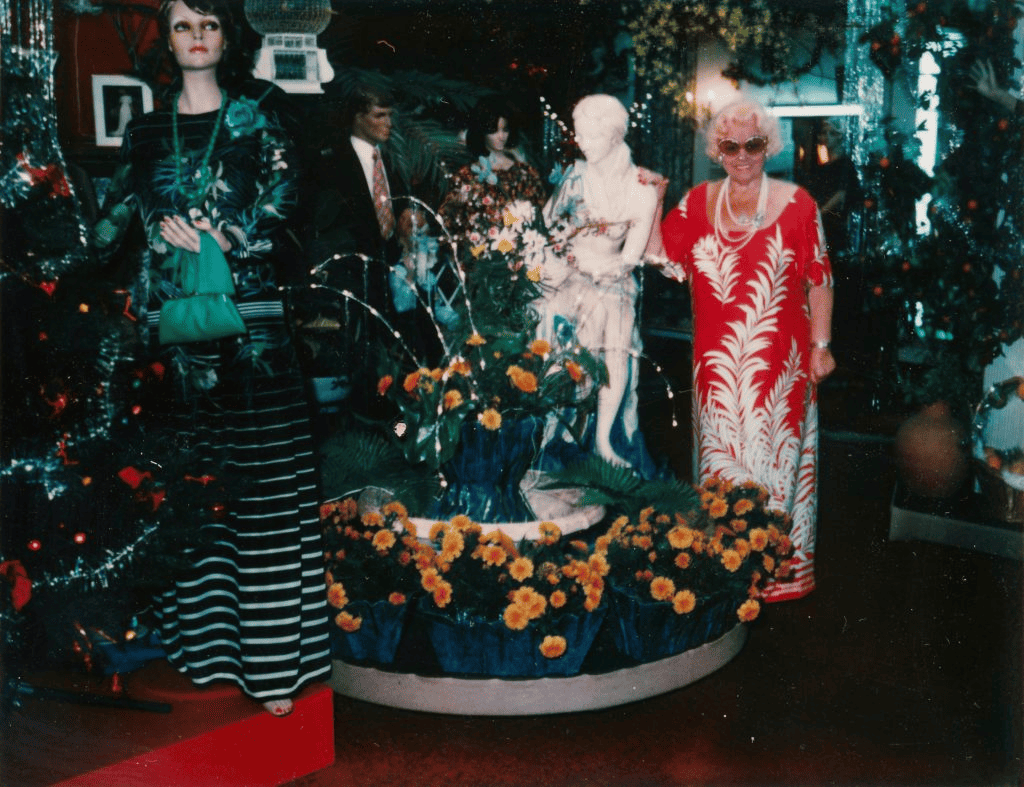
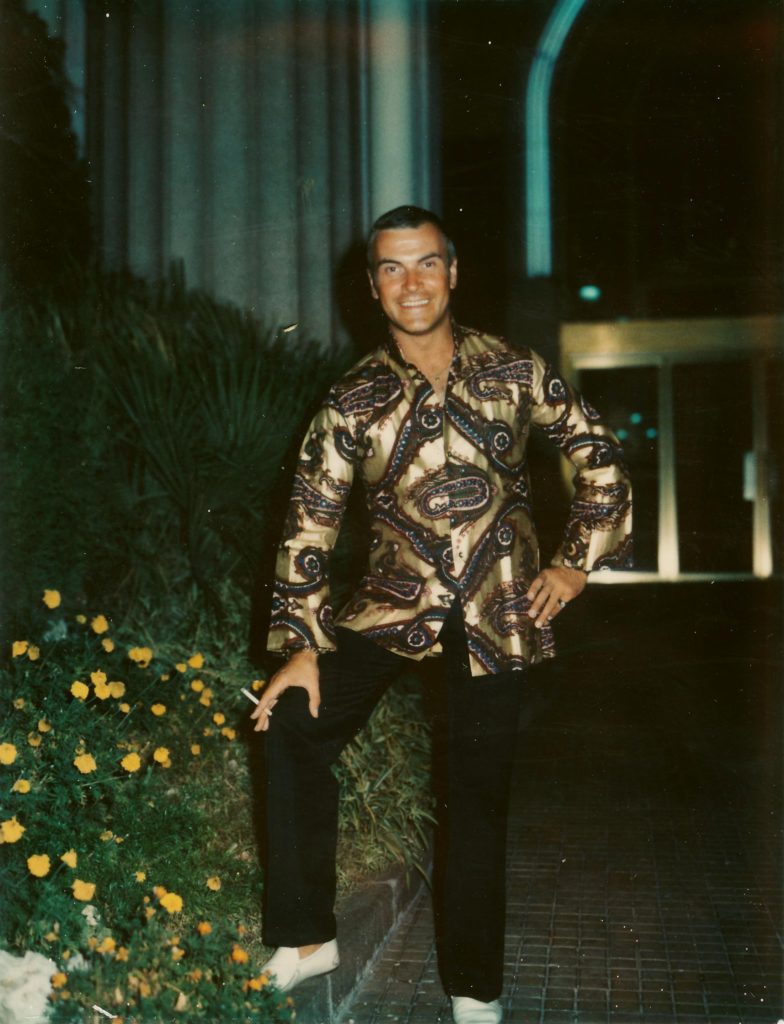
Behind and above the bridal shop were the private quarters, furnished like a Toulouse-Lautrec cabaret, a bonbonnière with lots of plush. A few magnificent paintings of an Orientalist and Symbolist bent hung there. There was high-quality Art Deco furniture, bought by ‘grandpa Henri’. Use was made of ‘a lift’, since according to Harry it was not fitting to climb a staircase. Stars only ever descend a staircase. “The great descend the road of life, the small climb it”.
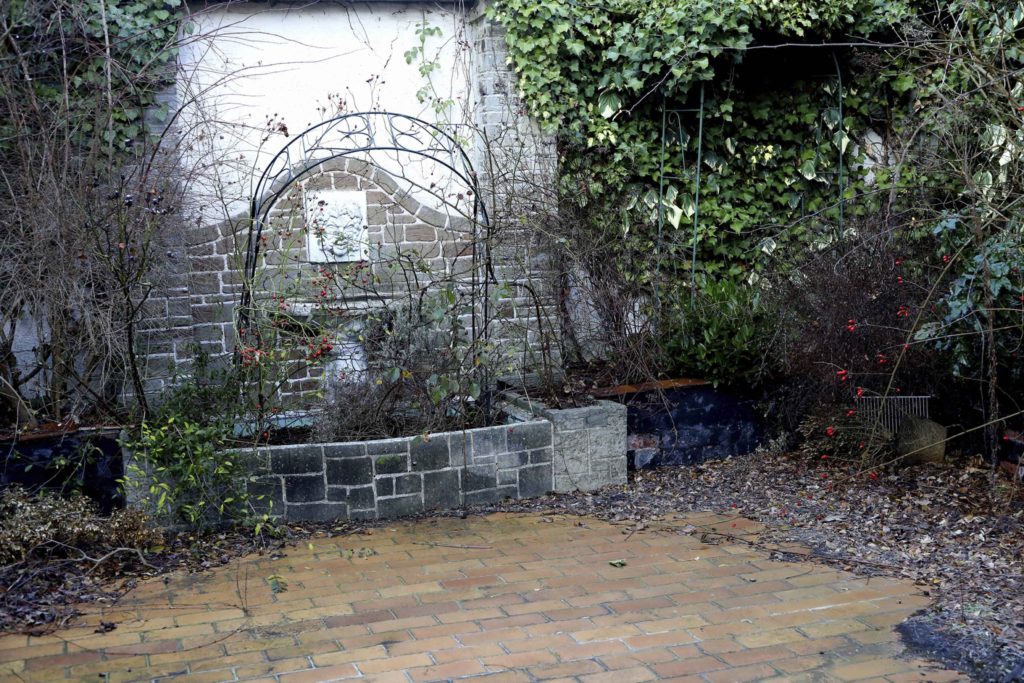
After the 1960s Harry changed nothing more in the shop or the house, which now and then led to absurd costs. One day I arrived at my family’s (they lived directly opposite Harry) and the fire brigade was there. An enormous jet of water came crashing down from the terrace above onto the cobbled alley. What had happened? On the upper terrace stood a “Bacchus” fountain; instead of working with a pump that recycles the water, the fountain had been connected to the water mains year in, year out. When Harry stayed at the coast for a few days, the drain had become blocked and there was so much water on the terrace that it was about to collapse.
Harry enjoyed his apartment in Nice on the Promenade des Anglais, a villa in Ostend and a house on the seafront of Blankenberge. His name stood on the facade in wrought iron. The interiors were the same everywhere as in Aarschot.
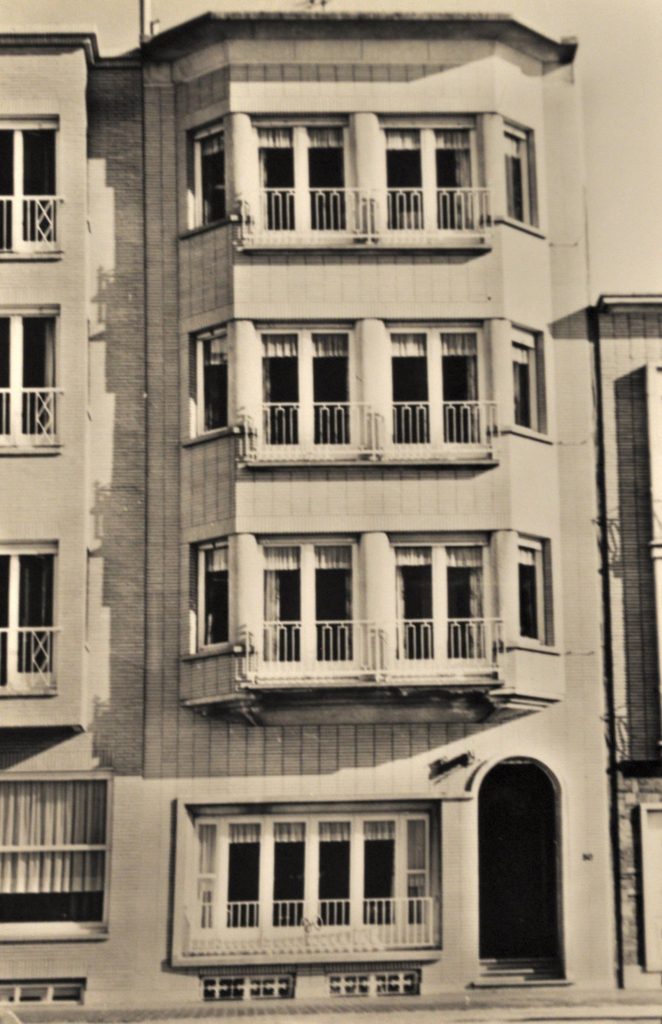
After a weekend out on the town, Haute Couture Harry would cruise into the town centre honking his horn to let ‘Osschot’ know he was home again! He gladly took envy and gossip along with it.
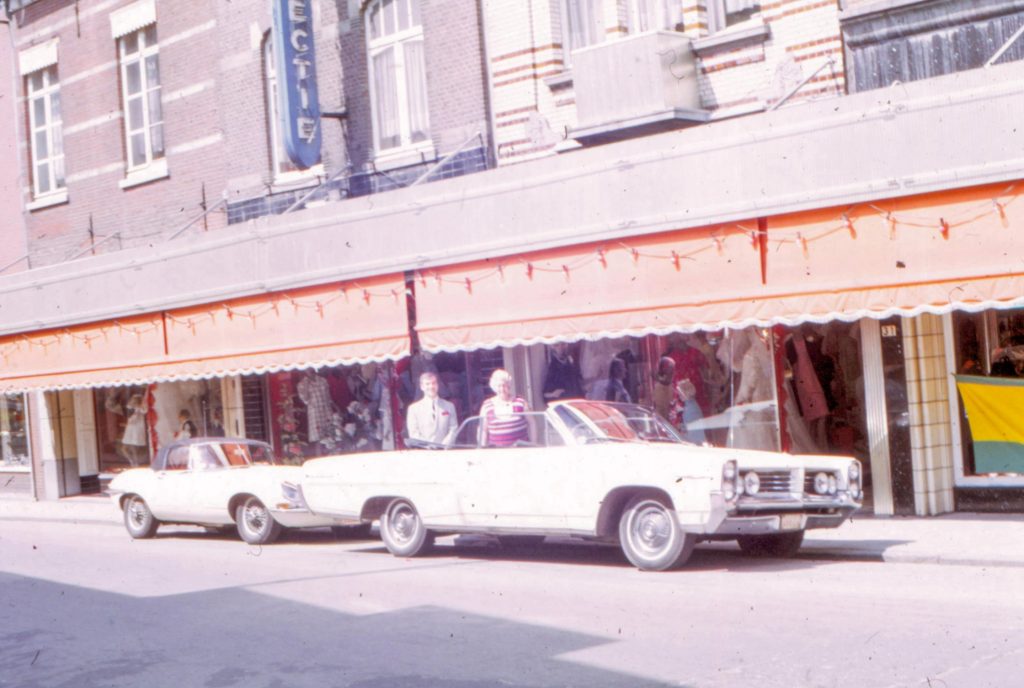
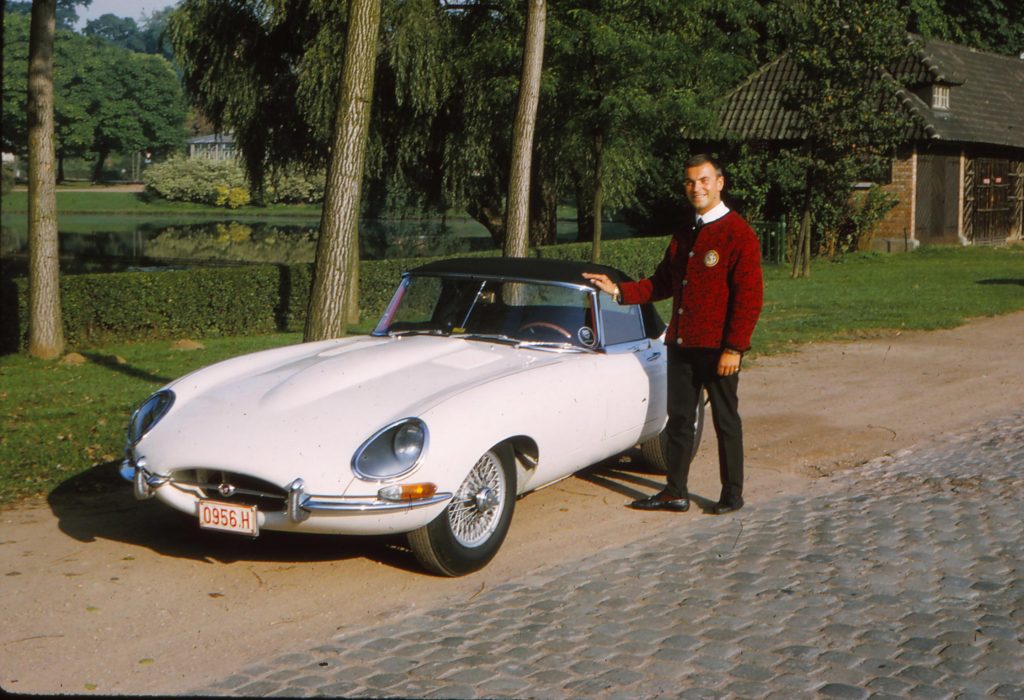
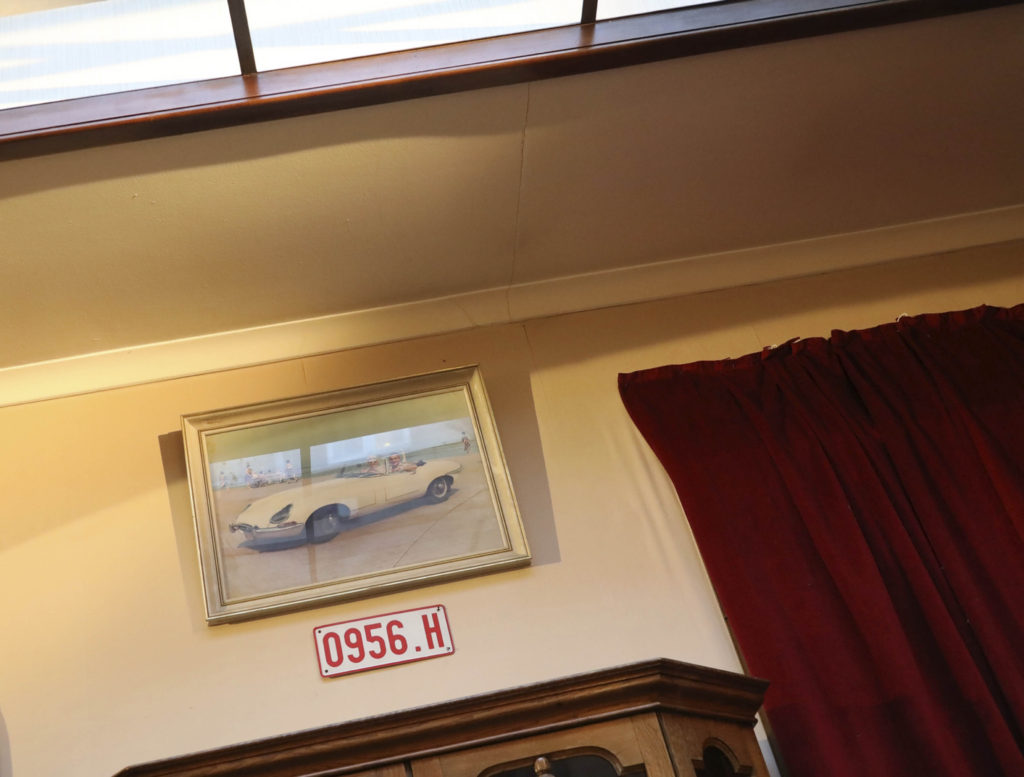
Father Heylen, who treated his son so badly, drove a snow-white 1964 Pontiac Parisienne Convertible. Spectacle in spades, but of course only a quarter of the commotion in the streets of Aarschot caused by Harry’s own white Jaguar E-Type with two Chow Chow dogs in the back.
Carefully and slowly Harry Heylen drove many prestigious cars. Always white status metal, because this is the only body colour that could be repaired flawlessly after damage… The Mercedes S-Class had Swiss number plates and curtains. With the Jaguar E-Type the first prize for most elegant gentleman was won in Knokke!
While Rachelle and Prosper resided in Nice, their son Harry held riotous gay parties in the ‘salons de mariage’, much to the annoyance of my uncle, who could not get to sleep opposite. Aunt Leentje had to phone Mr Heylen at night – “to ask if it could be a bit quieter…?”
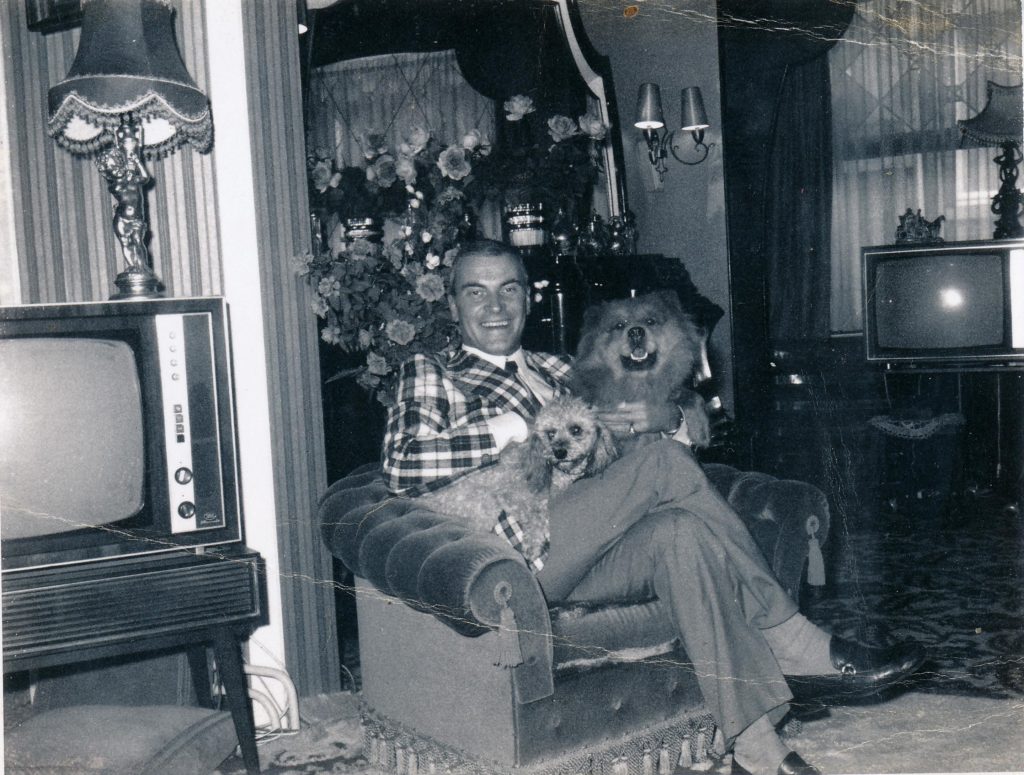
‘Mr Harry’ (as the staff called him) was a very devout man. For several years he flew with the staff to Lourdes for one day, on pilgrimage. Afterwards my aunt received a plastic Our Lady statue filled with holy water. For the annual Saint Roch illumination, the town’s biggest tourist event, he personally brought a colossal candle to “Notre Dame d’Aarschot” where large candles are also offered for sale, but those “standard sizes” were not an option. The Heylen parents had their own church chairs with their name engraved on them.
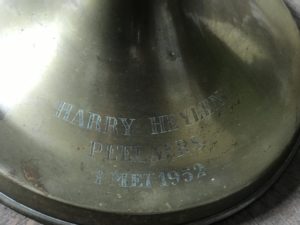
Harry Heylen financed the communion gong for the Church of Our Lady in Aarschot
The Aarschot animal protection society was generously sponsored every year. Harry’s first dog that I remember was a Chow Chow that snapped at the legs of passers-by. The injured were referred to the surgery of my uncle, Dr Paul Van Kerckhoven. “Tellthe doctor that Monsieur Harry is coming to pay for the consultation”. After the Chow Chow came Scottish sheepdogs, all of which were called ‘Prince’ . Every week‘Prince’ visited the best grooming salon and smelled of Coco Chanel eau de parfum. If I ever dared to give Prince the name ‘Bobbieke’, I was rightly reprimanded by an irritated Harry.
Harry had a court who secretly dreamed of inheriting something of the ‘empire’. ‘Uncle Harry’ enjoyed this, kept them dangling and became godfather to countless children…
Time gnawed at ‘Harry’s Empire’, which was gradually reduced to faded glory. The flamboyant dandy grew grey, thin and faded into a lonely eccentric who very rarely went outside. His social circle shrank. The cynical old gay man used fewer rooms of his five-building house. ‘The girls’ (shop girls) remained in service to wait on ‘Mr Harry’. They were summoned with a little silver bell on the table. If there was no immediate response, he did not stop at ringing once, but knocked and tinkled away in ‘full colere’.
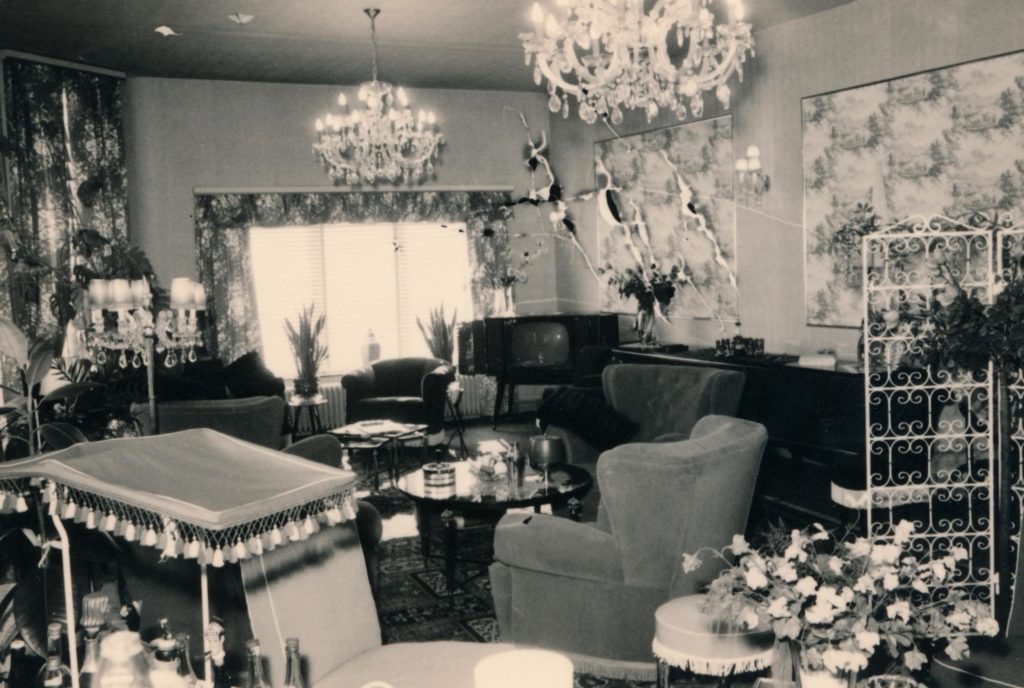
Harry is the man who motivated me to start a decoration shop. On the day of the opening he came by and bought decoration items. I wrapped everything carefully but was brusquely told that I was wasting too much paper.
When I ended the relationship with my painfully handsome boyfriend, Harry was indignant and thought it absolutely unacceptable. He was so afraid that I would end up alone like him, like so many gay men, embittered, without a man, without children.
Harry loved a ‘practical joke’. I once went there to apply for a job, dressed in Harry’s style: flannel trousers, blue blazer with gold buttons, snow-white shirt and tie. Harry asked ‘the girls’ what they would think of working together with the notary’s son . They asked me frankly whether I could pin hems and was willing to iron. Harry liked the idea of such a ‘pièce de théâtre’.
Once we came back at night from a lobster restaurant in Brussels on the Fish Market, ‘at Patje’s’ (as Harry called the owner). Arriving home, Harry noticed in a display window that a mannequin had been fitted with the wrong arms and he became furious: all the shop lights on, the music kicked in and quickly up in the lift; there he pulled open a cupboard from which arms and legs fell. I had the fit of laughter of my life.
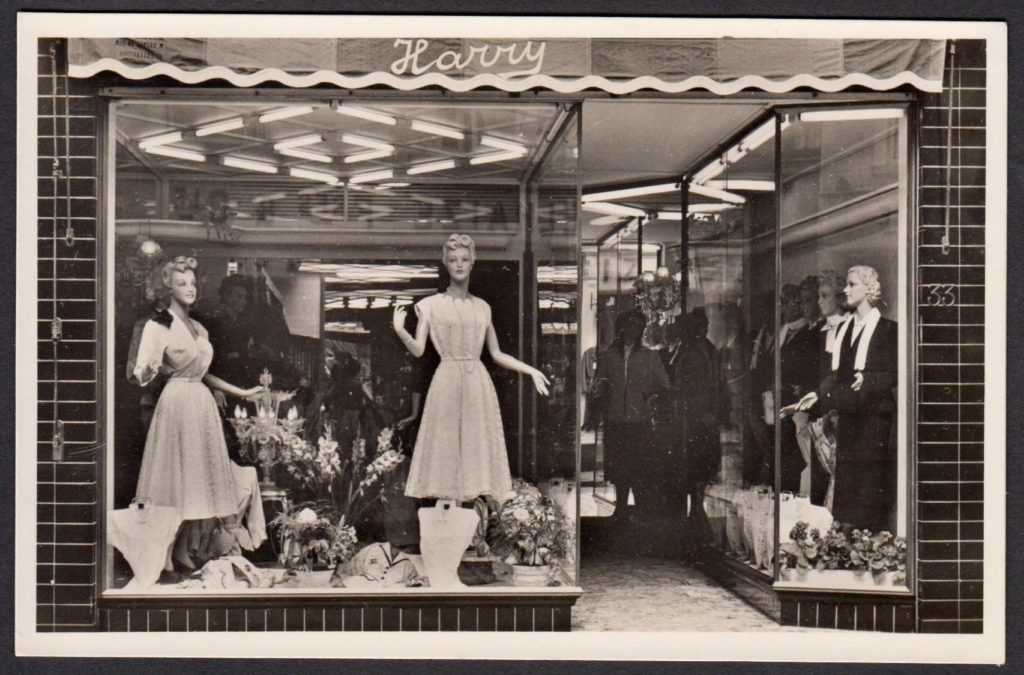
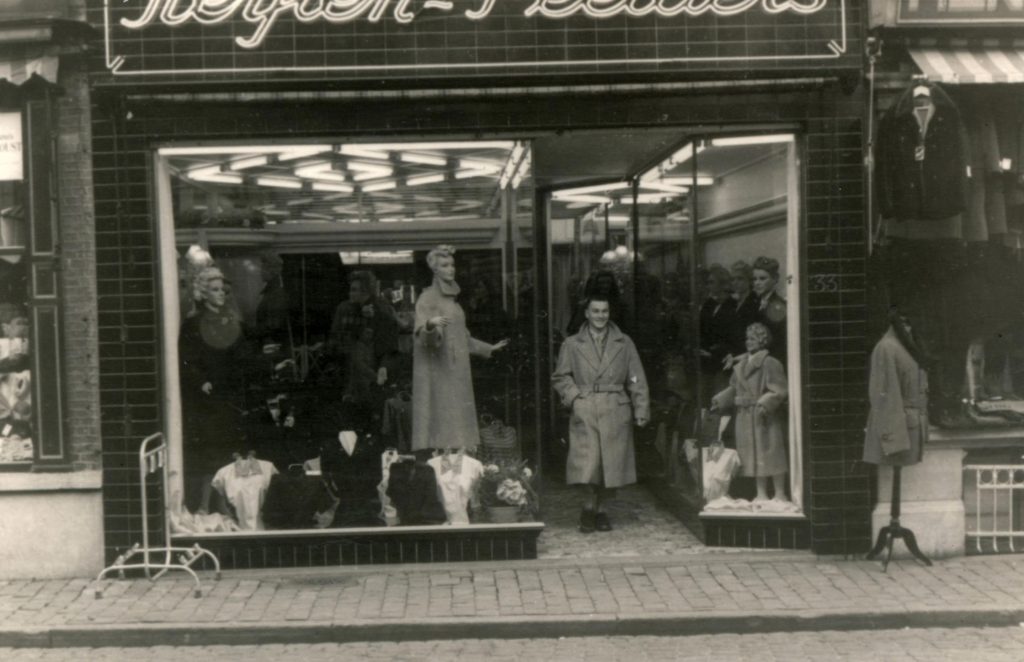
What did Harry mean to Aarschot? He was a generous employer. His shop did well for decades, luring countless customers to Aarschot. Quite a few buyers came from Wallonia, because he could sell in French with great flair and humour!
It took courage to come out as gay in that period . He disliked gay men who did not want to come out about their orientation.
My own coming out had not been plain sailing either, “being from a provincial bourgeois background”. That is why Harry respected me. I still think of him regularly.
Pieter Van Kerckhoven
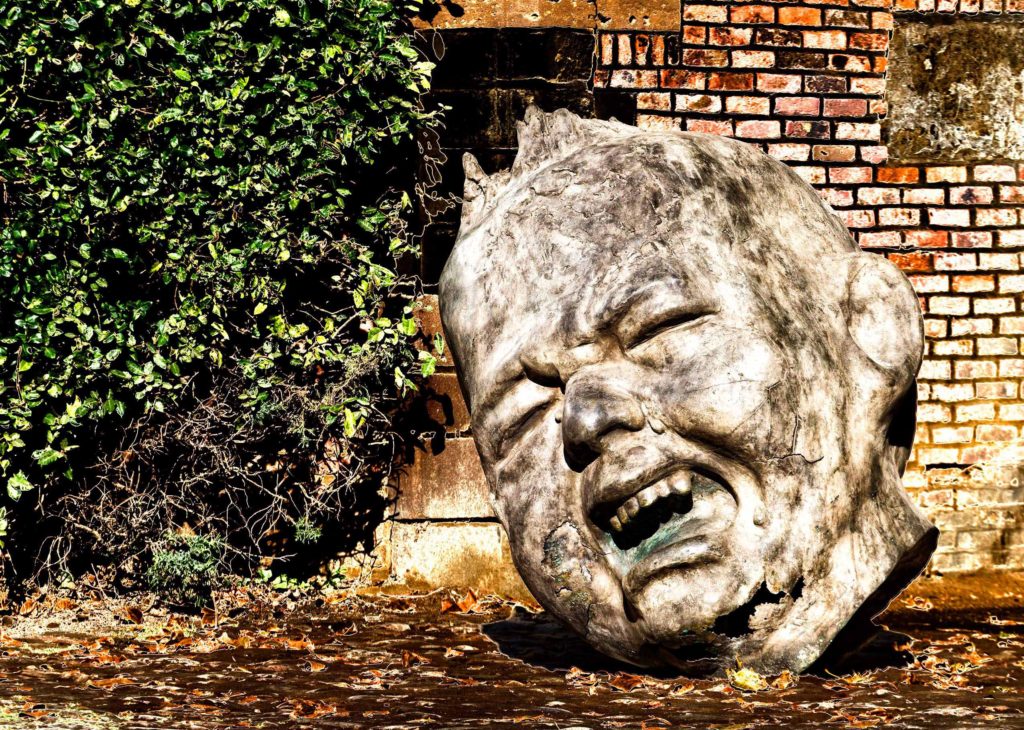
In the Capucienenstraat you come across a gigantic weeping child’s head. This bronze work is by the hand of SCULPTOR MAARTEN CEULEMANS. It is an interpretation of the late 19th- or early 20th-century little display dummy from the shop Haute Couture Harry.
Bonpapa Jef acquired this piece of heritage. The wax head, with real hair implanted, is attached to its torso with ribbons.
During World War II it stayed, together with valuable objects, in a walled-in secret room. Display dummies that were not hidden were used by the occupier as signposts at crossroads in and around Aarschot.
Every season “de Bleiter” received a suitable boy’s costume or tuxedo. At the “Osschot” fair he was given a balloon around his wrist. Harry surrounded his little mannequin (1) with gifts that he brought back from travels.
Harry: “Nothing will help, he will go on crying”!
The original version goes on “crying” in the Municipal Museum. Other display dummies of Harry’s serve in the Erotica Center Aarschot.
1 The word “mannequin” comes from the Middle Dutch word mannekijn (little man), a wooden doll that the tailor used to pin his clothing designs onto. In the Middle Ages Flanders was, among other things, also the centre of European “haute couture”. Because publicly showing women’s clothes was considered improper, male pages were given this task.
Paragraph from the autobiographical stories of Brigitte Raskin – Afscheid van Steen – 1996 – pages 97, 98 :
…The former brewery is now a shopping centre, the whole town centre has become a shopping arcade. Its shop windows reflect me as a woman on a shopping round until suddenly, level with the clothes shop Harry, hocus-pocus, I become the girl who sees the little boy again, the only friend she ever had in town.
The Bleiterke stands as ever among Harry’s mannequins. They wear wedding dresses, the little boy is their young squire. He cries so heartily that you can almost hear him through the thick window pane. Hot little glass tears trickle over his little face contorted into a grimace. This time he wears a white and green striped suit with matching cap. It was pulled down deep over his ears. That is why I did not see straight away what I notice only now: how a skin disease has attacked the wax face. It now seems partly carved from raw, dead flesh, with white nerves crossing the crying wrinkles. The head of the Bleiterke must have melted in the light of a new spotlight or the heat of the summer sun. Why did the precious Mr Harry not put a cap on the bristly hair of his mascot in time? Why did the people of Aarschot not look after their Manneken Traan better? And why is the Bleiterke still standing here, with that rotten face and teeth that have turned yellow?
The sick little boy infects my memory of the little girl. She turns away from the shop window in the Martelarenstraat and feels like crying along, whereas she used to be cheerful about her little friend.
There was a time, the years of the Great War, when in this street everyone wept incessantly. The Germans had marched through Aarschot on their way to the IJzer. While their highest-ranking officer was surveying the chaotic occupation of the town from a balcony, he had been shot dead. That had happened on the corner that this street, then still Peterseliestraat, forms with the Grote Markt. The Germans had become wild with rage, had dragged all the men and big boys out here, led them in procession to the edge of town and bestially murdered them there. That is how the Peterseliestraat became the Martelarenstraat. For a time only women, girls and little boys lived there. One of them was called Jefke and was two when his father was killed. I have known him all my life, I have often heard him tell the story of the cruel fate of his street. Unfortunately it occurs to me too late that I should have given the wax weeping boy the name Jefke and so given his inexhaustible tears a surplus of reason. … BRIGITTE RASKIN
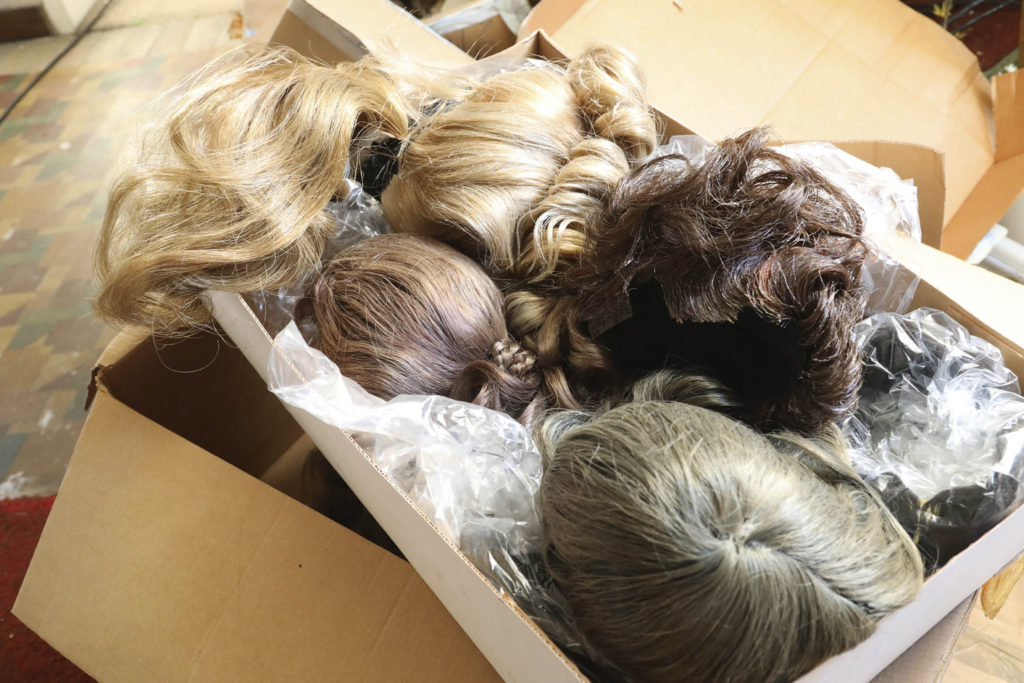
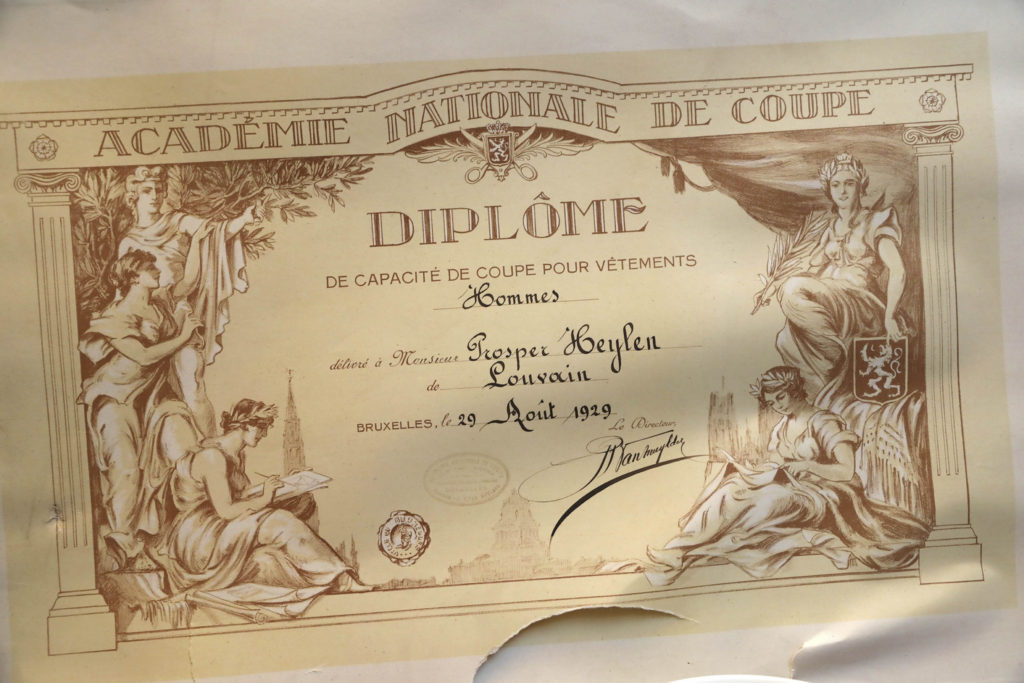
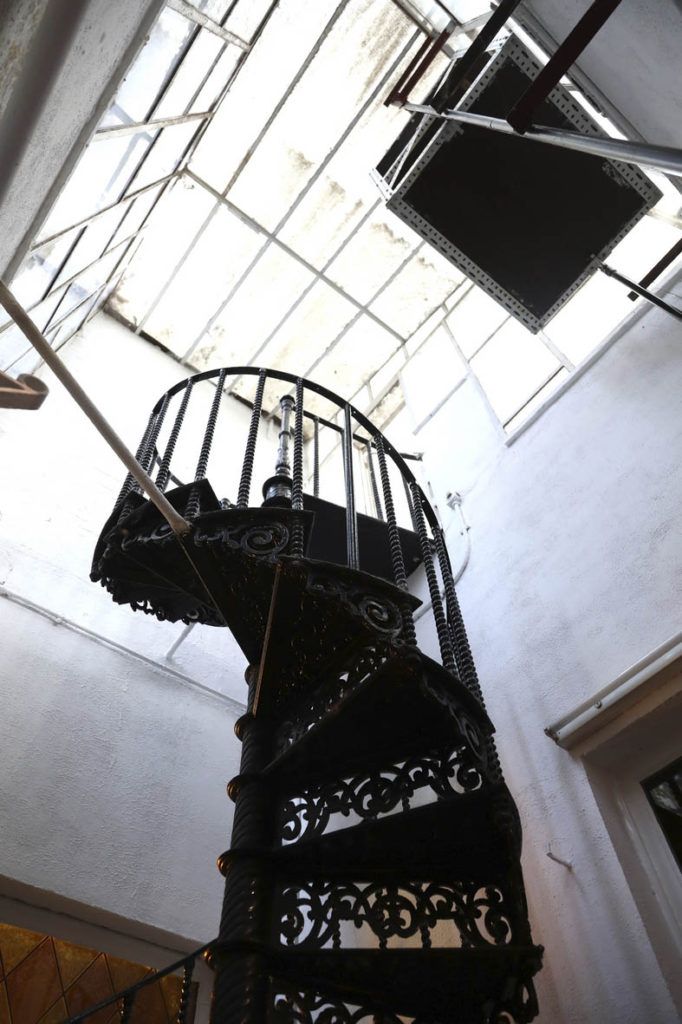
photo series – Harry’s faded glory by photographer André Matthijssens.
After the demolition of the Haute Couture Harry site, archaeologists found treasures from the Middle Ages: from jugs to an impressive moat to an intact barrel. The finds go back to the 12th century.