<< IV Martyr of Aarschot
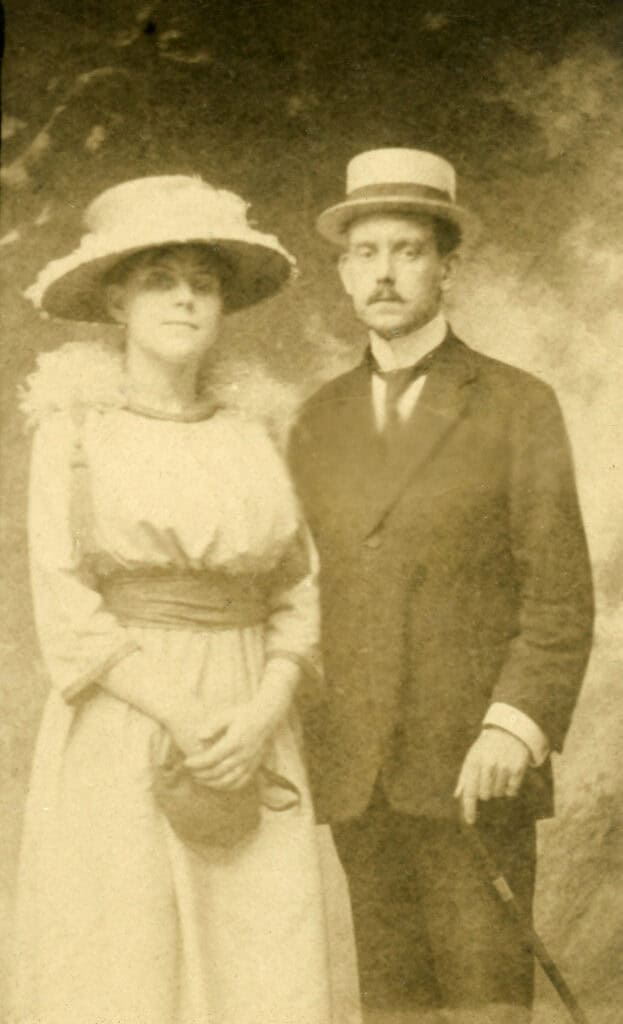
Arthur and Clementina Van Kerckhoven Van Dyck
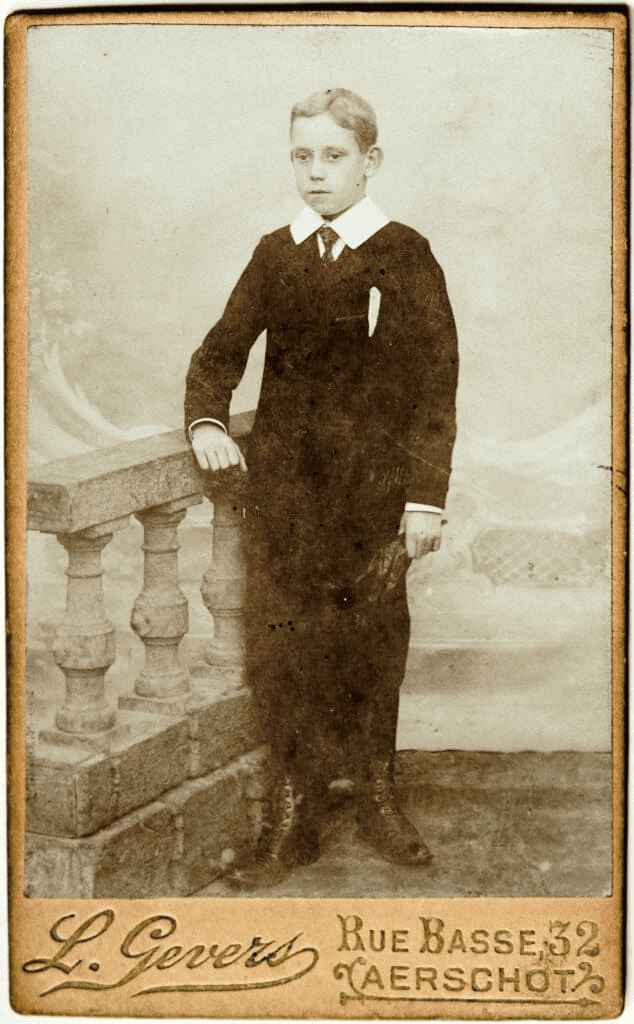
Arthur (photo: around 1900)
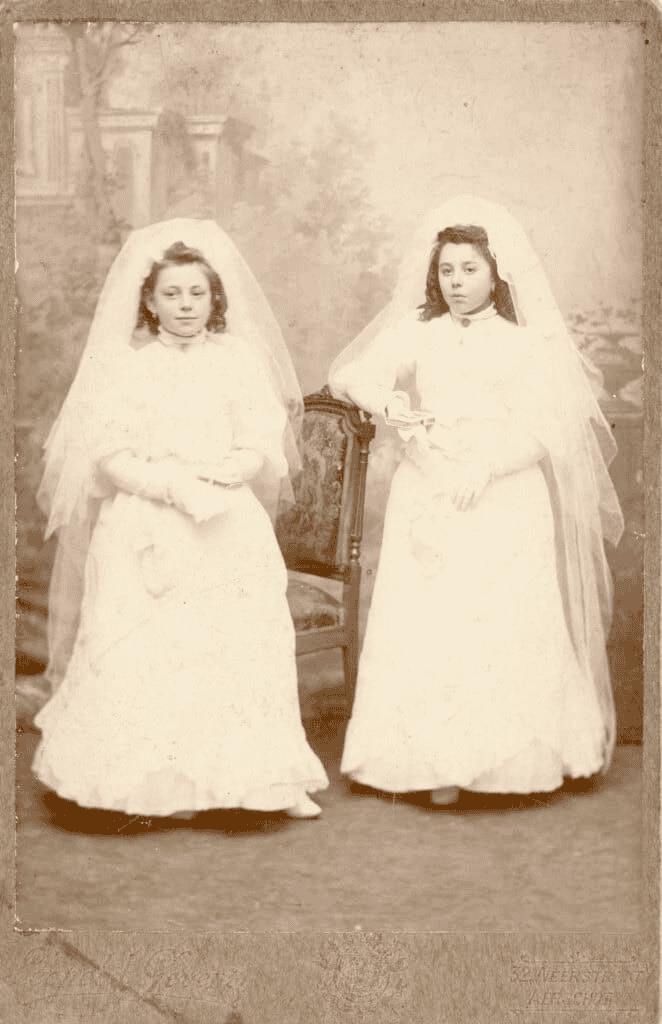
Tineke Van Dyck on the right in the picture (photo: around 1900)
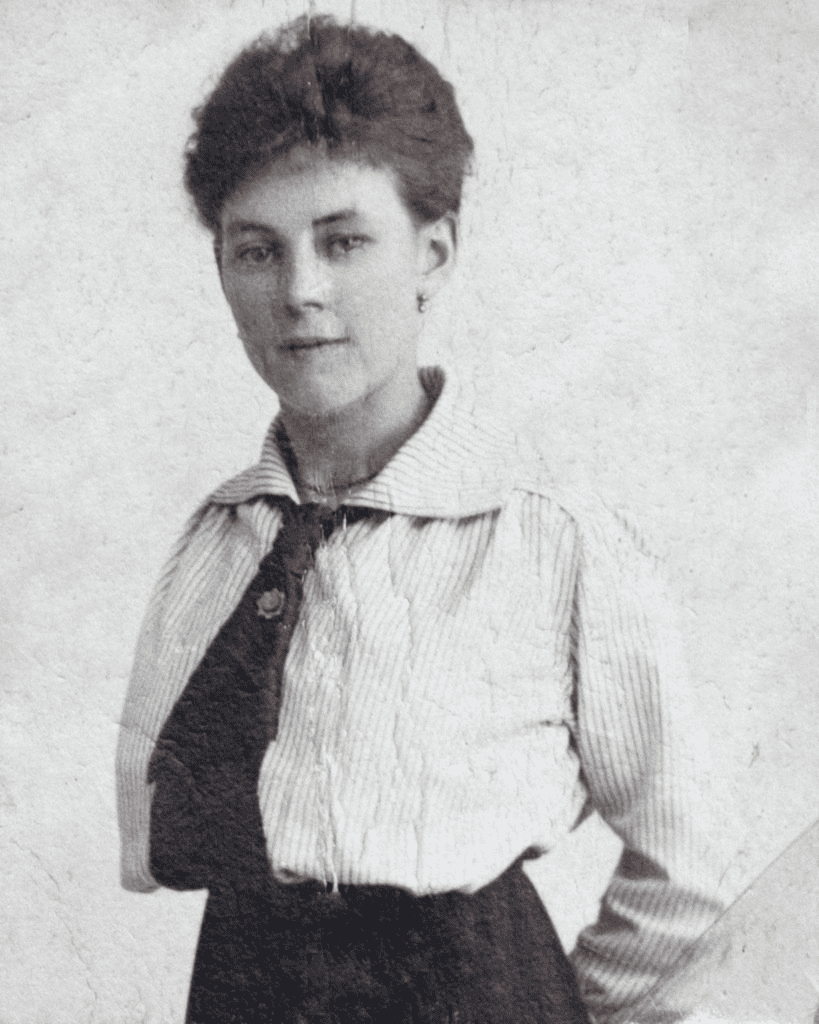
Frie’s mother as a student at the boarding school in Champion near Namur
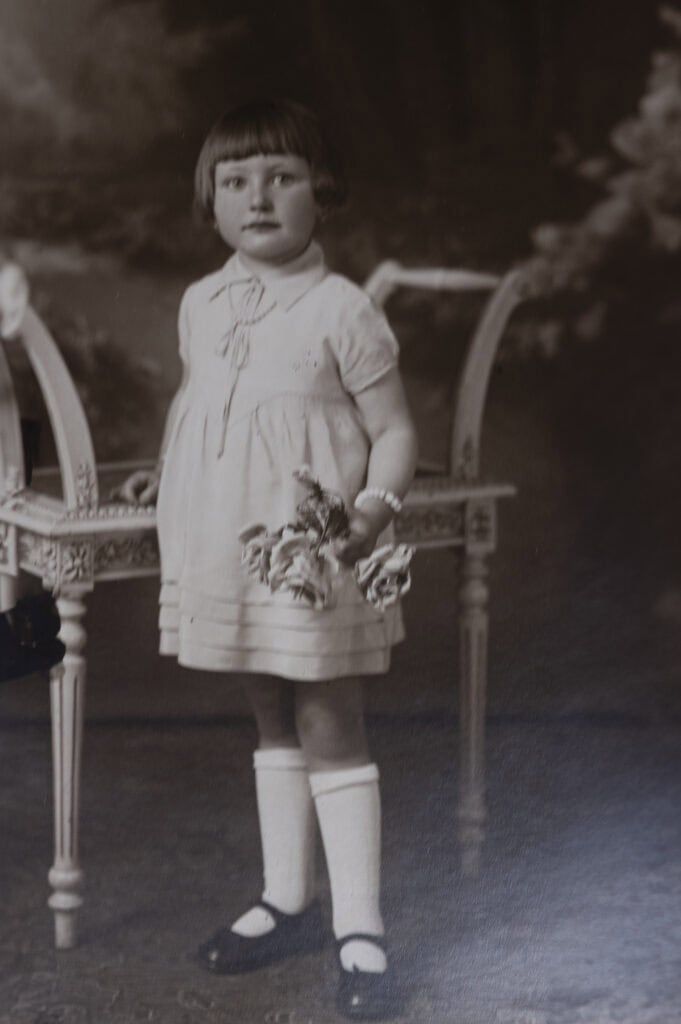
Julia Van Dyck – sister of Tineke – aunt of Godfried – ran a café on the Meulenberg
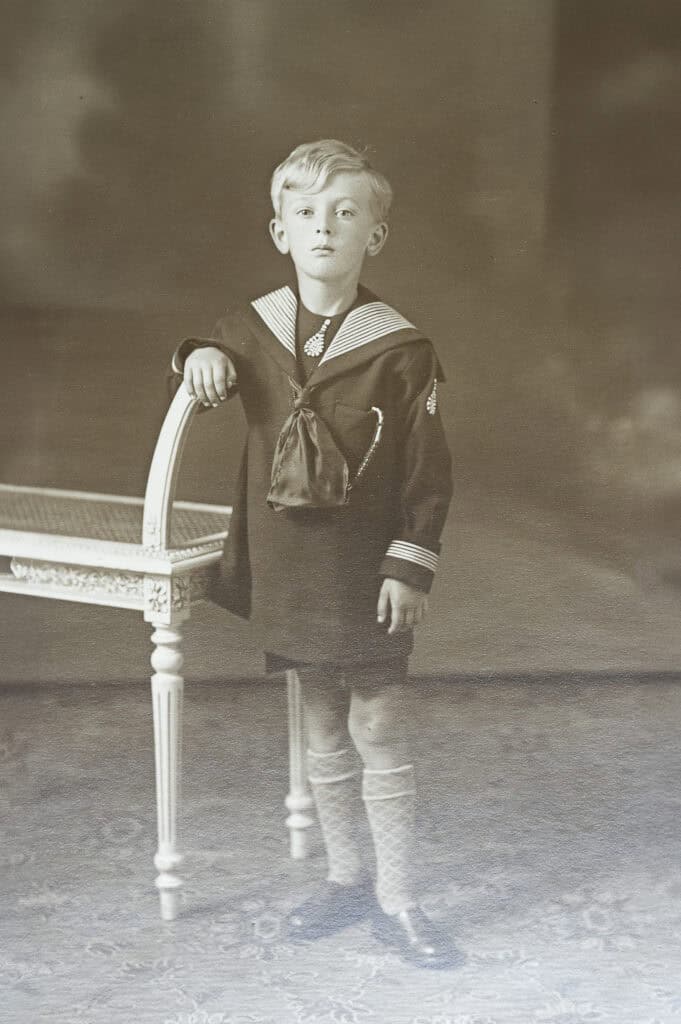
Lucien Van Dyck – brother of Tineke – uncle of Godfried
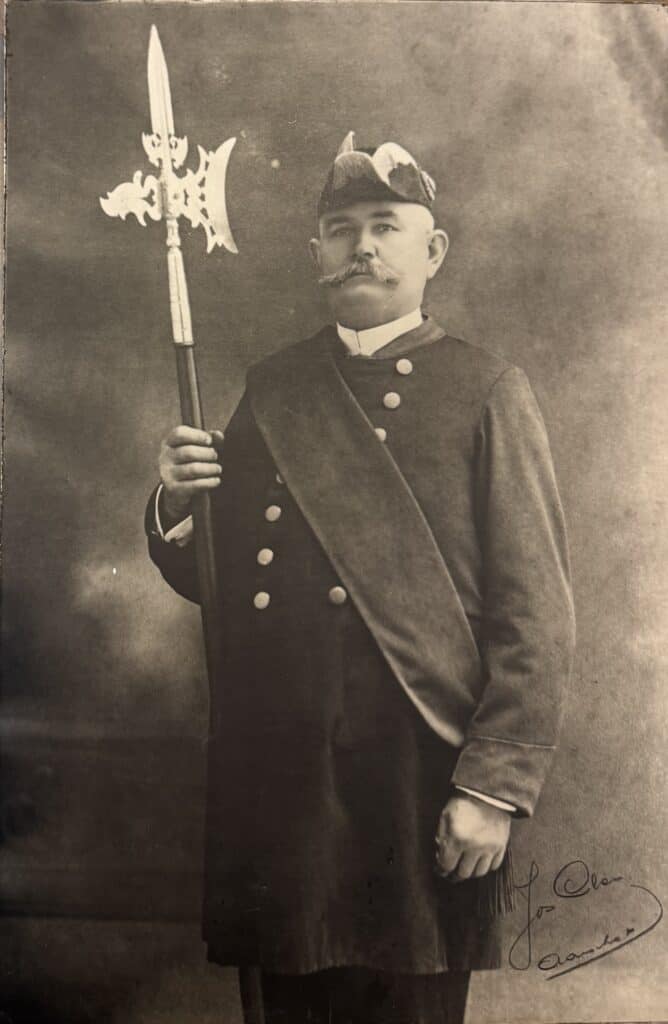
Godfried is fascinated by his uncle, the church beadle, also called ‘suisse’. The beadle accompanies ceremonies and receives visitors in the Church of Our Lady of Aarschot – The suisse is the half-brother of Tineke Van Dyck
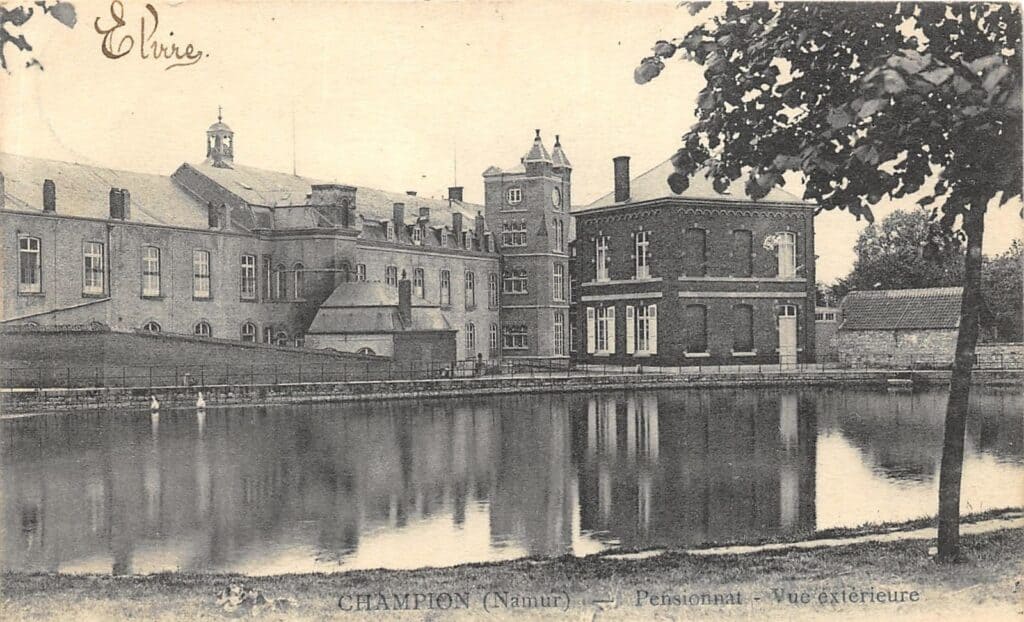
Champion (Namur) – Pensionnat – Vue extérieure – where Tineke is a boarder
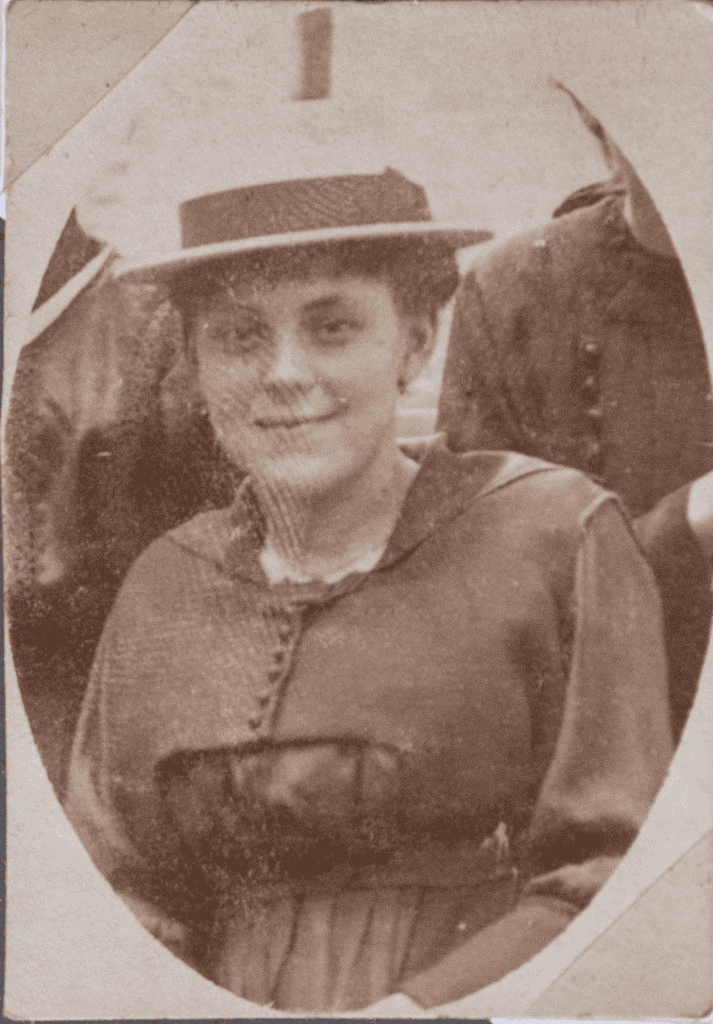
Tineke comes from the Meulenberg. She plays the piano beautifully and will later give piano lessons to her grandson Guy.
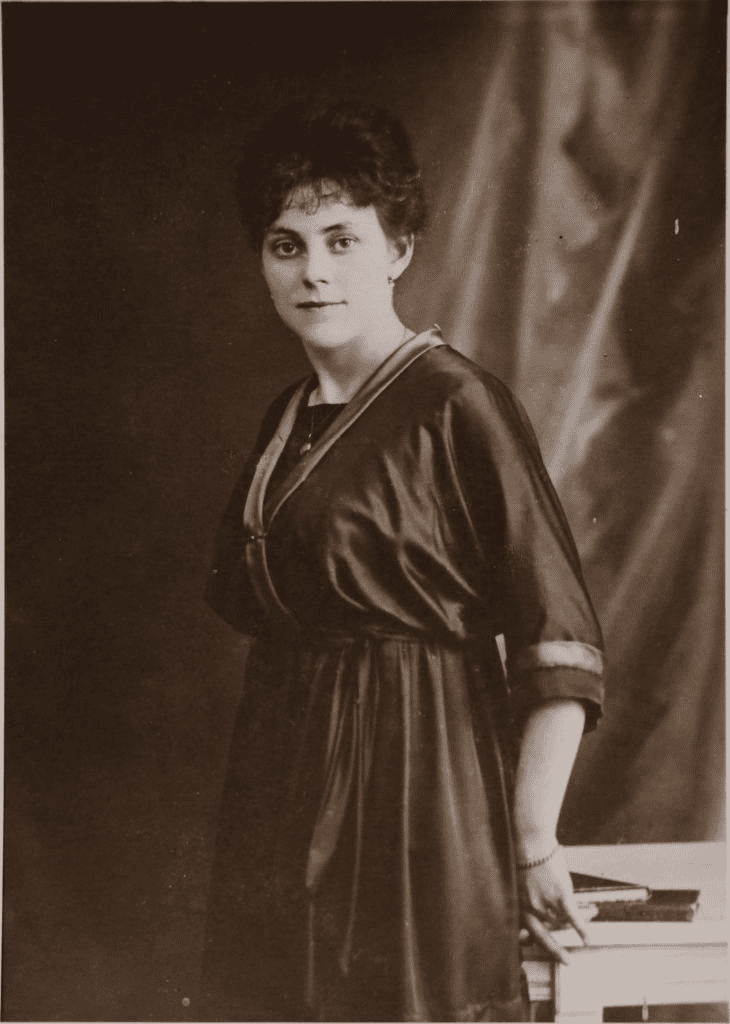
Clementina Van Kerckhoven Van Dyck (1897-1963)
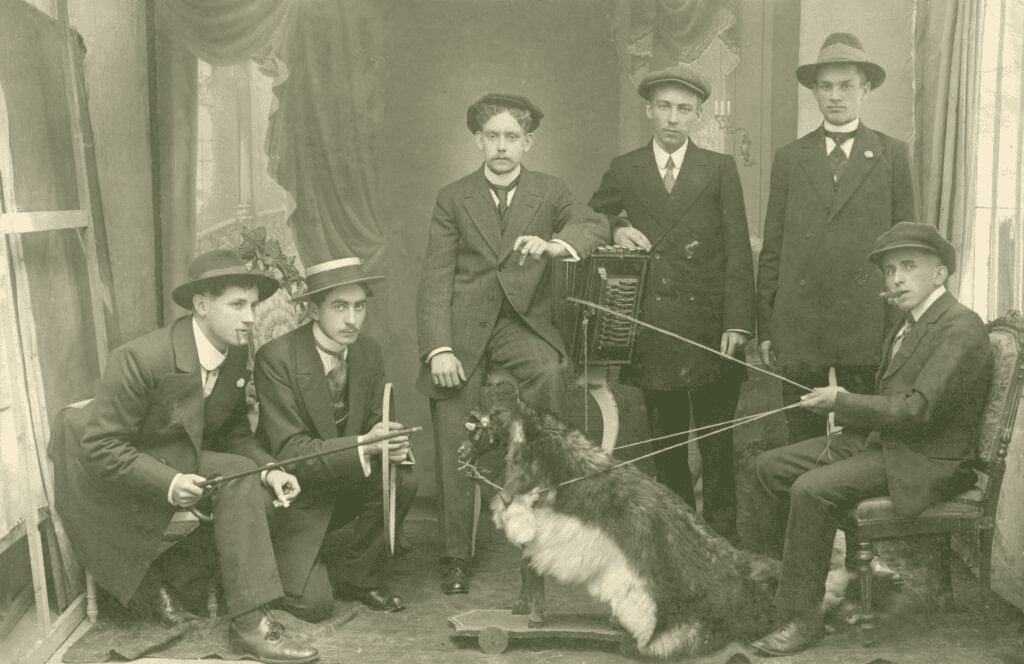
Arthur in the middle with cigar
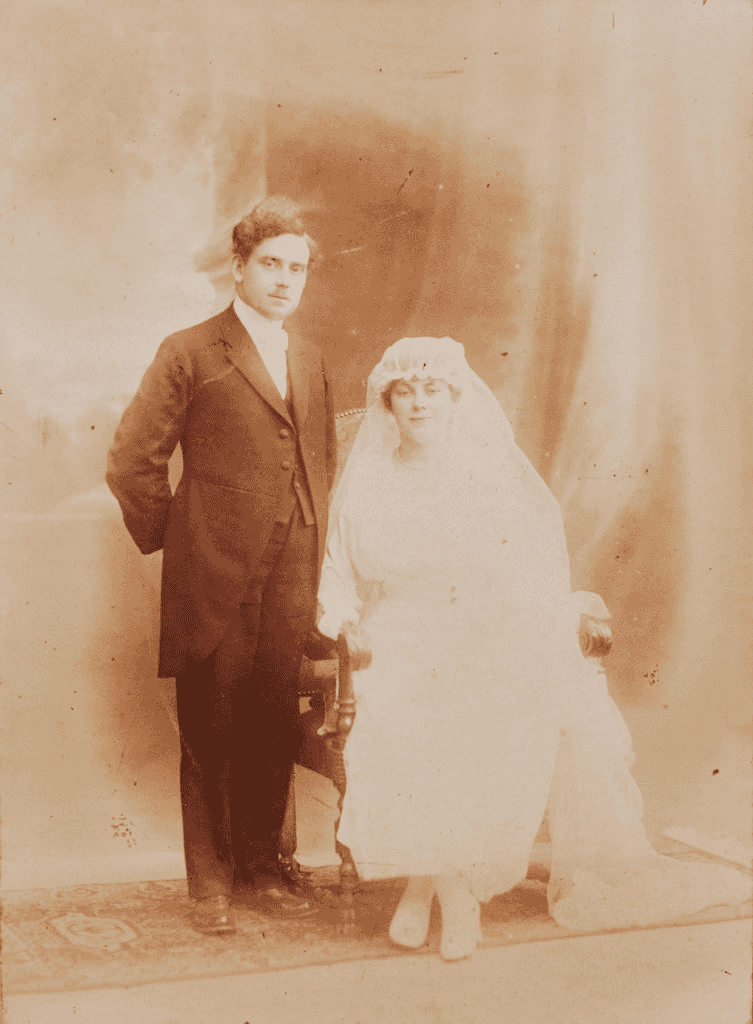
Wedding portrait of Arthur and Clementina
Arthur and Clementina have four sons together: Paul (1922-2011), Jos (1925-2005), Godfried (1926-1929) and Aimé Godfried (1930-2013)
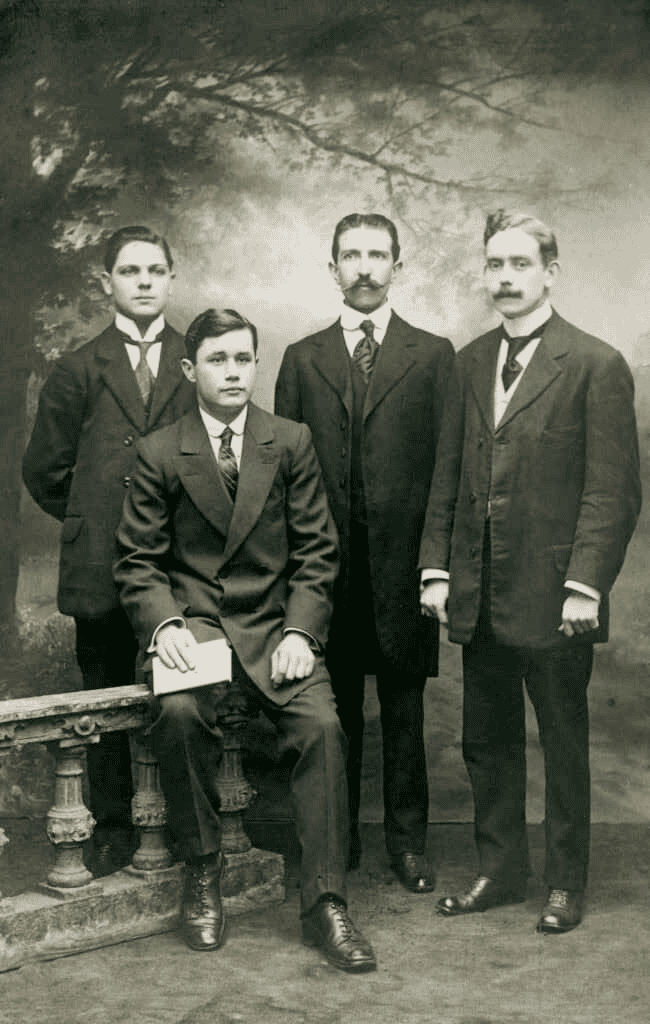
Arthur on the right in the picture, standing in the middle his brother Richard Van Kerckhoven. The two boys on the left are unknown.
War and peace
In August 1914 the German army takes Aarschot. The German authorities accuse the people of Aarschot of having shot dead their German colonel. Arthur, who speaks German, is asked under duress to sign a document that is supposed to show that the people of Aarschot did indeed shoot the German colonel dead. Arthur refuses and is struck on the head for it. By this refusal the people of Aarschot officially remain exempt from responsibility for the death of the German colonel. Arthur has to abruptly stop his pharmacy studies in Leuven and is deported to a labour camp.
Arthur scrapes through by the skin of his teeth and is finally released after a year in a German labour camp. When he arrives at Aarschot by train he is weakened, ill and, from exhaustion, can hardly stand or walk any more. His sisters, who wait for him at the station, no longer recognise him. Afterwards Arthur continues to struggle with frail health.
Once I heard my father tell the following story and it made him sad: He told why, after the First World War, the authorities of Aarschot refused to honour his father Arthur for his heroic deed. The reason was that Arthur Van Kerckhoven was a close friend of a liberal minister and in Aarschot the Catholic party under the noble mayor Coomans de Brachène was in power. Dad said that the mayor, who was also a brewer and notary, tolerated no competition. That besides political power he did not want to share economic power either. Other important candidate investors for Aarschot were turned away one by one. When I myself sat on the town council, the Local History Society submitted a proposal to rename the ‘Kerkplein’ the ‘Guillaume Coomans de Brachène square’. I blocked that. They had indeed appointed Arthur secretary-clerk of the town, but for father an extra tribute should have gone with it.” – Pieter
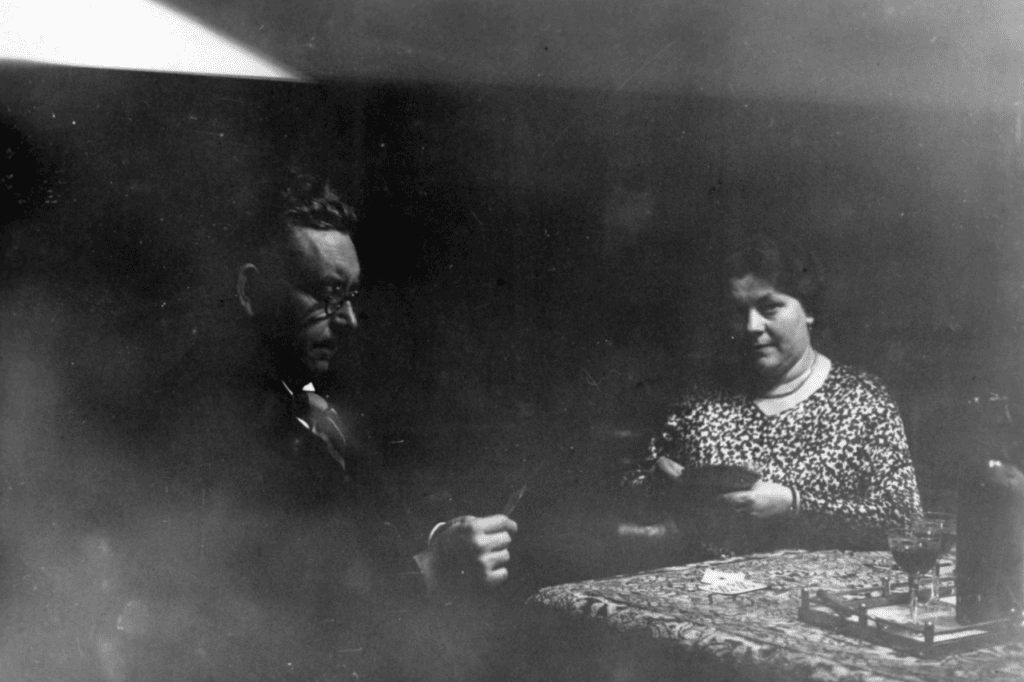
Arthur and Tineke (photo: 1937)
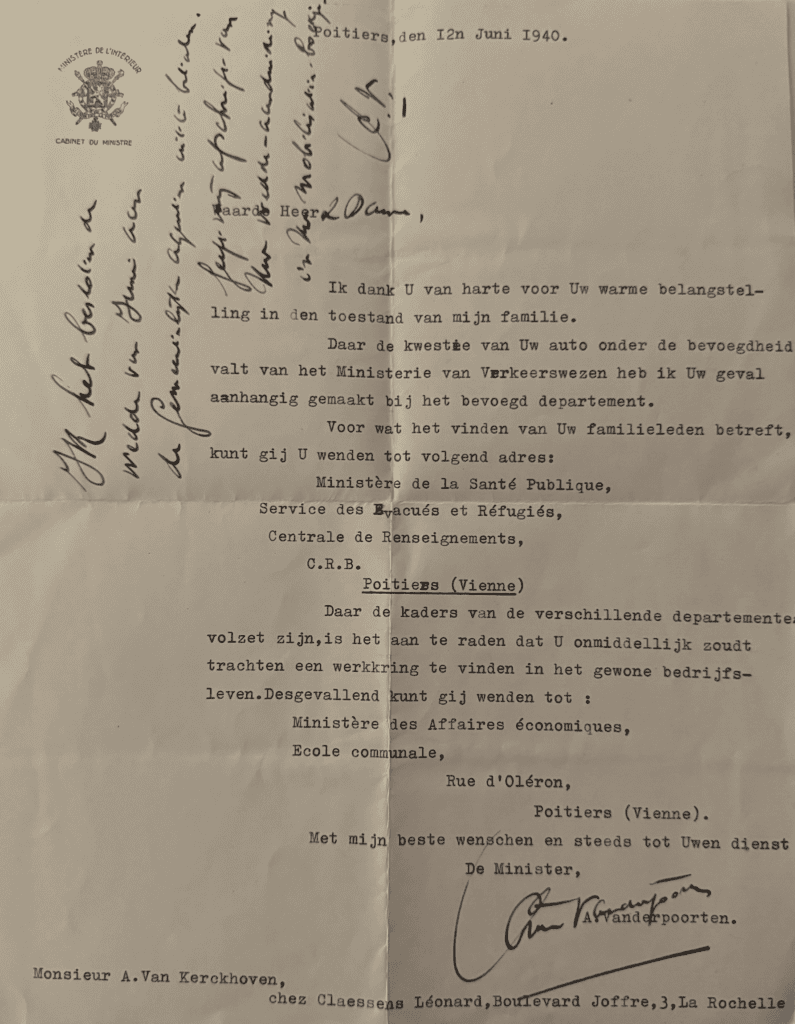
Godfried wonders why during the Second World War his father fled with his family to Larochelle. In the 1980s Godfried goes on holiday with his family to Larochelle and visits the place where they stayed during the Second World War.
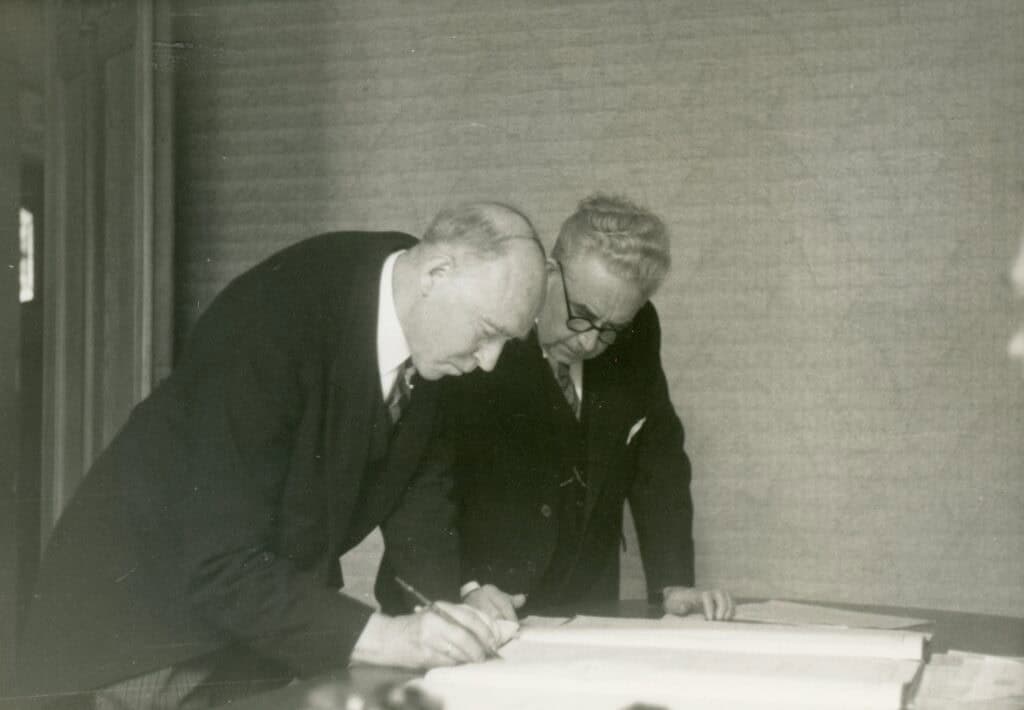
Arthur on the right in the picture
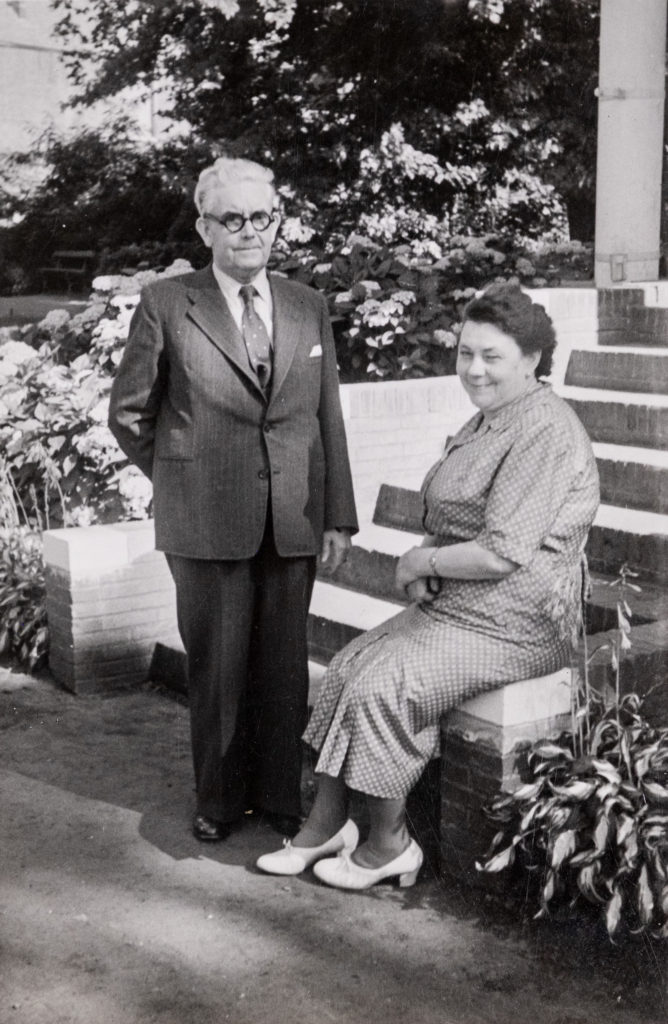
Arthur and Clementina Van Kerckhoven Van Dyck
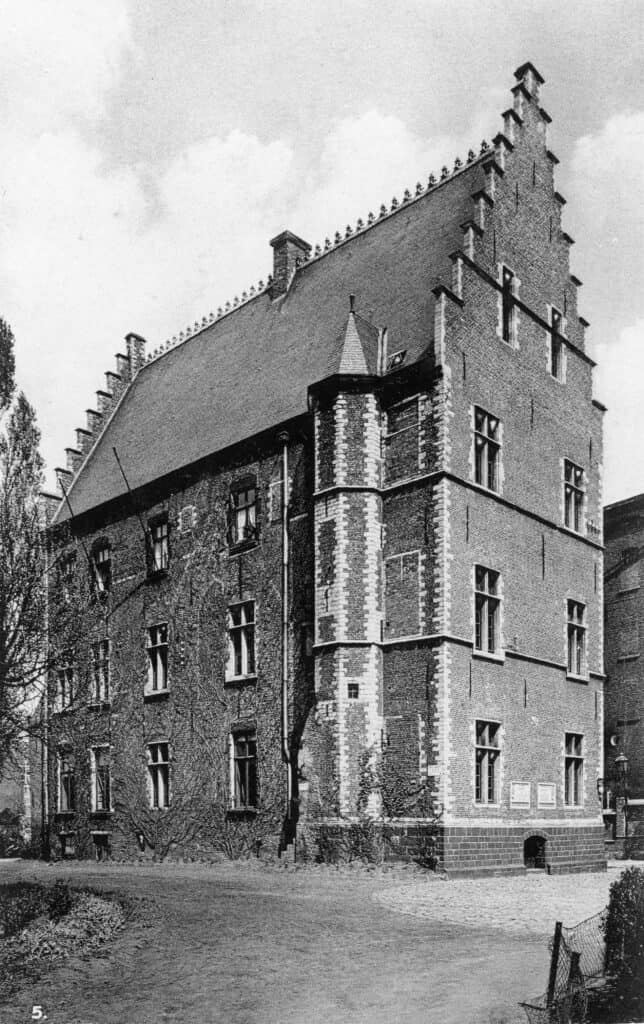
On the back of this postcard it says: Aarschot ‘Drossaarde’ built in 1470 by Willem van Croy. Seized in 1797. Now town hall and museum of local history.

in the place of the Drossaarde…
Arthur becomes secretary at the town hall “Drossaarde”, where he completes the population register in his careful handwriting. About the fatality of his health he prefers to remain discreet.
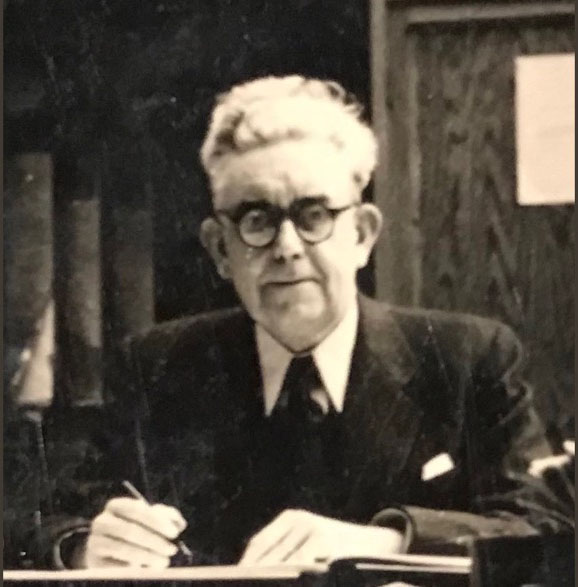
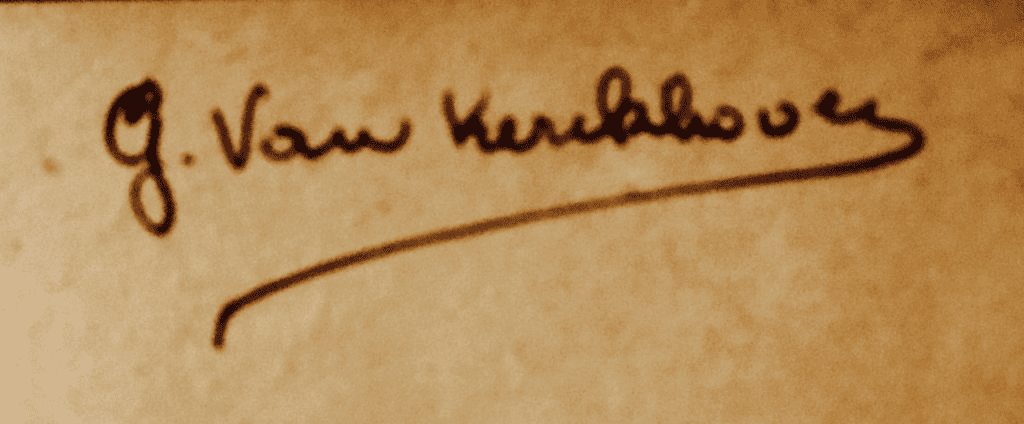
Arthur Van Kerckhoven (1892-1958) When he has his portrait made, he almost always looks straight into the camera, serious, stern and aloof.
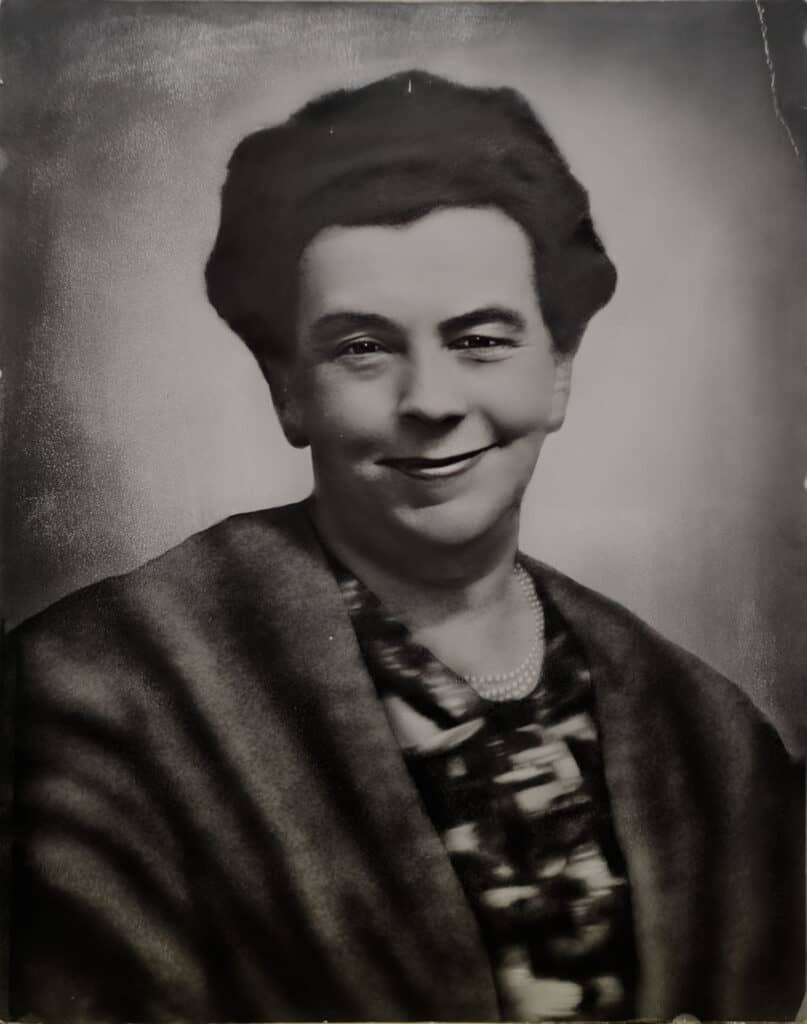
Shrewd businesswoman with a nose for textiles has to work hard.
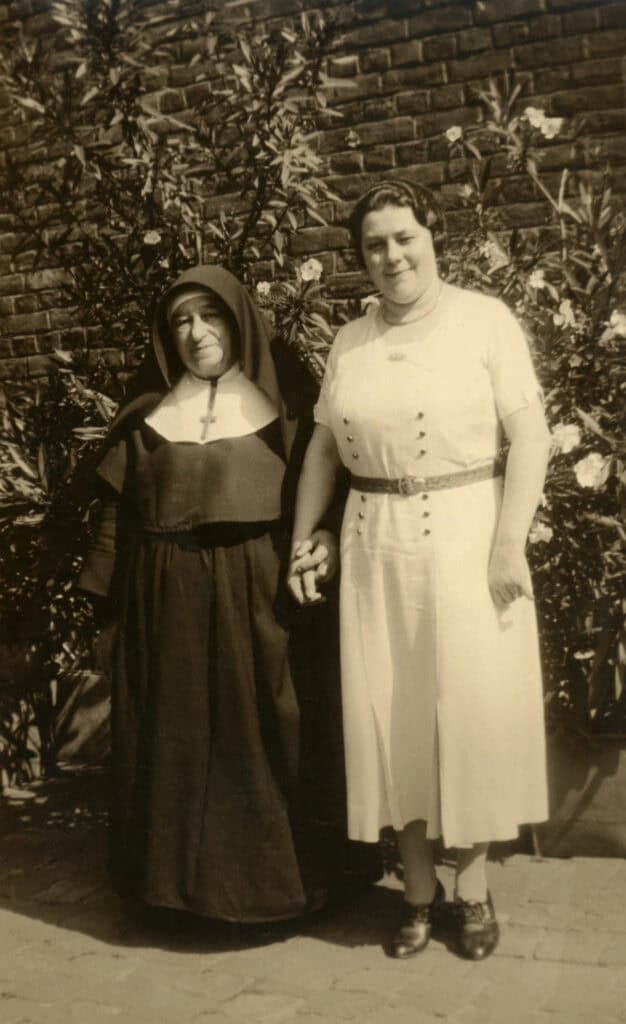
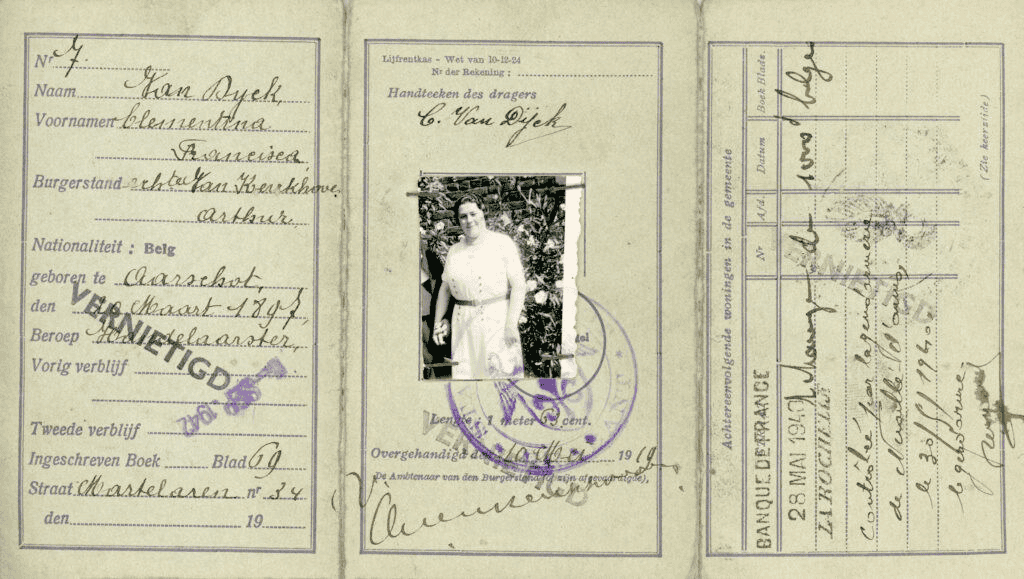
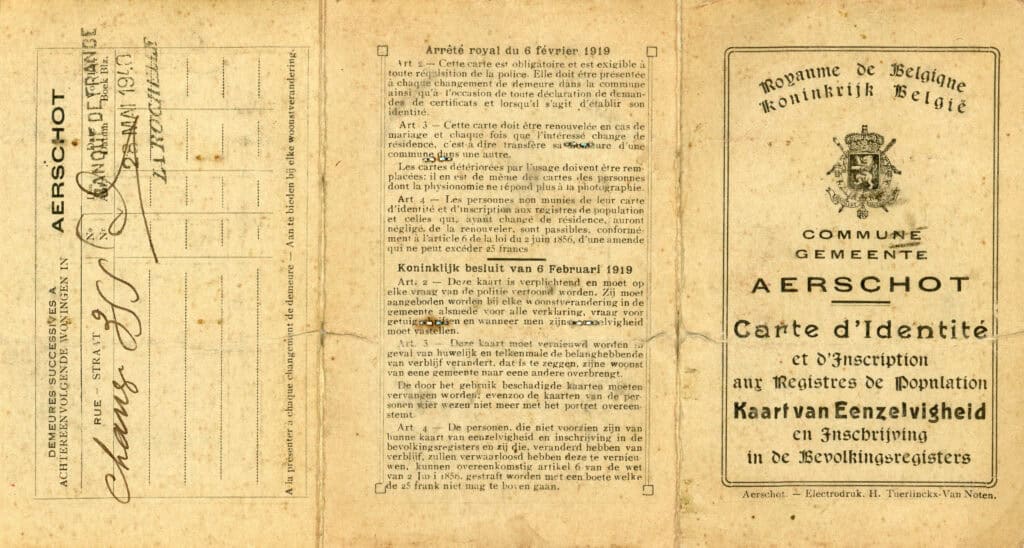
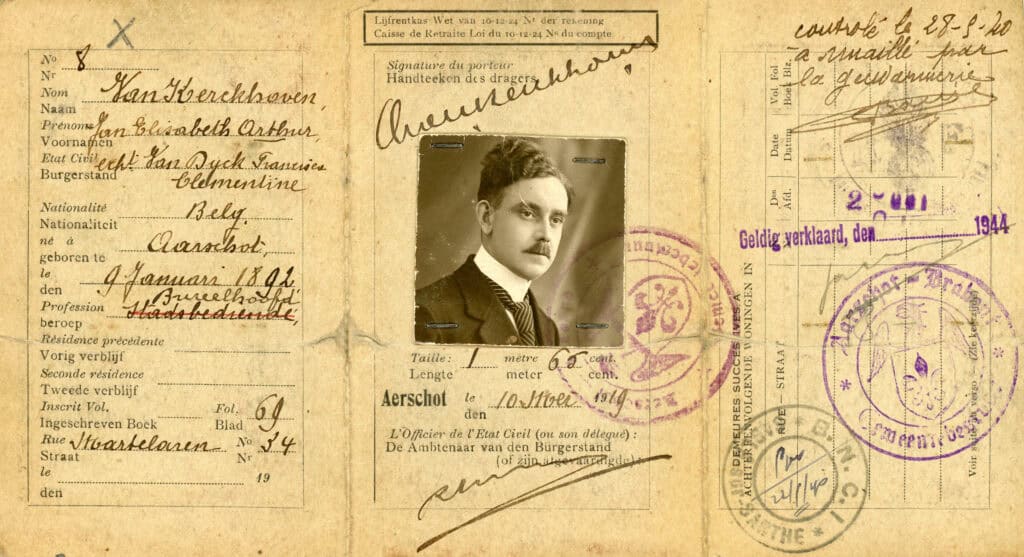
identity card of Tineke Van Dyck – note her signature – Tineke puts dots on the y – the right-hand part was filled in by the gendarmerie in Larochelle in 1940
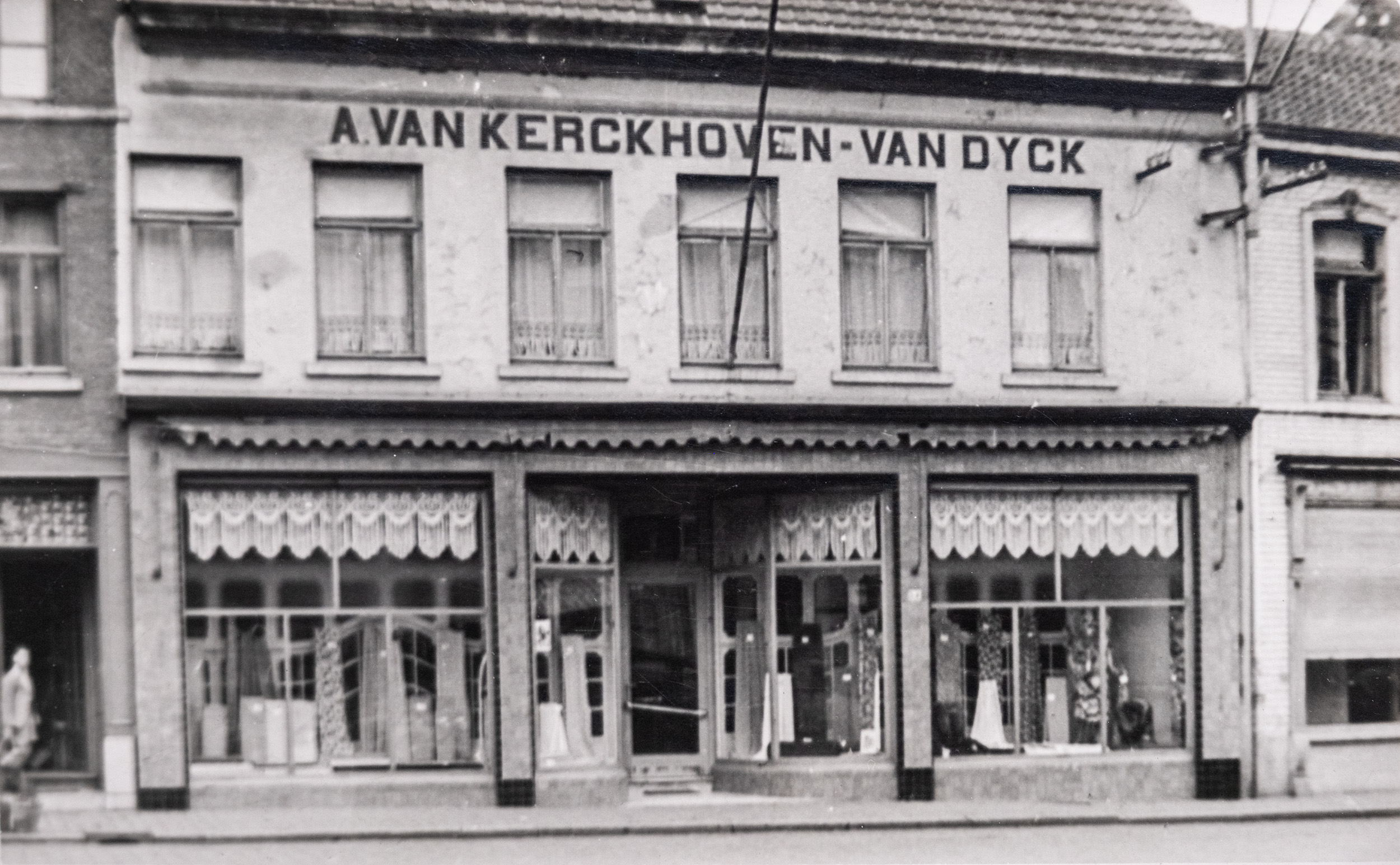
Godfried’s parental home
As a deportee of the First World War, Arthur knows the limits of his health, and the entrepreneur discreetly invests his money in a fabric and fur-coat shop for Clementina and a few commercial properties in the town centre.
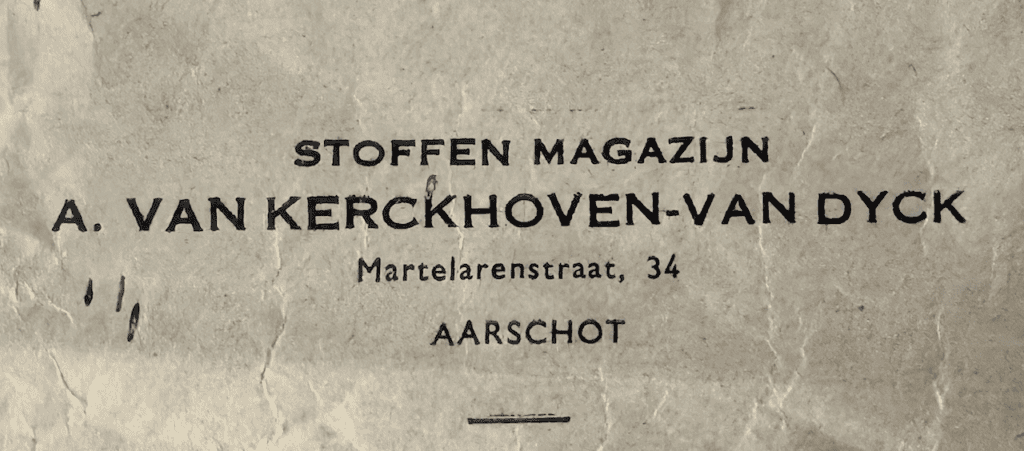
“In trading it is not only turnover and profit that count but also the product and the people. You must not be stingy with customers. When measuring I do not look at a centimetre.” – Tineke It is bustling and people come from far away.
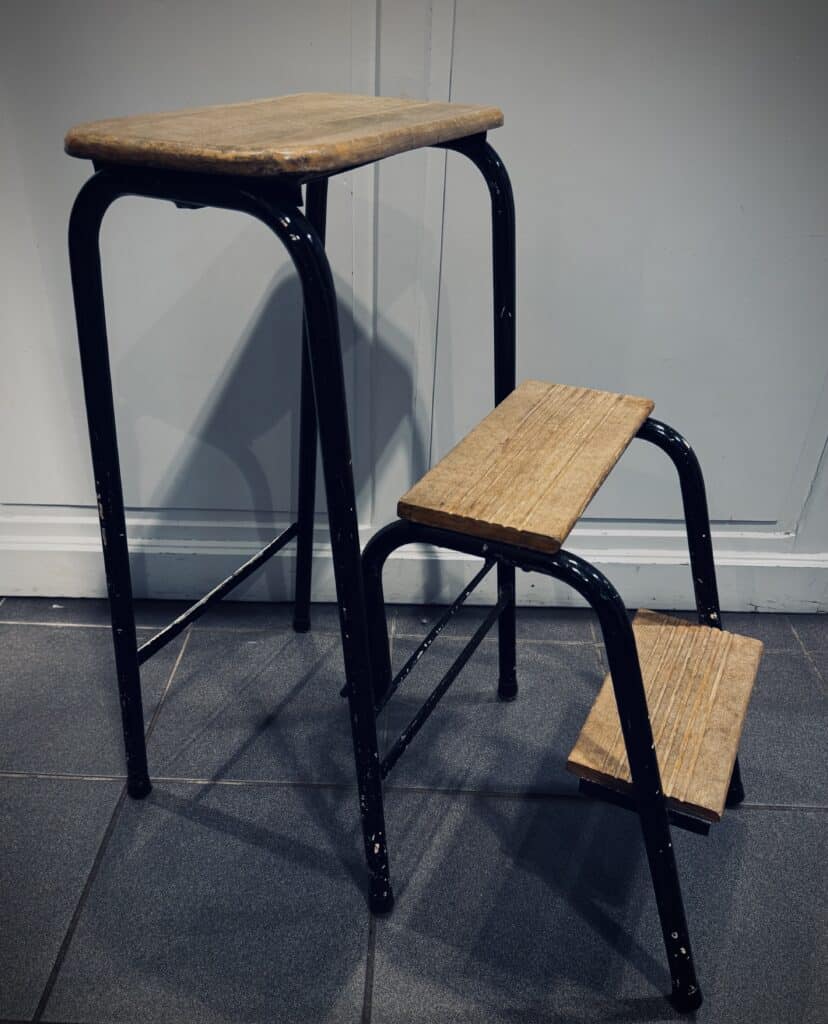
The authentic retro ‘Brabantia’ step stool with which Tineke endlessly takes lengths of fabric from the shop shelves.
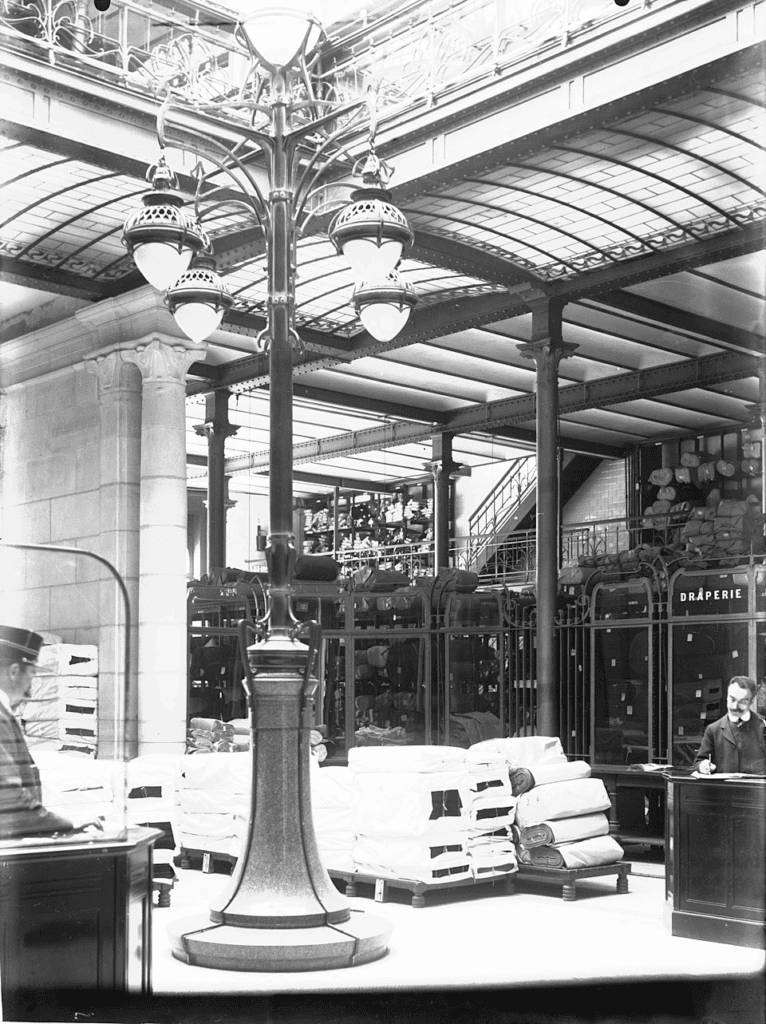
Godfried accompanies his parents when buying fabrics in Brussels. Here at the wholesaler Wauquez, where the Comic Strip Museum is now.
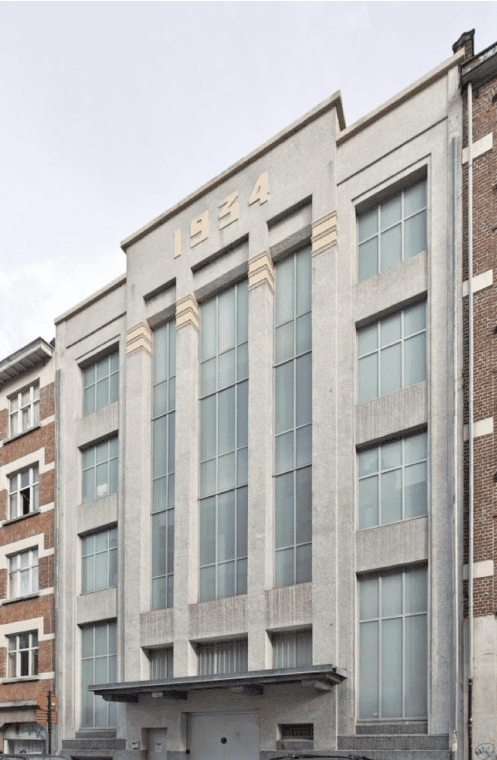
‘Etablissements Blum’ where the weekly purchases continue. (photo: 1990s)
This fabric wholesaler comes into the hands of Anita Buelens of Rillaar. The notary admires the elegant, beautiful and renowned textile entrepreneur. As a young girl she was at the root of the “golden years of Rillaar” by making it, among other things, the Diolen-fabric village. She then ran a fabric shop in the Nieuwstraat in Brussels, which grew into a wholesale business on the Antwerpsesteenweg at the Ijzeplein. Mrs Buelens’s business became the Belgian number one in textile import and export. This is reported by the financial-economic news medium Trends.
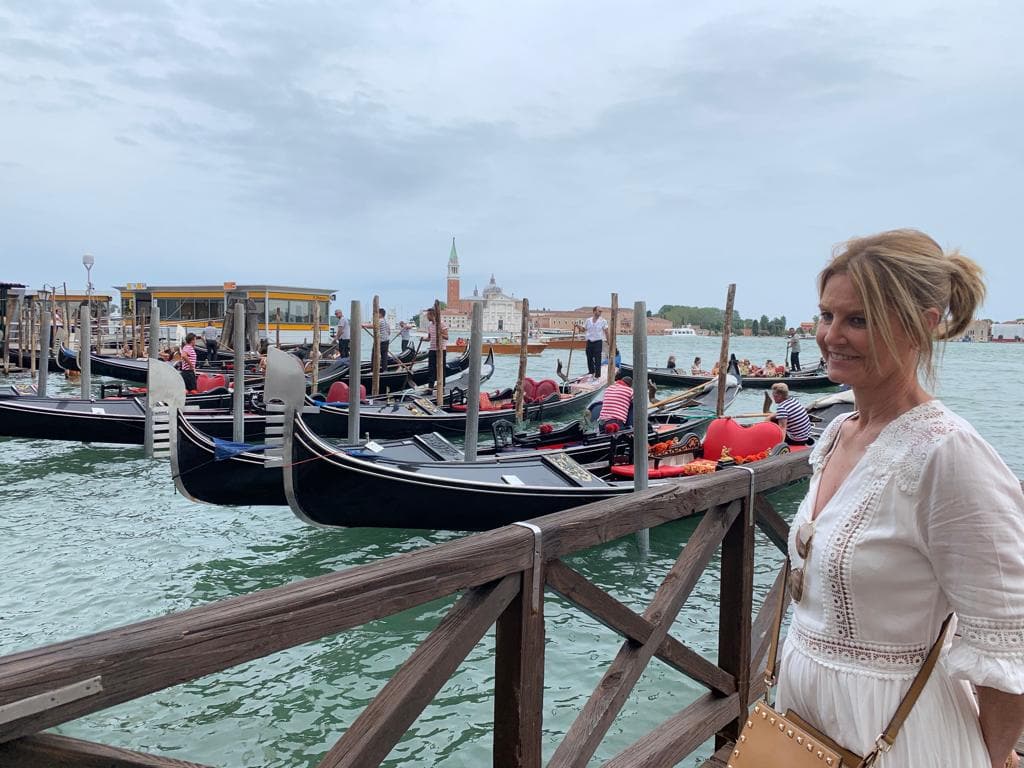
Her daughter, Kitty Buelens is Pieter’s bosom friend. “My father thought it was wonderful that I came to your fabric wholesale business, where he too went weekly with his parents. Godfried was each time interested whether I had seen your mother. How she was dressed and what car she drove. I would then repeat that your mother got about with a chauffeur in a dark-grey ‘S-Class’ with champagne-coloured cushions.” “But I saw her drive in a dark-blue Jaguar. It is unbelievable how far she got.” – Godfried “No doubt your mum had a great influence on me. She hammered it into me that Aarschot is not for me. That I had to move to Brussels or Paris.” – Pieter & Kitty bring out their p’tites histoires from around 1990.
Godfried II
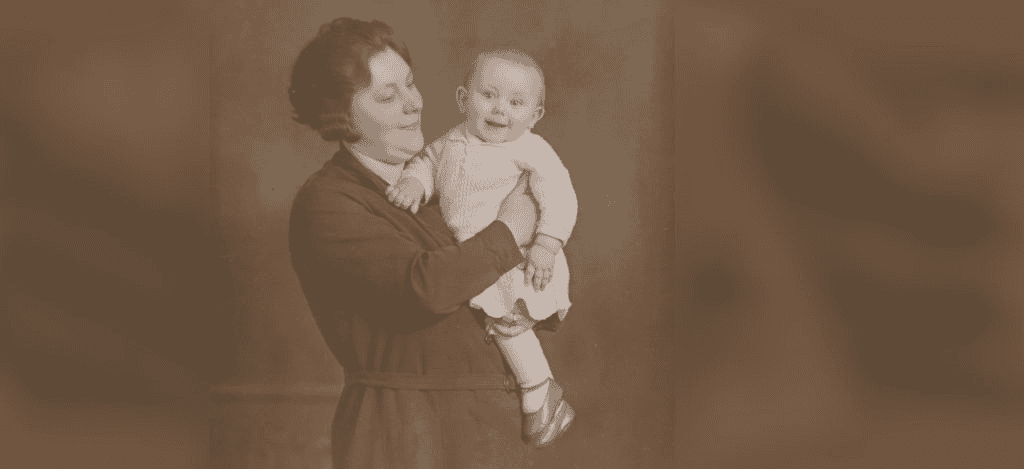
Clementina cannot accept the death of her three-year-old son Godfried and decides to give her newest-born the same name. On Thursday 14 August 1930 Godfried is born in the parental home. The evening before, his mother had given the display windows a new arrangement with the newest fabrics, to let shoppers who come down to the weekly market dream away.
Here he is at last! The full name of the successor of the deceased Godfried is ‘Aimé Godfried Richard Jules Corneel’. The godsend is dedicated to Mother Mary. His parents make the promise that they will dress him in white and blue until his first communion, as a plea for Mary’s grace to keep the little child.
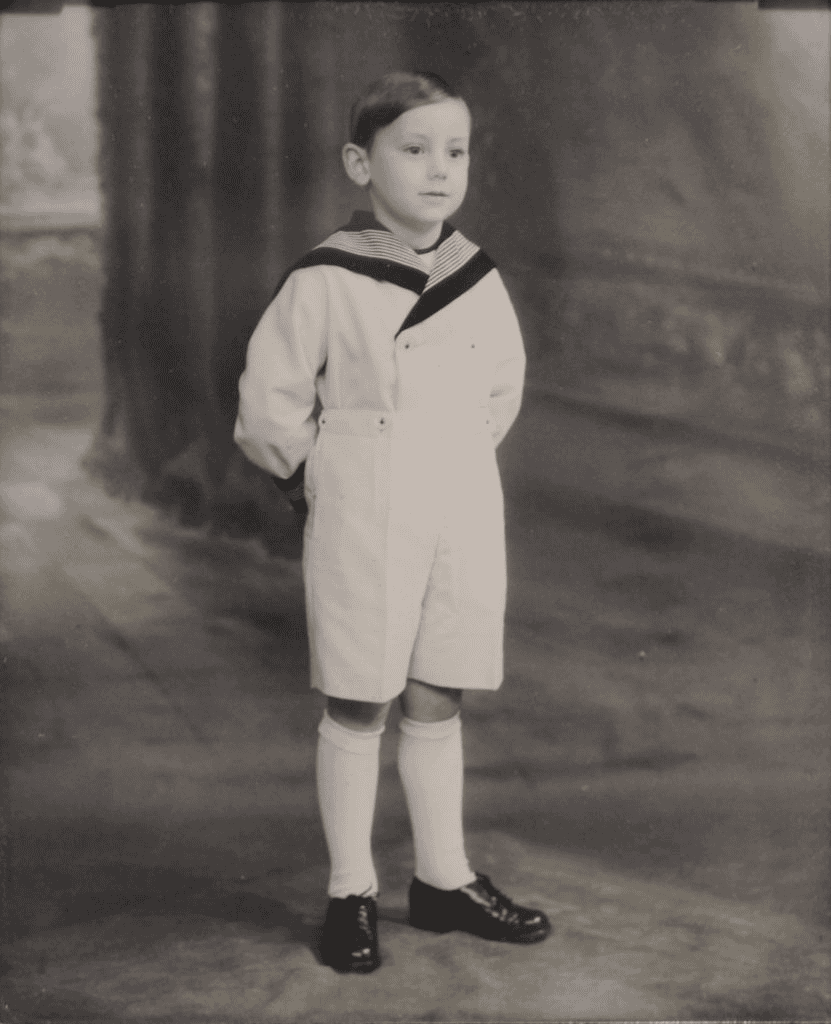
Aimé Godfried dressed in white and blue until his first communion
In the shadow of his deceased little brother, Frie is required to pray a great deal for that little Godfried and for himself, so that he too will not die. A brown leather case is put in his trouser pocket containing a rosary, which Frie will carry with him until almost the end of his life. Mia lets the rosary get lost at the dry cleaner’s.
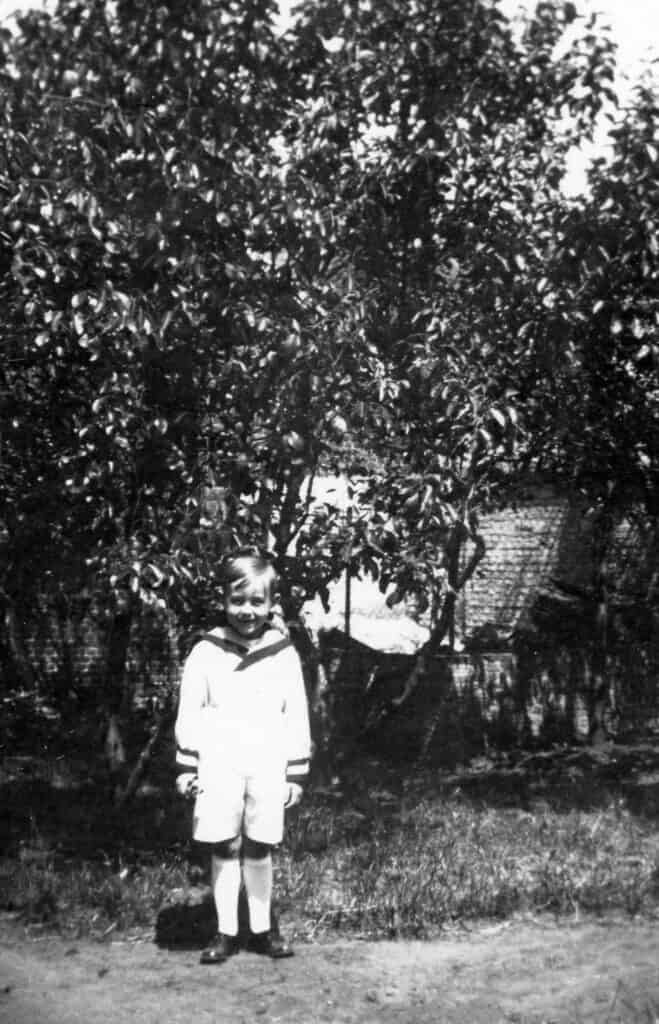
Godfried
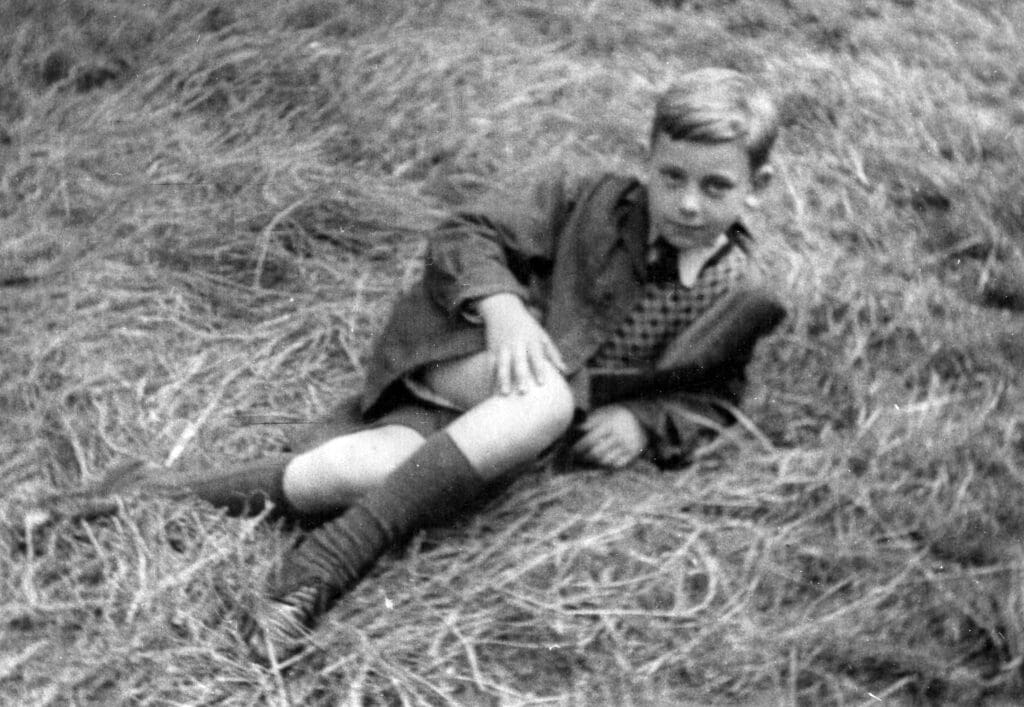
Godfried
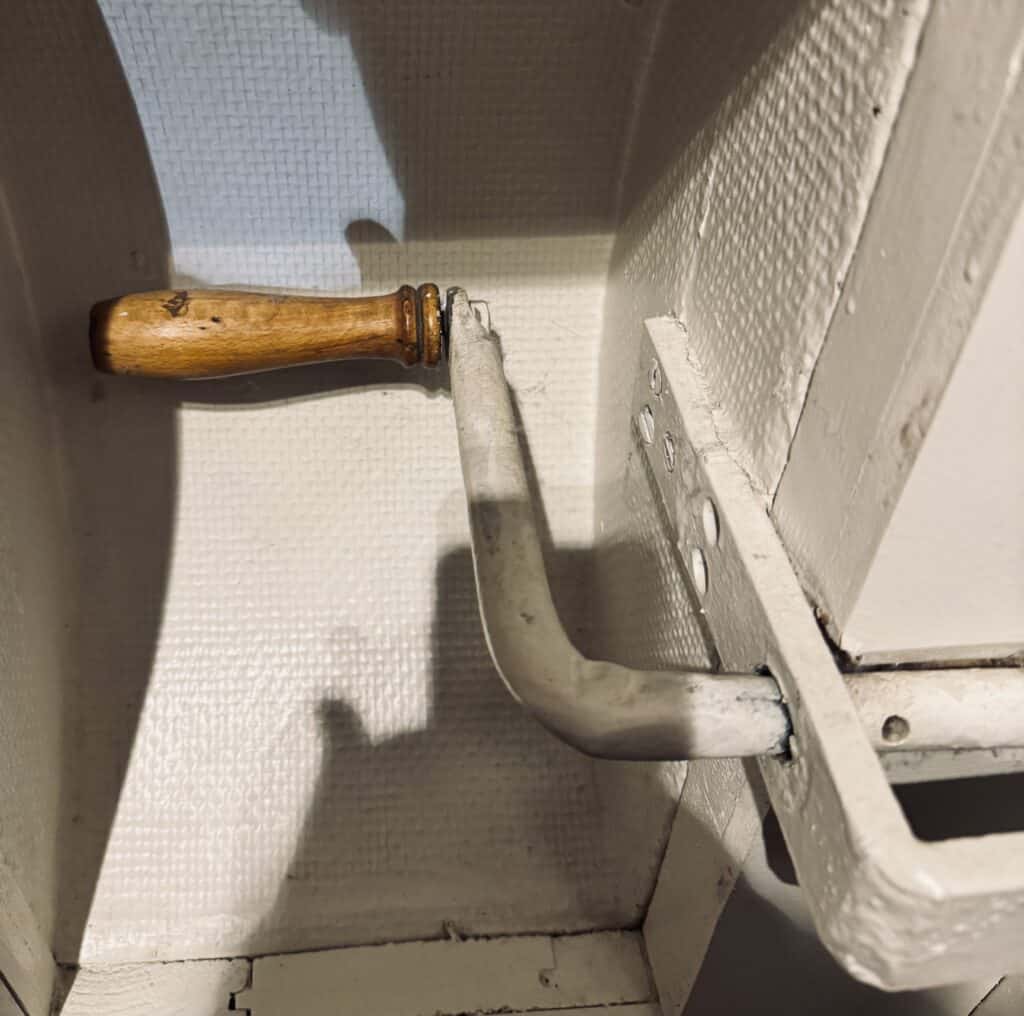
As a child Frie once stands outside on the doorstep. His older brother lowers the heavy roller shutter but loses control of the crank. The big roller shutter shoots down and lands on Frie’s little head. Frie loses consciousness. Fear grips Tineke’s heart, she fears losing her second Godfried too. Fortunately our young hero has “a hard head!”
“Suskewiet – Het mirakel gebeurt in Vlaanderen
The little booklet is signed by Godfried. The role of the shepherd is played by Frie at the Sint-Jozefscollege. It is his most beautiful childhood memory.
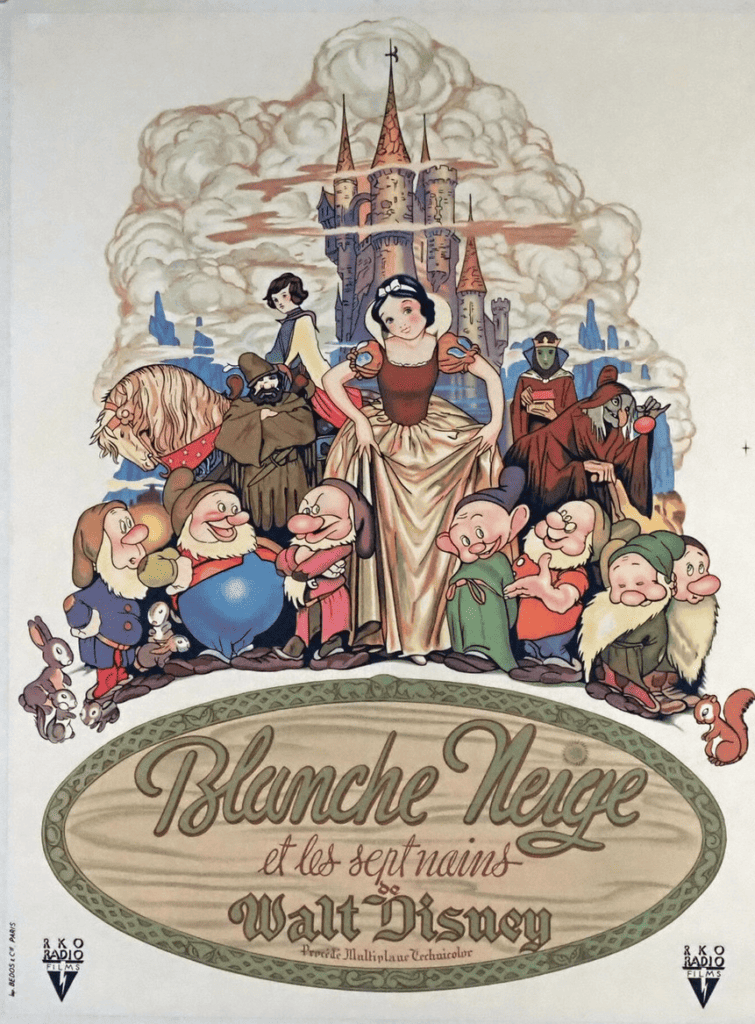
(1937) A further overwhelming moment for Frie is the premiere of Disney’s animated film ‘Snow White and the Seven Dwarfs’.
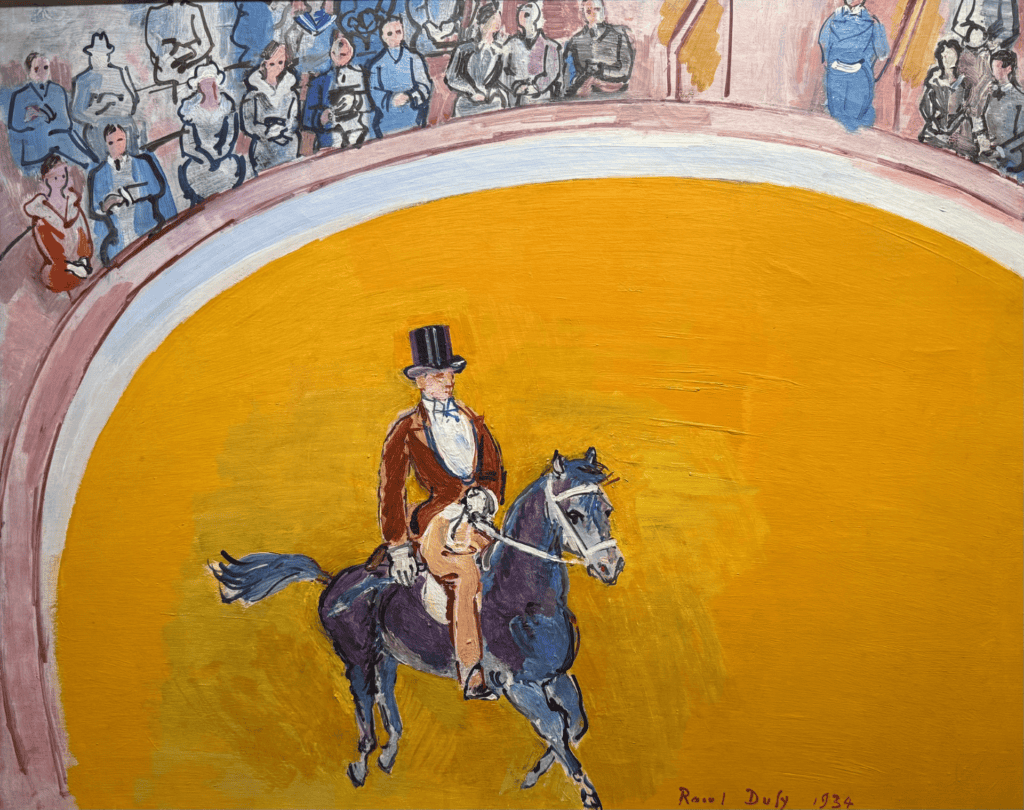
The Circus – 1934 – Raoul Dufy (1877-1953) – oil on canvas – 65x81cm
The circus world is deeply rooted in Godfried’s interests. His family is there when the Bouglione circus gives a colourful show in Brussels. Of circus broadcasts on television Frie can never get enough.
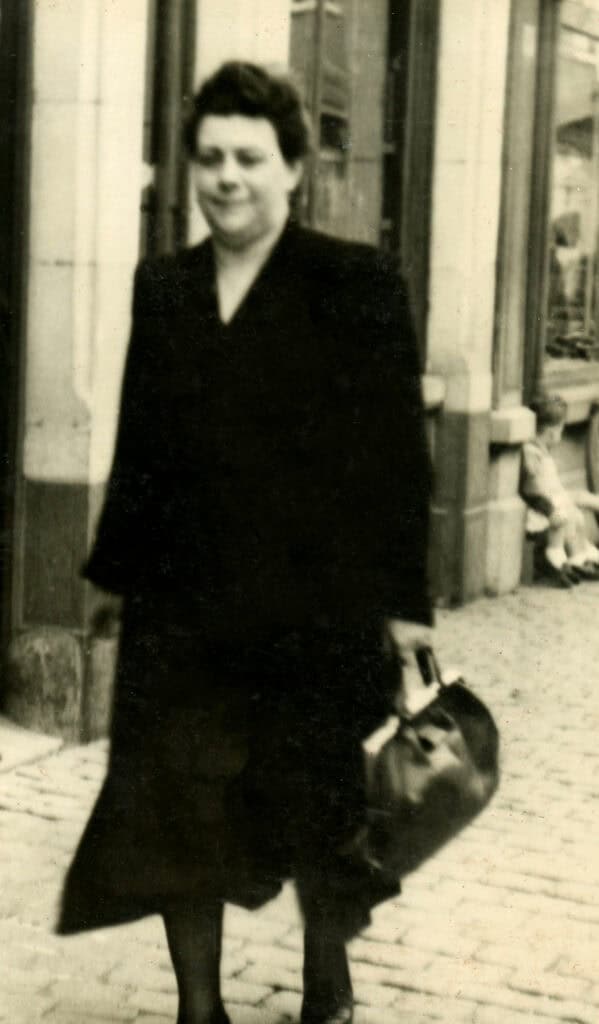
In Aarschot everyone calls her Tineke Van Dyck
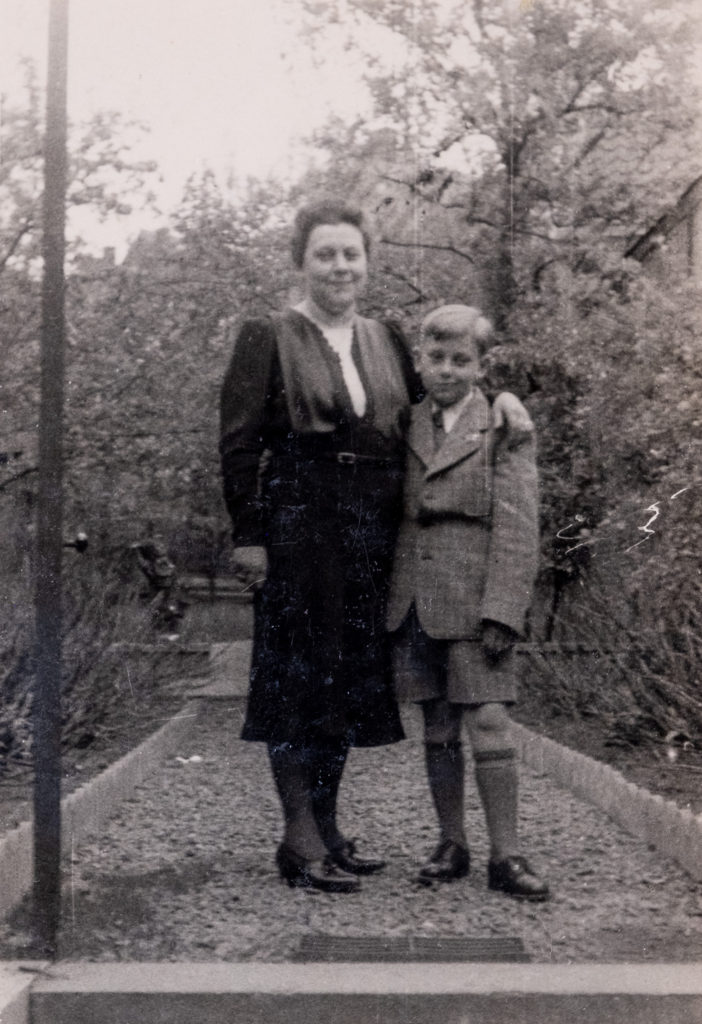
Frie at his mother’s side
Frie and his brothers gratefully praise the tireless drive to work of their mother, who is the heart of the business.
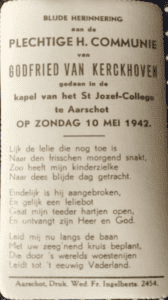
Frie’s solemn communion card
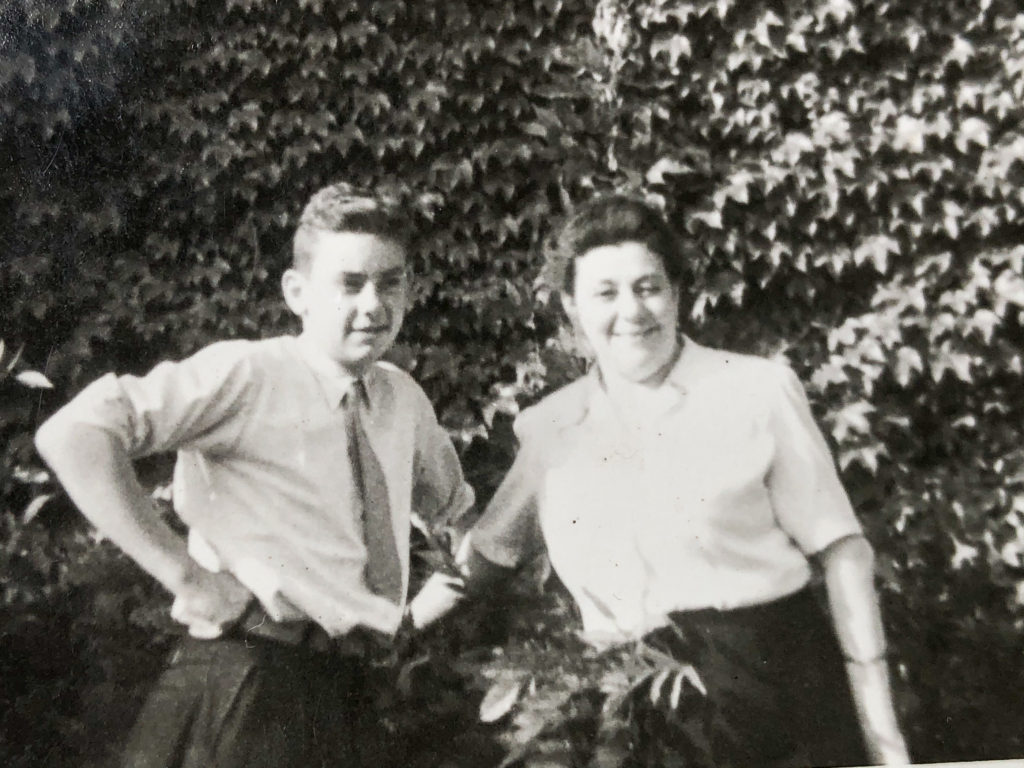
Frie and his mother
Frie and his brothers declared themselves indebted to their mother all their lives: they regard her as their example.
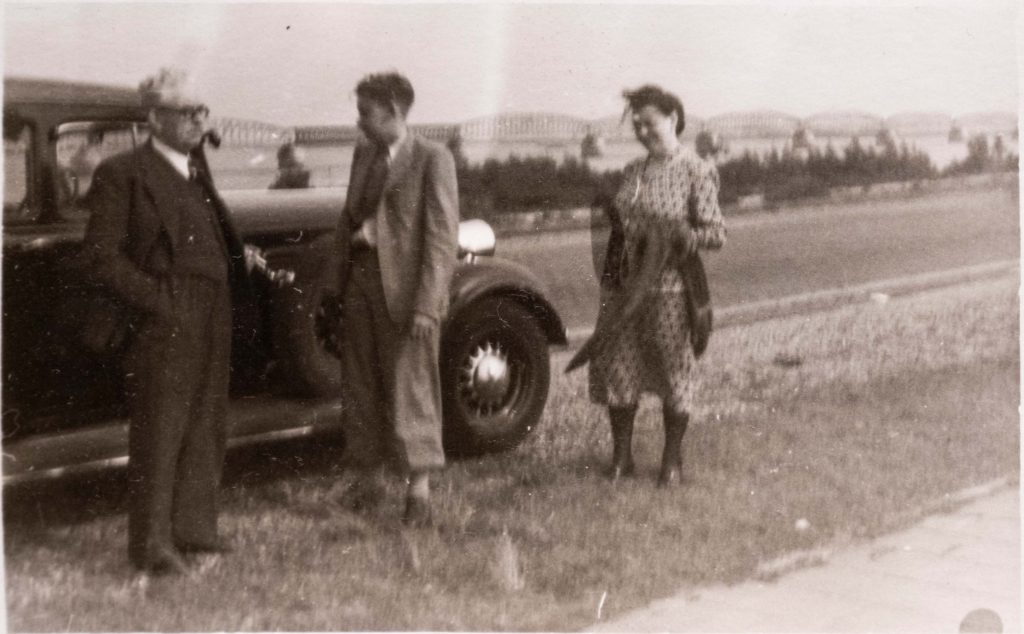
Frie with his parents in Duisburg
During the Second World War the family flees to Larochelle. As a result Frie does not go to school for months. After the war Frie travels with his parents to Duisburg to see the destruction caused by the bombing. The gaze of Arthur, who died in 1958, makes one wonder what exactly is going on in his head. A look at the horrors of the two world wars can help.
The bond between Tineke and her daughter-in-law Mia (photo: 2024)
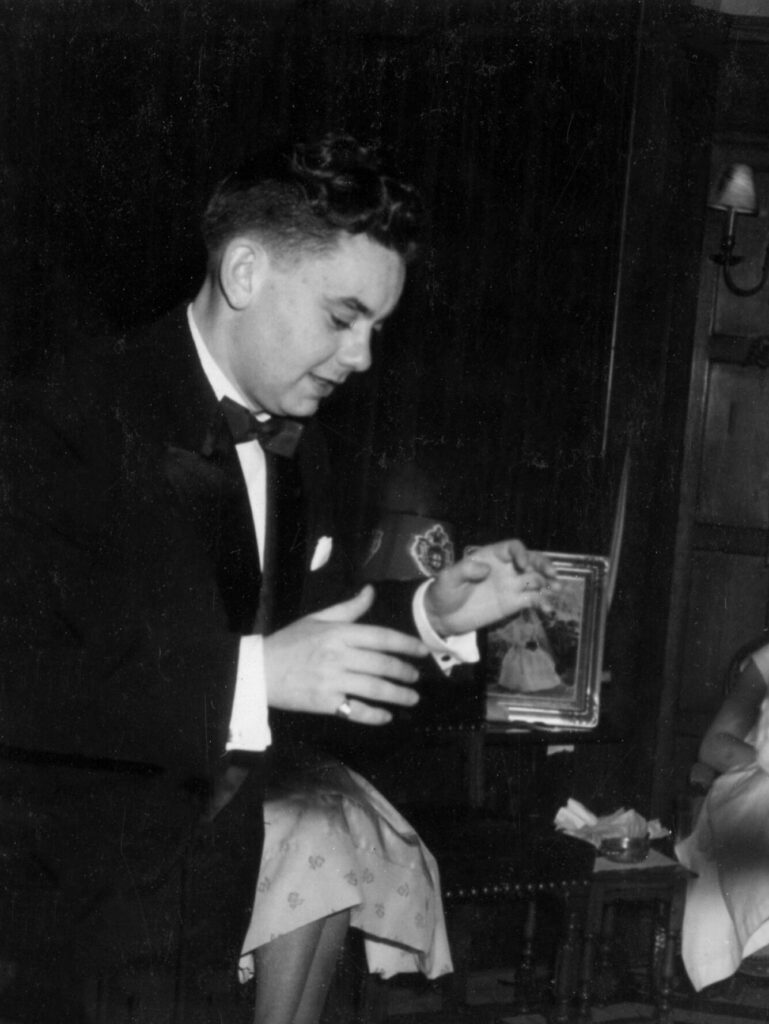
Godfried
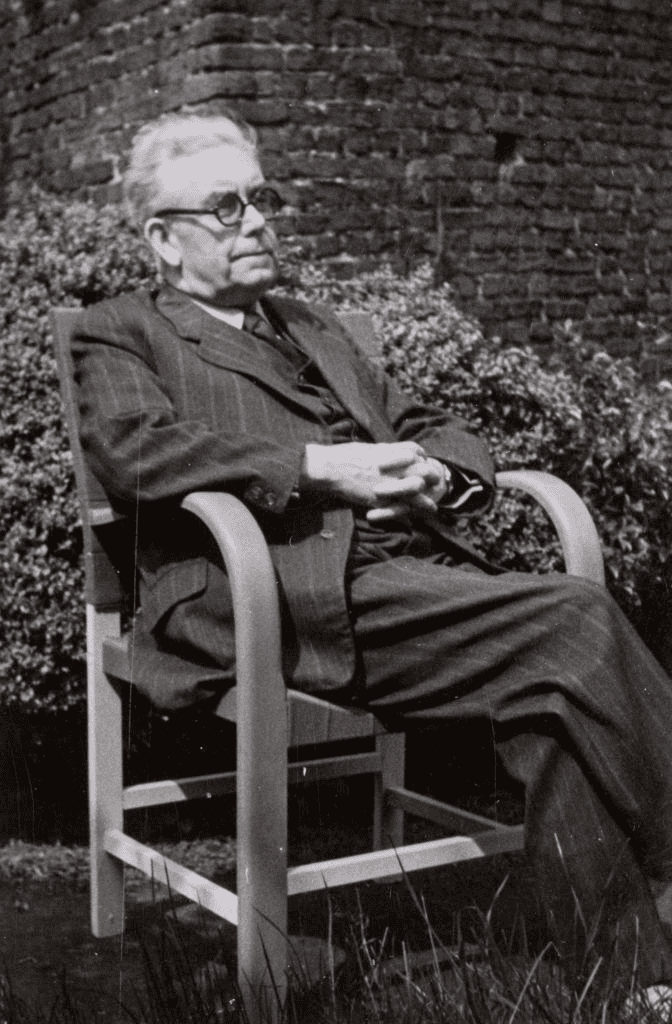
family man Arthur
(1958) Arthur Van Kerckhoven has died, his sons and his wife Tineke Van Dyck let Aarschot know.
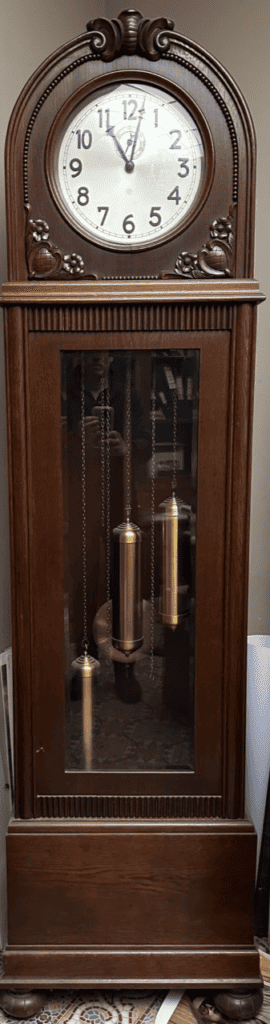
Arthur’s grandfather clock
Protocol after a death At the moment of Arthur’s death the clock in the living room is stopped out of respect. The ticking ceases and the house falls silent. Like a heart that stops beating. The age-old ritual of stopping the clock reminds us of the transience of life and the need to stand still at the loss of a loved one.
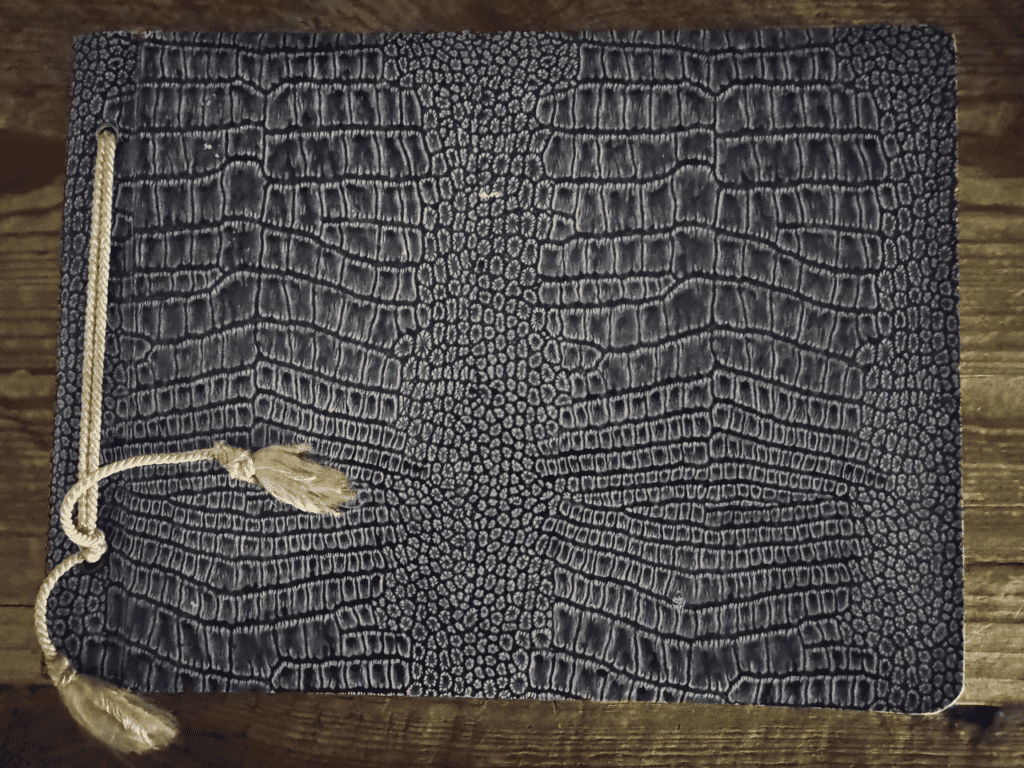
A photo album of the funeral ceremony of Arthur Van Kerckhoven
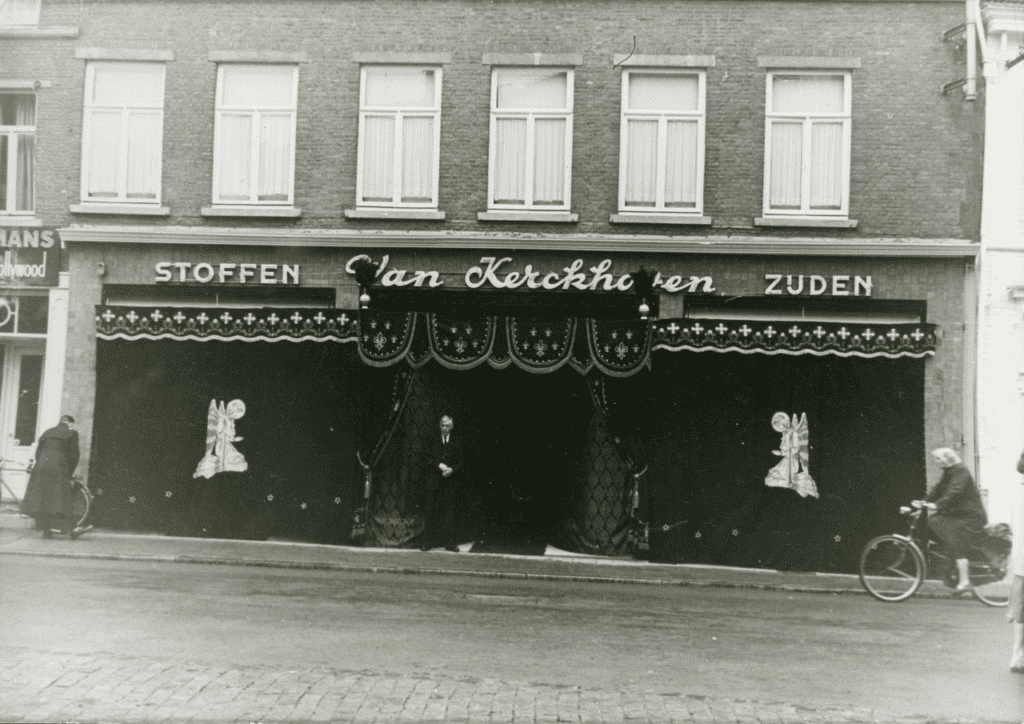
When Arthur has died, this is surrounded by ceremony and protocol.
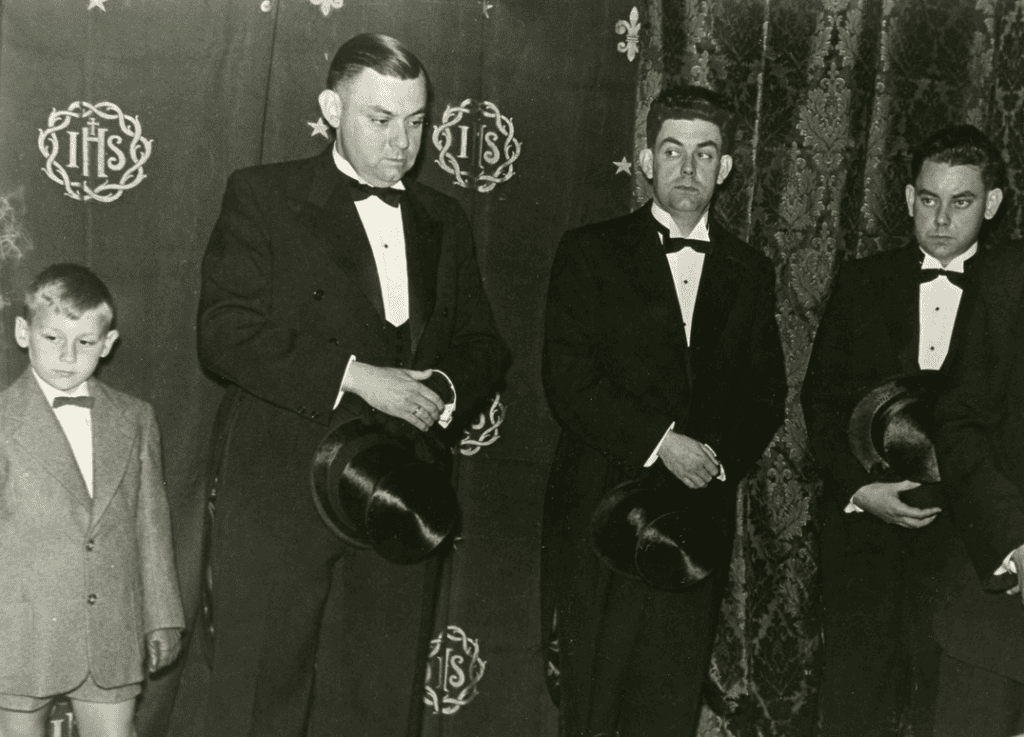
Luc, Paul, Jos, Godfried When his father dies, Godfried is 28 years old.
the deceased lies in state at home
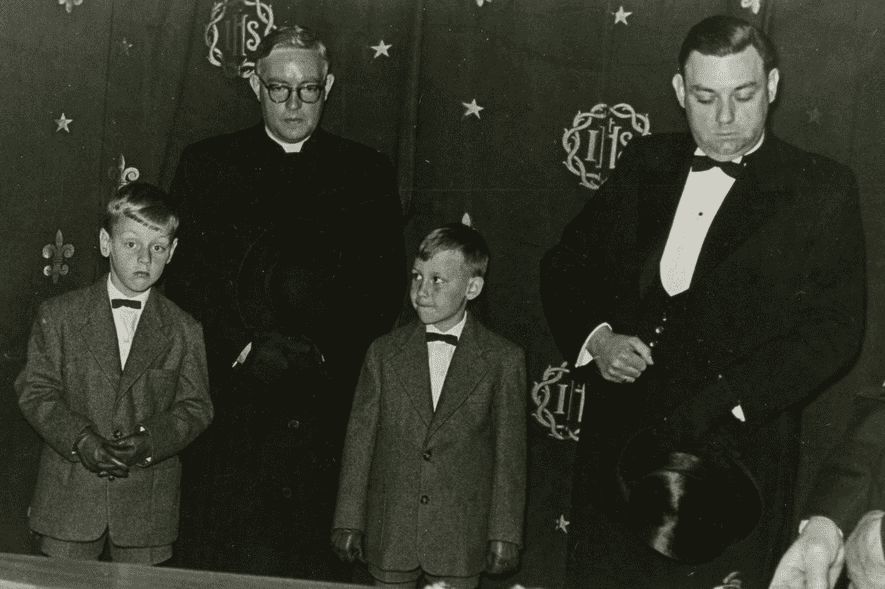
L. to r. Guy, Rev. Richard Vermaelen, Luc, Paul
Richard, the parish priest of Laeken whose father Richard Vermaelen (1868-1914) was murdered without a chance by the enemy troops in Aarschot during the First World War. It was customary to give children the first name of parents, godfather or godmother. Godfried’s grandmother was the sister of the executed Richard.
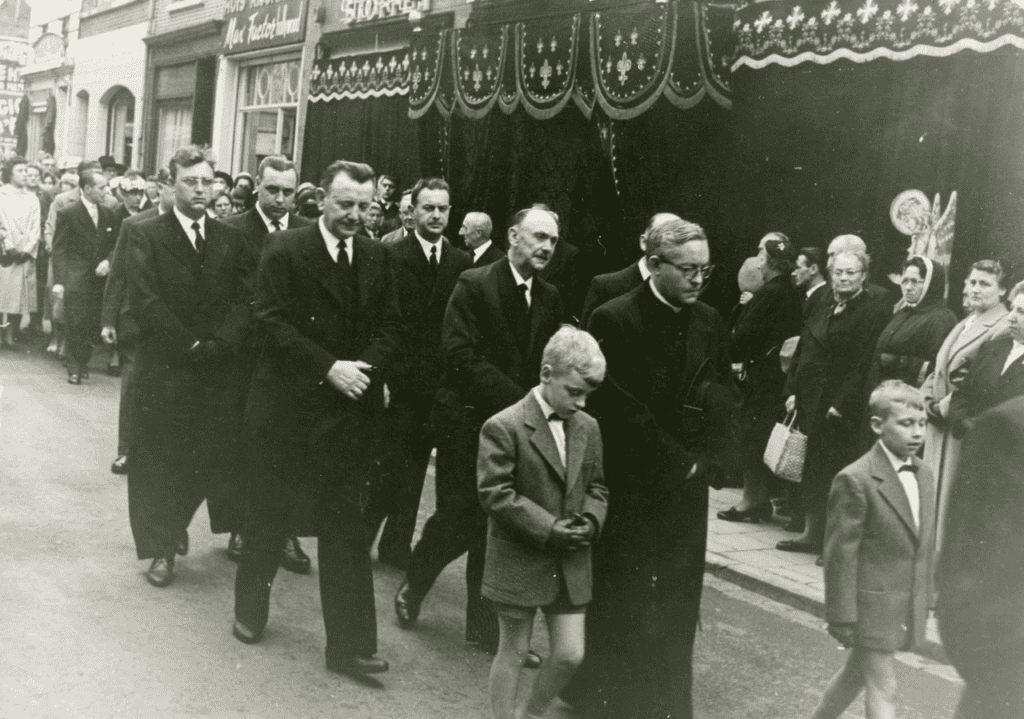
In the Martelaerenstraat quite a few curious onlookers and believers gather. The older man in the picture behind Pastor Richard Vermaelen is Richard Van Kerckhoven, Godfried’s godfather. The little boy next to the Reverend is Guy Van Kerckhoven and the little boy on the right in the picture is Luc Van Kerckhoven
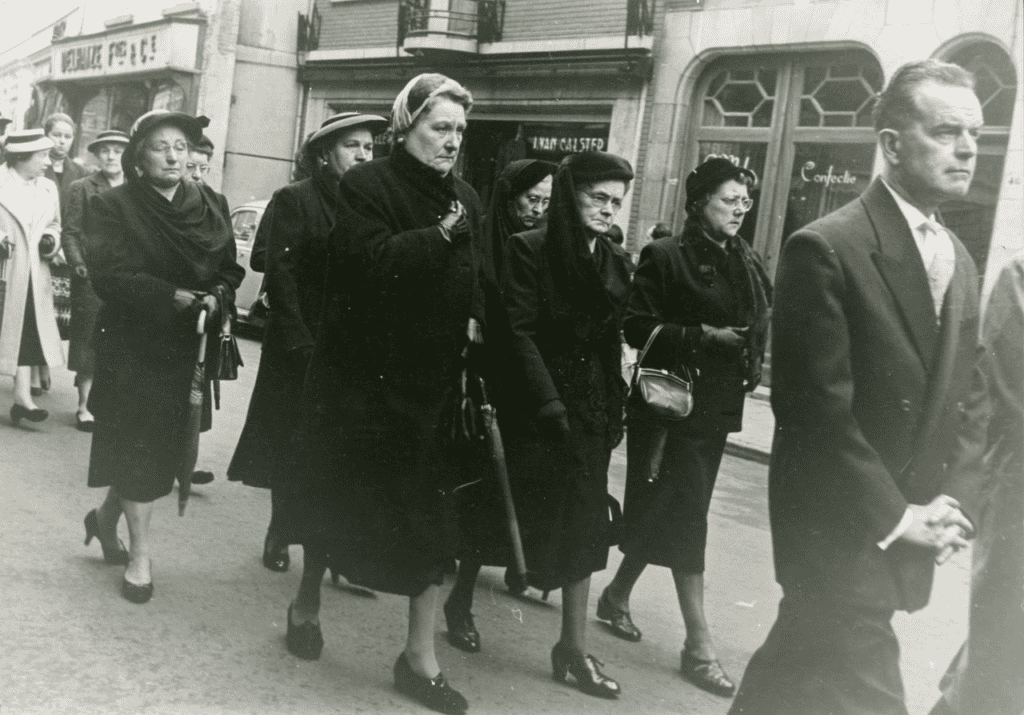
In the middle aunt Margaretha Van Kerckhoven and to her right Godfried’s cousin Rosa. Rosa is the daughter of Richard Van Kerckhoven.
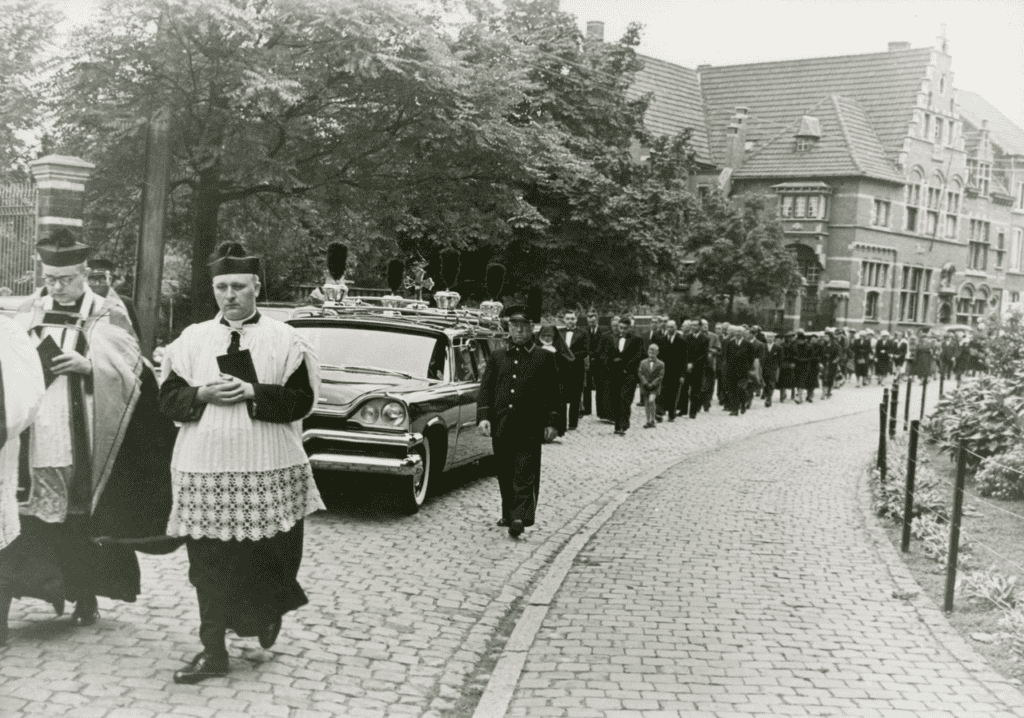
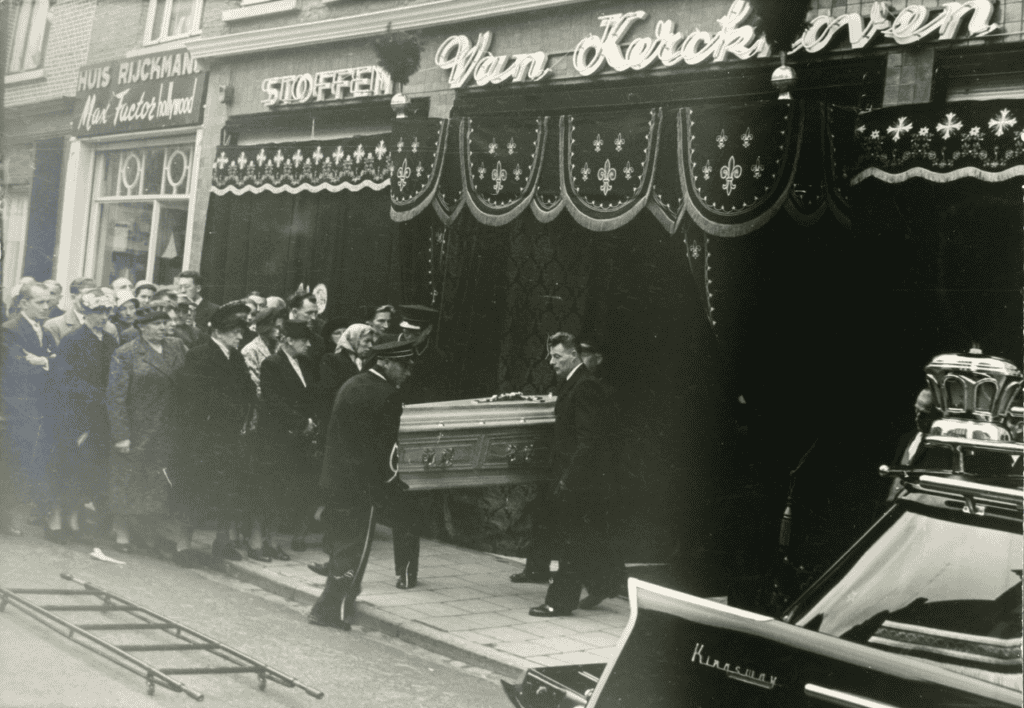
At a solemn funeral the priests with altar servers go to fetch the deceased at home… Arrival of the funeral procession of Arthur, father of Godfried, at the church (left: Canon Emiel Polleunis (1900-1981), right Rev. Jos Goor). Behind the hearse first go the gentlemen and much further back the ladies; the husband or wife of the deceased never goes along.
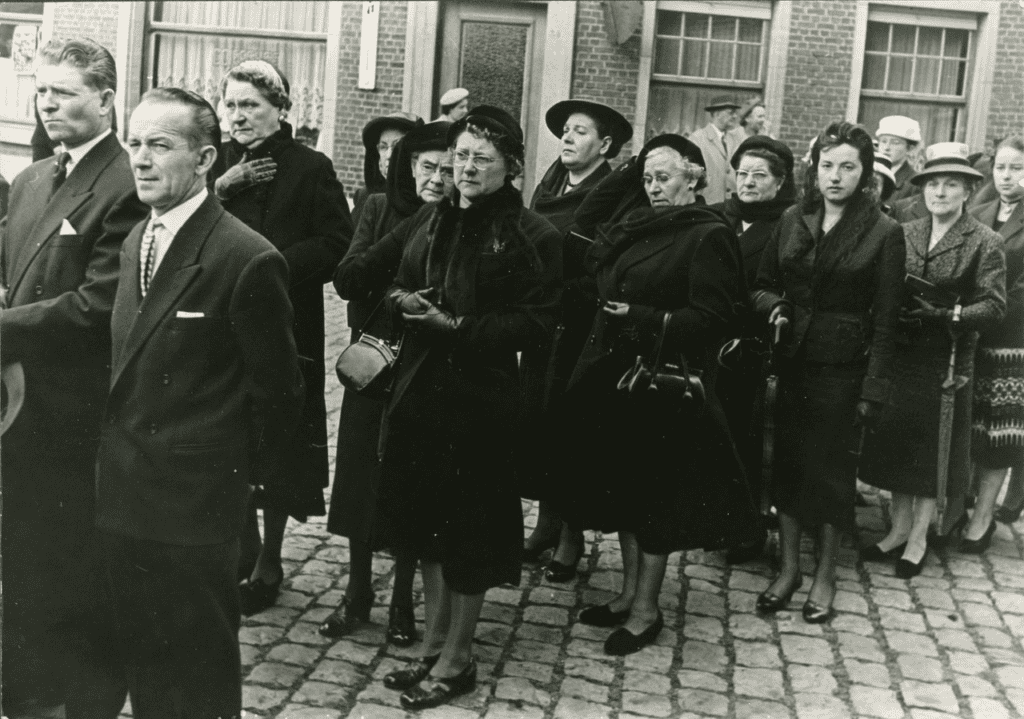
The first woman at the front of the picture is Rosa Van Kerckhoven and to her left Margaretha, one of Arthur’s seven sisters After a tribute in his residence at number 34 Martelaerenstraat, the body of Arthur Van Kerckhoven is taken to the Church of Our Lady in Aarschot.
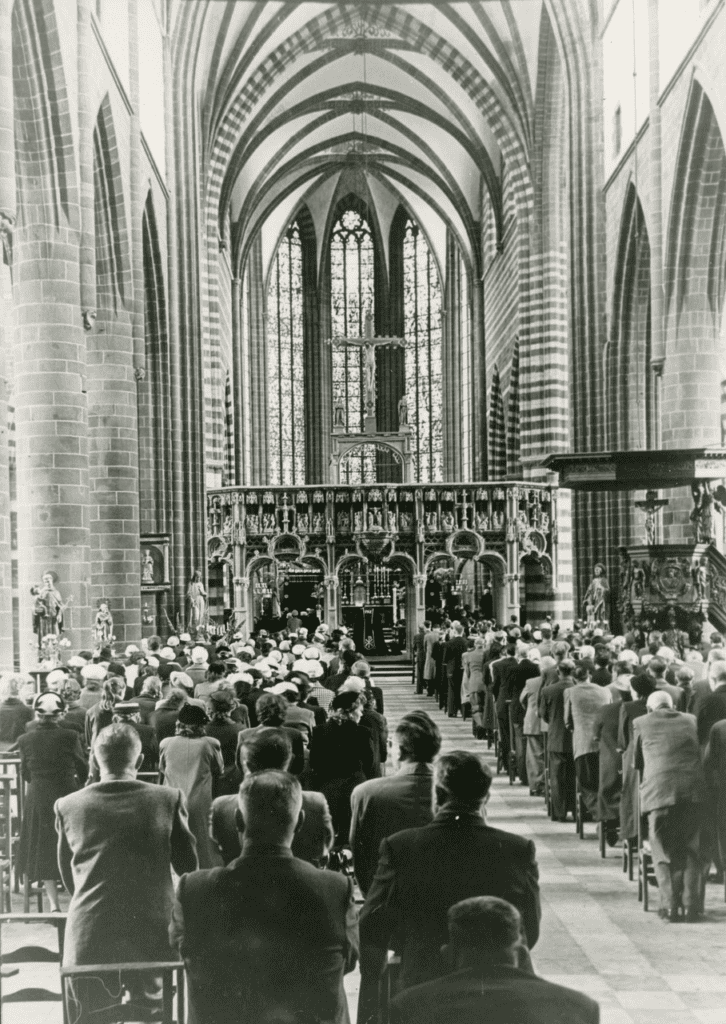
Interior view of the Church of Our Lady in Aarschot during the funeral service of Arthur Van Kerckhoven
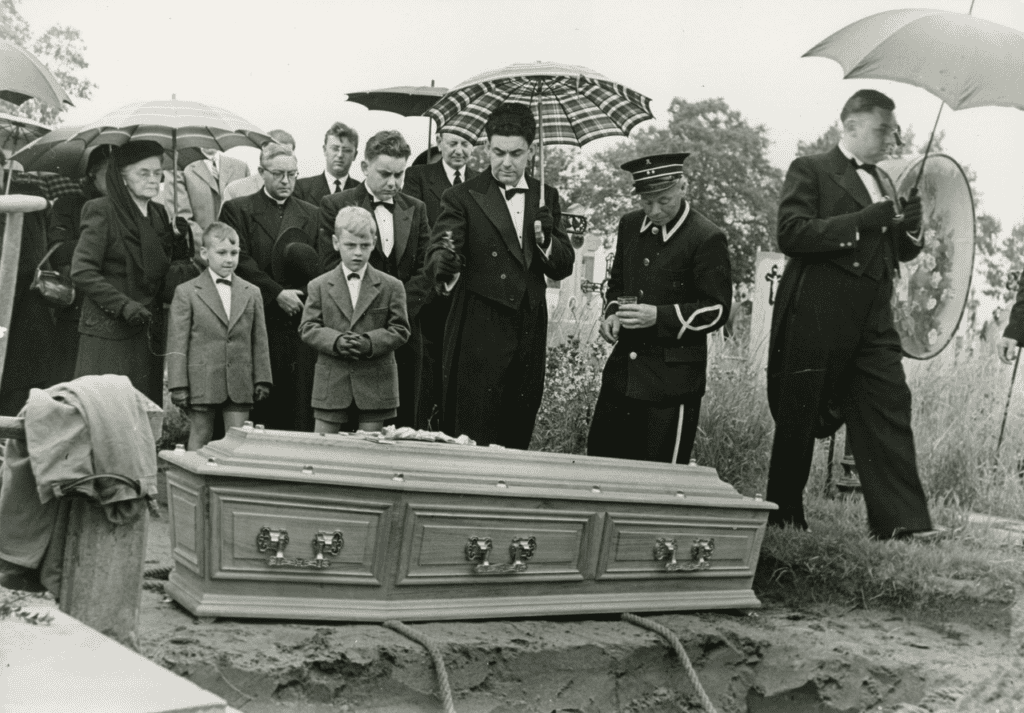
Interment of the mortal remains of the late Arthur Van Kerckhoven
L. to r. aunt Margaretha, the young Luc, Rev. Richard Vermaelen, the young Guy, Godfried, Jos, master of ceremonies, Paul
Pergolesi: Stabat Mater (Emma Kirby) by The Academy Of Ancient Music, Chrisopher Hogwood. (1989) Pieter gives this interpretation to his father.
Tineke dies 5 years after Arthur
(1963) She reaches the age of 65 and struggled during the last years of her life with several heart problems.
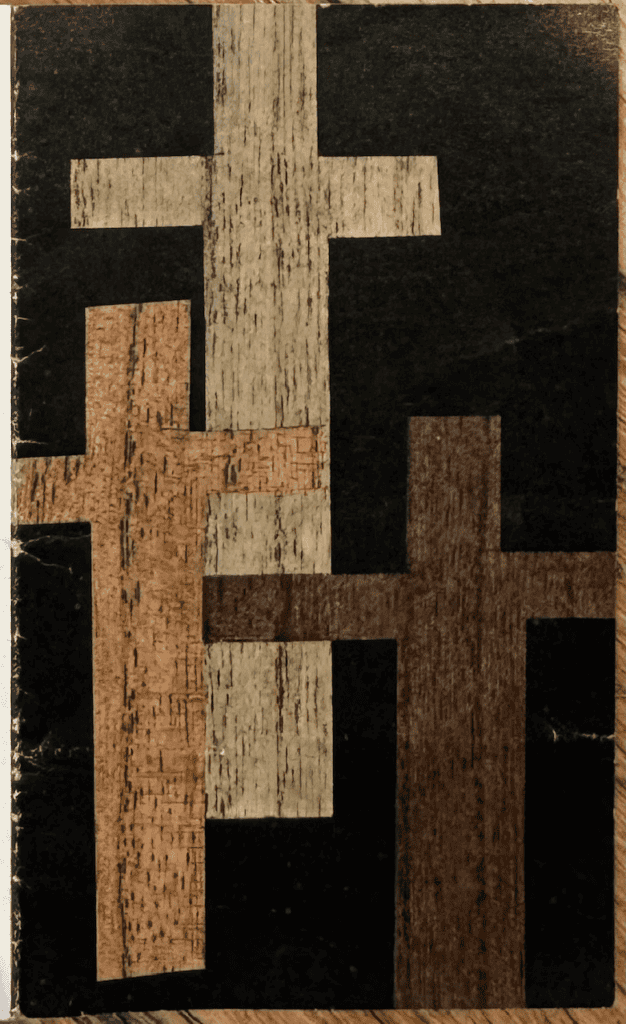
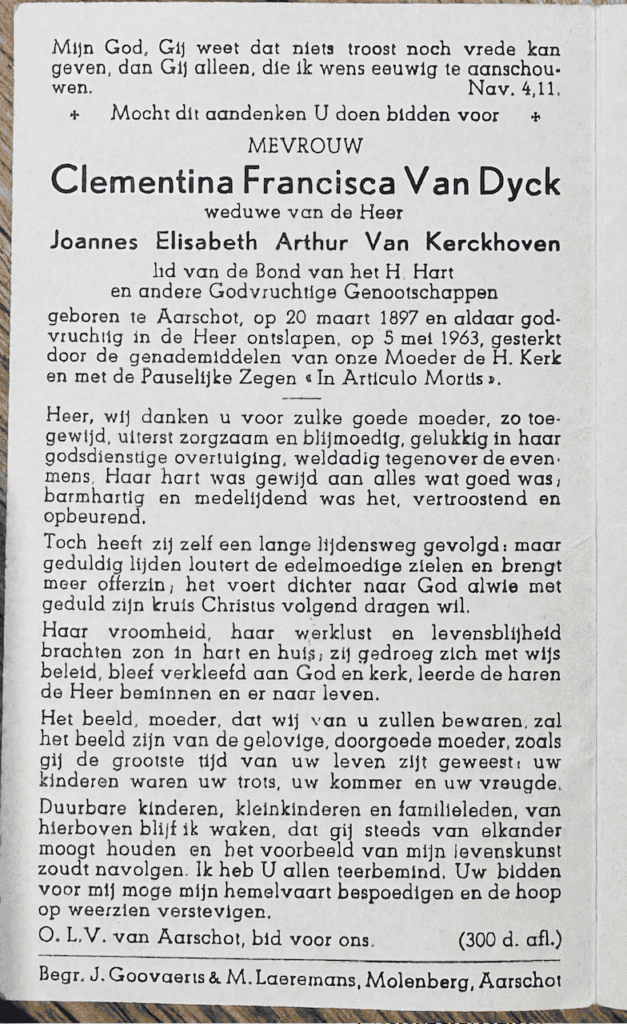
“Très malheureux est celui qui aime seulement les corps, les formes et les images. La mort détruira tout, essaie d’aimer les âmes, car tu les retrouveras.” – Victor Hugo
“With unspeakable emotion and deep sorrow” Godfried announces the death of Tineke, “his beloved mother”. The Aarschot businesswoman died on Tuesday 5 May. “She passed away peacefully, surrounded by her sons.”
VI Brother Paul >>>