… May I call him the Nestor of our artists? Though that is not quite right, for I know no younger soul, no more playful fellow, no more exuberant character. And yet, his figures, whether modelled or drawn, stand with their whole little beings in True Life! They hold up a mirror to us. Our failing and winning, our daring and dithering, our hesitation, our shame, our recklessness, our leaping, our falling and scrambling back to our feet. It is us; Man, standing there in our PURE. And even though we are cast in bronze, we remain tender and soft as the wax we were, kneaded in his hands. … – Josée Lehon, art historian
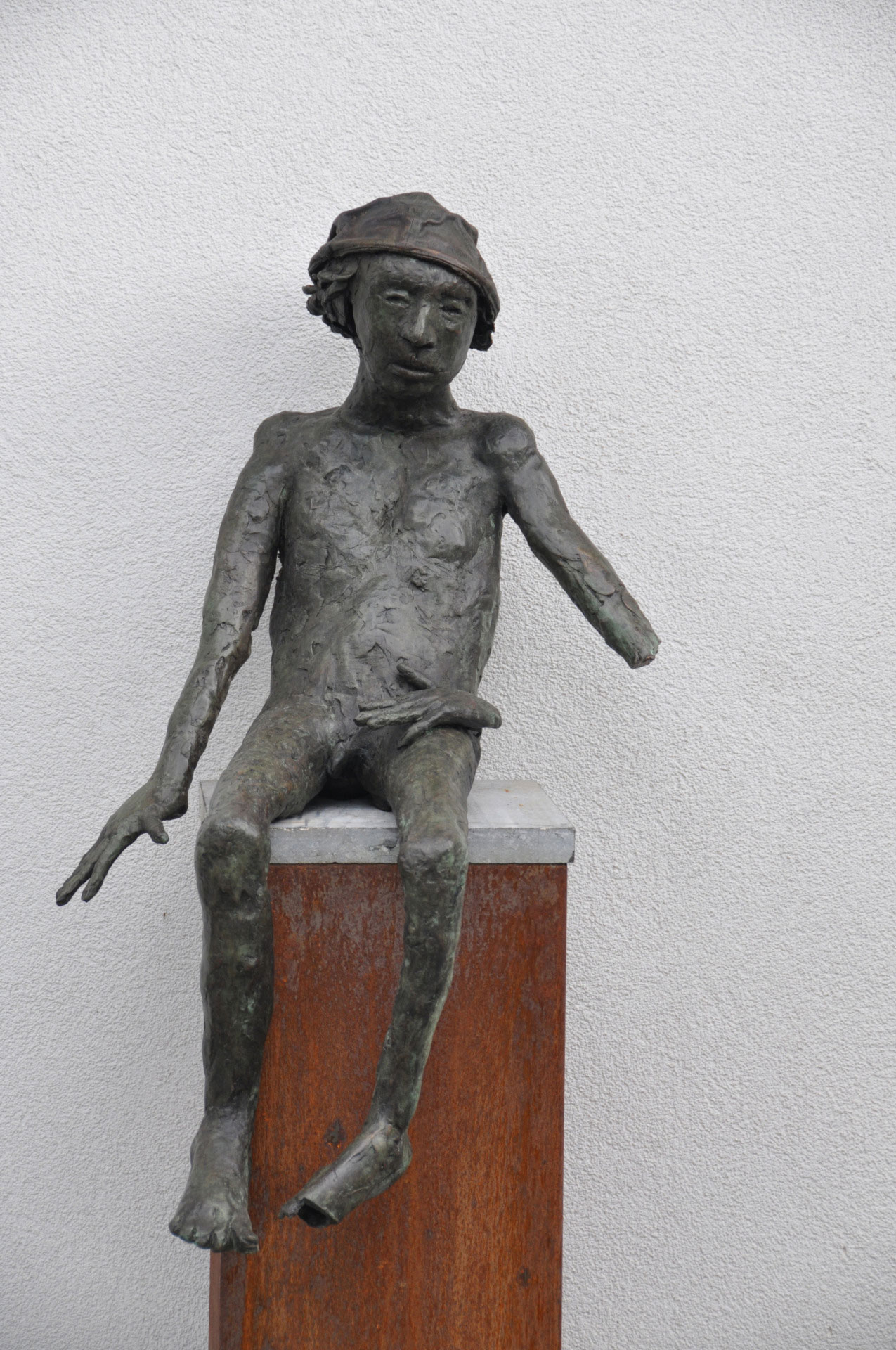
Jan Rosseels makes sculptures in wax, which are later cast in bronze. They often take a slice of daily life as their theme. The figures sit contorted between far too long arms and big hands. Perhaps this is a translation of the complex nature of man. source: kunstroute Hageland
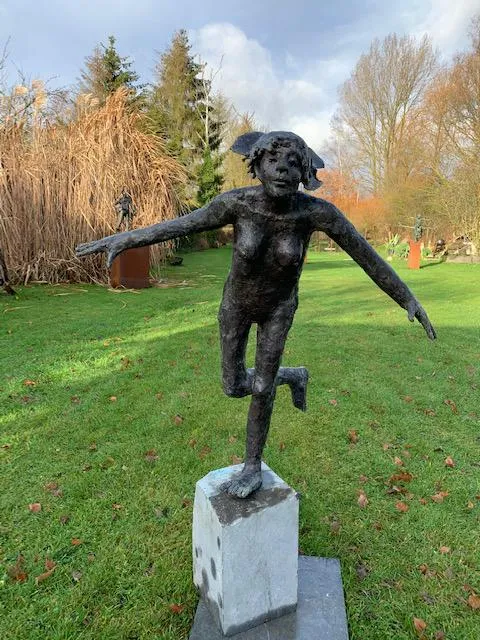
Jan Rosseels (b. 1950), sculptor and native of Aarschot. He studied at the Provincial Higher Institute for Fine Arts in Hasselt under sculptor Luc Verlees, at the Municipal Academy of Aarschot under painter Fons Verstreken, at the Academy of Heist-op-den-Berg under sculptor Lode De Preter and at the Academy of Lier under sculptor Roland Rens.
He learned bronze casting from sculptors Roland Monteyne and Ward Dyck at the State Higher Institute for Fine Arts in Anderlecht. From 1979 to 1991 he ran the Aarschot café ‘de Flater’. As a teacher at the Art Academy of Aarschot and Dworp he organised international exhibitions from 1991 to 1994.
Sculptures by his hand adorn the cityscape of Leuven and Aarschot.
He was selected for the exhibition Young Belgian Sculptors, Brussels 1974. Jan Rosseels exhibits constantly at home and abroad (Aarschot, Leuven, Antwerp, Brussels, Paris, Düsseldorf, Frankfurt,…).
In 1987 he became laureate in Sculpture, Antwerp.
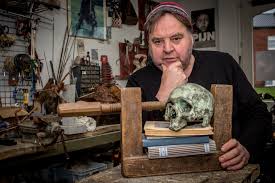
Jan Rosseels in his studio
Hulst, 57
3272 Testelt
tel 013/ 77 61 09
… May I call him the Nestor of our artists? Though that is not quite right, for I know no younger soul, no more playful fellow, no more exuberant character. And yet, his figures, whether modelled or drawn, stand with their whole little beings in True Life! They hold up a mirror to us. Our failing and winning, our daring and dithering, our hesitation, our shame, our recklessness, our leaping, our falling and scrambling back to our feet. It is us; Man, standing there in our PURE. And even though we are cast in bronze, we remain tender and soft as the wax we were, kneaded in his hands. … – Josée Lehon, art historian
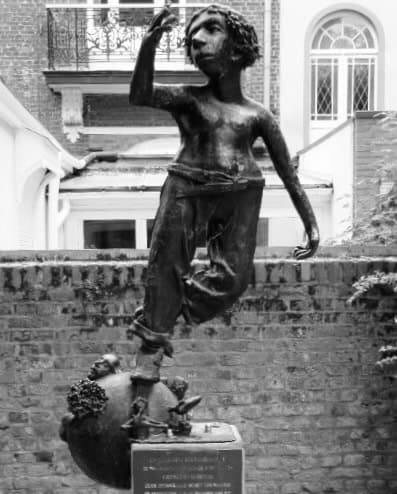
Kamerood sesteg
This bronze statue of the Kamerood Sesteg was made by Jan Rosseels at the request of the ‘men of 60’, who donated it to the city of Leuven. The statue stands in the Sint-Donatuspark in Leuven. It was unveiled on 10 September 2000.
It goes back to the Leuven notion of ‘kamerood sesteg’, the precise meaning of which nobody knows any more. It is often said to stem from medieval guild-shooter life. The shooters’ guilds could have a maximum of 60 members. Each time a member died, a ‘bleuke’ (novice) was allowed to enter the guild: the 60th member, or the kamerood 60 as it were. The expression is still used to designate a newcomer with condescending sympathy.
The notion was eagerly taken up by the Leuven Men of ’60. They commissioned Jan Rosseels to dedicate a statue to it. They donated it to the city in 2000, when they all turned 40. The creator made the statue brim with symbolism, with an eternally young man full of zest for life. The finger on the nose indicates a smart aleck. The globe at his feet symbolises illusion, the baby new life, the snail slow progress towards growing old, and the more mature man with a bunch of flowers ‘liking to paint the town red’. (source: leuven.be)
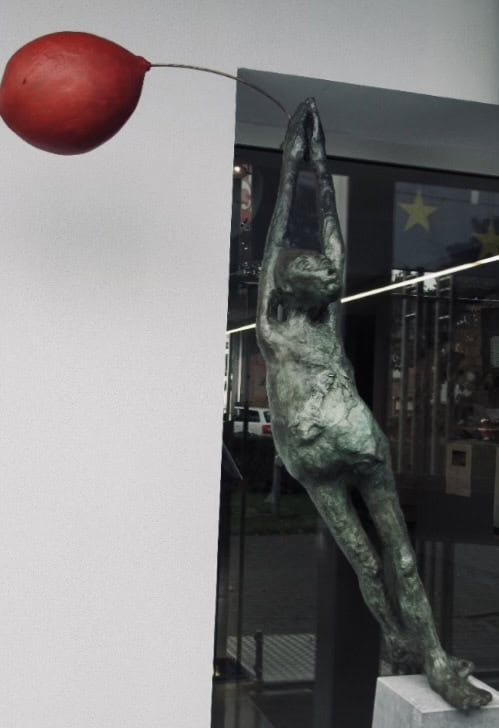
The joy of youth
The statue shows a playing child with a balloon in its hand. A museum holds up a mirror to the visitor. In it, the visitor looks at the past, but also makes a link to the present and the future. The building was once a maternity hospital. Many people from Aarschot were born here, and the artist Jan Rosseels too saw the light of day here.
Like the renovated museum, the statue looks young and youthful. The child too still has a whole future ahead. The balloon refers to the fleetingness of things. You must dare to let it go, let it fly away to an unknown destination. Your youth too you must be able to let go, without forgetting it.
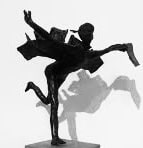
Every year the Aarschot Culture Council awards a prize to an artist who is connected to the city in one way or another. In 2021 the sculptor Jan Rosseels receives that prize for his entire oeuvre.