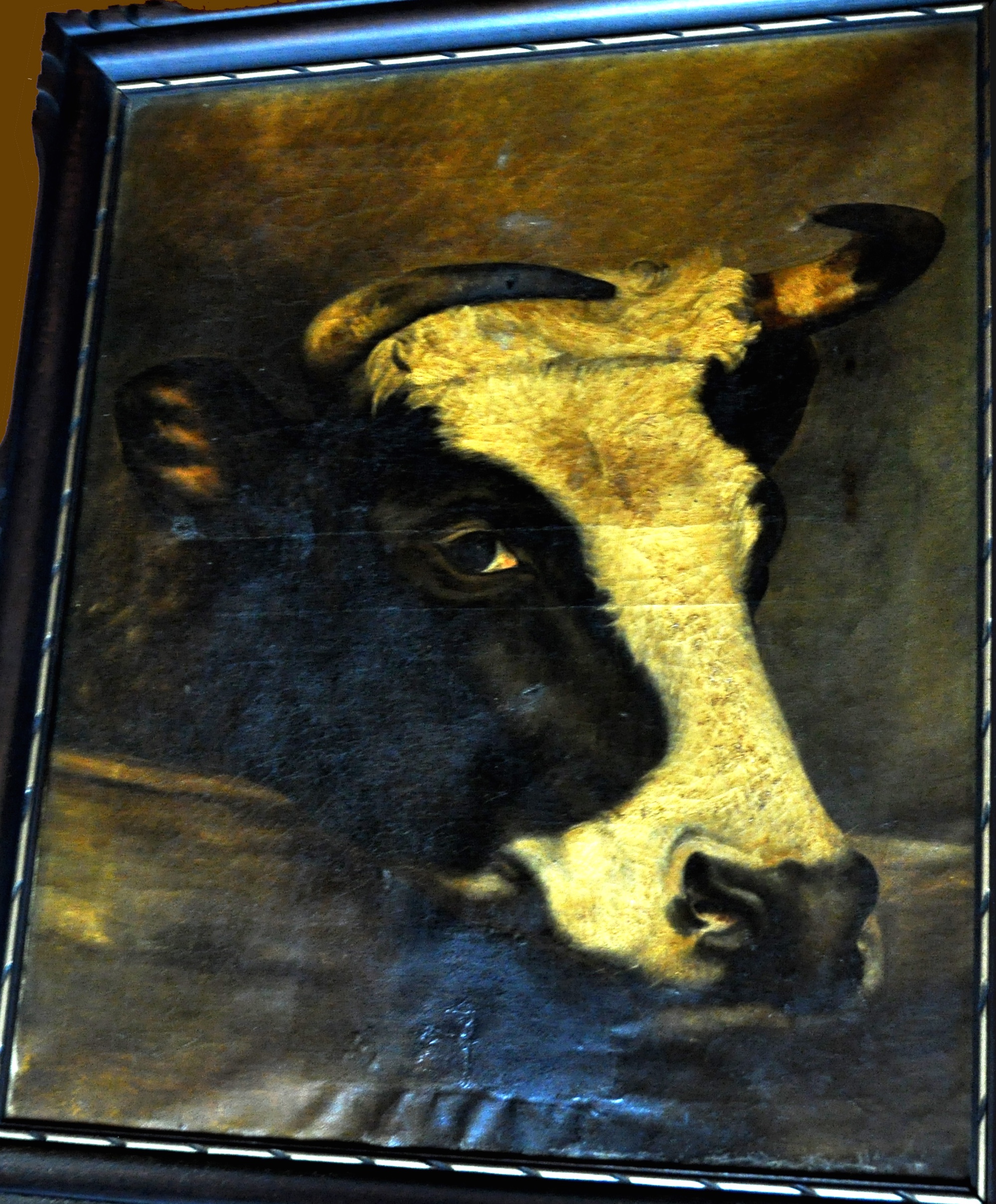
- oil on canvas 58 cm x 71 cm
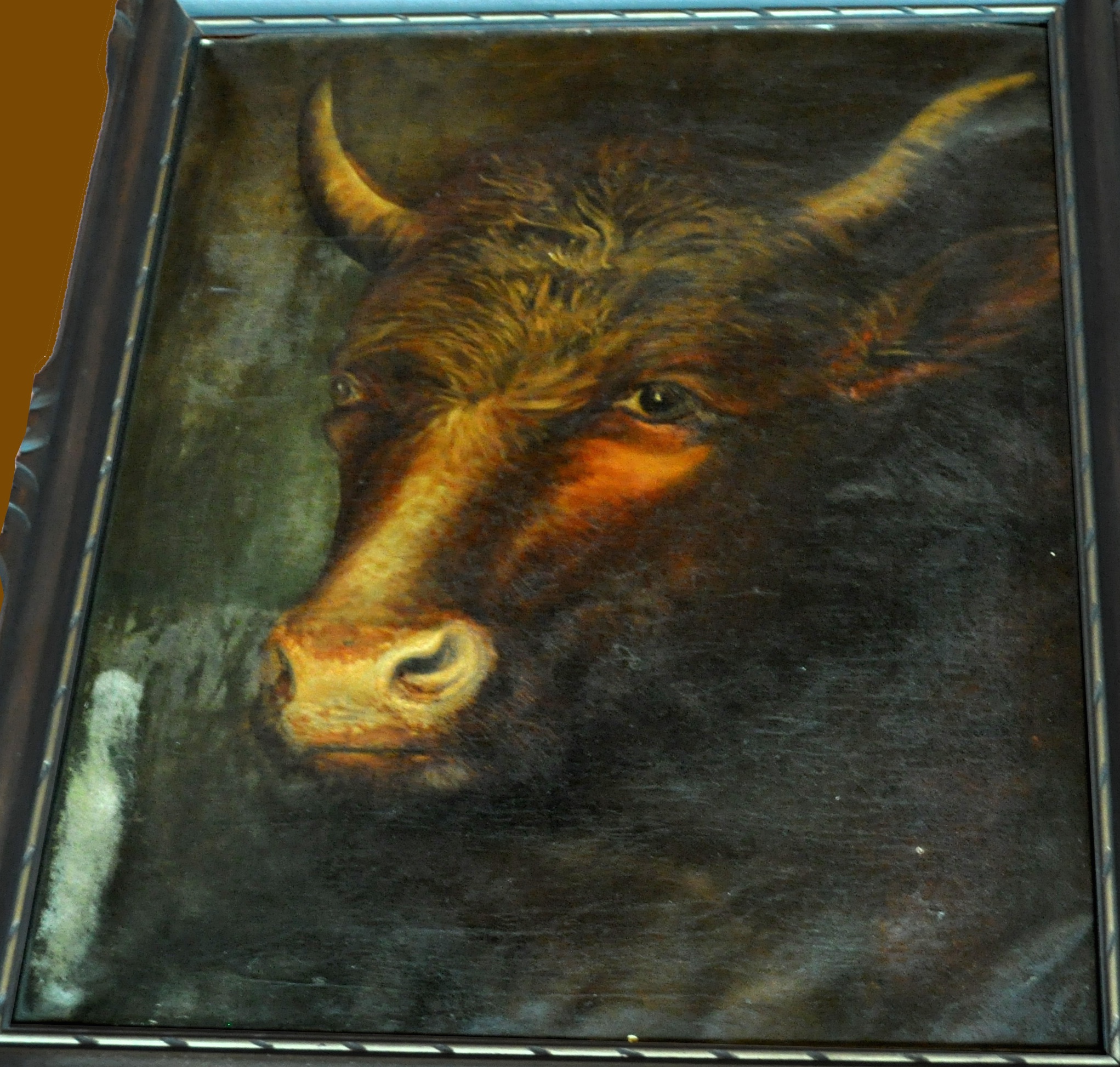
- oil on canvas 61 cm x 72 cm
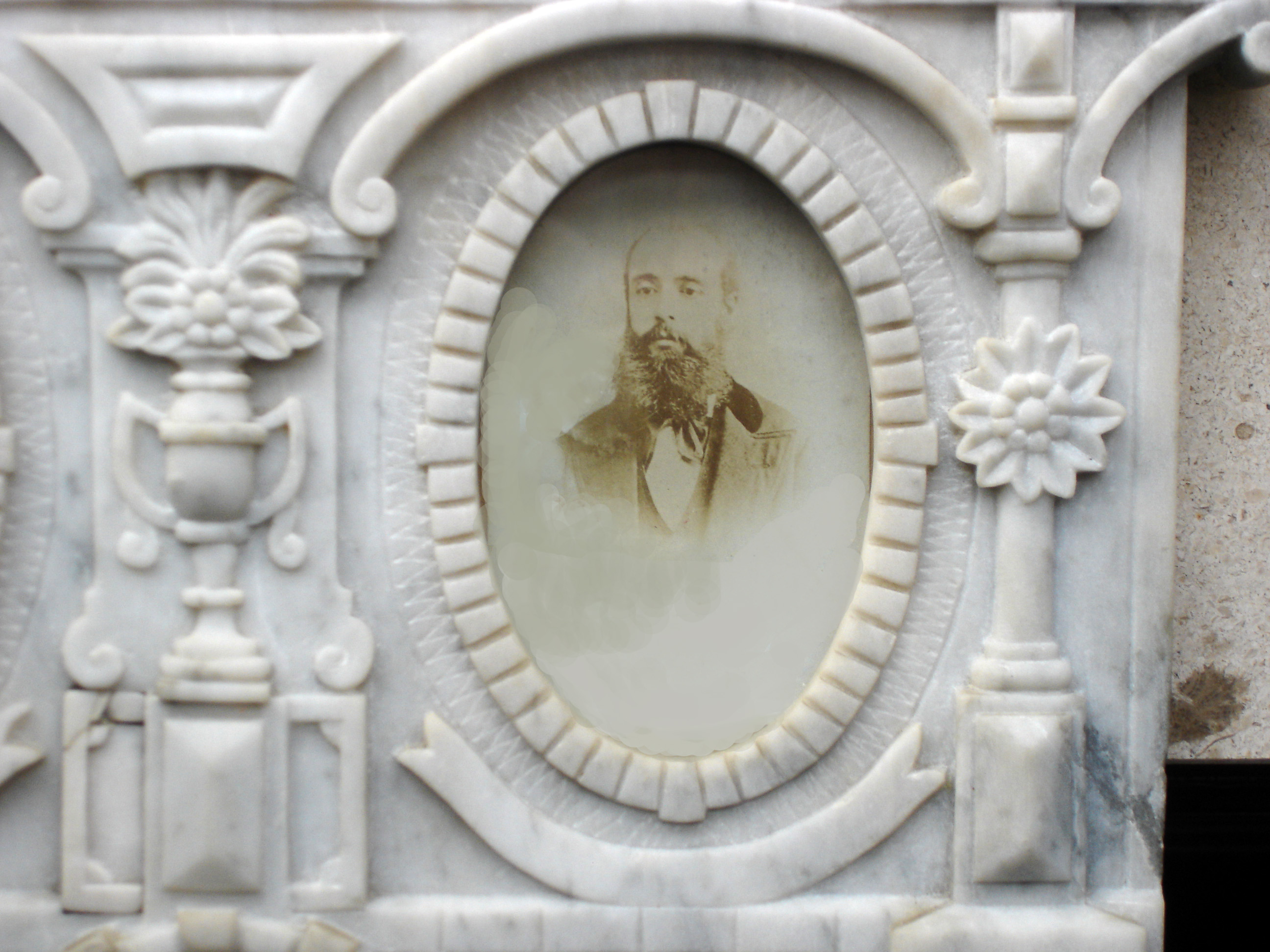
- Carolus Bosmans
|
Dear Sir,
The reason for this contact is in reply to your general request for information about:
Carolus Bosmans
Born as Carolus Josephus Leopoldus Boschmans, known as “Jos”
Married to Johannes Emelia Pauwels
This far from undeserving painter won the “First Prize of Rome in painting”
The attached photo of this man was taken shortly after the wedding of his son
Joannes Franciscus Boschmans to Elisabeth Van Hoffelen
Two paintings by my great-grandfather Carolus are in my possession
|
|
Given their age, these works are still in good condition
The works are still in their original frames
The damage sustained during the war has been repaired, but is still visible
|
Text: Archive of the “Heemkundig Museum Aarschot” (local history museum), by J. Meeus
In 1868 the Aarschot town council granted an allowance to a certain Carolus BOSMANS, a student at the Academy of Fine Arts in Antwerp.
The information provided by Dr Guido Persoons, scientific librarian of the Royal Academy of Fine Arts in Antwerp, shows the following:
Carolus BOSMANS took the following courses:
- Winter 1865 – 66
- Landscape painting; age of the student: 22, address: Molenberg 18, Aarschot.
- Summer 1866
- Landscape and animal painting; address: Luikstraat 43, Antwerp.
- Winter 1866 – 67
- Landscape painting; address: Molenberg 18, Aarschot.
- Summer 1867
- Landscape painting; address: Aarschot.
- Winter 1867 – 68
- Same course; address: Hoogzettersstraat 30, Antwerp.
- Summer 1868
- Same course and same address.
- Winter 1868 – 69
- Landscape and animal painting. Address: Oude Vaartplaats 5, Antwerp.
- Summer 1869
- Same course and same address
- Winter 1869 – 70
- Same course and same address
BOSMANS was 22 at the start of his studies and 27 at the end. He obtained the following distinctions:
| 1865 – 66 | secondary level, “perspective pittoresque”, 1st of 3 participants. |
|---|---|
| 1866 – 67 | “perspective pittoresque”, 3rd. Prize of excellence, secondary level, landscape and animal painting, 3rd. |
| 1867 – 68 | “Perspective pittoresque pastel”, landscape painting class, secondary level, 5th. Prize of excellence, landscape and animal painting: 3rd. |
| 1868 – 69 | “perspective pittoresque linéaire”, 2nd. “perspective pittoresque pastel”, 2nd. |
| 1869 – 70 | “perspective pittoresque linéaire”, 1st. “perspective pittoresque pastel”, 3rd. Prize of excellence, landscape and animal painting, 3rd. |
So BOSMANS completed, with considerable merit, the entire secondary course in landscape and animal painting, as it was called at the time.
Can anyone tell us more about the further course of the painter’s career, for instance where he settled after finishing his studies, and whether any of his works are known and have been preserved, and where?