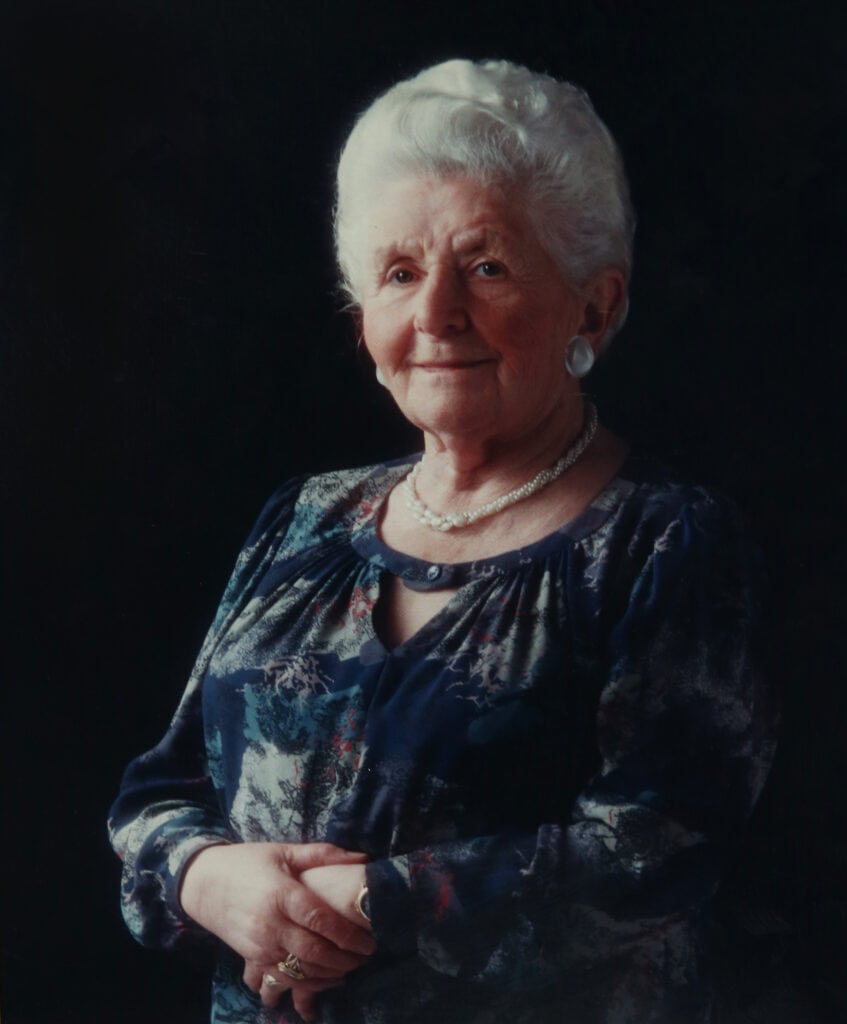
Mit Cock: a piece of Aarschot
“On 7 August 1991 we visited Mit Cock. We had a long, pleasant chat. A few weeks later she passed away. To improve readability, the interview is not reproduced verbatim. It is, however, correct in spirit and content.” – Robert Van Rompuy and Gie Van de Wouwer
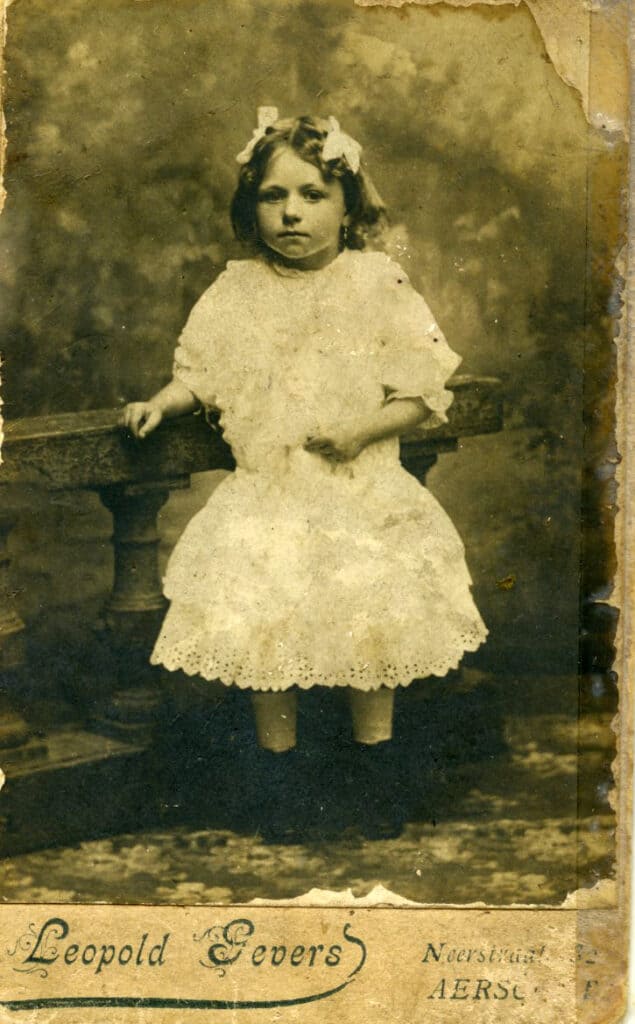
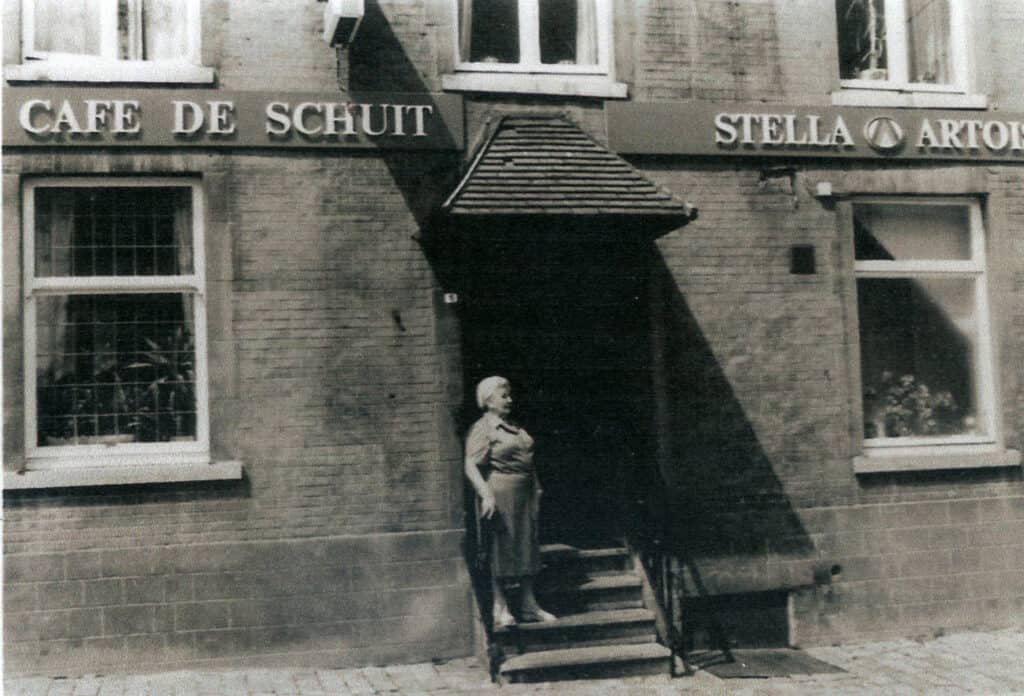
Mit was born in De Schuit.
School days in Wavre
G: Mitteke, where did you go to school? M: Me? Here with the nuns, you know. G: At Sancta Maria? M: Yes yes, but it wasn’t Sancta Maria yet back then. G: With the nuns? M: Yes, I did primary school there and afterwards in Wavre together with my cousin Margriet Swinnen. I don’t know if you know her. She is still alive, but she sold everything and moved to Brussels to live with her daughter at the age of eighty-three. With great sorrow, because now she would love to come back. She is eighty-seven there. R: You went to school in Wallonia, so you speak fluent French? M: That is the reason why I went to fetch it so far away. M: During the war it was really bad in Wavre because there was not enough to eat. My parents had to smuggle food over there to provide for me at school.
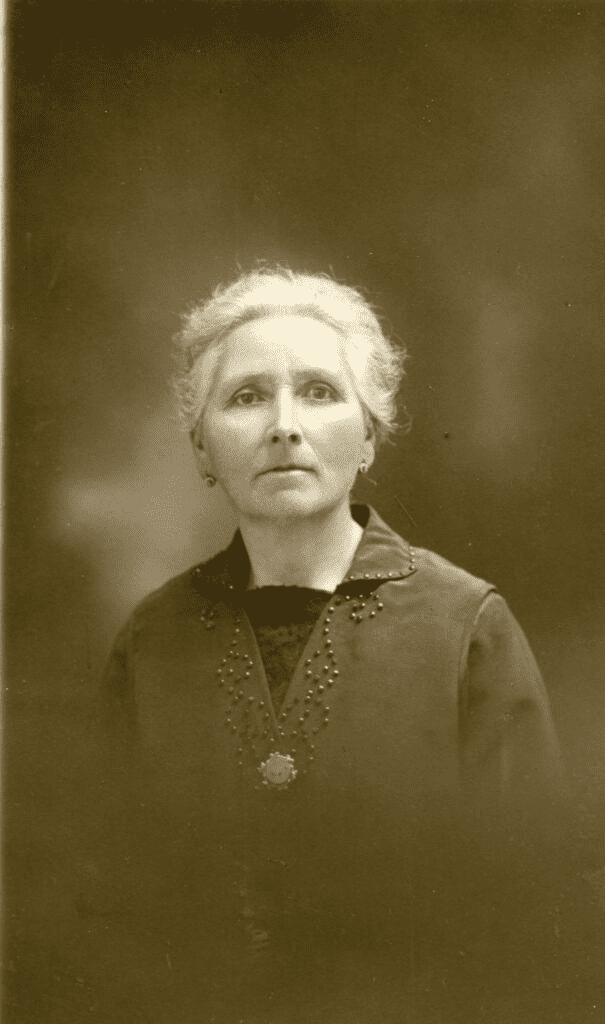
The mother Barbara Verstrepen (1869-1947) came from Rillaar.
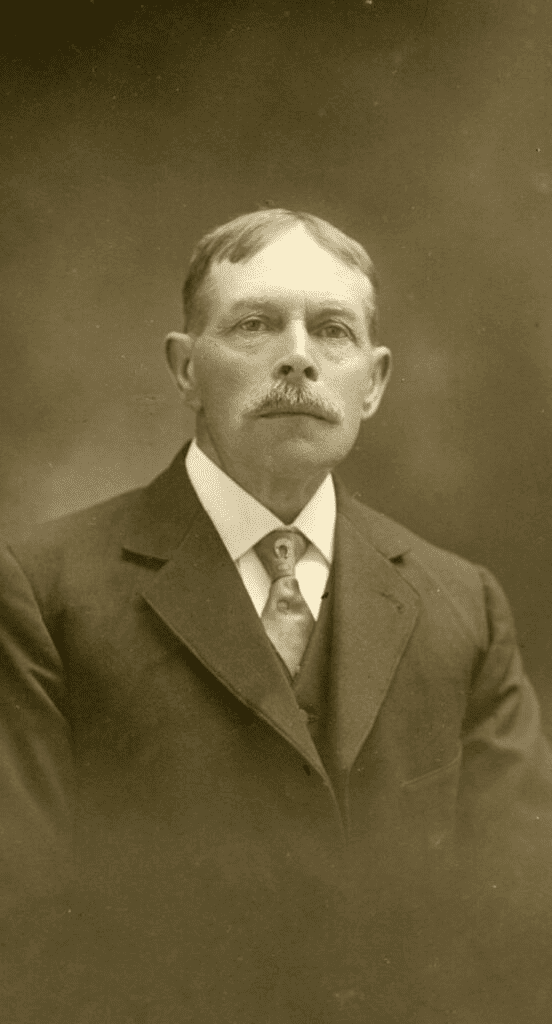
Father Karel De Cock (1871-1953) bought the inn around 1900 .
Besides the café, Karel and Barbara traded in seeds and plants. As market traders they travelled with horse and cart as far as Herentals. After her parents passed away, Mit, as the only daughter, wound up the seed trade and continued to run the inn.
R: It is the First World War you are talking about now? M: That’s certain, I am 88 years old. I made my Solemn Communion in Aarschot. Afterwards Margriet and I went to Wavre together to follow secondary studies in the girls’ boarding school. I will never forget it. I did not understand a word of French, not a single one. There were three hundred pupils in the school. During the war the food supply was problematic, which is why parents had to smuggle food for their children. Sometimes I was also allowed to visit my Walloon friends. They were mostly daughters of wealthy farmers there. And there I was served regional dishes. Like the very first time, I will never forget it: shredded cabbage with fried potatoes. I thought “Oh dear, I surely won’t be allowed that!” But I thought it was delicious. It was so well prepared. We didn’t know that in Aarschot, raw cabbage cut with the machine and fried potatoes with it. My parents could not visit often in Wavre. They came with horse and cart, after all, and during the war that was not everything. R: Were there still other Flemish children at the boarding school? M: No, only Margriet and me. R: Wasn’t it terrible to be put in a boarding school as a child all alone, and in a foreign language at that? M: Of course it was terrible. I did not understand a word of French, and when they were angry with us they spoke only Walloon. Then I understood nothing at all. I never understood the Walloon dialect, by the way. R: Didn’t you have a harder time as a Fleming? It was the beginning of the language struggle then, after all! M: The école moyenne in Wavre was a state school, but my parents had signed a letter saying that I had to go to mass. And we did that on Sundays. There were only twelve boarders. The headmistress looked after us at the weekend. It was a real little household. I thought it was great at the time. R: And did you have a bit more freedom on Sundays? M: No, we were not allowed outside. They did take us for walks. We received a very good upbringing there. It was even stricter than later with the Minims. And there too it was no picnic with those nuns. G: You were there then for three months at a time? M: We were there until we had a chance to come home. At a certain point it really was no longer possible because there was no food at all in Wavre. Then I went to the Minims in Leuven. I thought of going to Paridaens but there was no room left. Margriet went to school in Scherpenheuvel and I stayed with the Minims until I was eighteen. In Leuven I also had many friends. My mother baked gingerbread herself with honey in it. There were few boarders in Leuven. I shared with my friends. It was war, you know. At the weekend I was allowed to stay with my friends from the Leuven area. R: You have a lot of schooling behind you, compared with the customs of the time. M: I was still a child when I went to boarding school. At the Minims I was with Margriet Van Noten, she hasn’t been dead long, has she, and with Maria Broos, the mother of Jos Pelgrims. Maria Broos has only been dead one year. Herman Pelgrims, the councillor, came personally to bring me the sad news. At the end of her life she stayed in a care home. She did not like it there and cried a lot. Do you know why? She could no longer see well and bumped into everything. At the Minims there was also Miss Frederikx. G: The one from the shoe shop. M: Right, but then the old Miss Frederikx. She never married. She played a good trick on us once. I’ll tell you that story some time… Every three months we were allowed to go home. This was mainly on holidays such as All Saints, Christmas, etc. We then had to travel in second class. G: There was also third class then, wasn’t there? M: Yes, but the nuns did not allow us in there. Once I was on the train home with Margriet and Frederikx. There was a man in the compartment. At some point he asked “A cigarette, young ladies?” We already felt like grown girls, and so I answered coolly: “Oh yes, thank you, sir”. I had never touched a cigarette in my whole life. That man had a good laugh at our coughing and our antics. The following week, however, we had to come to the headmistress. I had to explain my behaviour and received only four points for conduct. That was the worst you could get. A little later Margriet Van Noten received the same punishment. Not Frederikx, because she had not smoked and she was the one who had gone and reported everything. Then the three of us flew home to get a certificate from the dean-parish priest. This was to confirm that we were indeed of impeccable behaviour. I can still see my mother going with me to the dean… . R: And all that for a cigarette. M: Certainly, you can no longer imagine those times.
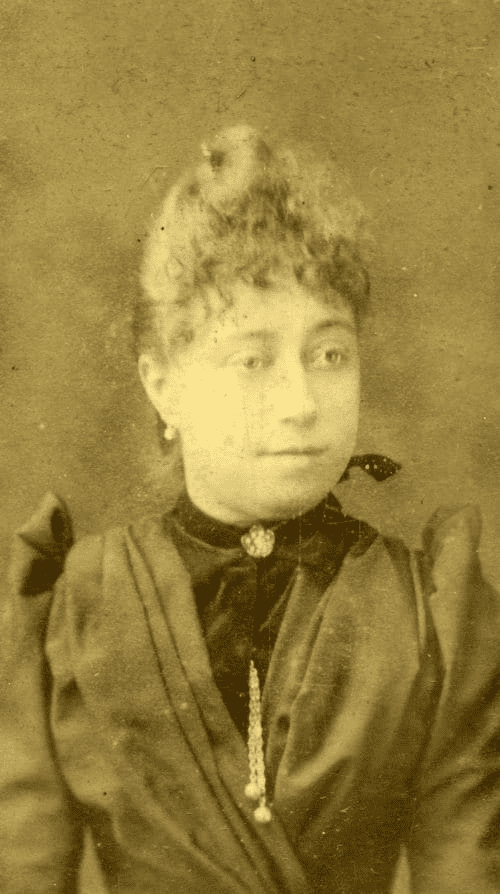
Maria, the sister of Karel De Cock
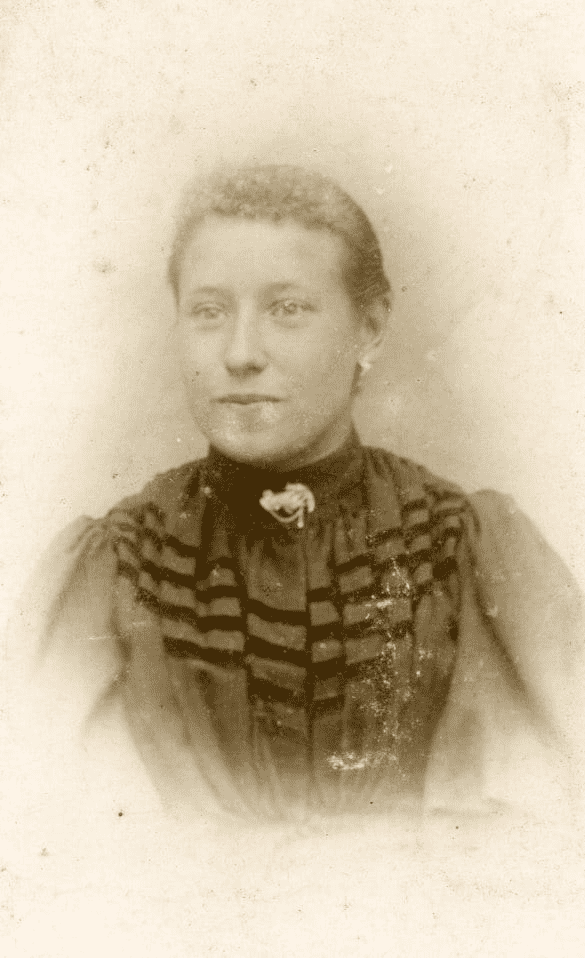
another sister of Karel De Cock
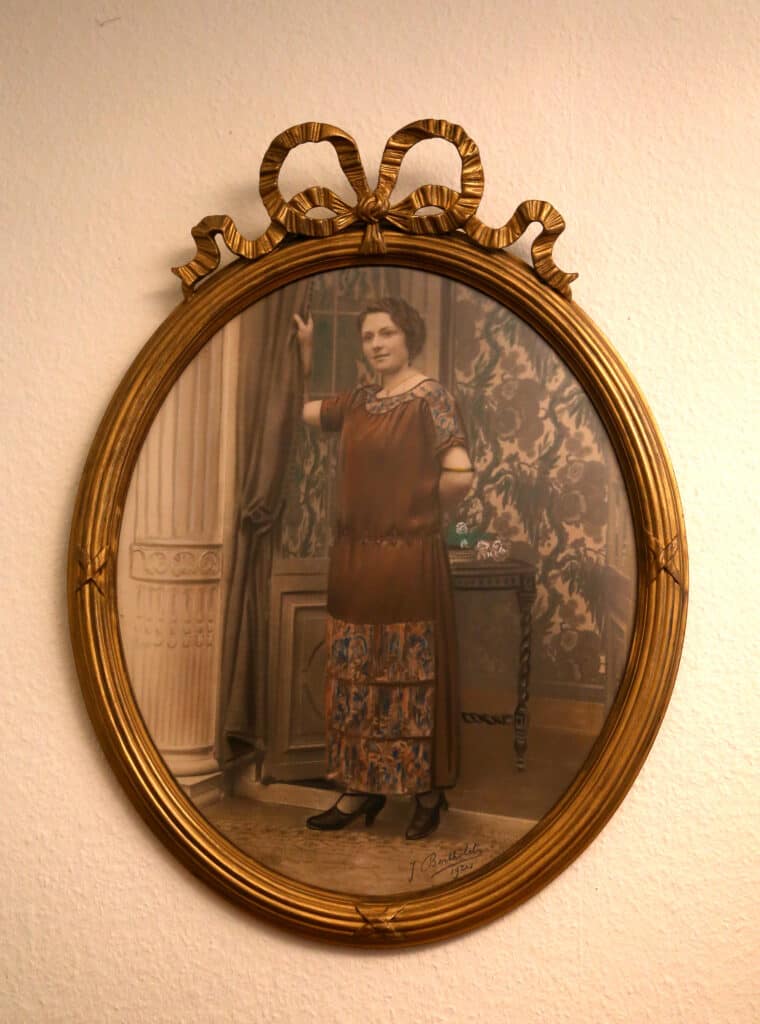
Maria Josephina De Cock: young, pretty, full of empathy. Wherever she appears she is the radiant centre and gets what others cannot manage.
Cinéma and puppy love
G: Yet in my day the college was still strict too. M: But that was not comparable to my young days. I still remember that the professors of the college drove around town to catch kissing pupils. And on Sundays the college pupils invariably had to go to Benediction. We all had a sweetheart in those days. And that sweetheart mostly went to school at the college. So we had the habit of going to the cinéma on Sunday afternoon at the Mackens’ on the Bonewijk. We then sat right at the back (‘in den uil’). Because there you could really kiss your sweetheart! At three o’clock, however, our boys left the cinéma at top speed to go to Benediction at the college. After Benediction they came running back to the cinéma. When they came back into the hall it happened several times that one or other Benediction-goer accidentally walked into the beam of the projector so that his head showed up on the screen. The Macken, the hall owner, would then get really angry every time. He would shout indignantly: “Idiots, monkeys! Can’t you see?” Yes, in those days it was still very strict in schools. But it was fun all the same. Because you know, something you are not allowed to do… . Going to the cinéma was the entertainment of Sunday afternoon. The Macken would then explain the film. It was still silent film in those days. And the Macken, he could explain! His daughter Maria played the piano and he sat on the balcony. Then it was so quiet in the hall that you could hear a mouse run. Because the Macken did everything without a microphone. One day someone brought a ‘fart machine’. He set it off at every opportunity. This little device produced a sound as if someone was breaking wind. That caused great annoyance to the Macken. He would then shout at the top of his voice: “swine, filthy lot, aren’t you ashamed”. Then two relatives of the Macken came running upstairs. “Who did that here?” Of course nobody answered. They were not yet off the stairs when it started again. “And now everyone out”, shouted the Macken. Everyone roared with laughter. It was part of the fun. And then came the “Palace”. That was competition for the Macken. My father, already quite elderly by then, had never seen the inside of a cinéma. When the “Palace” opened its doors he too wanted to go to the cinéma with his friends. I will never forget it, they were showing “The Red Glove”, a cowboy film. In those days these films were in fact serials with a new episode every week. That way the hall owners were sure that their audience would return. When a cowboy was shot down on the screen, father would shout: “Come on, he’s dead and there he is back again!” He thought it was always one and the same cowboy!
About the Schuit
M: Yes, we had the café at home. And you know how it goes, where a young girl stands in the café. G: A fine young thing behind the bar… . The men came to the café in droves, surely? M: Just like you are coming now, aren’t you. That is how the young men came too, to socialise. (laughing) G: Is it true that you served beefsteak here in the café? I know that from my aunt Nie. M: No, that is not true. It was like this: in the little room next to the café we had a kitchen. There was a Leuven stove there. On Thursday, market day, there was a huge crowd here. We had stables then. The traders who had stalls at the market came to park their horse here, and they fried their own beefsteak here at my place. There were also some who fried herring and chops. It was mostly the women who fried after the market for their husbands. They then ate it in the café. It was served on a plate or on a piece of paper. The fried herring especially lay on paper. That was quite an affair. Back then the café was also different. It was much smaller. Later we had it altered. G: When was that, roughly? M: I don’t know exactly. But my parents were still alive at the time. My mother died young of cancer. My father Charel De Cock lived to be 81. One evening when I was attending a theatre performance at the “Cercle” (Kortstraat), he had gone to play cards at Berta Flo’s in the café next to the old “Unitas”. After the card game they all came back to have a beer in “De Schuit”. It was very cold but in “De Schuit” we had a warm stove. Marcel Leysens, a handsome man from the Aarschot area (they called him the “meneer arte”), was talking with my father about the card game. When I came home I heard him say to father: “Look at him there, the scrounger”. To which my father replied: “Winning five ‘Pale Ales’ and drinking two, that’s not being a glutton, is it!” At that moment Jules Swinnen came in and said to father: “Good Lord, uncle, I’ve just caught cold at the entrance of the Cercle”. My father said: “Here, take my place next to the stove. I have to go to the toilet for a moment anyway.” He got up and fell down dead beside the bar. Died of a ruptured heart artery.
The rebuilding of the Schuit
M: I still remember what father said when the café was being rebuilt. The works were carried out by Roger Macken from the Lei. It was in fact the first café in the Aarschot area to be changed in that style. The change was widely copied in other cafés in the area. For example at “Jef Nafte” by the bridge. Father said after the change: “Who will still want to come in here? No one will come here any more”. We were used to having lots of farmers and country people through the door. The renovation turned out enormously well, it became a beautiful café, it is still so today, by the way. The café was also enlarged at that time. It was extended some two metres deeper into the house. The day we opened after the building works, people were queuing at the door. There were so many people that they could not all get in. For the opening we had specially had a lorry of ‘Dort’ brought in from Germany because my beer man Fons Braes could not keep up. I received a very beautiful necklace from those Germans then. My whole back yard was full of beer.
Mit’s pranks
Mit, you once told me that you pulled a prank. You once did something with the gendarmerie, didn’t you? M: Well yes, those men came here a lot. They could drive their van in here. That way it stood out of sight of the good folk and the gendarmes could quietly drink their beer. Once, however, they had brought along a new colleague who did not yet know ‘De Schuit’. He was a former ‘boefer’ from Germany who had been discharged from the army and had thus ended up in the gendarmerie. While drinking his beer, his eye fell on the number board of the wip game that hangs in the café. People regularly shot at the ‘liggende wip’ here. Evidently unaware of this, our officer asked what the board was for. I told him that the café was in fact a guesthouse with several rooms. The numbers on the board corresponded to a room number. Incredulous, he asked me whether ‘De Schuit’ really had enough space for so many rooms. I took him out the back to the inner courtyard and explained to him that ‘De Schuit’ was much bigger than just the café. And that I had even more space than those eighteen guesthouse rooms. He swallowed my invention, took me aside for a moment and asked: “Mitteke, I know a divorced woman. She is a policewoman in Germany. Might I rent a room on occasion?” I answered: “But of course my boy, you are always welcome. Take the shortest way!” His colleagues burst out laughing. The gendarme fell for it completely. After a bit of private amusement I forgot the incident. A few months later, during my holiday in Spain, the man came back. My cleaning lady from Rillaar was minding the café during my absence. The gendarme asked for me. The cleaning lady said I was abroad. Then he asked her for a room. The cleaning lady said she did not understand this, but the man insisted stubbornly. At his wits’ end he pointed at the number board. “I want one of those rooms, Mitteke promised me”. The cleaning lady replied laughing: “My dear sir, that’s for the wip.” The man was never angry about it and always kept coming to the Schuit.
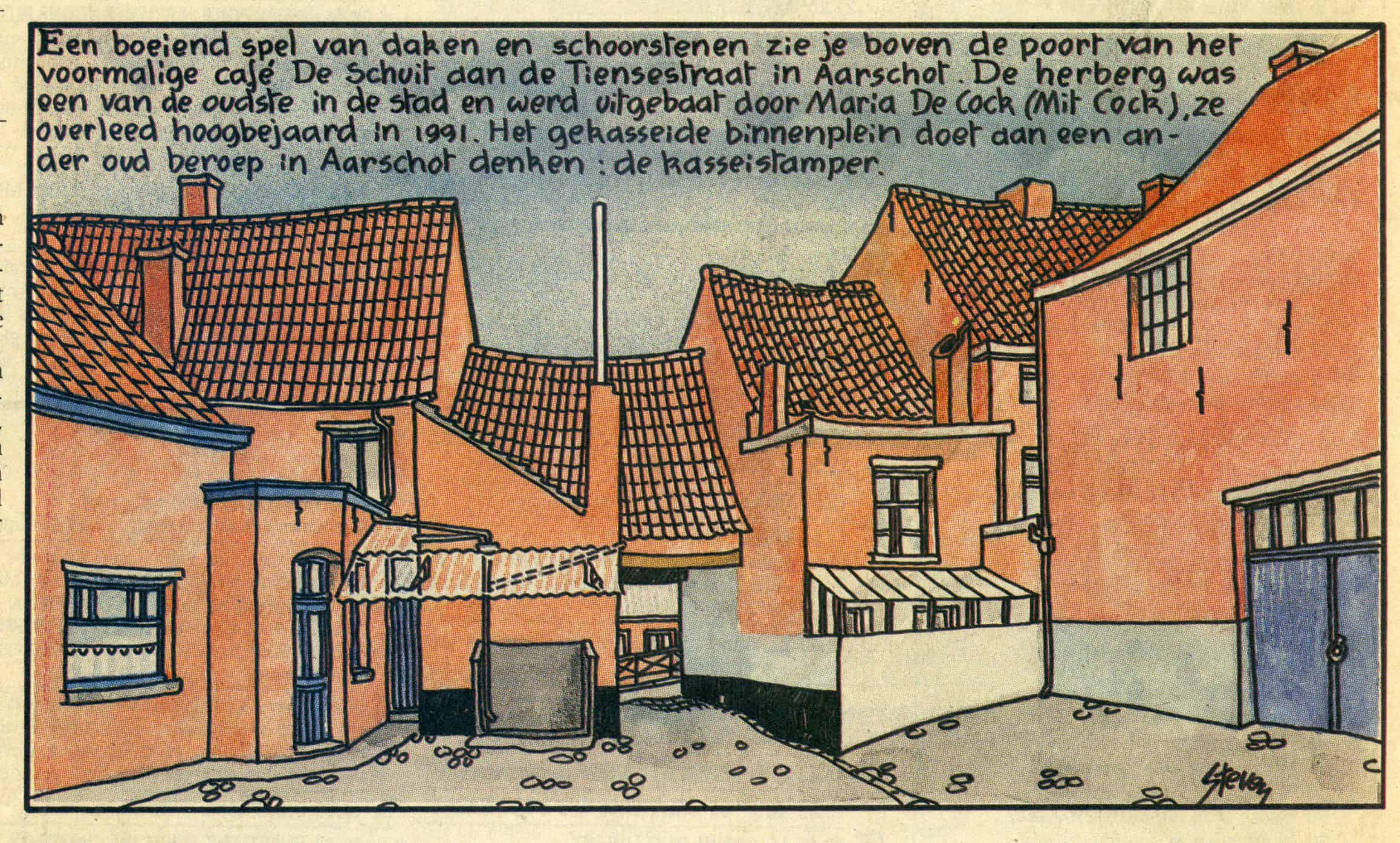
An illustration by the hand of Steven Tuerlinckx (1929-2022)
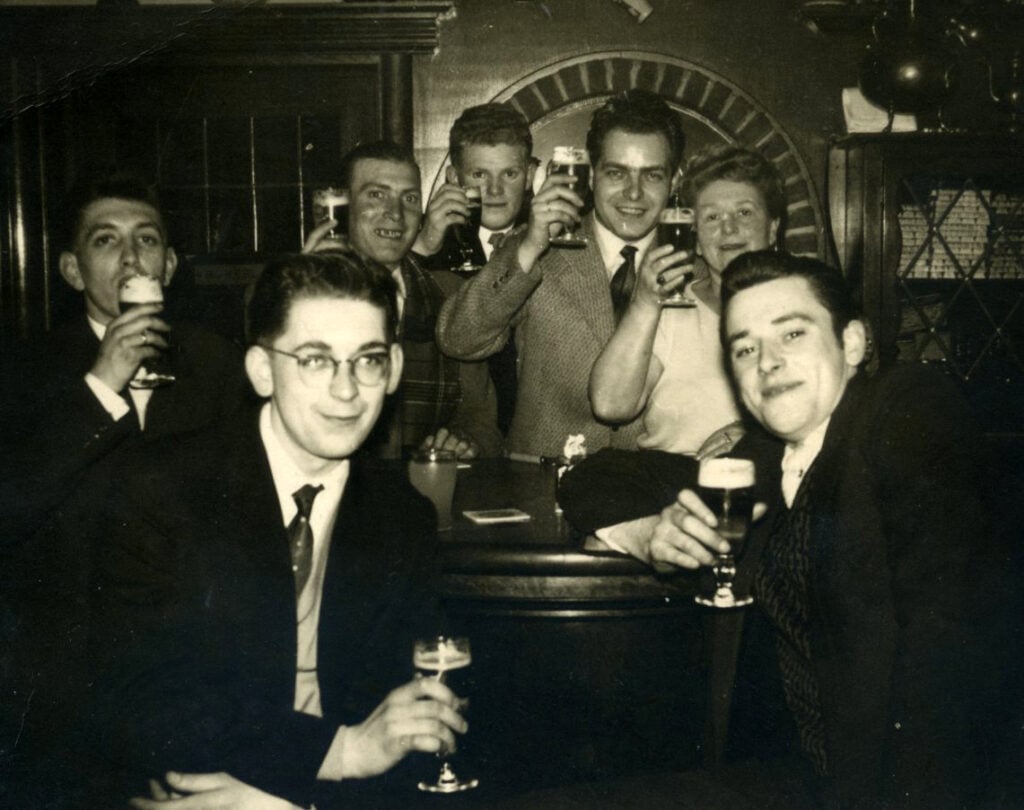
professional barflies
About carnival
G: Mit, you still have to tell that story about our Emiel Bosmans) M: Well, after the war carnival was subject to strict police regulations. So a mask was not allowed because one had to remain recognisable. Now Miel Bosmans was an artist at make-up. Miel made us all up, by the way. But we were never allowed to see his disguise beforehand. Sometimes we stood in the ballroom right next to him without knowing it. He played his role so superbly that we did not recognise him. During carnival he was always disguised as a woman. One time this was particularly successful and during the ball his neighbour “Rounault” from the porcelain shop was completely “gone” on his acted femininity. After a few dances he asked: “Rendez-vous” (a quickie). Before Miel could even answer, his neighbour began to kiss him. According to Miel: “With his tongue in my mouth!”
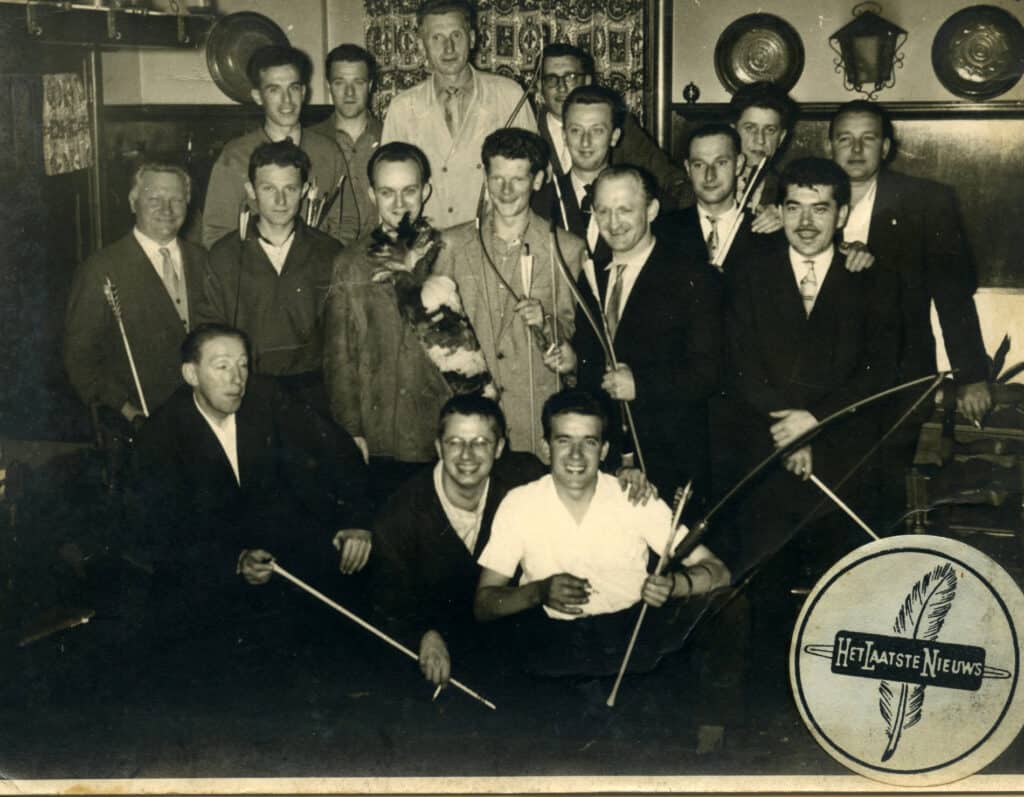
everyone was devoted to ‘De Schuit’
About the war
M: During the war my warehouse was requisitioned by the collaborators. The confiscated goods were kept in it. Sometimes we cried for poor folk who had to hand over their 5 kilos of potatoes to those filthy collaborators. We dared a lot back then, because while the collaborators were in the warehouse we listened to the English radio under a blanket in the stable. M: I will now tell you an incredible story. After the war rationing continued for a while. Meat could only be had with coupons. Each butcher received meat in proportion to his sales from before the war. To escape this measure, rather unfavourable for some butchers, the butchers’ association had decided to pool all meat rations and sell them jointly. My warehouse, where the collaborators had sat during the war, was fitted with meat stalls. All of Aarschot had to come here to collect its meat. I would open my yard very early. The butchers sat here in the early morning around the stove drinking their jenever while outside the queue of customers grew. At the time I had “deaf Fien” as a cleaning lady. Deaf Fien was truly deaf. She lived with her husband in one of the little huts at the top of the Meuleberg. Fien could not help picking on the butchers at every opportunity. Since Fien heard nothing anyway, they paid no attention. It went: “Are they here again? The swine, the murderers,….” The “Oude Jas” (“Old Coat”) was then chairman of the butchers’ association. He arranged everything and his will was law. And you know how it goes, for some the ‘Jas’ arranged something extra without coupons. So the commissioner, the mayor, etc. regularly came to collect their extra piece of meat. Now we have no cat ourselves, but strange cats do come here sometimes. So it sometimes happened that they unwantedly deposited something in the house! One morning while the butchers were drinking their jenever around the stove, Fien was again at her usual sermon. At some point she smelled a suspicious smell and shouted: “A cat has surely shat in the house here again”. Following the smell she opened the little cupboard in which the scores of the music society lay. In that cupboard lay a forgotten piece of rotten meat with enough maggots to make an average angler happy for a year. Deaf Fien took the piece of meat and threw it into the middle of the butchers in the café, shouting: “Voilà, you swine, eat the lot, may it be your misfortune!”
Accidents can happen…
M: Something serious once happened here. On our gate it said: “Stabling without guarantee”. Our Charel, still a young fellow at the time, had written the same text on a notice in the stable too. Now the farmers in those days sold their calves in front of the door here. They lay on a cart with a horse harnessed to it. Once on a market day a young fellow gave a harnessed horse a lash of the whip. It bolted. A neighbour from here on the Meuleberg, who was known for not being very afraid, still tried to calm the horse. He received a fatal blow from the cart, however. The mad horse with cart then went on to leave a trail of destruction across the Markt. Several people were injured. An hour later the public prosecutor’s office was here. Quite lucky that the notice “Stabling without guarantee” had been put up, otherwise I would have had to pay part of the costs. The owner of the horse and cart went mad from the incident. He died in the asylum. But this is an exception. Because a lot of trade was done here, calves, pigs,… . And all those market people came through here. Yet there was never a quarrel in my café. It was the most fun café for miles around. I have never known quarrelling or fighting here. It did not exist here.
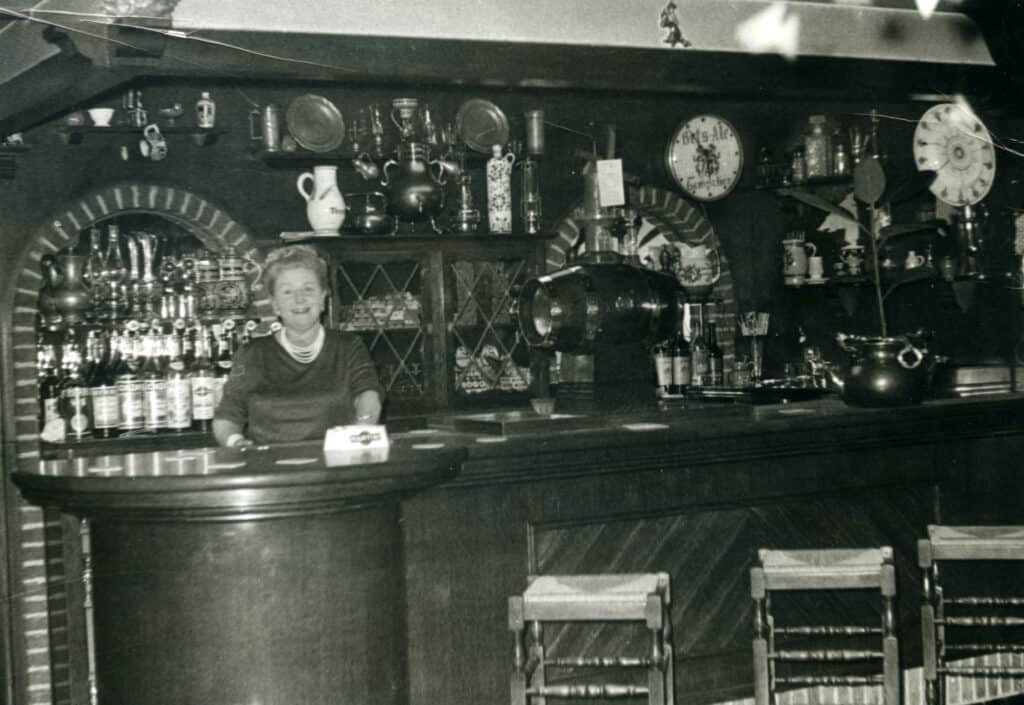
‘De Schuit’, her great pride
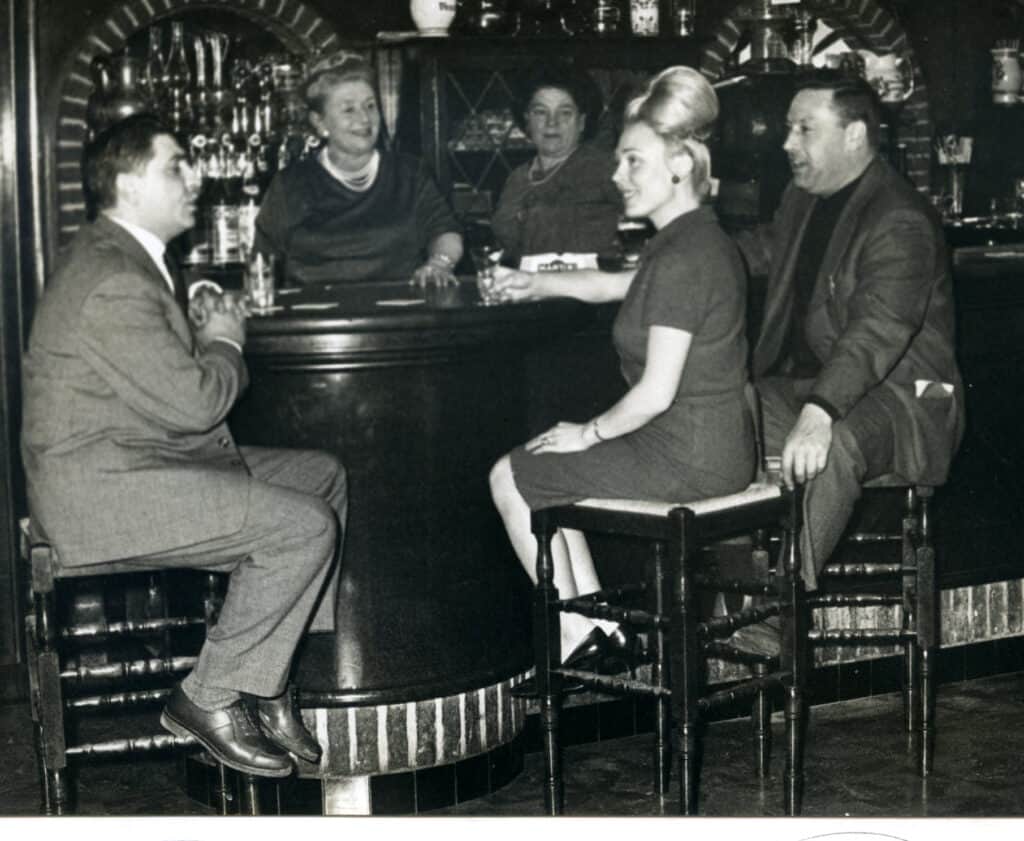
Left Jos Van Dingenen with wife ‘Jeanine coiffeuse’ and Jos Van Dijck ‘De Sloep’ were regulars at the legendary café.
‘De Schuit’ was the meeting place of the shooting guild ‘De Rebellen’, from 1946 of the association of Aarschot shoemakers, of the student club ‘Tijl’, of the Liberal Women’s League, the health fund and the trade union; a medical examiner held consultations there.
About the Rue Neuve
R: You sometimes told tall tales about the Nieuwstraat or about “de Grecht”. M: Yes, something regularly happened there. One of the most sensational stories was that of Mie Springop. Her husband went to work in the mine. He regularly had to leave at night. Mie had two sons. When her husband was away from home, she carried on with a bachelor, ‘Bruke Straks’. Once, when she was in bed with Bruke, her husband came home unexpectedly. He had missed his train (deliberately or not). The two lovebirds were so busy that they heard nothing. When the betrayed husband appeared in the bedroom, Bruke hid under the sheets. Mie swore to her husband that it was one of her sons lying in bed with her. Soon the truth came to light, and Bruke had to flee over the roofs in dire need, stark naked with his underpants in his hand. Mie Springop later met her end during a bombing raid in Kampenhout-Sas. She was literally beheaded there.
And Rik Viool…
The Thursday after, street singers led by Rik Viool were already on the market with a song about the Mie Springop story. Yes, those street singers were quick. They spread the local news by singing it. Rik Viool played his ten-bass accordion and composed the music. A defrocked priest wrote the text and made the drawings. Once a murder had taken place in Rillaar. A girl was murdered there with a hairpin. A few days later this incident was being sung about on the market. We sang and danced along. The drawings supporting the story mostly featured a lot of blood. Fun and merriment with a murder, that was how it was then, strange, isn’t it… . Rik Viool was an attraction in himself. Once a murder had taken place in Aarschot at the ‘white house’. I can still hear Rik Viool shouting about it: “Terrible murder in Aarschot, out of jealousy!” R: Wasn’t Rik Viool a bit of a simpleton? M: Rik was certainly no simpleton. He had the two most beautiful women. They were two sisters. And when the first was dead, Rik married the other. These two women were not Aarschot natives. Later he married the wife of the cattle dealer who went mad after that accident with the horse here. This woman, however, cost him a lot of money, because she even dared to wash her hair in champagne. Furthermore Rik was a real businessman. At the end of his life he lived in the Tonnestraatje. He then stood on the market with ‘poenjaarkes’ between ‘Jef Kist’ and the barrel. He was a friend of the house at ‘De Schuit’ because he was allowed to ride along with us, together with the priest, to the markets in the surrounding area. Religious or not? R: Mit, are you Catholic, a freethinker… What is your conviction? M: I have always been and remained Catholic. I made my solemn communion and went to school with the nuns. In Wavre it was a state school but with the Minims it was nuns again. R: But you always had the Liberals here. They did not have the reputation of being very churchgoing. M: “Au contraire”, they went to church more than the Catholics. Take Margriet Swinnen, she always kept going to church regularly. I had less chance to because of the café, but I always kept going to the funerals.
About her life
Sometimes people ask: “Mitteke, don’t you regret not having gone away more in your life?” Yet I did travel. I have been to Spain eight times, at a time when in Aarschot they still did not know what going on holiday was. I have visited most countries of Europe. Besides, I owned the most fun café in all of Aarschot and the surroundings. People came to the café and often stayed hanging around here while at their own homes there was sometimes a party. That is how much fun ‘De Schuit’ was. No, I have had a good life and regret nothing. If it could be done over, I would do it the same way.
Robert Van Rompuy and Gie Van de Wouwer (September 1991)
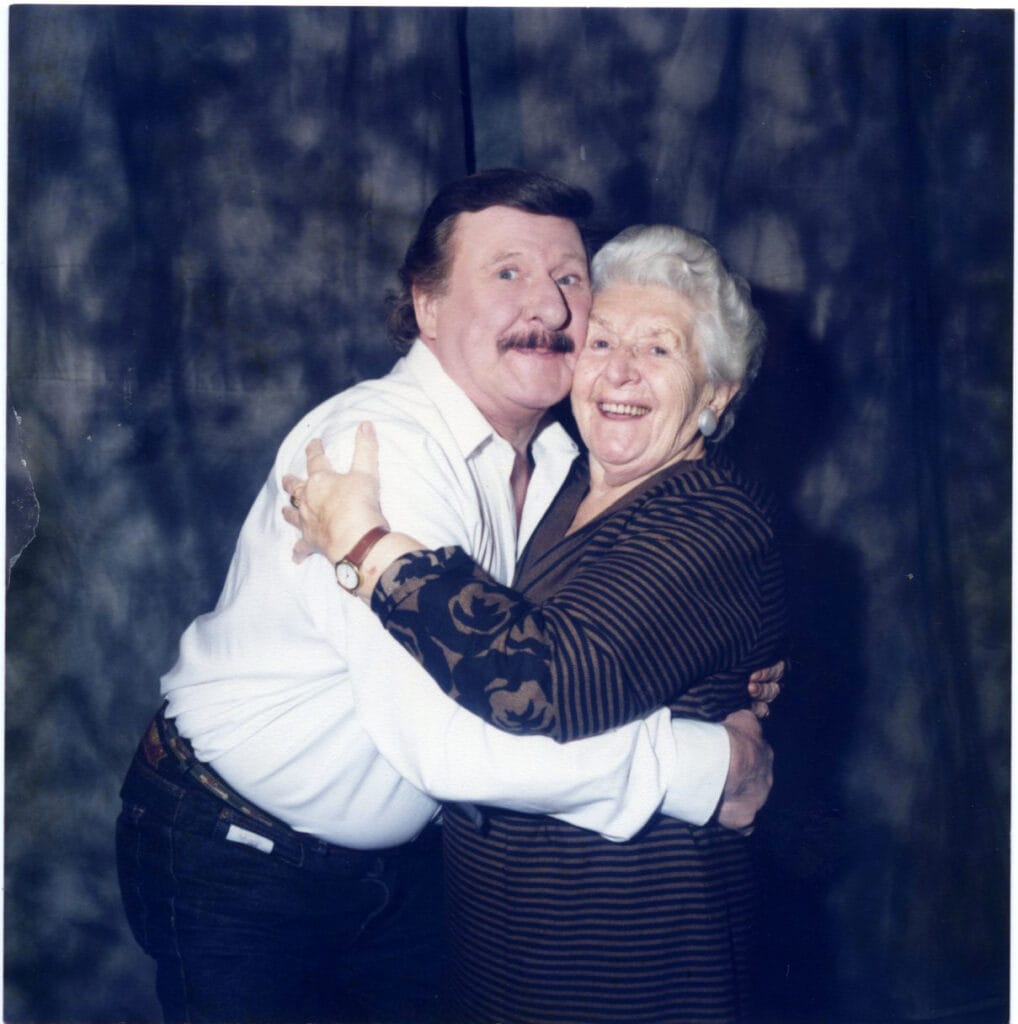
Mit Cock with Flemish artist Leo Martin
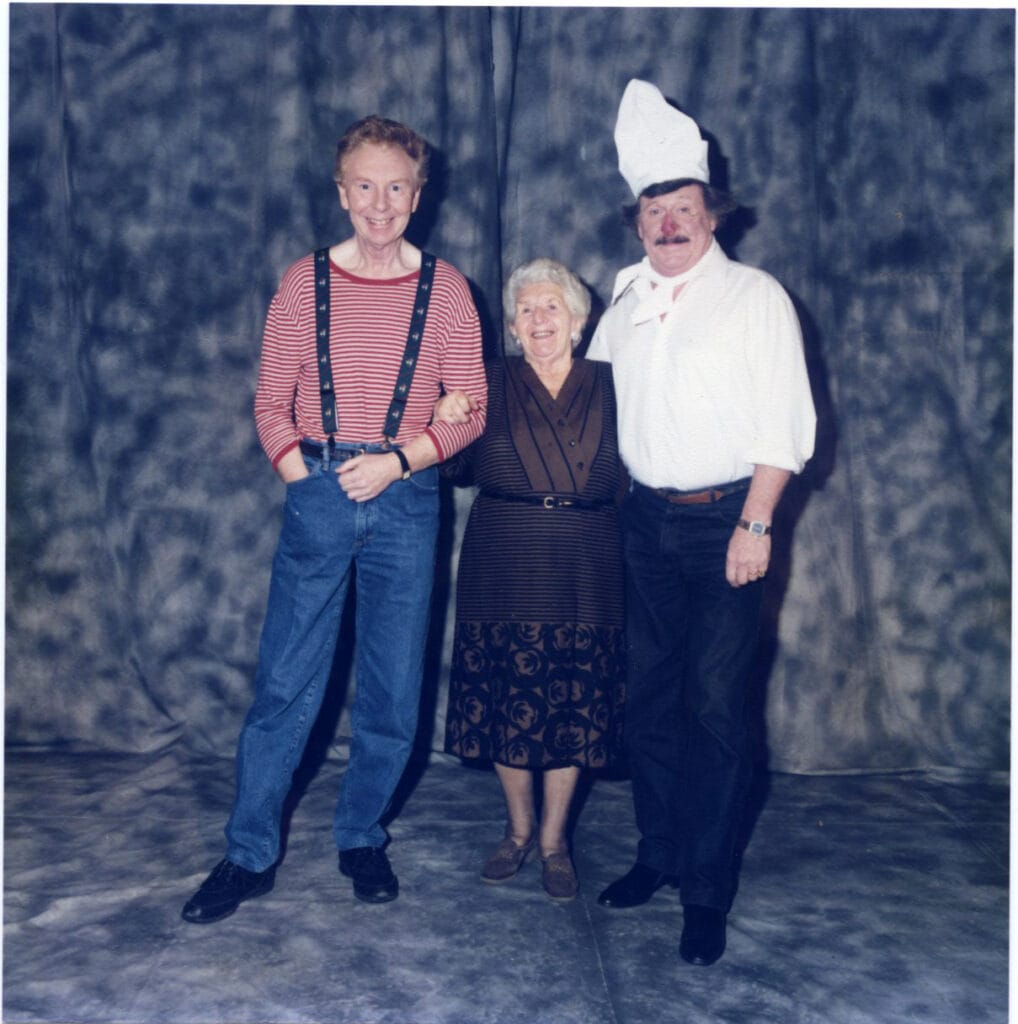
‘‘De Schuit’ was used for recording sketches of Gaston & Leo. Gaston Berghmans (1926-2016) and Leo Martin (1924-1993) formed Flanders’ most popular comedy duo. They were active from 1972 to 1992.
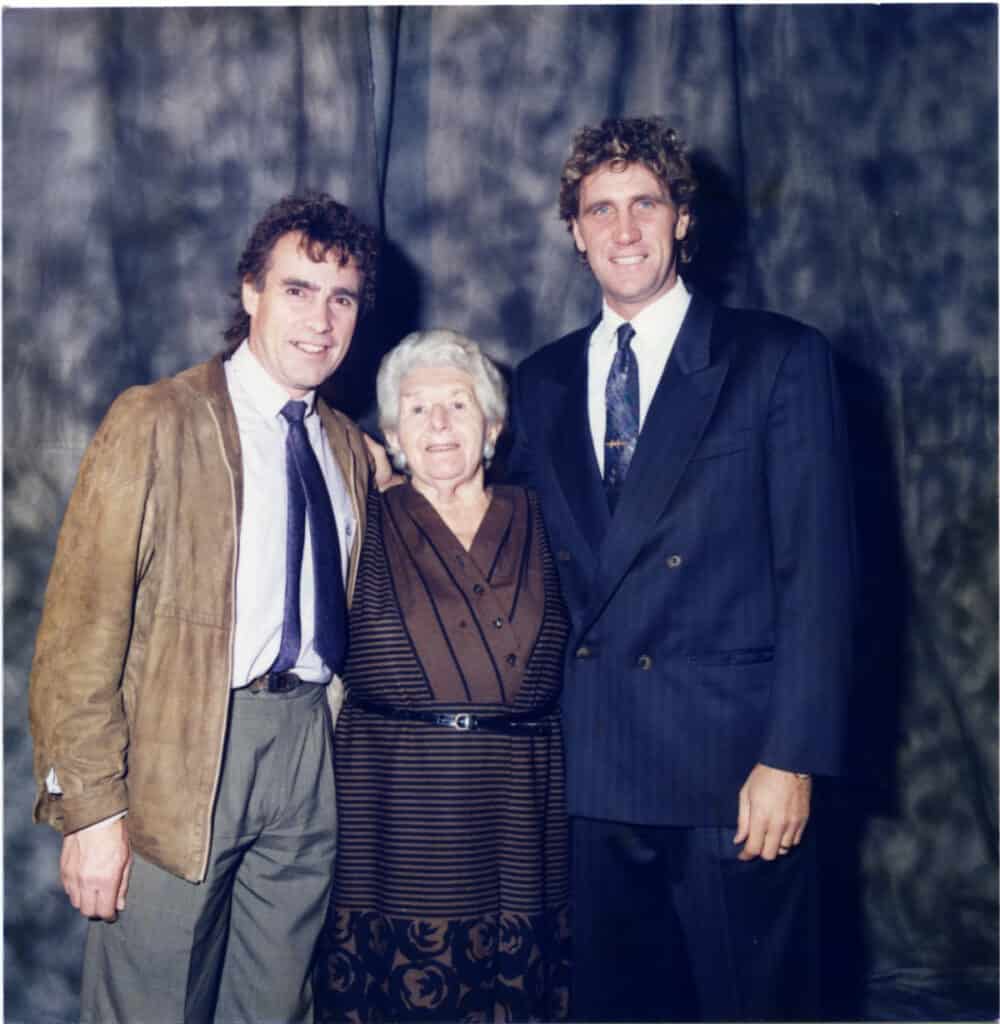
Jean-Marie Pfaff, former first-choice goalkeeper of the Red Devils, and cyclist …….. at Mit Cock’s.
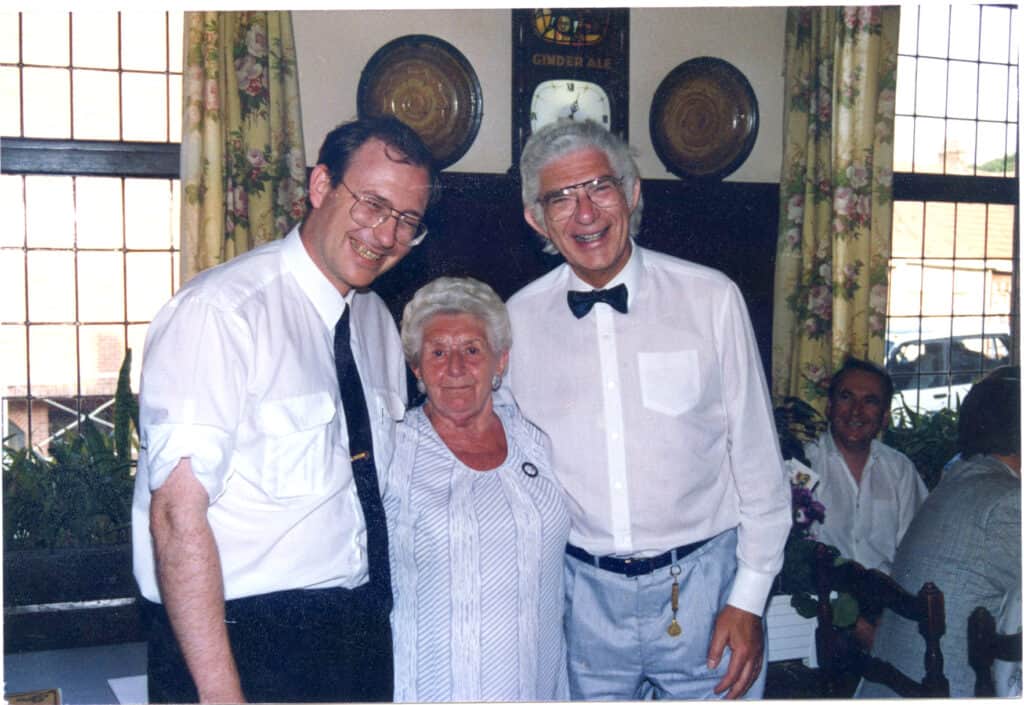
Mayor Rik Daems and the then Deputy Prime Minister Willy De Clercq (1927-2011) who gave a lecture at Mit Cock’s.
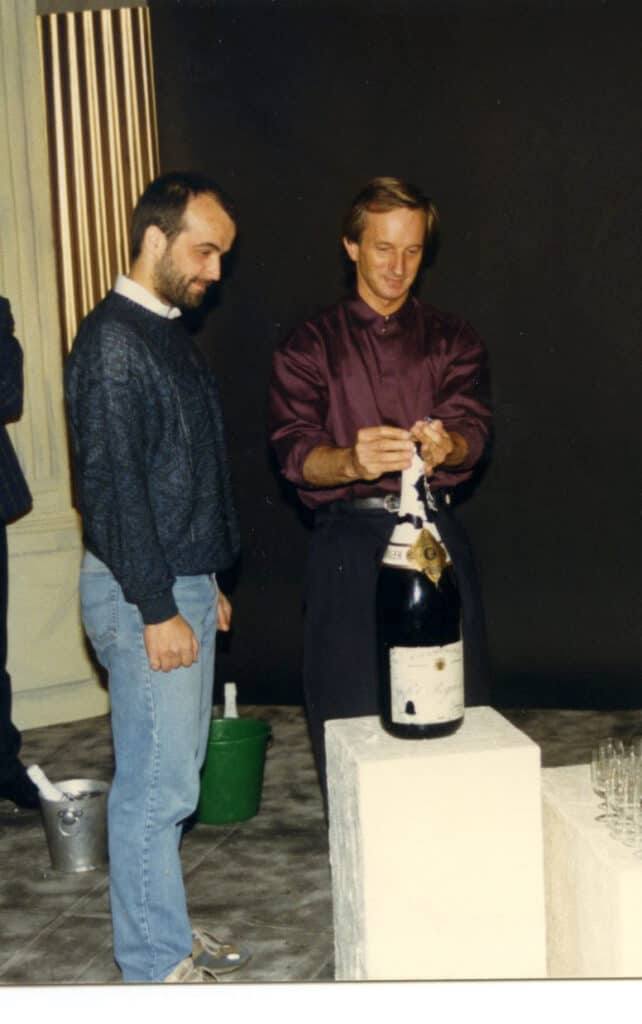
Benoît Theyskens ‘Thesse van de Knoet’ and photographer André Matthijssens at a surprise party on the occasion of the 87th birthday of Mit on 18 May 1990.
One of the most beautiful periods of my photography career
That is how André Matthijssens, photographer, describes the period when he had a studio at Mit Kock’s.
“It all began with meeting Mit in the ’70s. Mit was the grandmother of my good friends Suzy and René and so I regularly came through the door of café ‘De Schuit’. A real brown pub, with Mitteke (as I called her, like the other regulars) behind the tap. Where folk wisdom mattered more than ‘devouring letters’, where the heart was in the right place and where bon vivants, Mitteke at the head, had a good time.
In the early ’80s I worked a lot with Sasha, who was a fashion photographer. When we were talking in the Schuit about our plans to build a big studio together, Mitteke overheard our conversation and said ‘why don’t you do that in the barn, my boy’. When we saw the space we were sold immediately and the rest is history.
The barn stood empty, was very high and had a tall, wide door, so that we could even drive a van in. The ideal place, then, as a photo studio, although that was only possible after we had swept away dust and remnants of previous decades during a thorough clean.
We realised big international projects in the studio. The studio lent itself to applying techniques that had not been used in photography before; fashion photography from a trampoline or shooting straight down through the attic hatch while the models lay on the floor, which gave a special and innovative result.
Looking back on that period I can say with certainty that it is the finest period of my career as a photographer. Photography was pure. There was no digital photography yet, let alone Photoshop. You really had to be creative then to make images that got noticed.
Glad and happy that I was able to experience this under the wing of ‘Mitteke’, with whom I had a particularly close bond of friendship until her death and whom I still hold dear in my heart.” – André Matthijssens, photographer (2023)
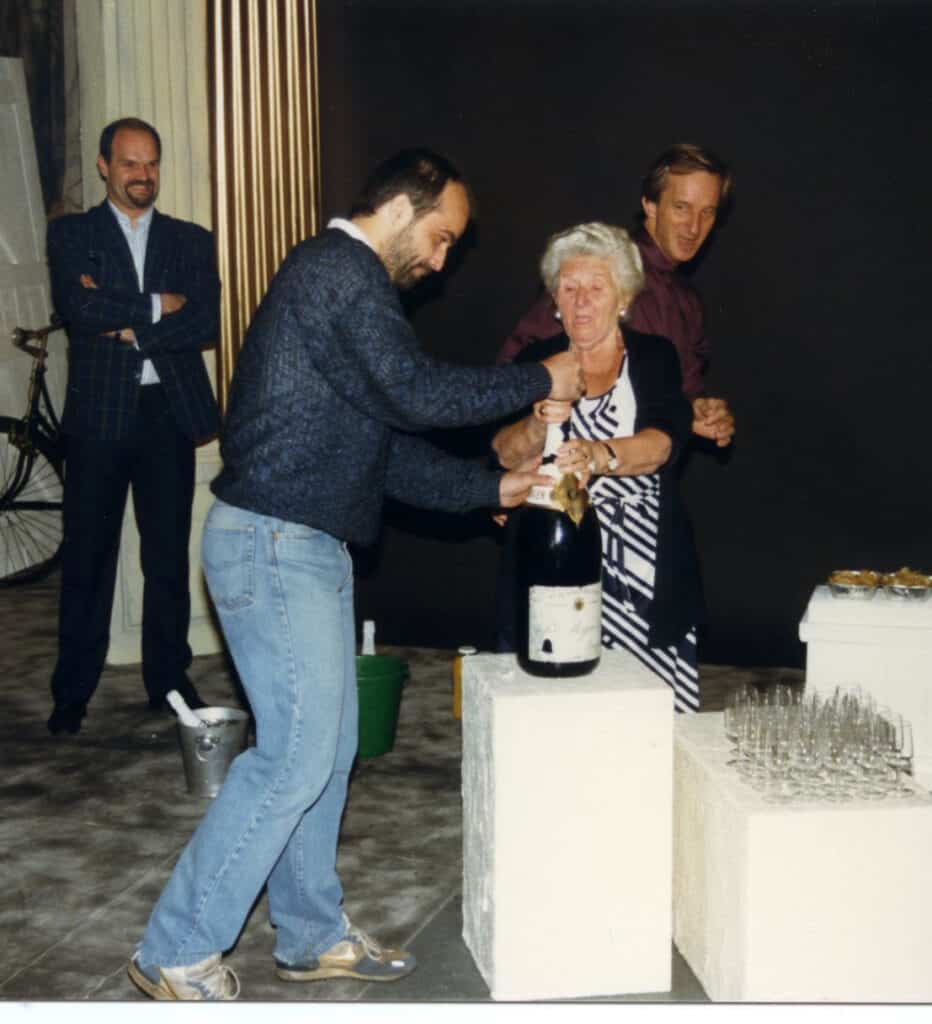
Mit Cock, Benoît Theyskens and André Matthijssens. On the left, deputy commissioner Pouillon looks on. He often came to the inn to eat his sandwiches “with a good bowl of soup”.
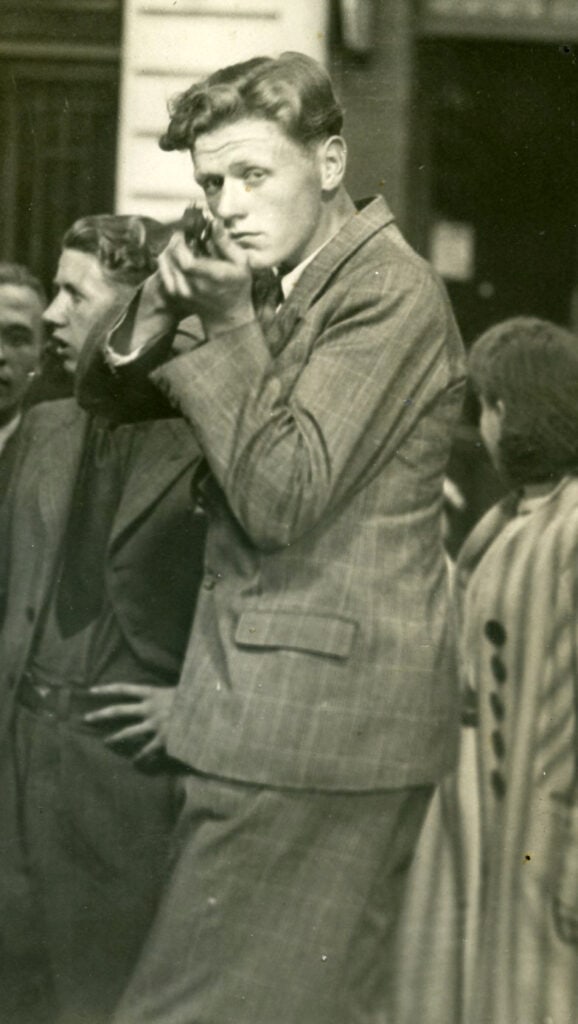
Charel Goossens, Mit’s son
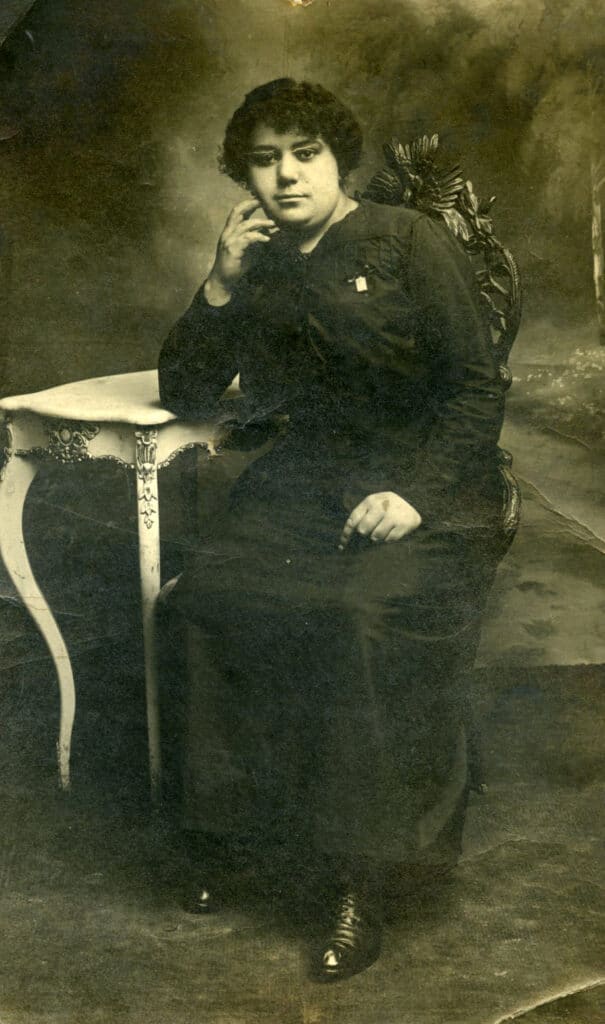
Tinne De Cock, Mit’s niece
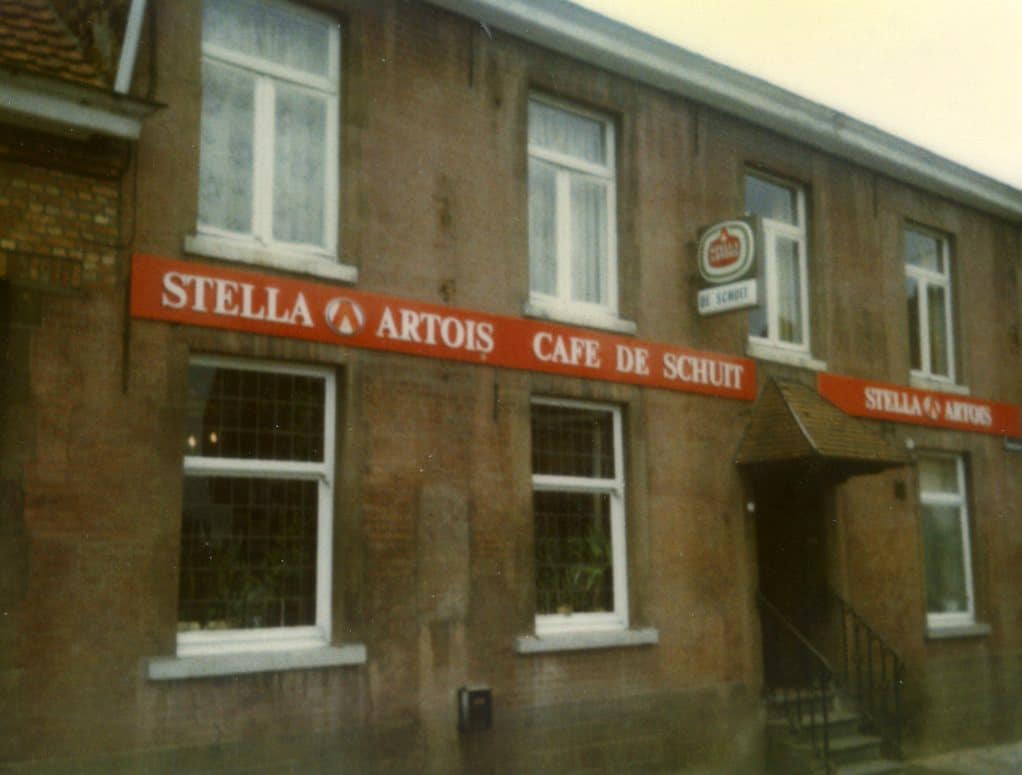
‘De Schuit’, located on the corner of the Tiensestraat and De Grecht, was hit by fire in the mid-1990s and subsequently demolished.
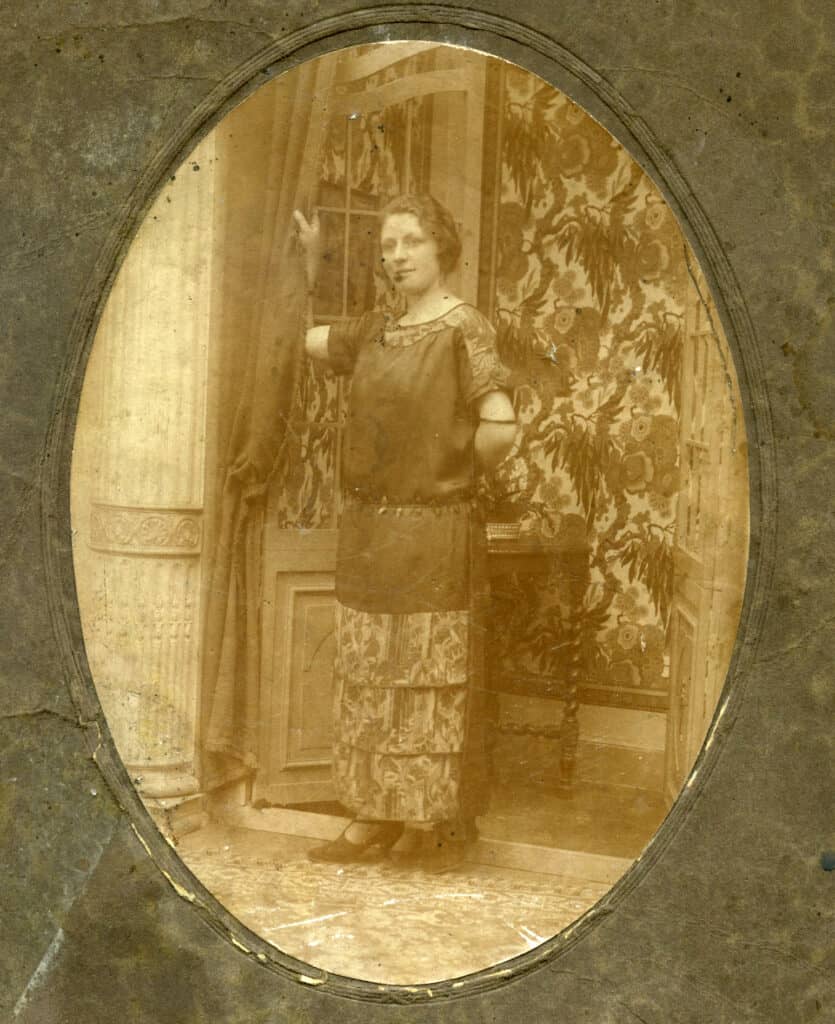
Maria Josephina De Cock – ‘Mit Cock’ (1903-1991)
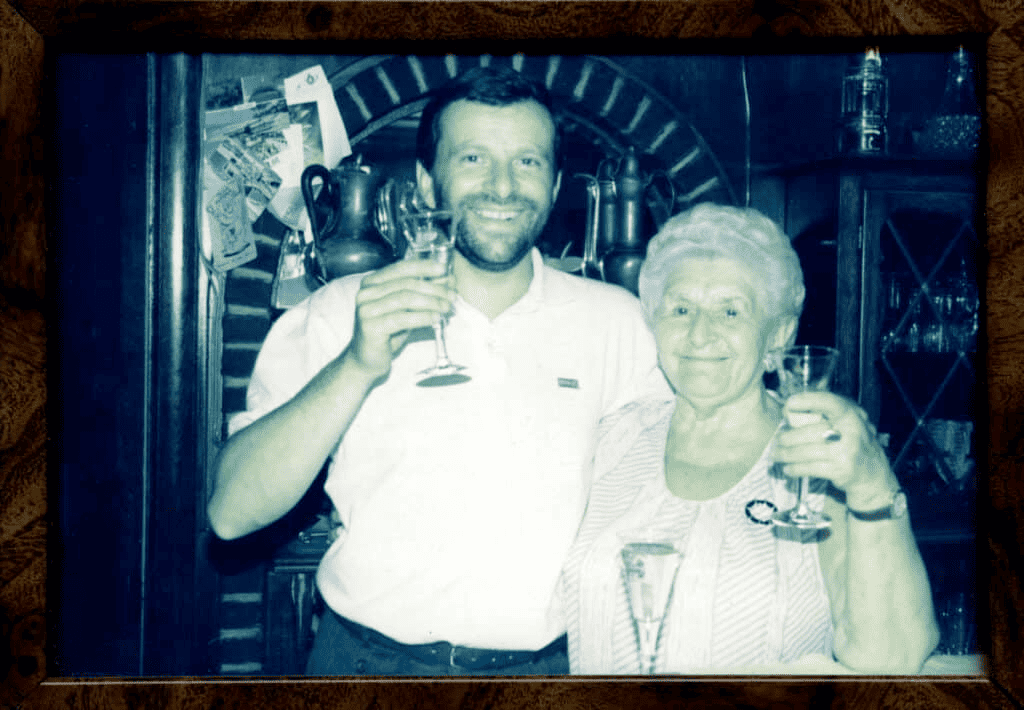
proud Mit with her grandson René Cypers, director of Municipal Education Aarschot
“Before WWII our mum regularly went to Paris for her trousseau”: grandson René Cypers testifies.
“Next to the café there was a warehouse for storing seeds and a little shop where vegetable seeds were sold in paper cones. In those days everyone had a patch of land. At the Orleanstoren my great-grandparents owned quite a lot of farmland, the harvest of which they sold at markets.
In the café there was a jukebox and a pinball machine. Remy Tuerlinckx did the maintenance and received part of the takings. One Belgian franc in the pinball machine and five francs in the jukebox for three songs. As a small boy I could operate the machines clandestinely (for free), secretly noticed during a repair by Remy or a technician.
There was dancing on all possible occasions; New Year’s Eve, carnival, fair, parties and … ‘meetings’ of, among others, the Liberal Women’s League.
I would peek through the keyhole then (1950s, early ’60s) to see these women (Mit Stipper, Margueritte Swinnen, Fien Deca, …) slightly tipsy dancing the ‘French
cancan’ on the table, skirts up, and singing, until … someone came and pulled my ears ‘you mustn’t do that, my boy’. Edith Piaf and other French chansons, also from the Moulin Rouge, were preferred. Mit Cock ‘our mum’ regularly went to Paris before WWII for ‘her trousseau’. She spoke French fluently.
When I was small, Mit Cock was one of the only ones with a telephone. And then people came: “Mitteke, may I make a call?” And I can still hear my grandmother answer: “Well, my boy, is it nearby?” Because if it was close it was one franc, and if it was further, five francs. In those days you still had to call an exchange, and there were only three or four little numbers.
Someone who must not be missing from the story is my paternal grandfather… bompa René Cypers I.
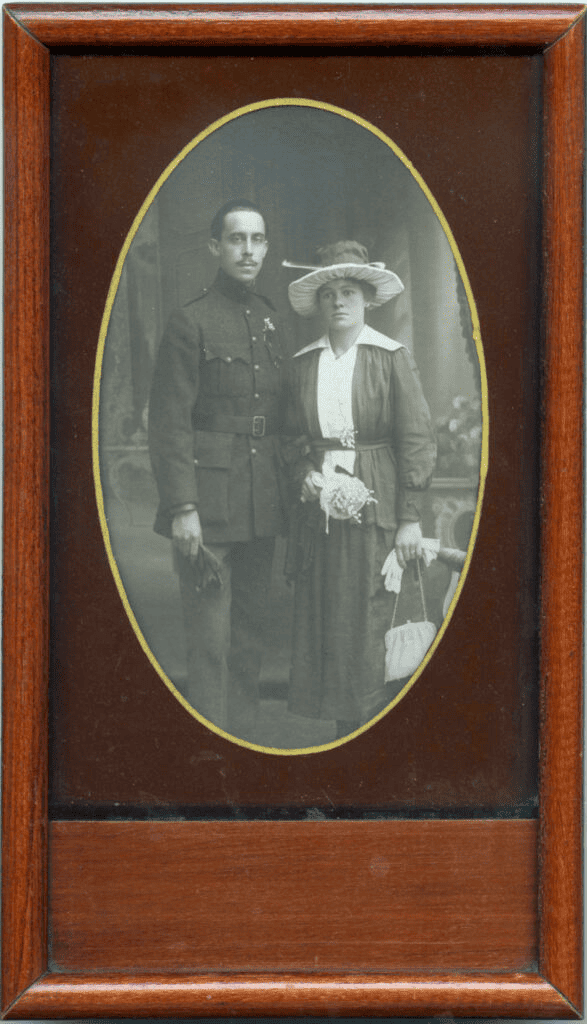
wedding portrait of WWI veteran René Cypers (1892-1967) with Léonie Filliaert (1896-1988)
Bompa René Cypers was a tailor with a clothing shop in the Martelarenstraat, 31. He met Leonie Filiaert, originally from Bruges and the daughter of inland-waterway skippers, during WWI. Leonie (Nolletje) was born in Antwerp at the mooring place of their barge, the “Santiago”.
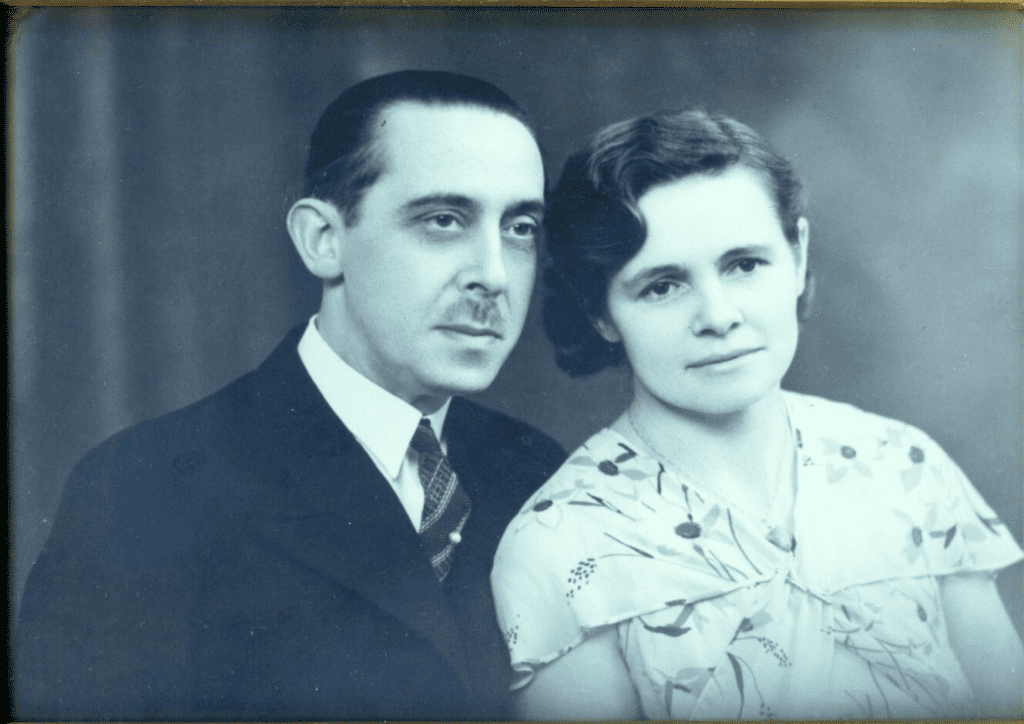
René and Léonie Cypers Filiaert
René was a veteran of 1914-1918, honorary chairman of the theatre circle “Hoger Streven”, board member of the “Liberale Volksbond”, representative of the Liberal Middle Classes on the Market Committee of the town of Aarschot, former board member of the Koninklijke Cirkel, active member of the Volunteer Fire Brigade, board member of the committee for the promotion of tourism.
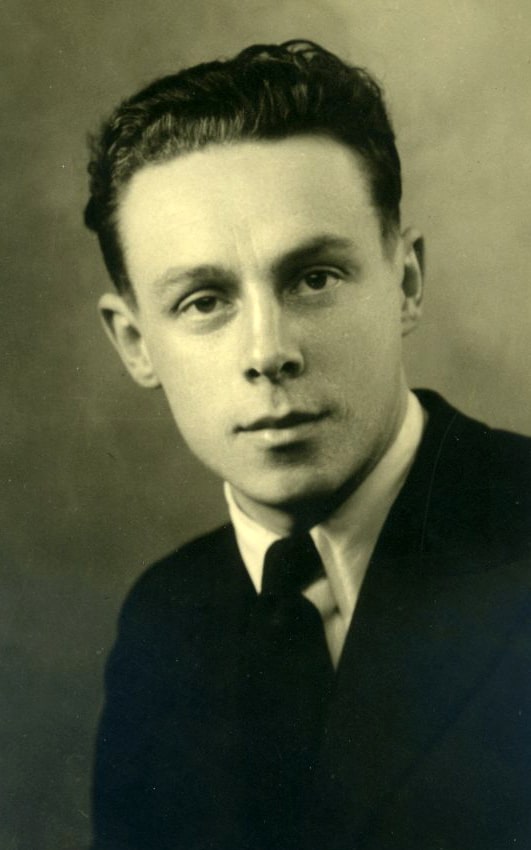
the son-in-law of Mit Cock, Jac. Cypers (1920-2011) headmaster of the State Secondary School
My bomma sent her son, my father, to ‘the Meuleberg’ to meet ‘that pretty girl from café ‘De Schuit’’, already a blue (Liberal) venue at the time. My dad was suffering enormous grief because his then sweetheart (a resistance fighter from Tournai) had been shot during an intervention by … an English warplane, at the end of WWII.
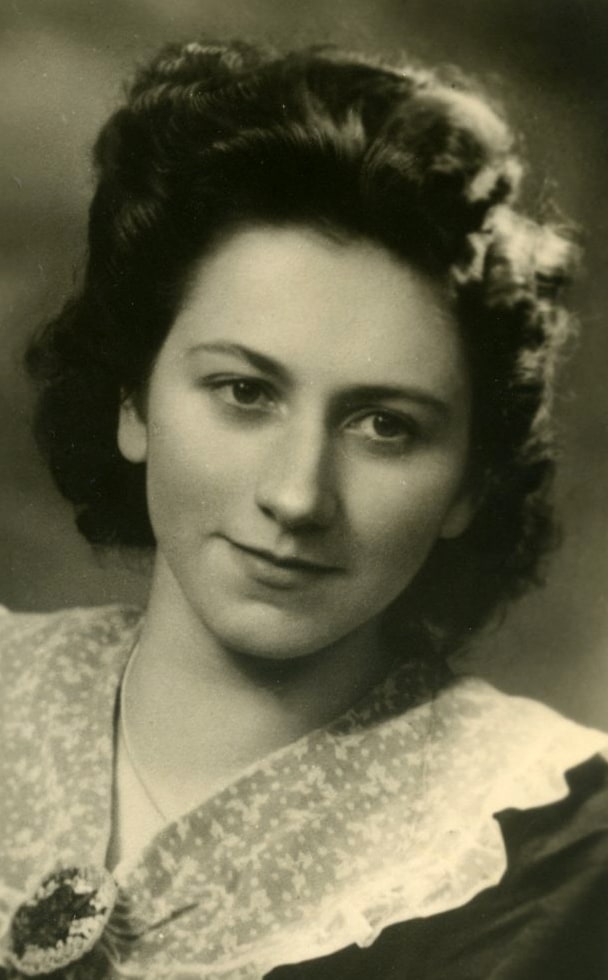
Andrée De Smet (1922-1944) resistance fighter WWII
“Dad’s sweetheart. Note the resemblance to my mother.” – René
“Remembering Andrée, war heroine: our duty!” – newspaper L’Avenir (29 September 2014) “…died at Forest (Frasnes) while she was bringing back armbands for the fighters of the Independence Front.” – C.D.C. (4 September 1994)
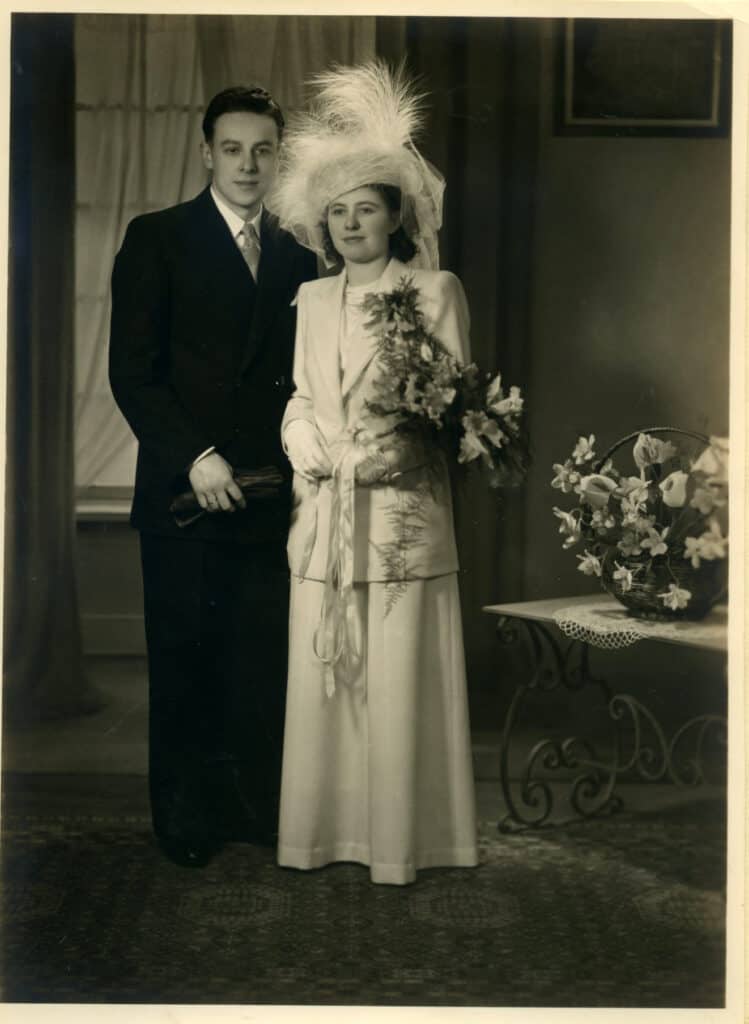
In 1947 Mit’s daughter Luciana De Cock (1925-2022) marries Jac. Cypers
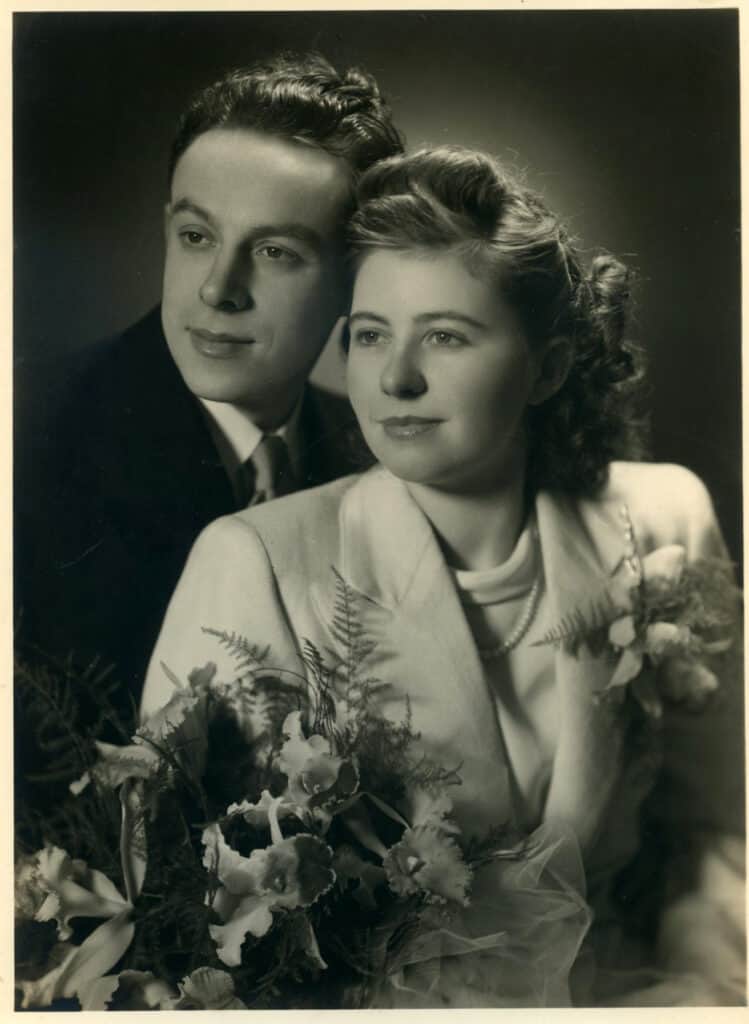
Jac. and Luciana Cypers De Cock
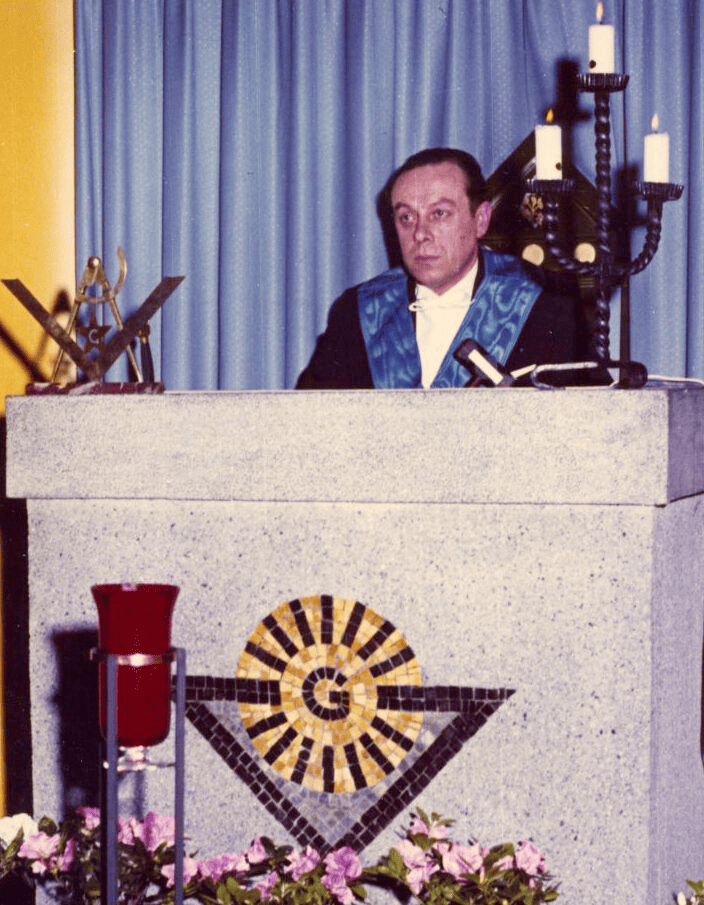
In 1949 Mit Cock’s grandson is born; René II. His father, Jac. Cypers, is initiated the same day in Leuven as a Freemason in the lodge ‘La Constance’. Cypers becomes chairman of the first Dutch-language Belgian Grand Lodge in Leuven. Later Cypers founds a new lodge workshop, ‘De Wyngaerdenranck’. In naming it, Cypers is inspired by the Aarschot chamber of rhetoric ‘De Wyngaerdenranck’.
“An inner quest
Labyrinths that can occur in the tilework of churches are both a mark left by brotherhoods of initiated builders and one of a pilgrimage to the Holy Jerusalem.
The labyrinth symbolises, on the other hand, the path to the inner Self, to the temple of the Holy Spirit that can dwell within us.” – Jac. Cypers
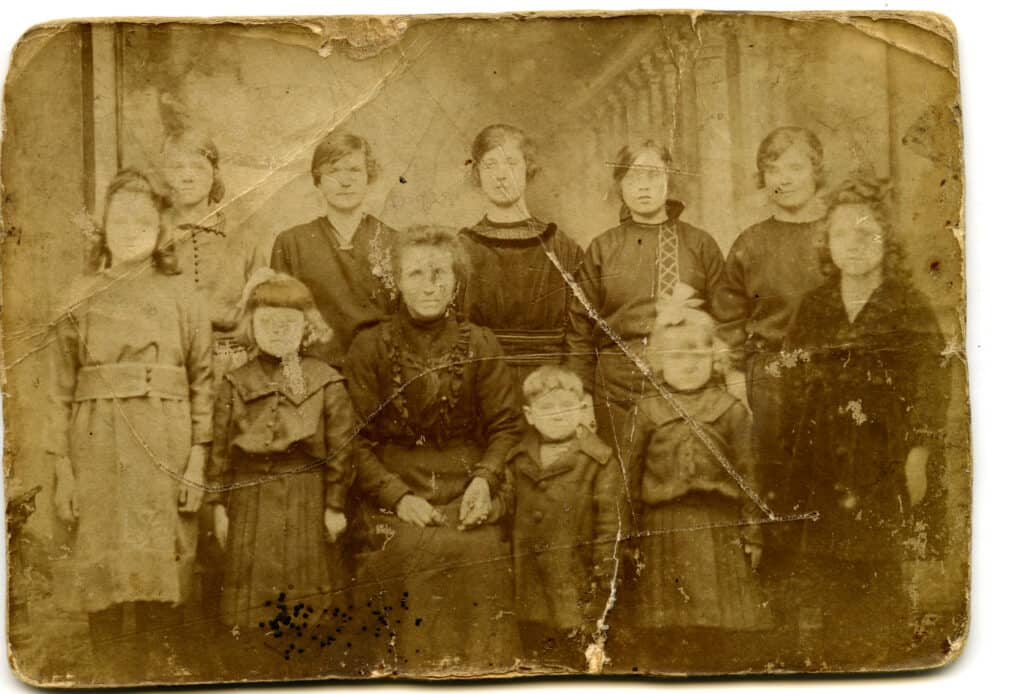
unknown family portrait
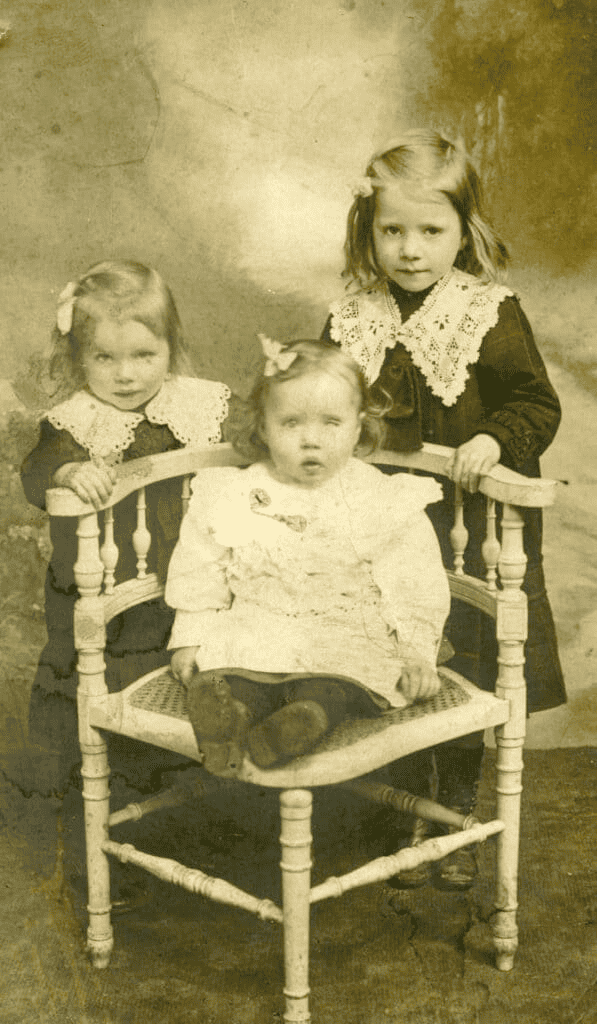
unknown portrait
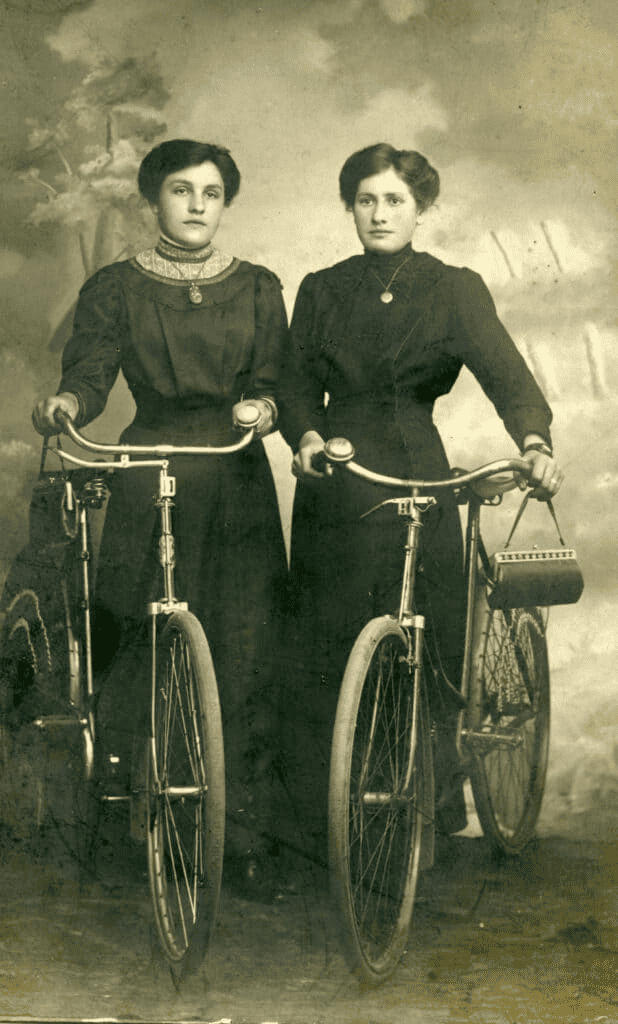
unknown portrait
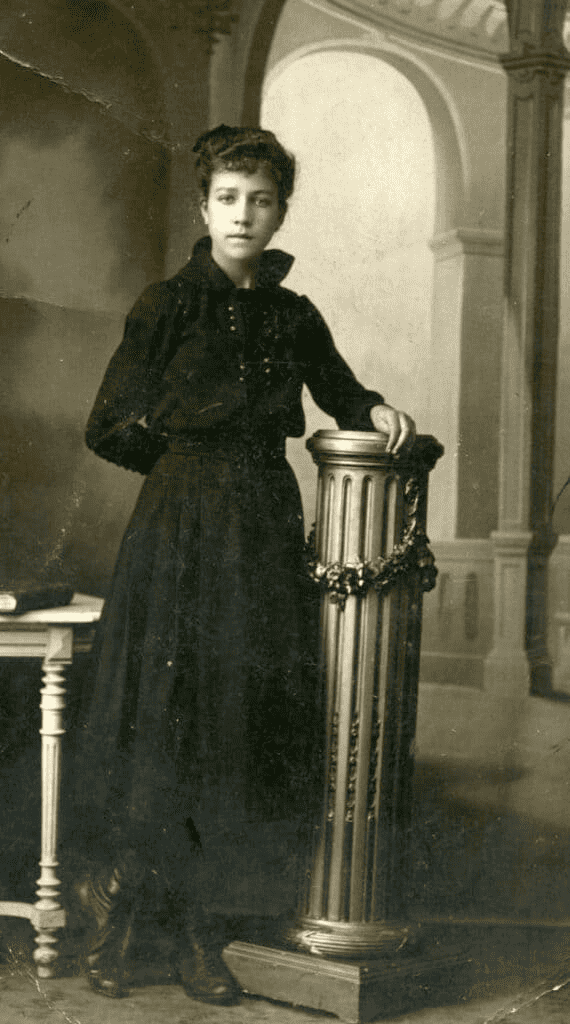
unknown portrait
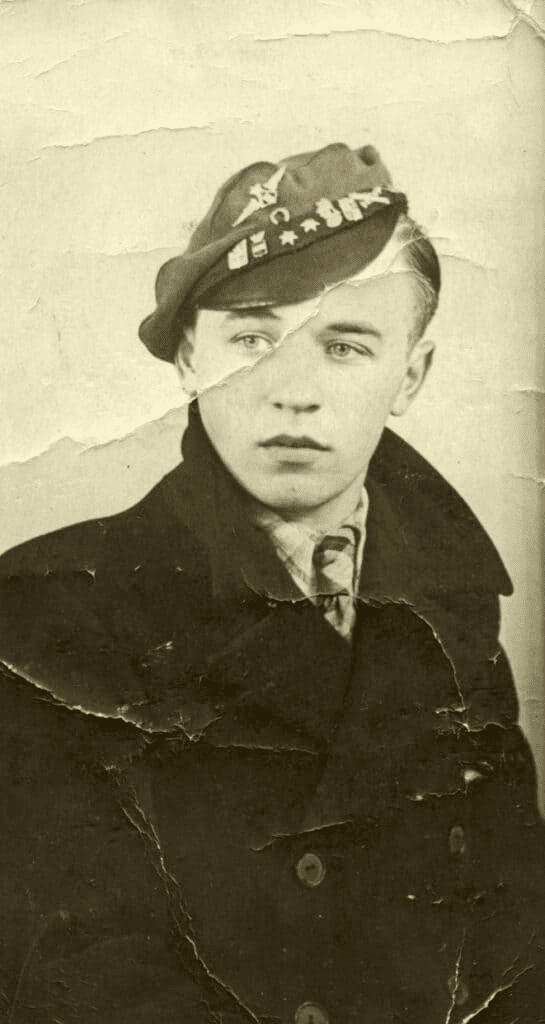
unknown portrait
All the photos come from Mit Cock’s photo album.
the Aarschot Local History Circle interviews Mit Cock’s grandson
www.heemkundeaarschot.be There are still short films about ‘De Grecht’ by the Aarschot Local History Circle.
“Boeksheiring lak spek van binne wit en van bowate zwet!” – Stiene Fouche
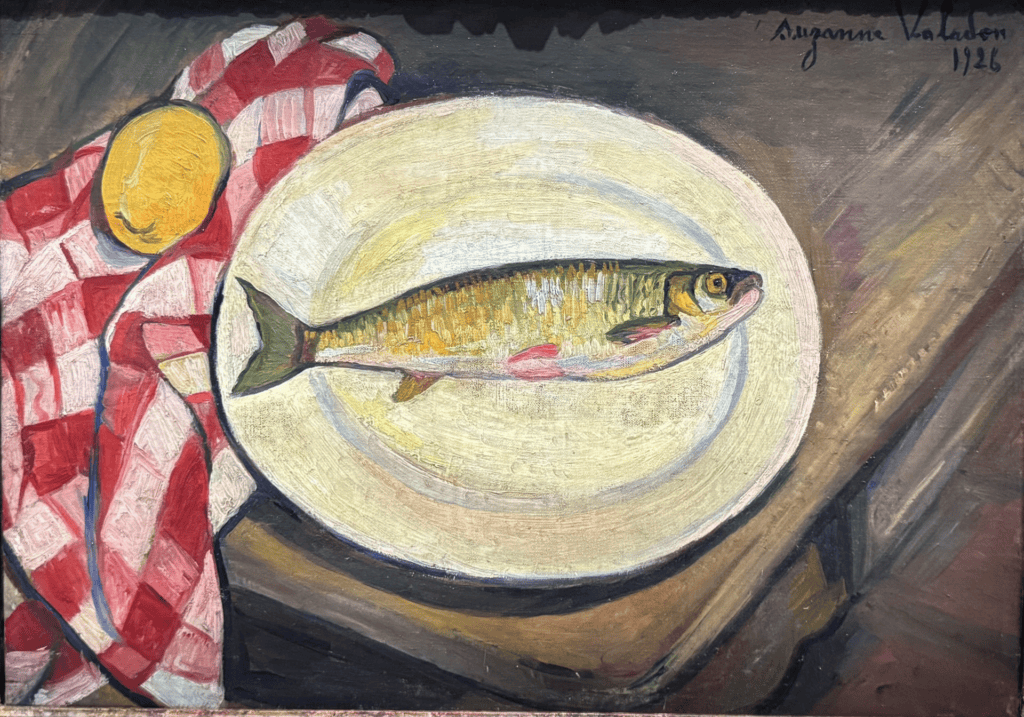
Still Life with Fish – 1926 – Oil on canvas – Suzanne Valadon
Another unique Aarschot figure: STIENE FOUCHE. Her great-granddaughter Suzy Van Meensel married Mit Cock’s grandson René Cypers.
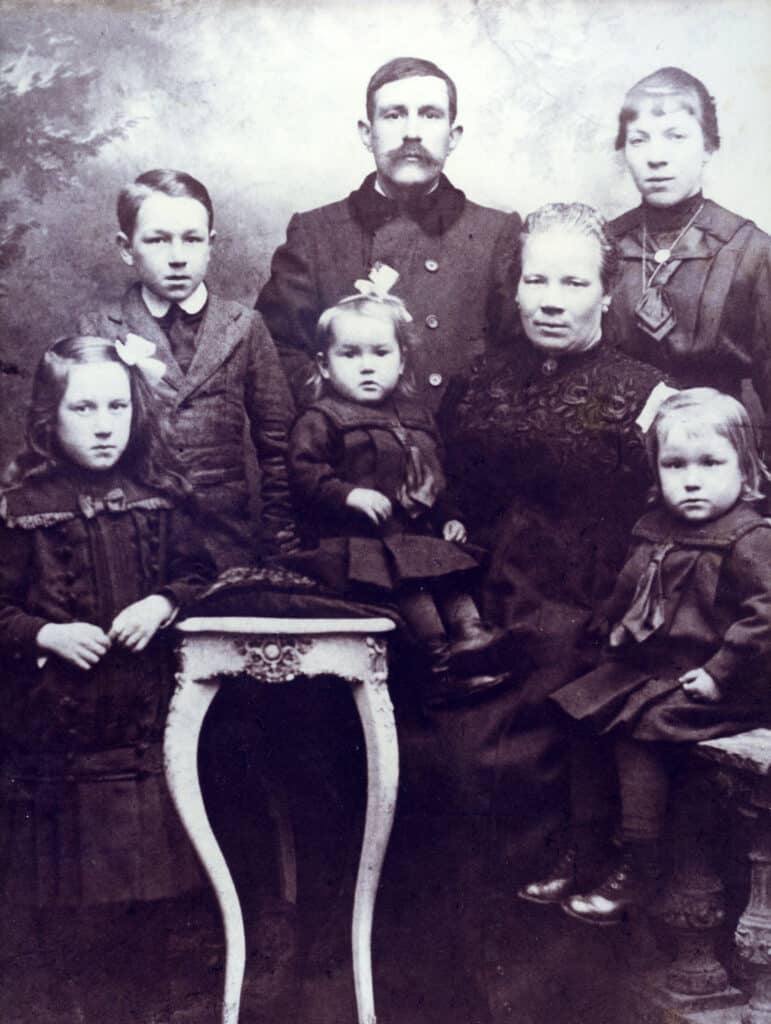
Justina Matthijs ‘Stiene Fouche’ (1878-1959) She married Theodorus Leemans (1881-1919) in 1904. The boy on the left in the picture is Fransiscus Leemans (1904-1968), the father of Justine Leemans. The smallest girl on the table is the grandmother of Suzy Van Meensel. The girl sitting at the far right died at the age of 12.
(2021) A conversation about Stiene Fouche with her granddaughter Justine Leemans and her great-granddaughter Suzy Van Meensel.
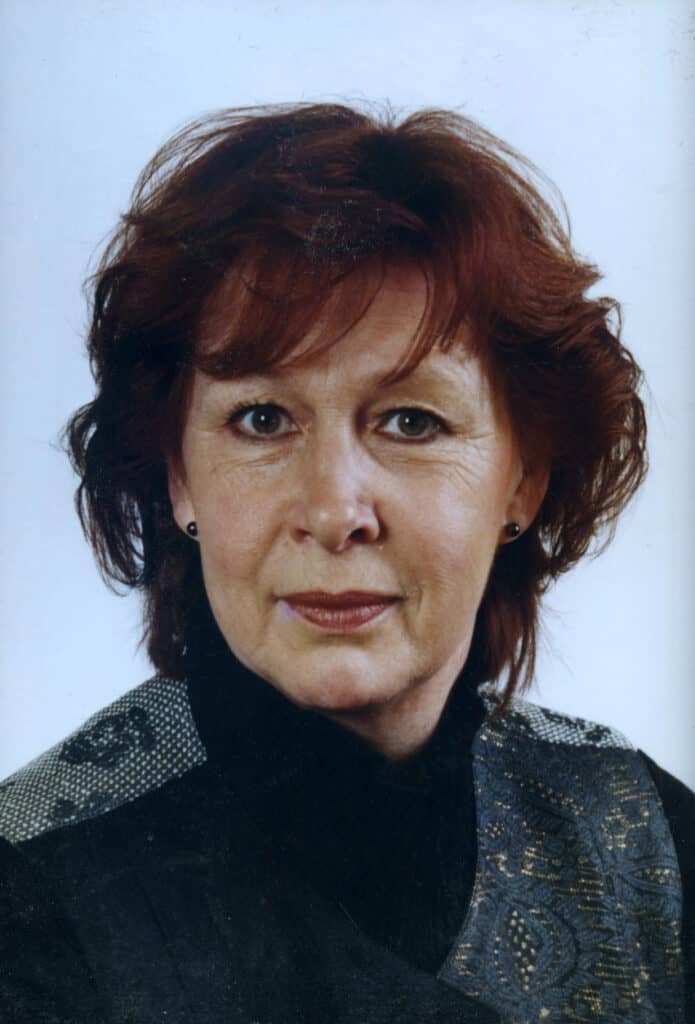
Suzy Cypers Van Meensel
In 1973 Mit Cock’s handsome grandson René marries Stiene Fouche’s great-granddaughter Suzy Van Meensel.
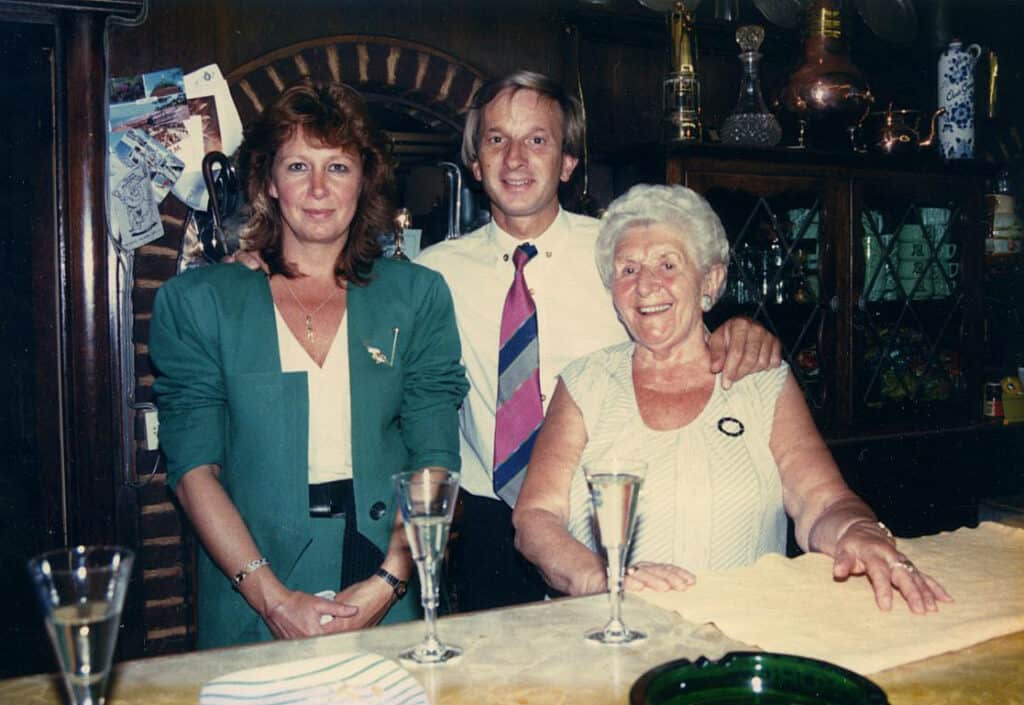
fashionably graceful Suzy and André Matthijssens at Mit Cock’s. Note the designer champagne flutes.
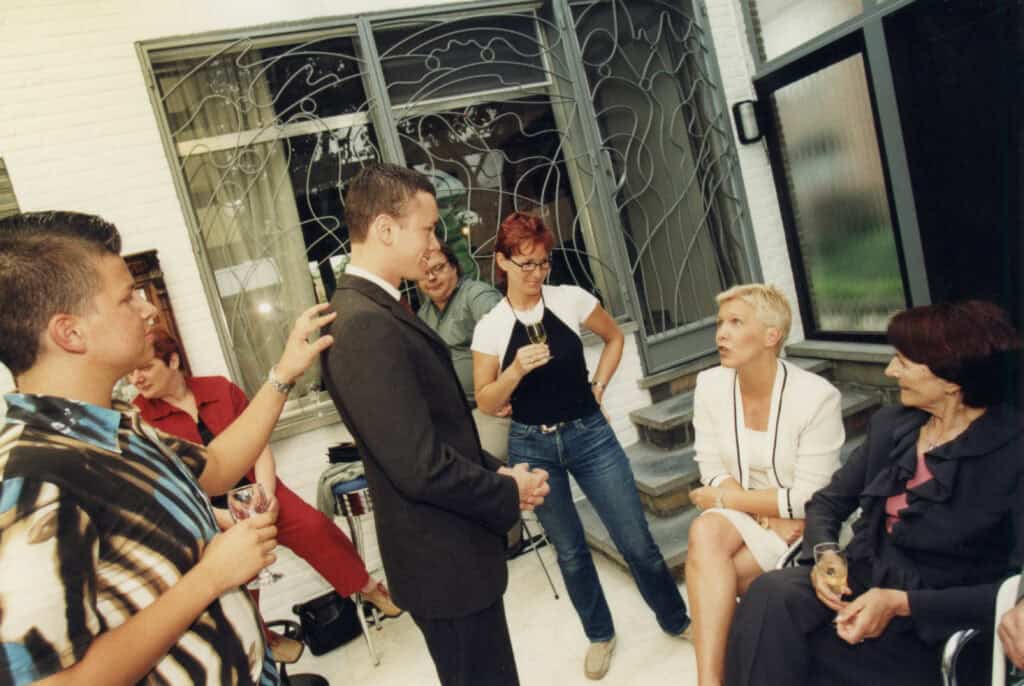
l. to r.: Suzy Cypers’ nephew: Glenn Van Nerum with his bosom friend Pieter Van Kerckhoven – Lily Schrijvers – Maggy: Glenn’s mother – Justine Leemans: Stiene Foesj’s granddaughter
“Pieter, if ‘our mum Mit’ were still alive you would get a big smacker of a kiss. She was no ordinary madame, she was a café boss… ‘pur-sang’.” – René
digitised by SADA (Stedelijk Archief en Documentatiecentrum Aarschot)
(1973) The wedding of Suzy and René Cypers Van Meensel filmed by Johny Voners (1945-2020) digitised by SADA (Stedelijk Archief en Documentatiecentrum Aarschot)