Ernest Van den Panhuysen
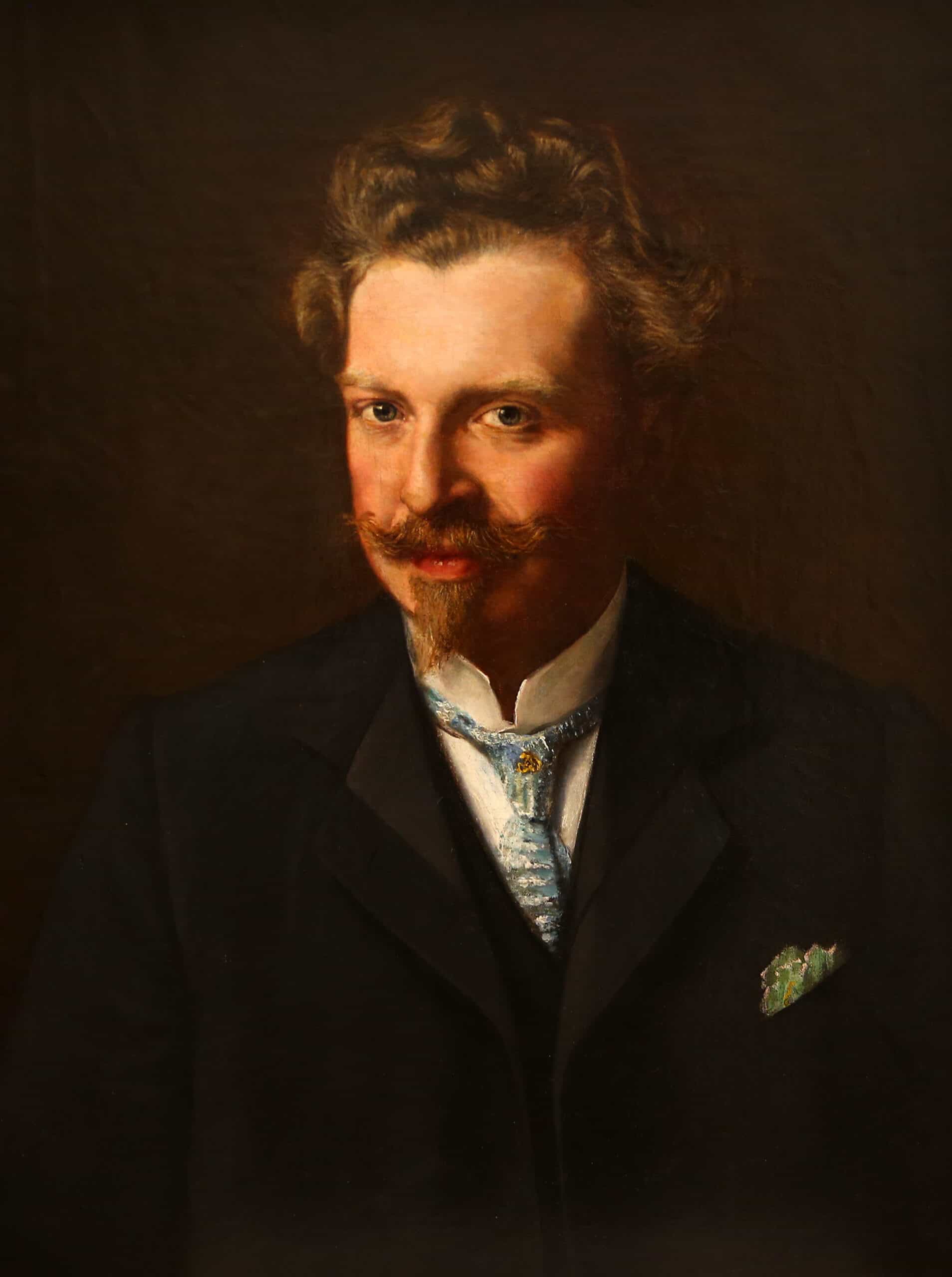
72 x 53 cm
Self-portrait
oil on canvas
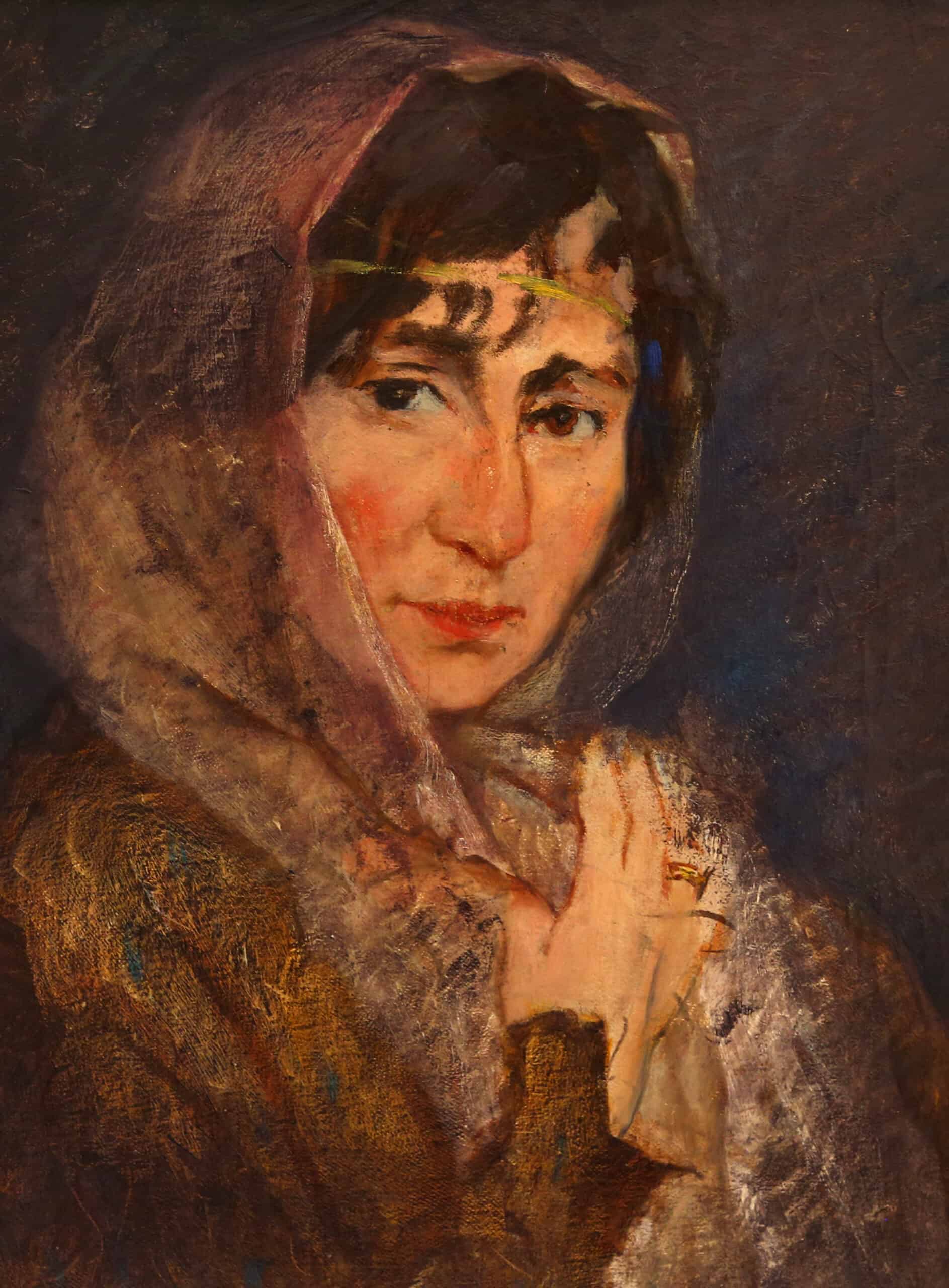
40 x 30 cm
Gypsy woman
oil on canvas
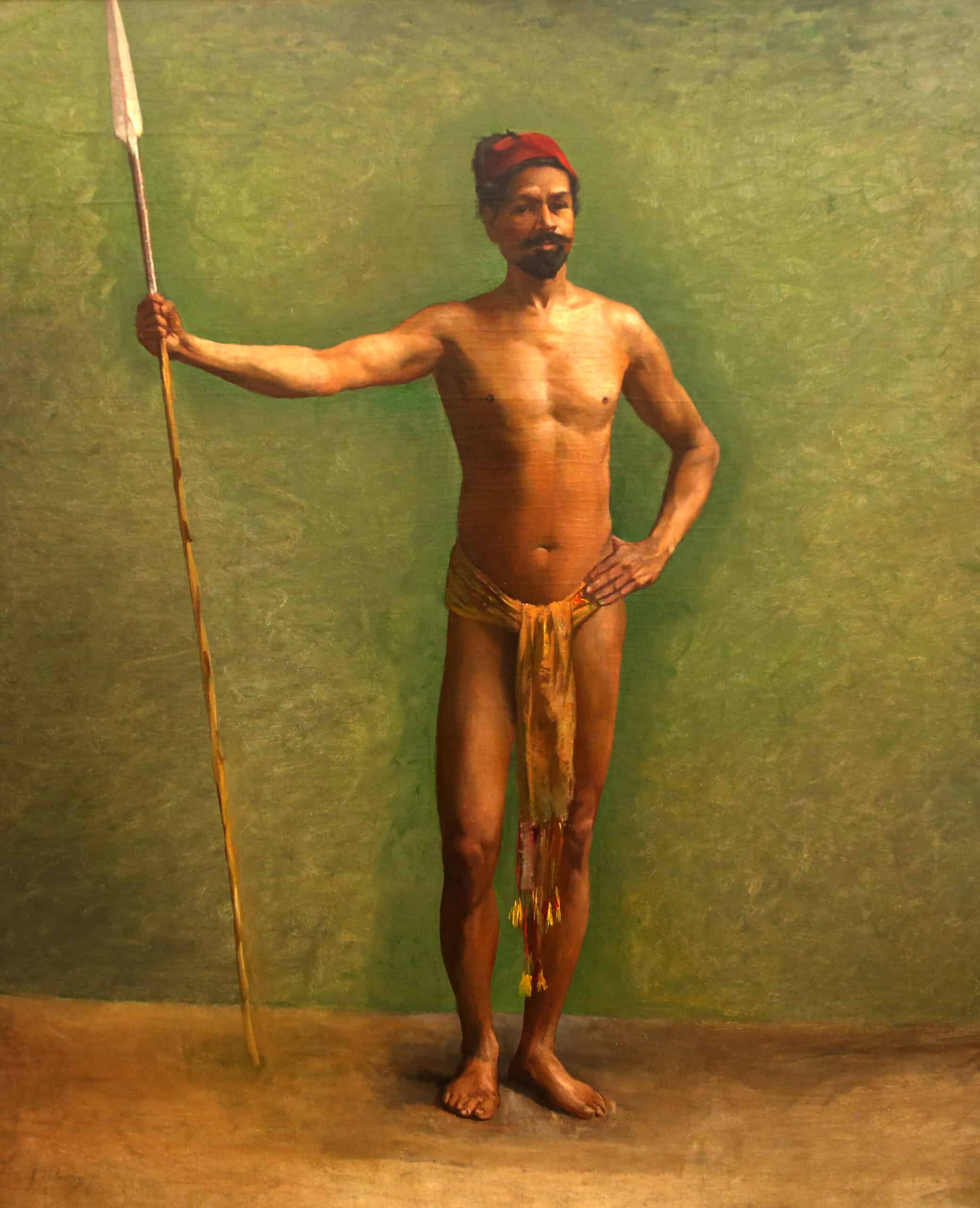
105 x 88 cm
Fakir with spear
oil on canvas
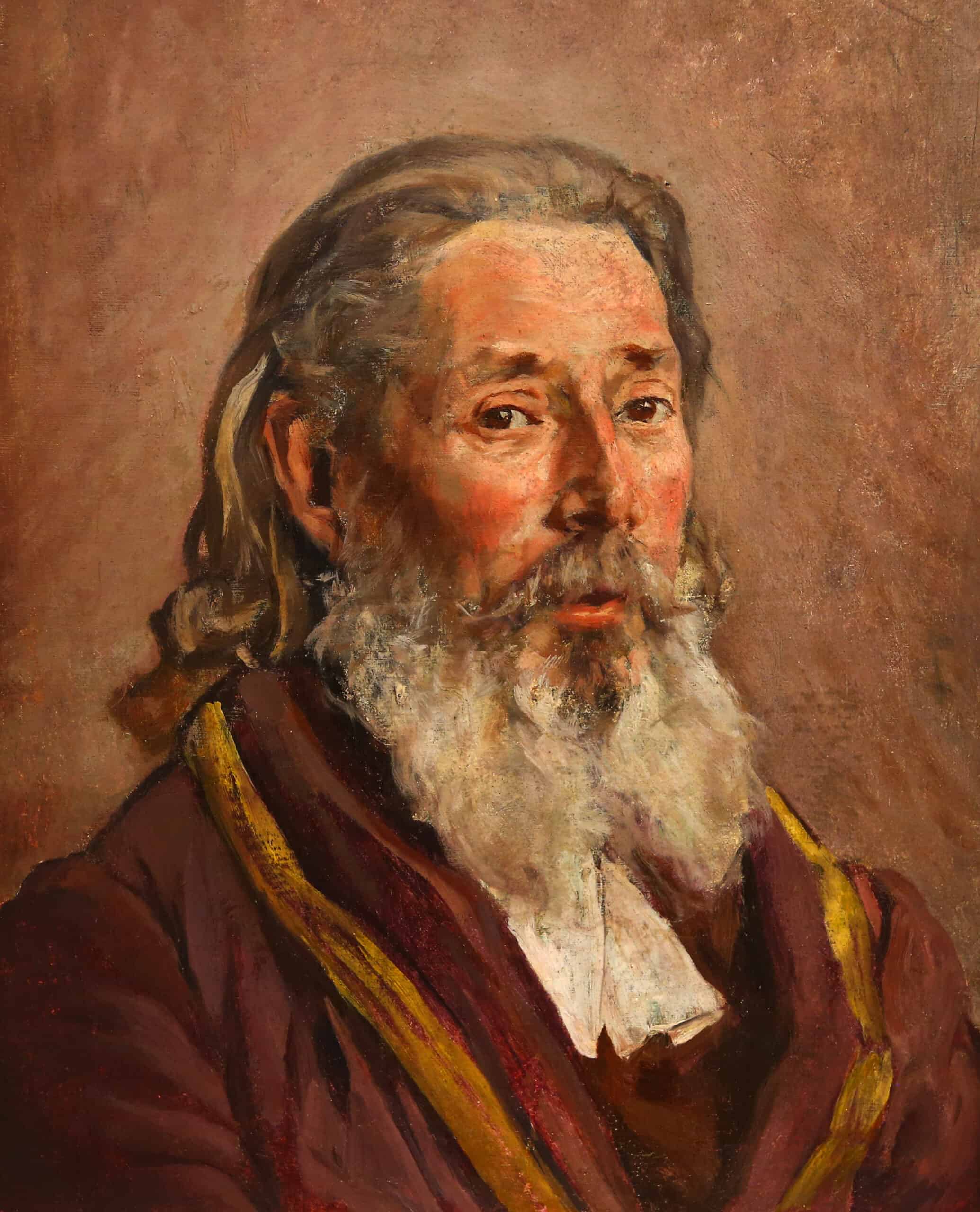
40 x 30 cm
Grey eminence
oil on canvas
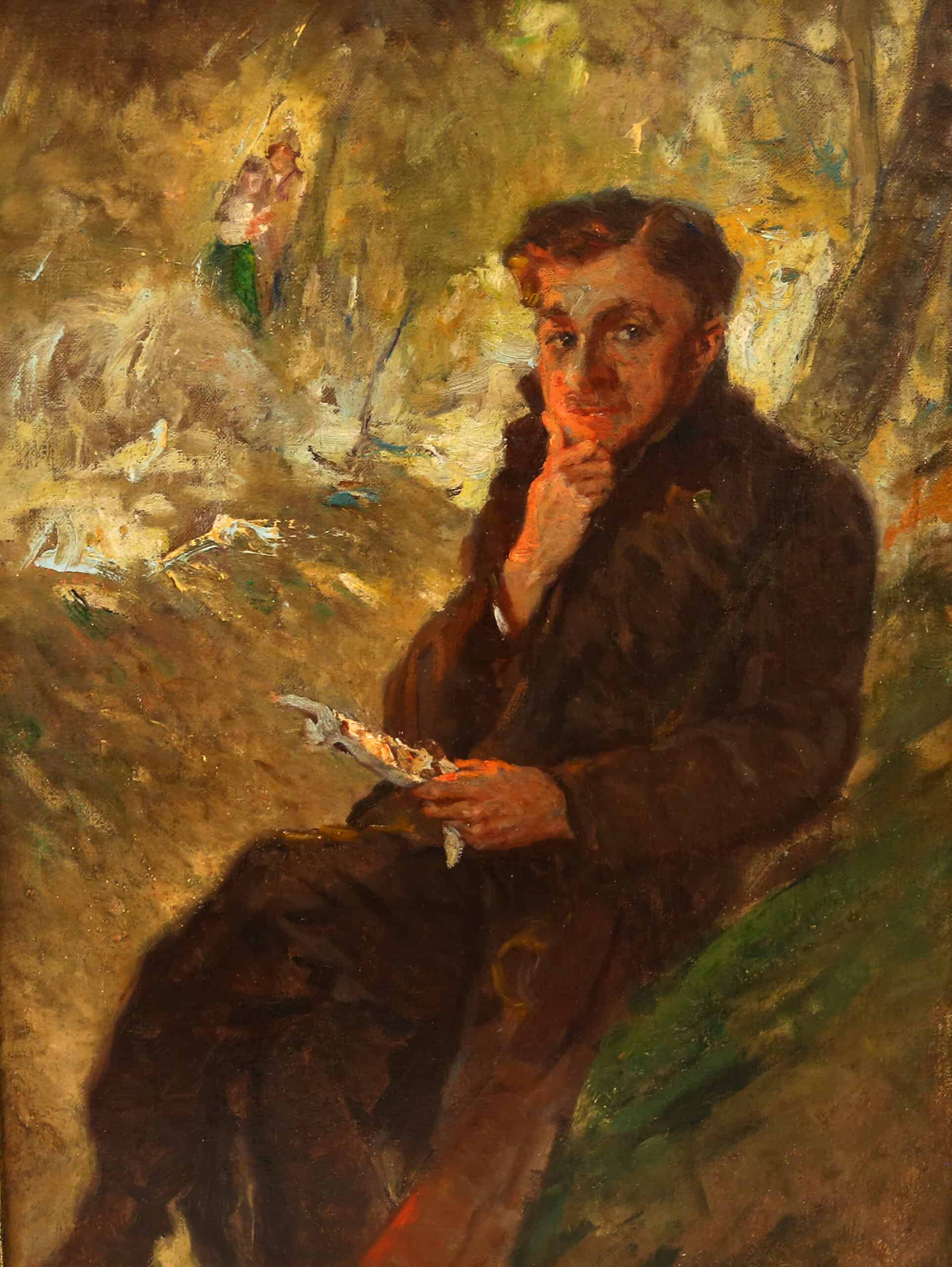
45 x 33 cm
The poet
oil on canvas
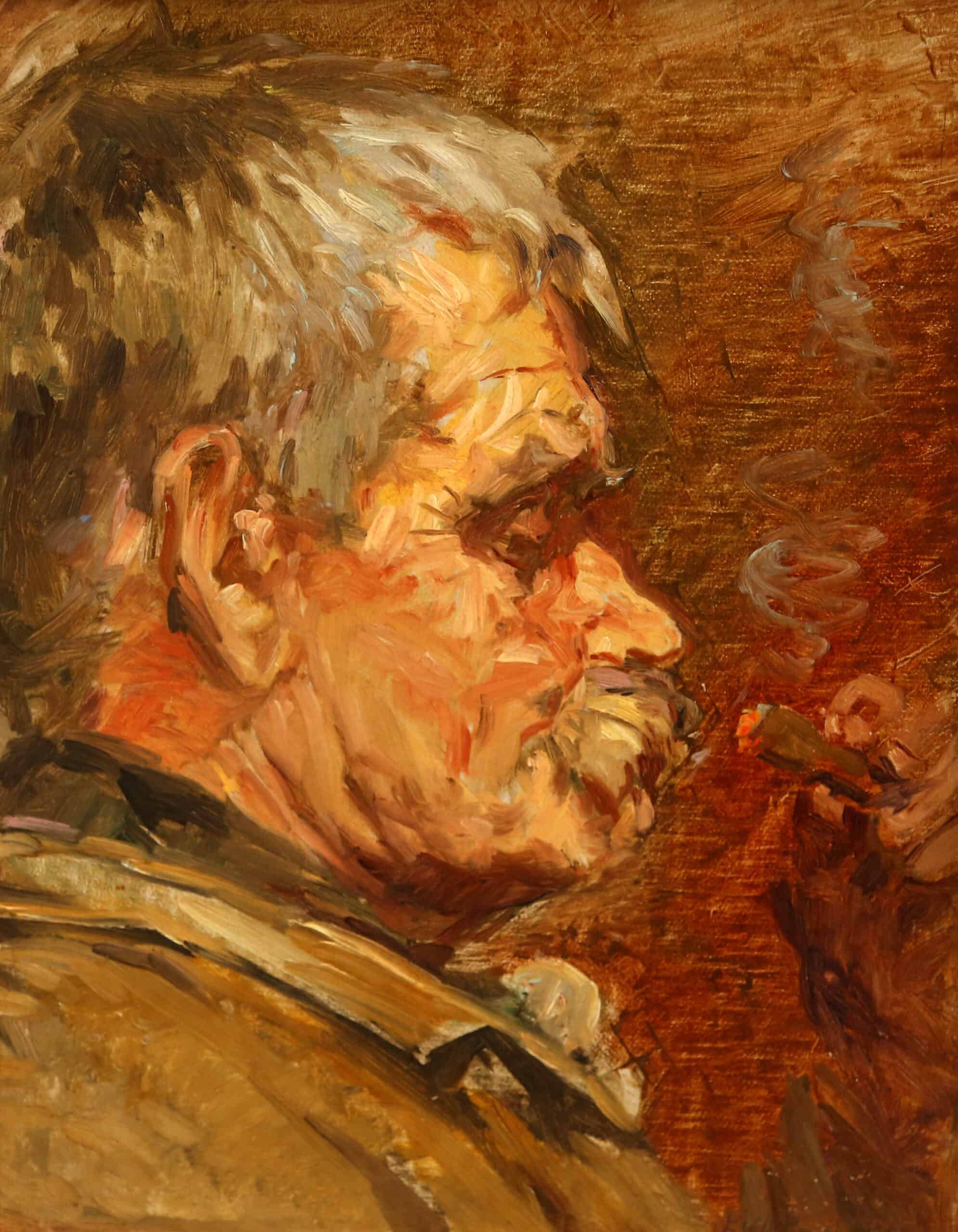
32.5 x 26 cm
Man with cigar
oil on canvas
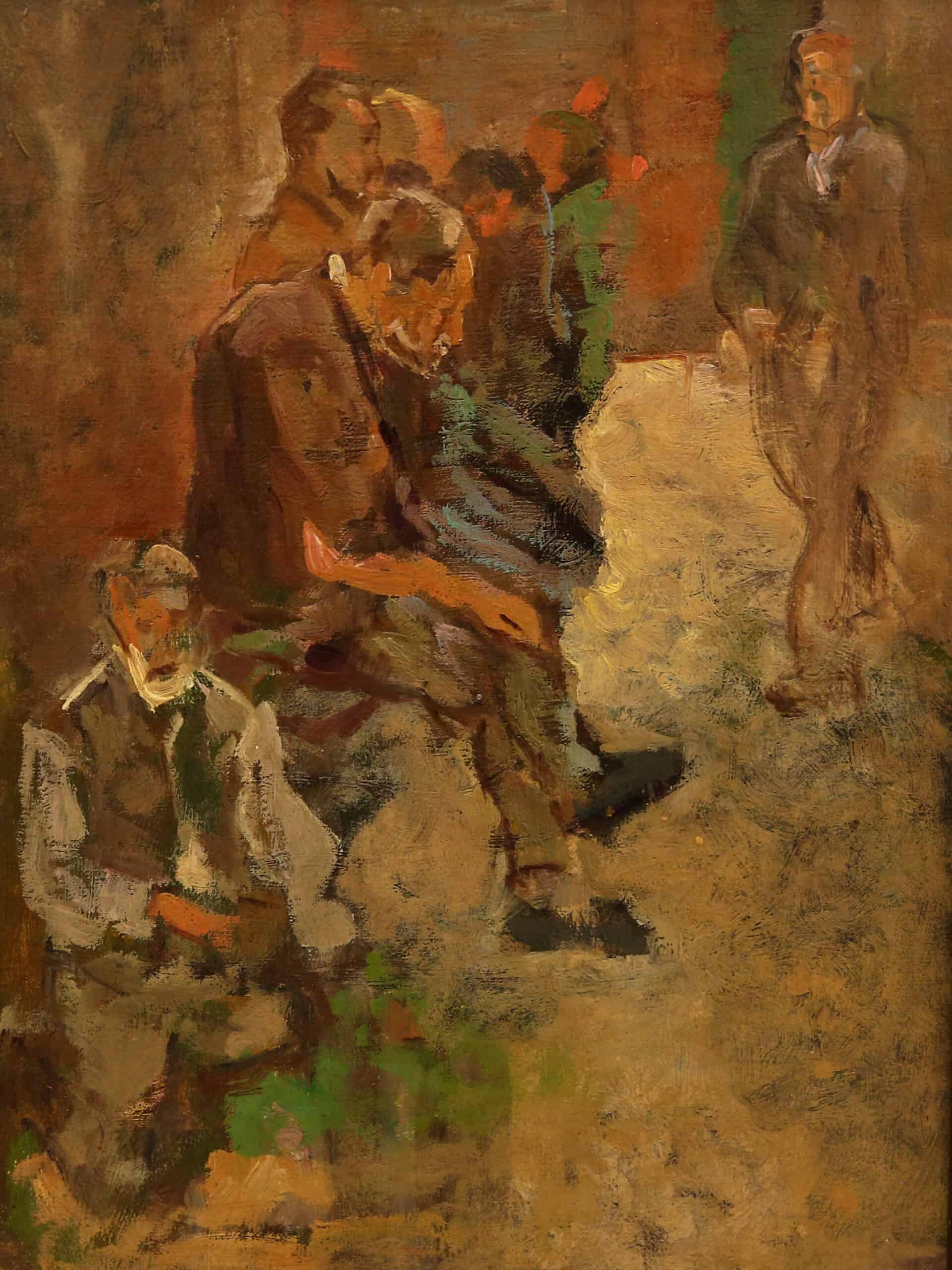
32.5 x 24.2 cm
Beggars
oil on canvas
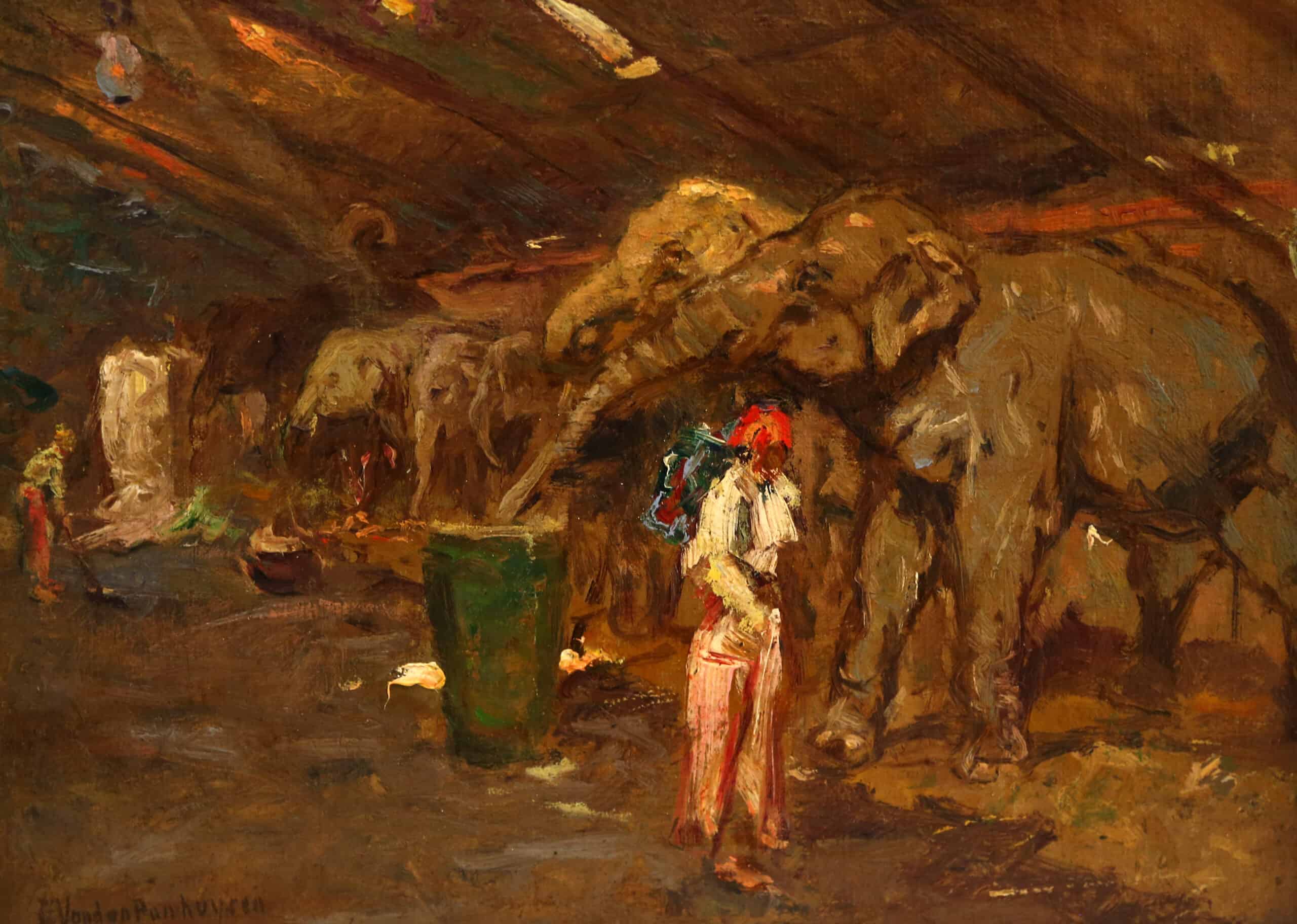
22.5 x 32.5 cm
Elephants at the circus
oil on canvas
50 x 62 cm
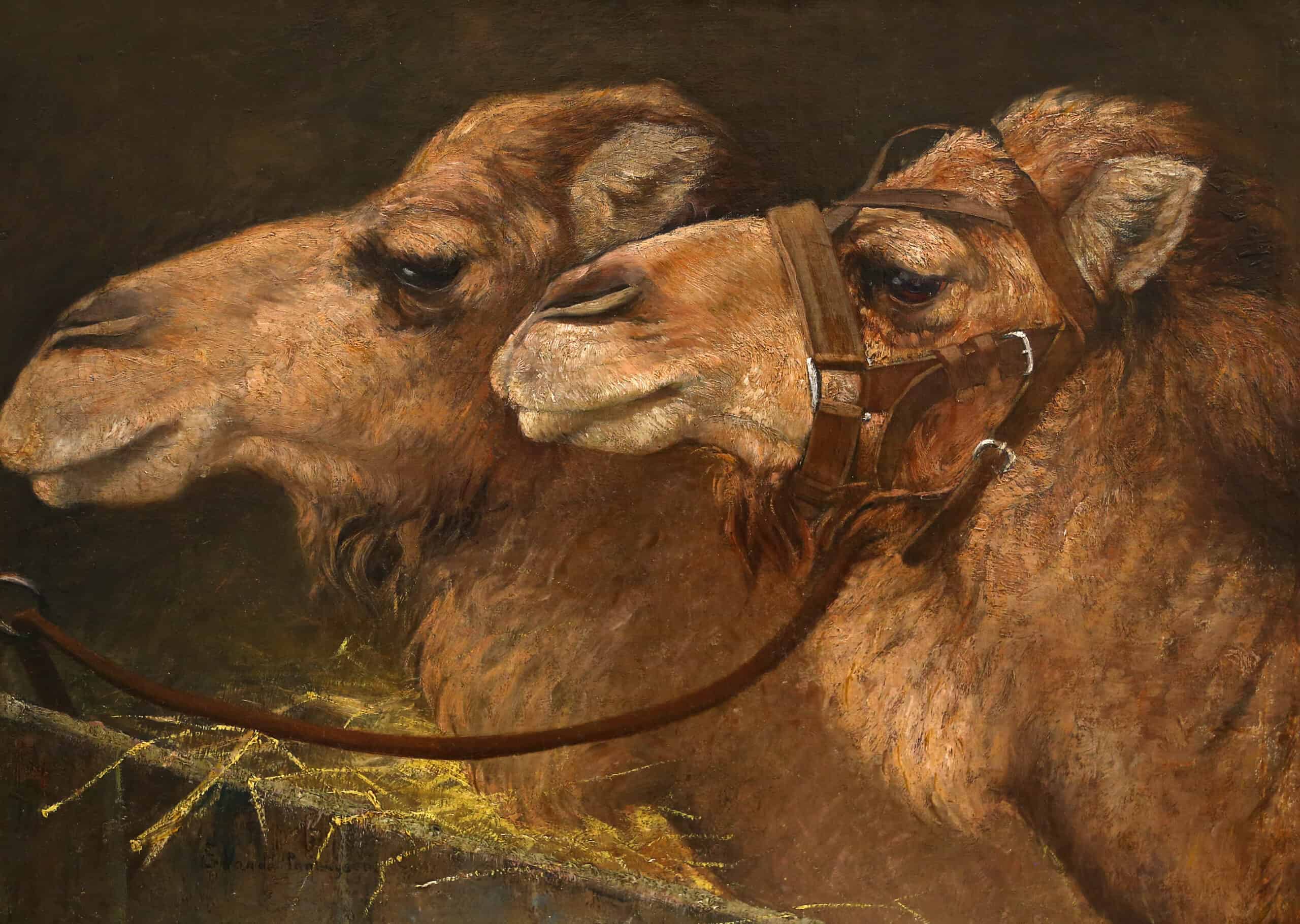
Two dromedaries
oil on canvas
18 x 27.5 cm
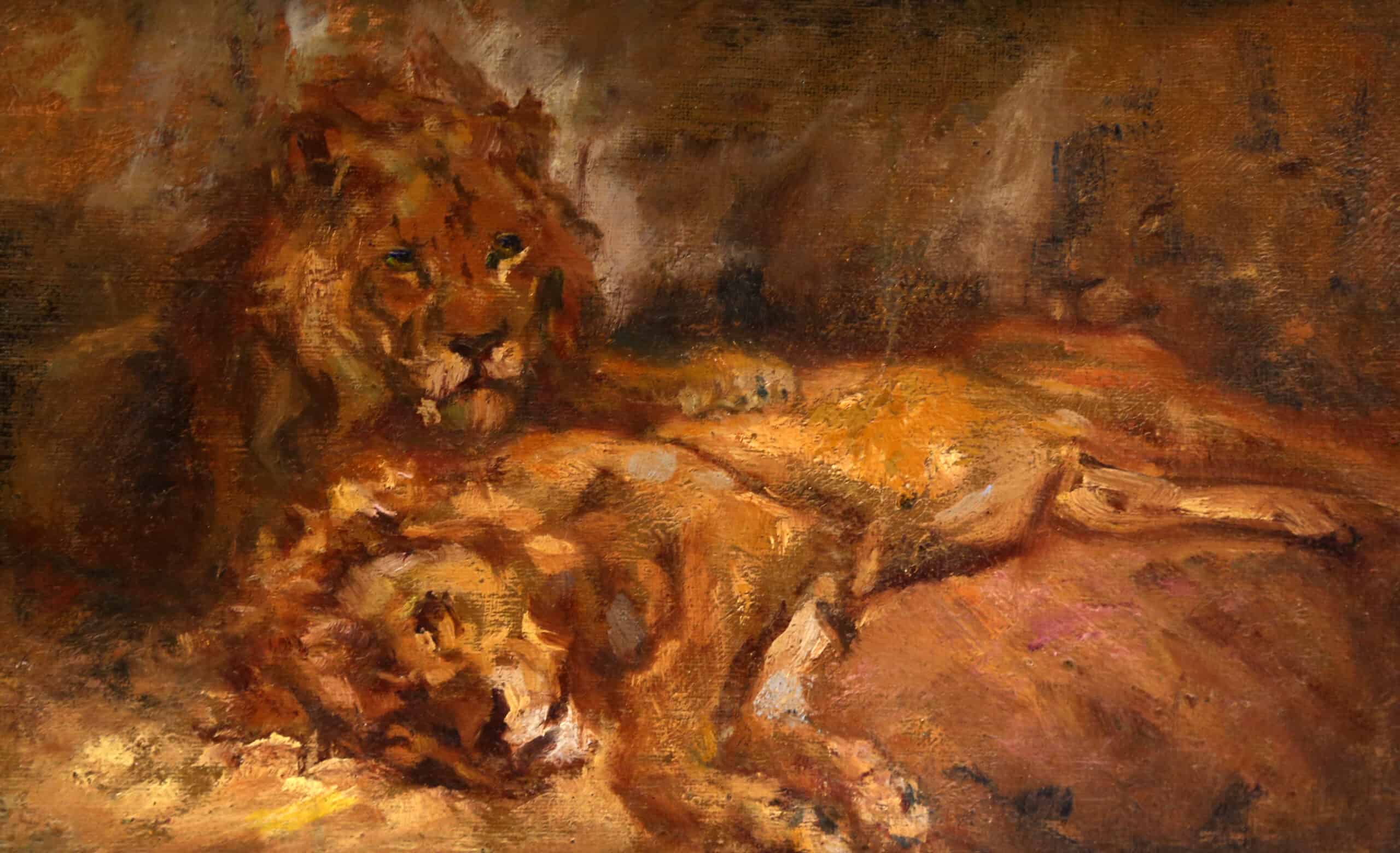
Two lions
oil on canvas
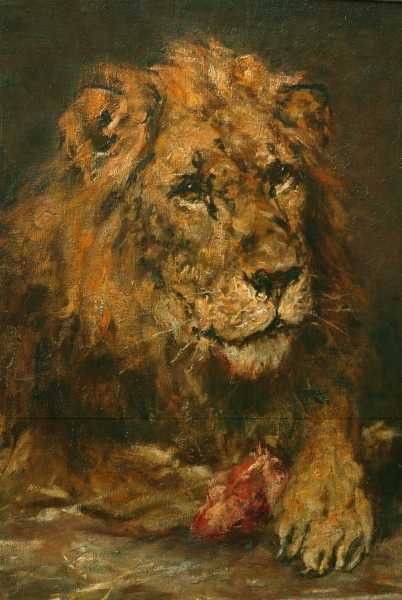
Lion
oil on canvas
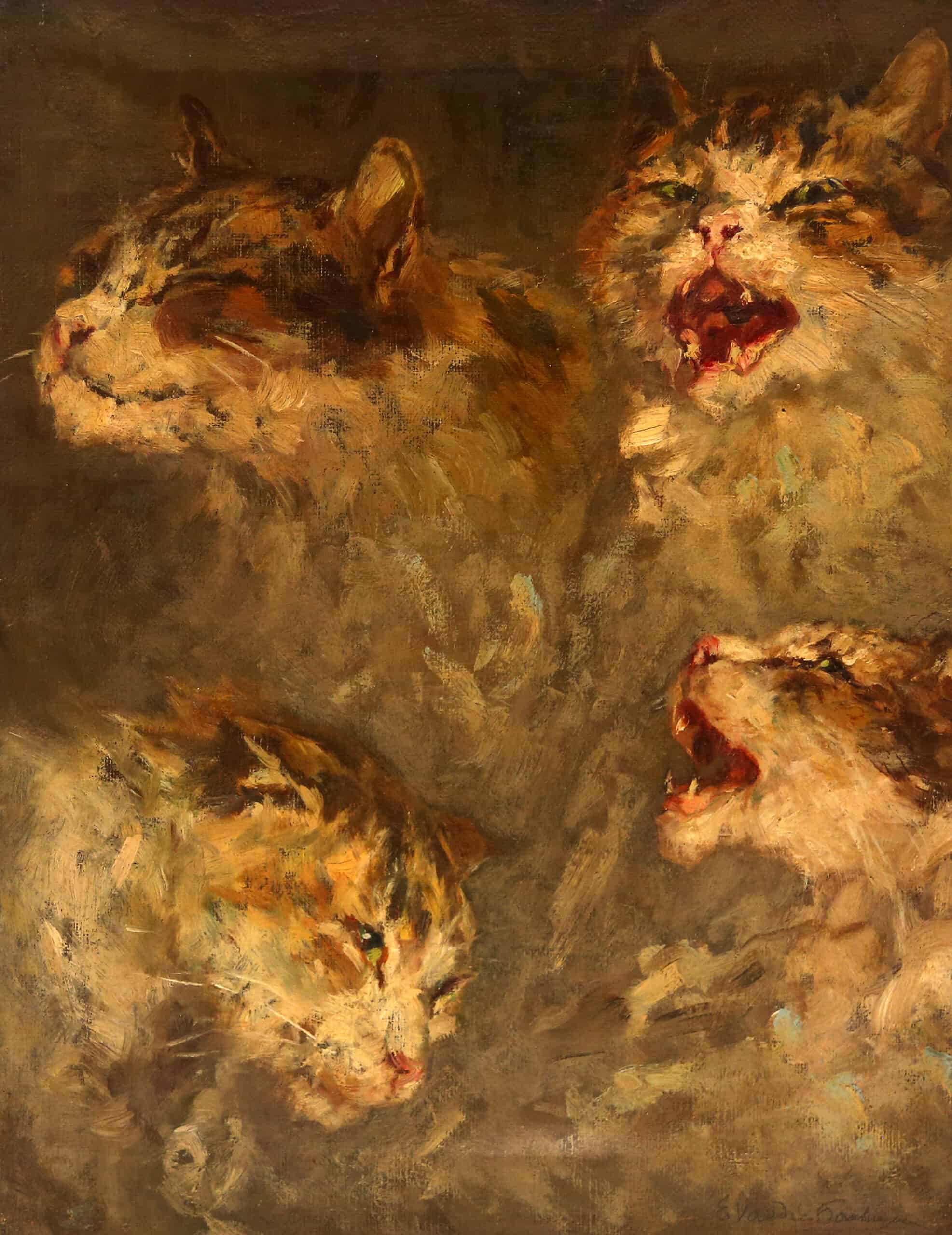
37 x 25 cm
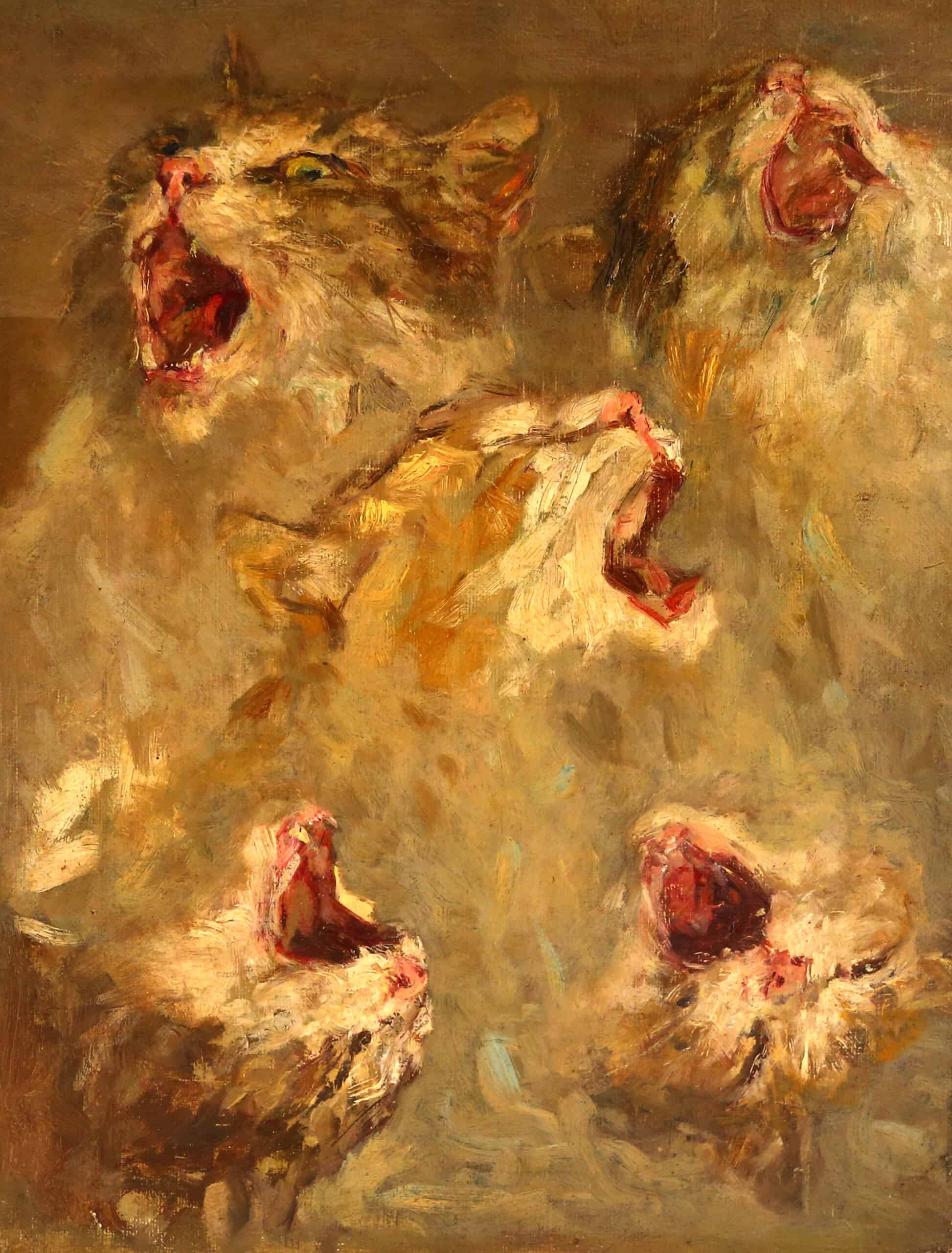
Kittens
oil on canvas
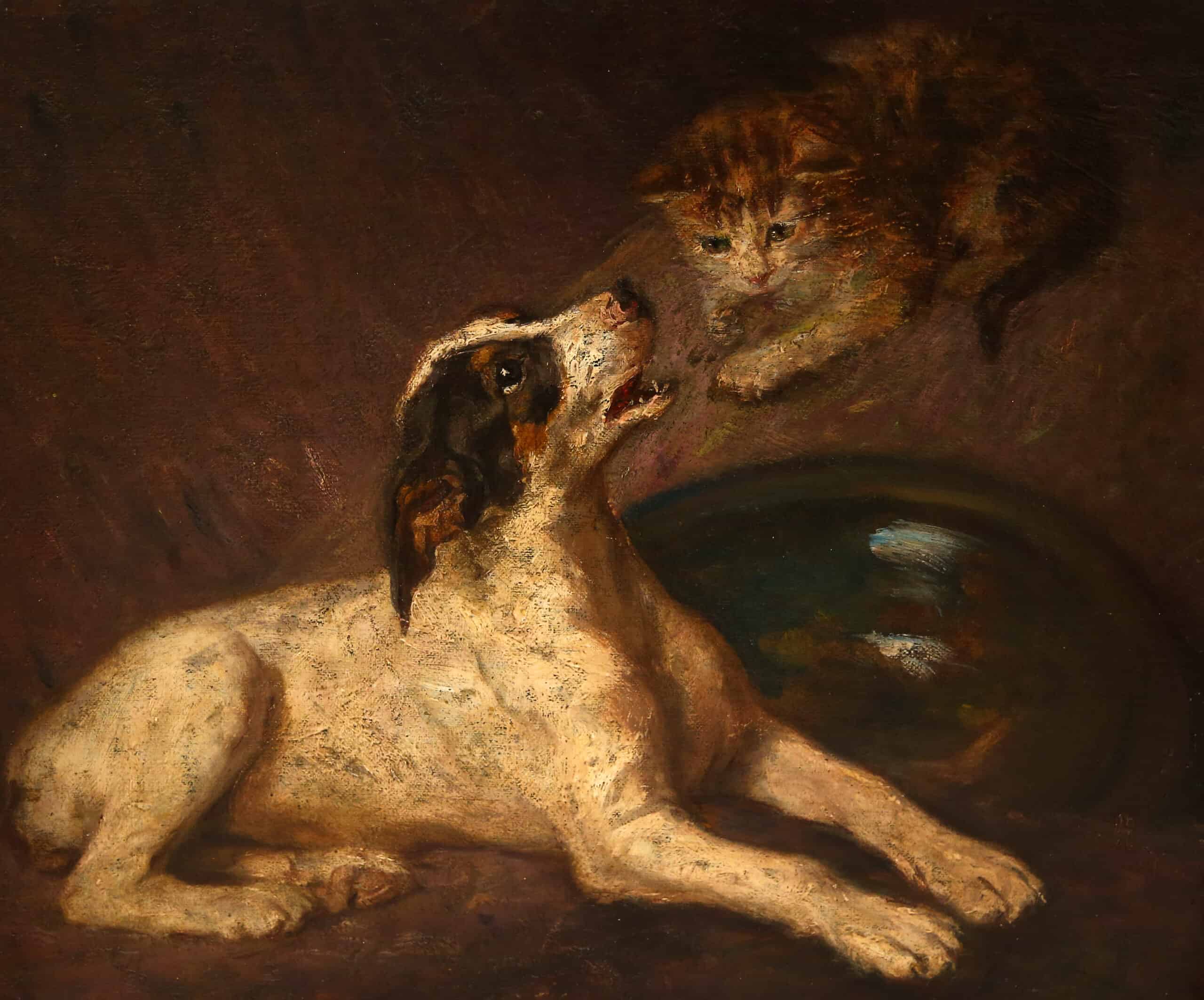
34.5 x 37 cm
Cat and dog
oil on canvas
“His animal paintings are in general full of tenderness. He has a sure hand, a feeling for line and colour, a very sensitive, gentle soul: his heart is a treasure chest of goodness.” – Karel Rutgeerts (1933)
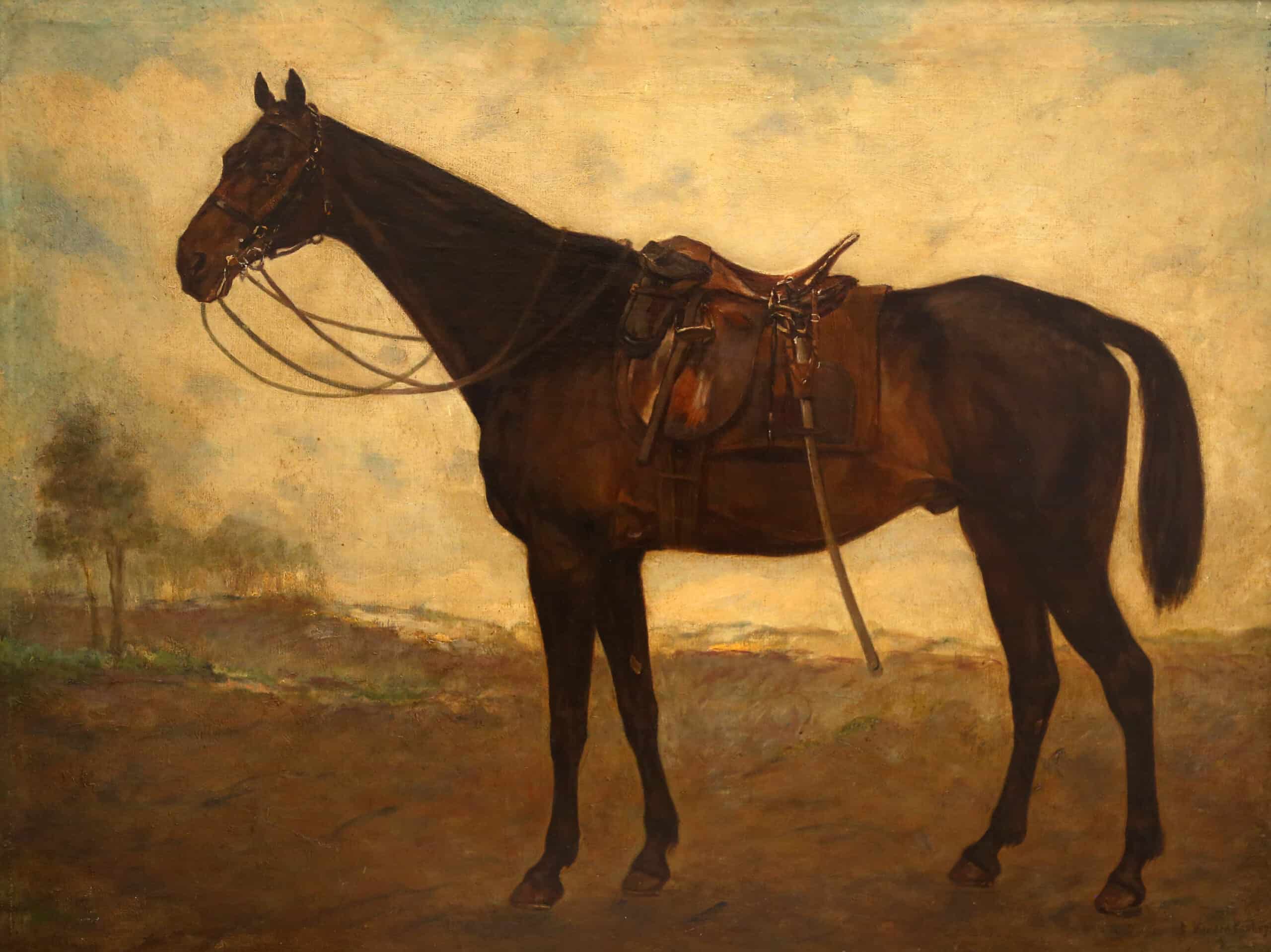
60 x 80 cm
Saddled army horse
oil on panel
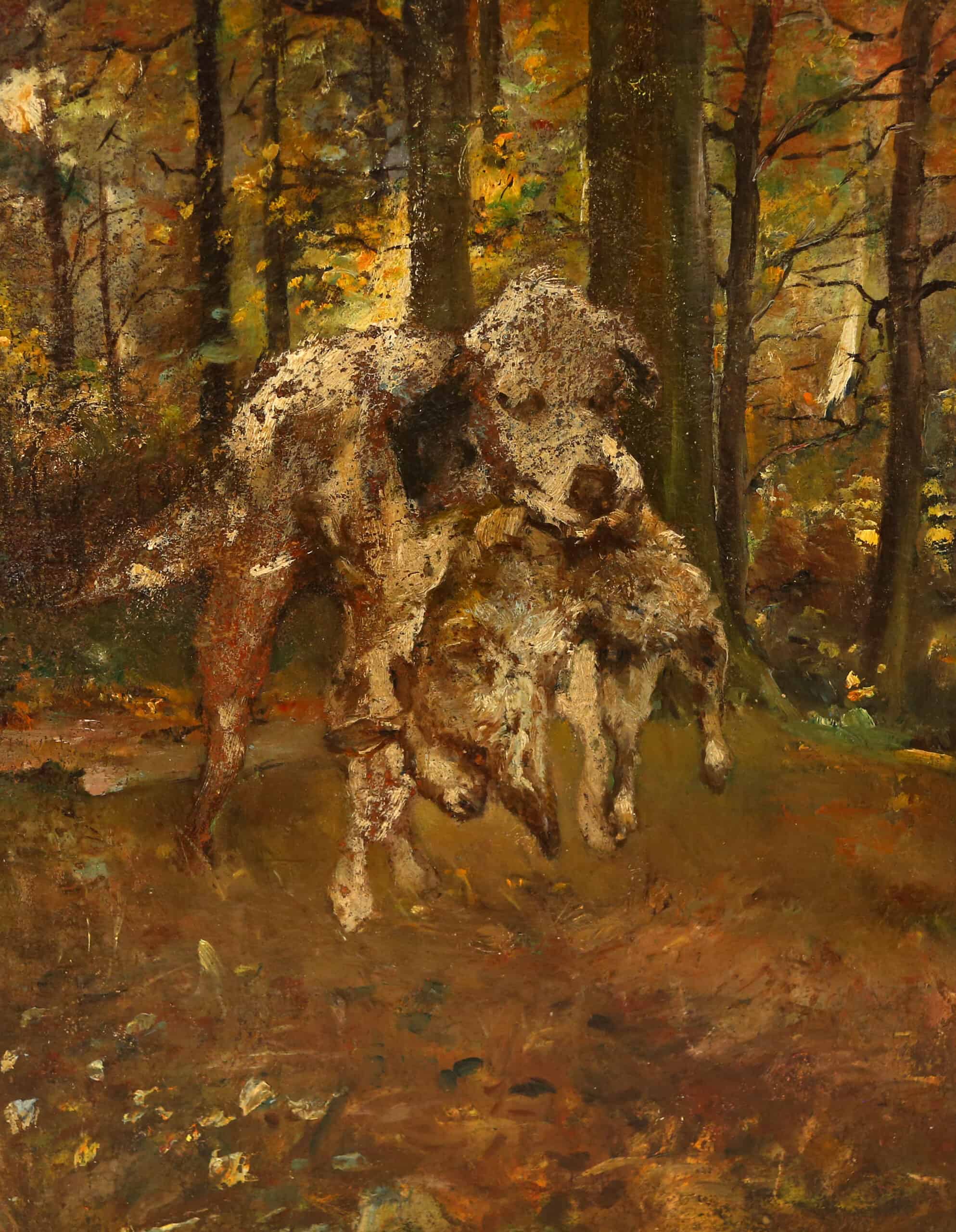
40 x 31.5 cm
Dog with hare in its mouth
oil on canvas
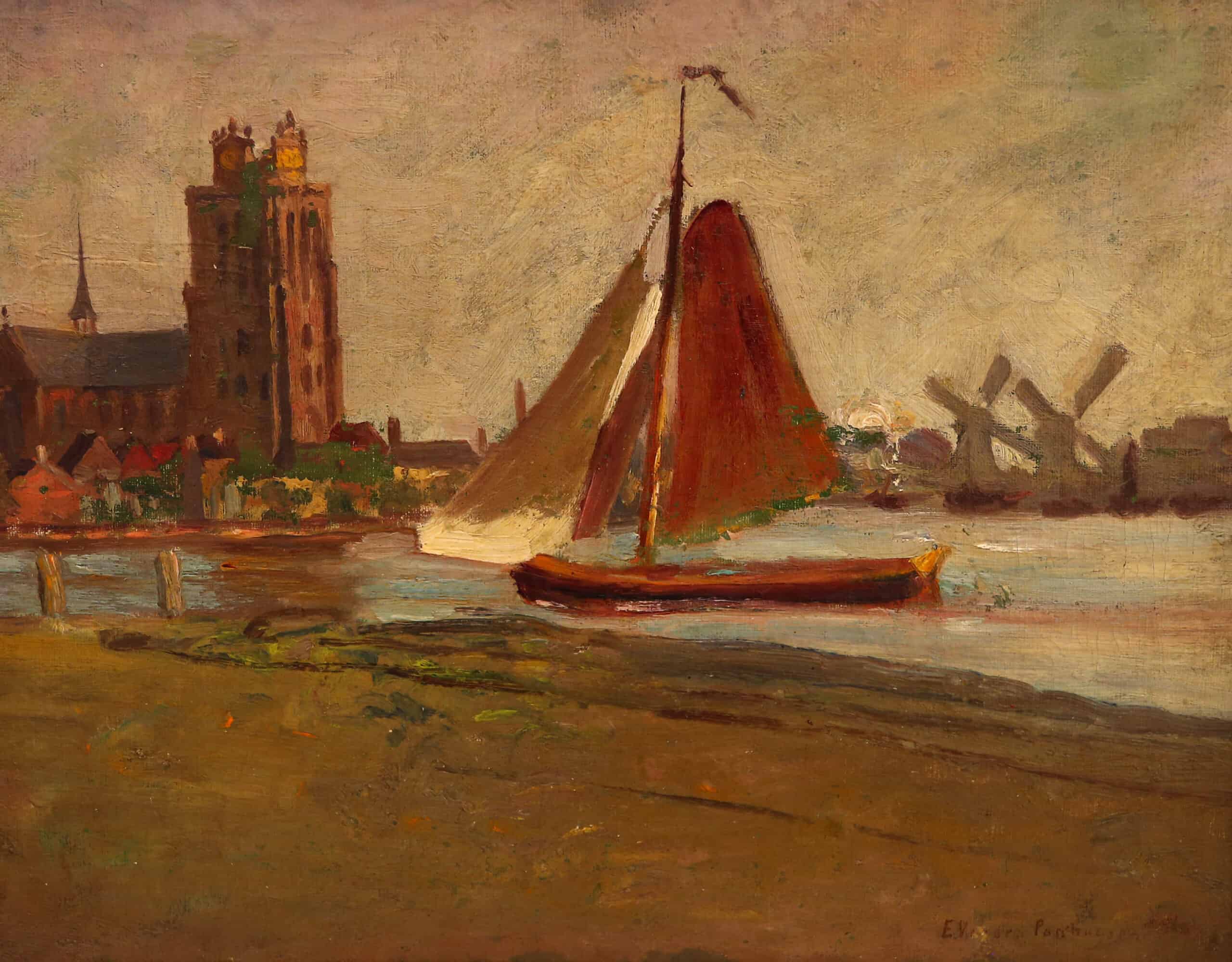
Lissewege
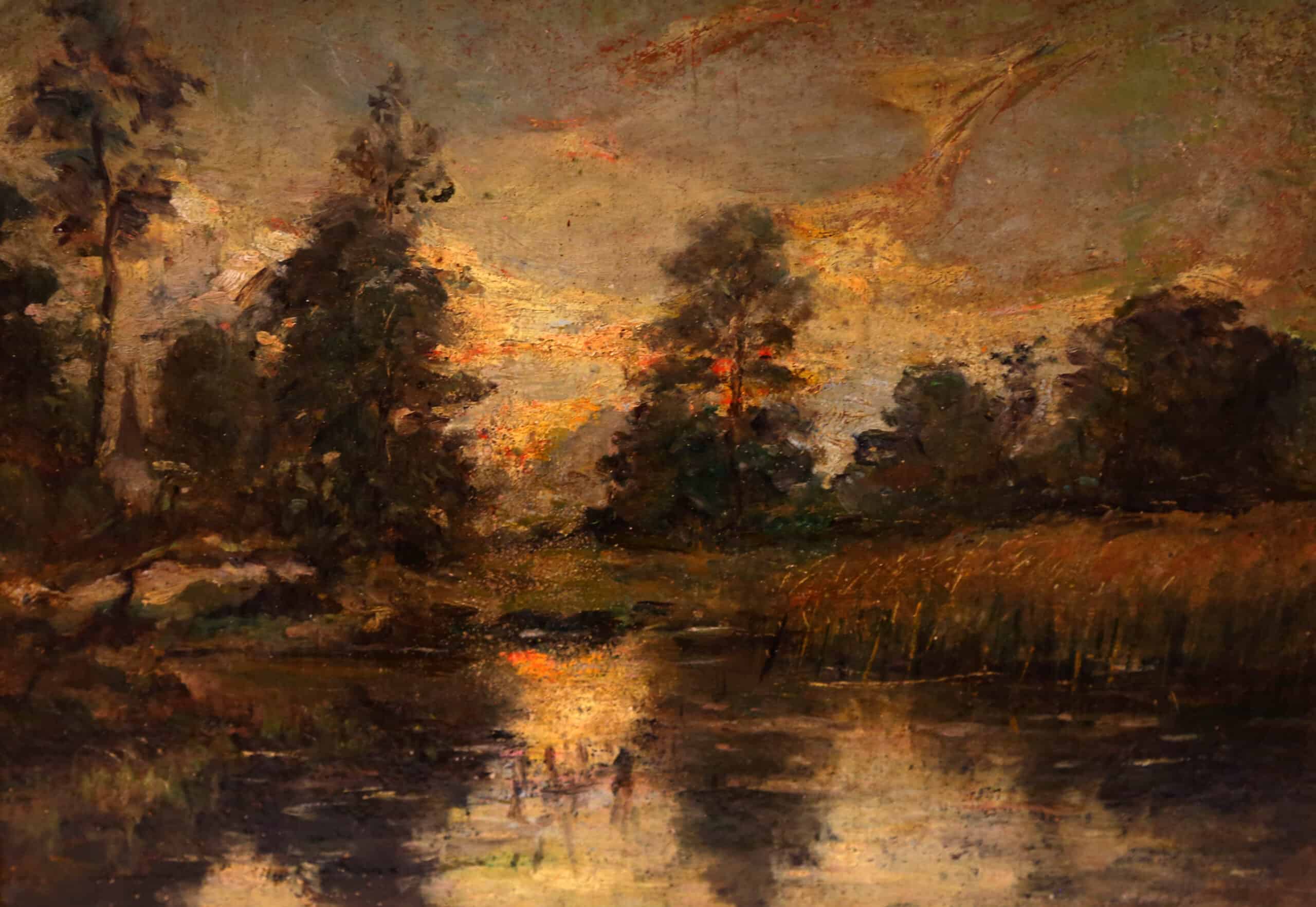
20.5 x 28 cm
oil on canvas
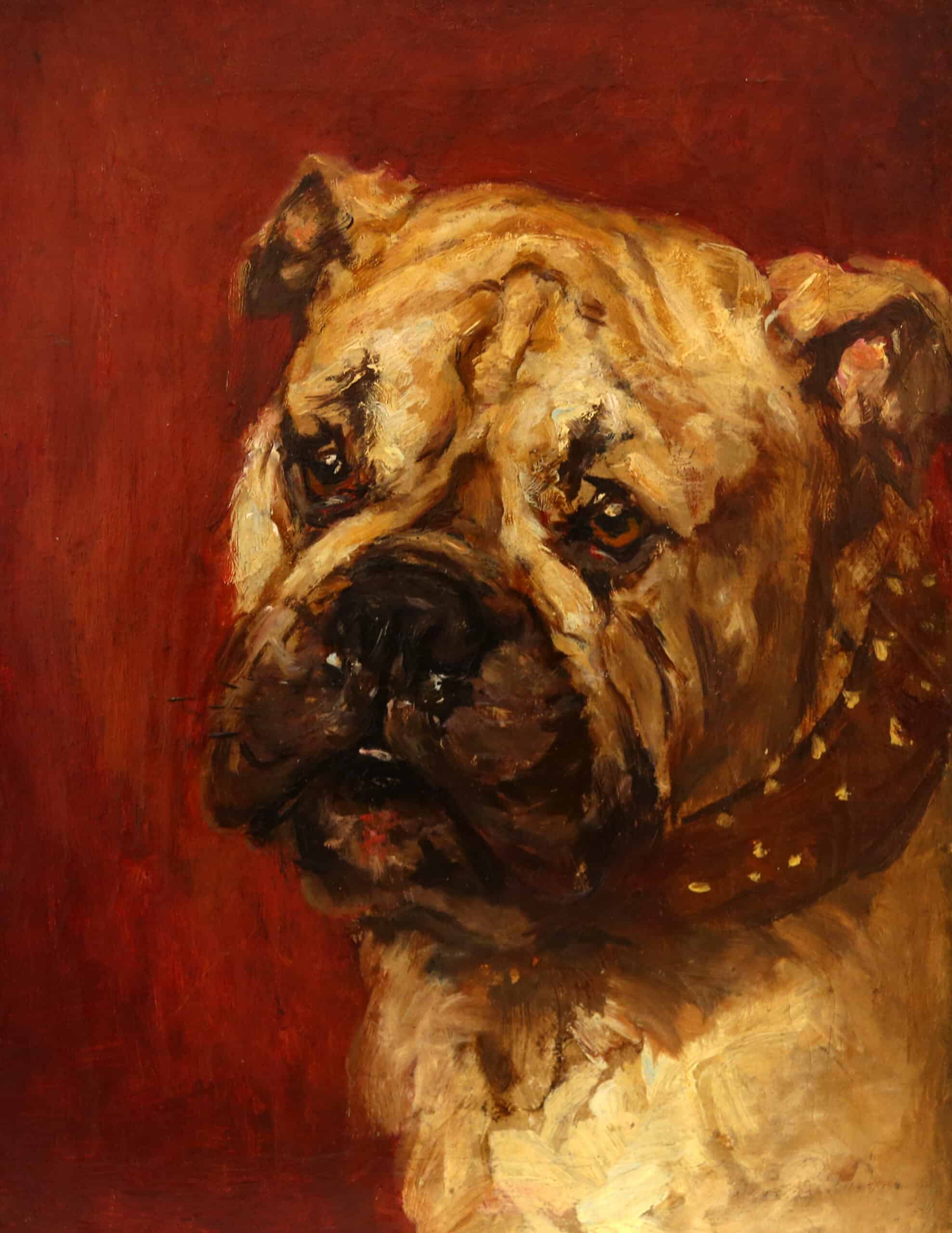
33 x 25 cm
Boxer
oil on canvas
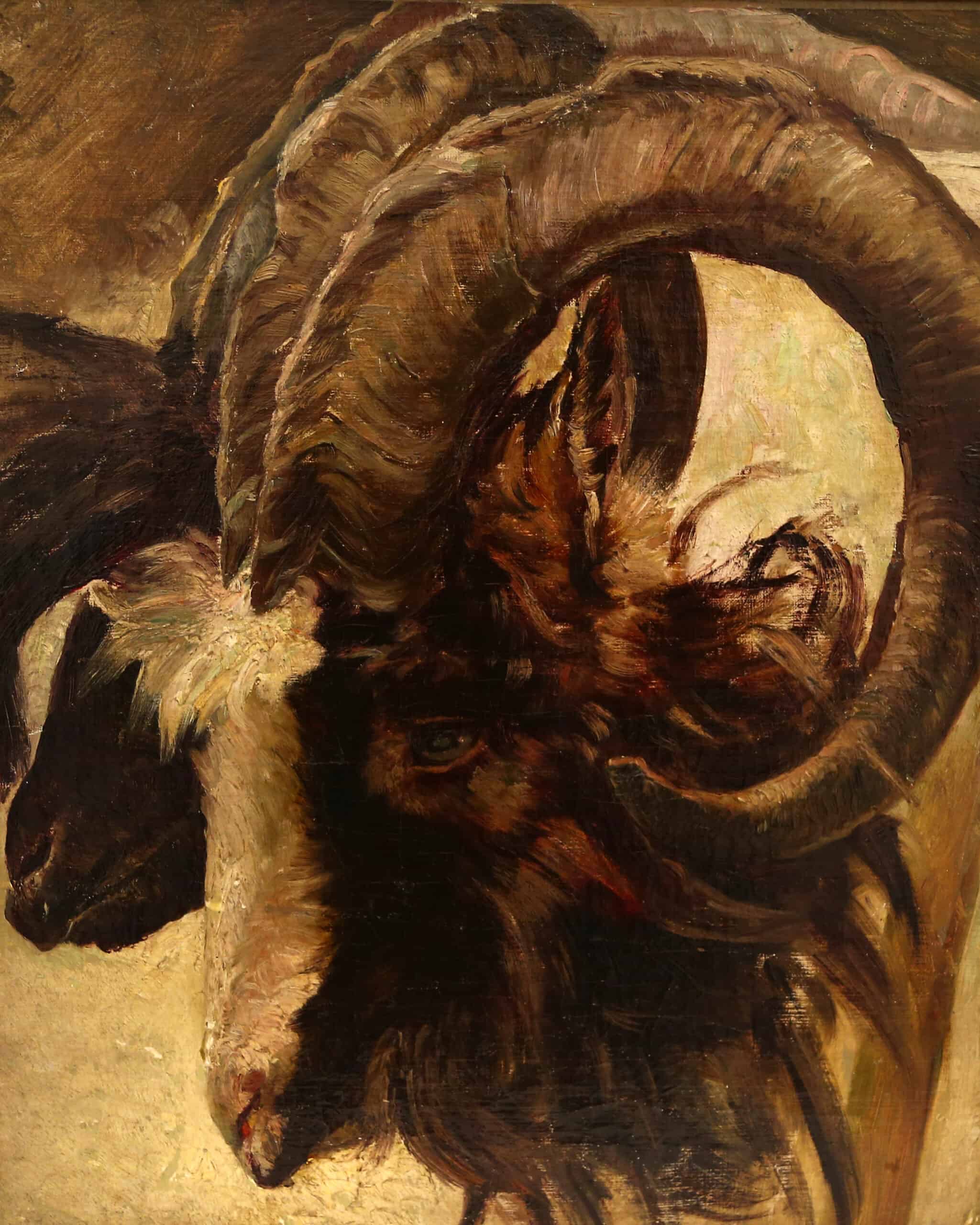
42 x 34.5 cm
Ibex
oil on canvas
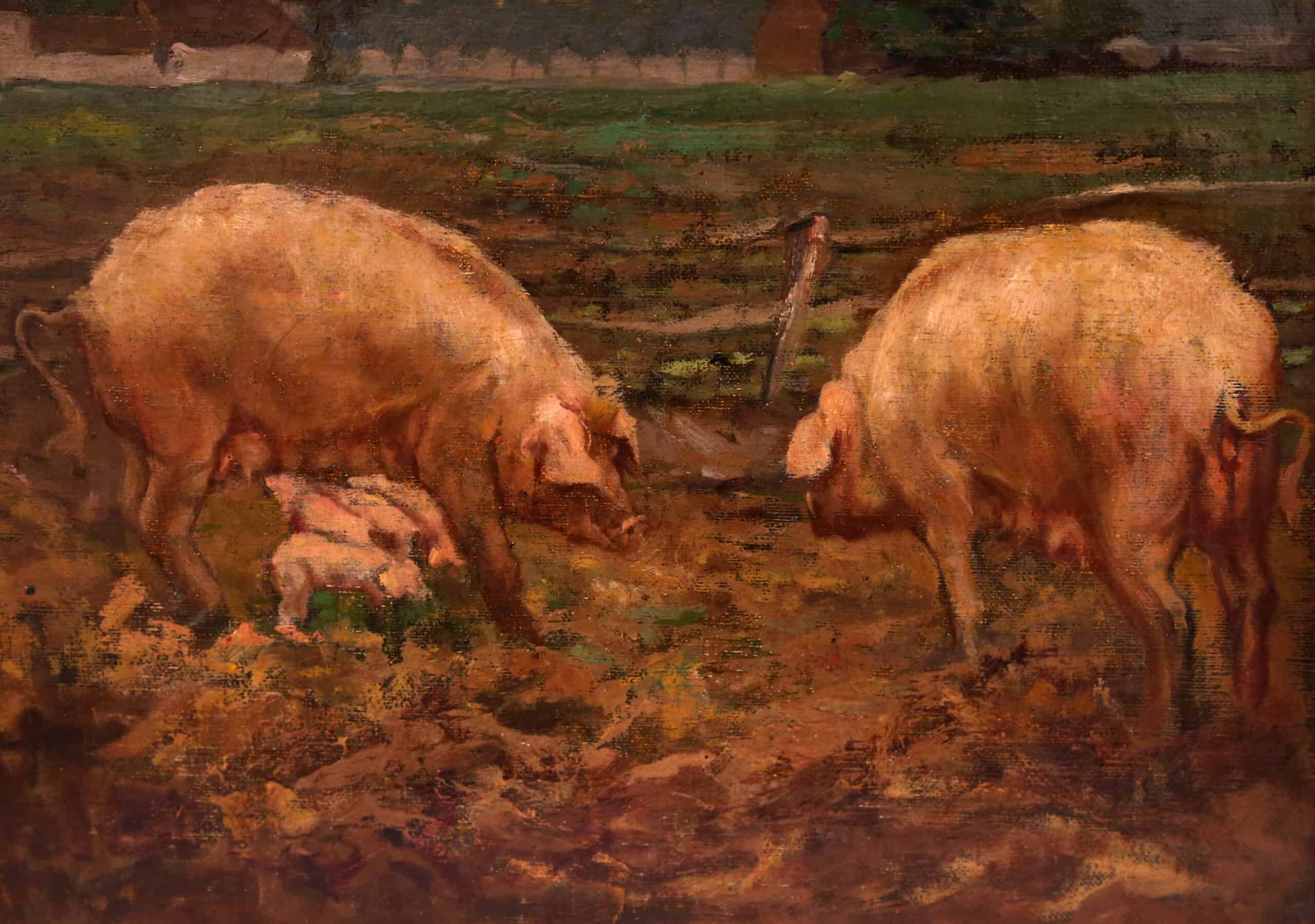
24.5 x 32.7 cm
The pig pool
oil on canvas
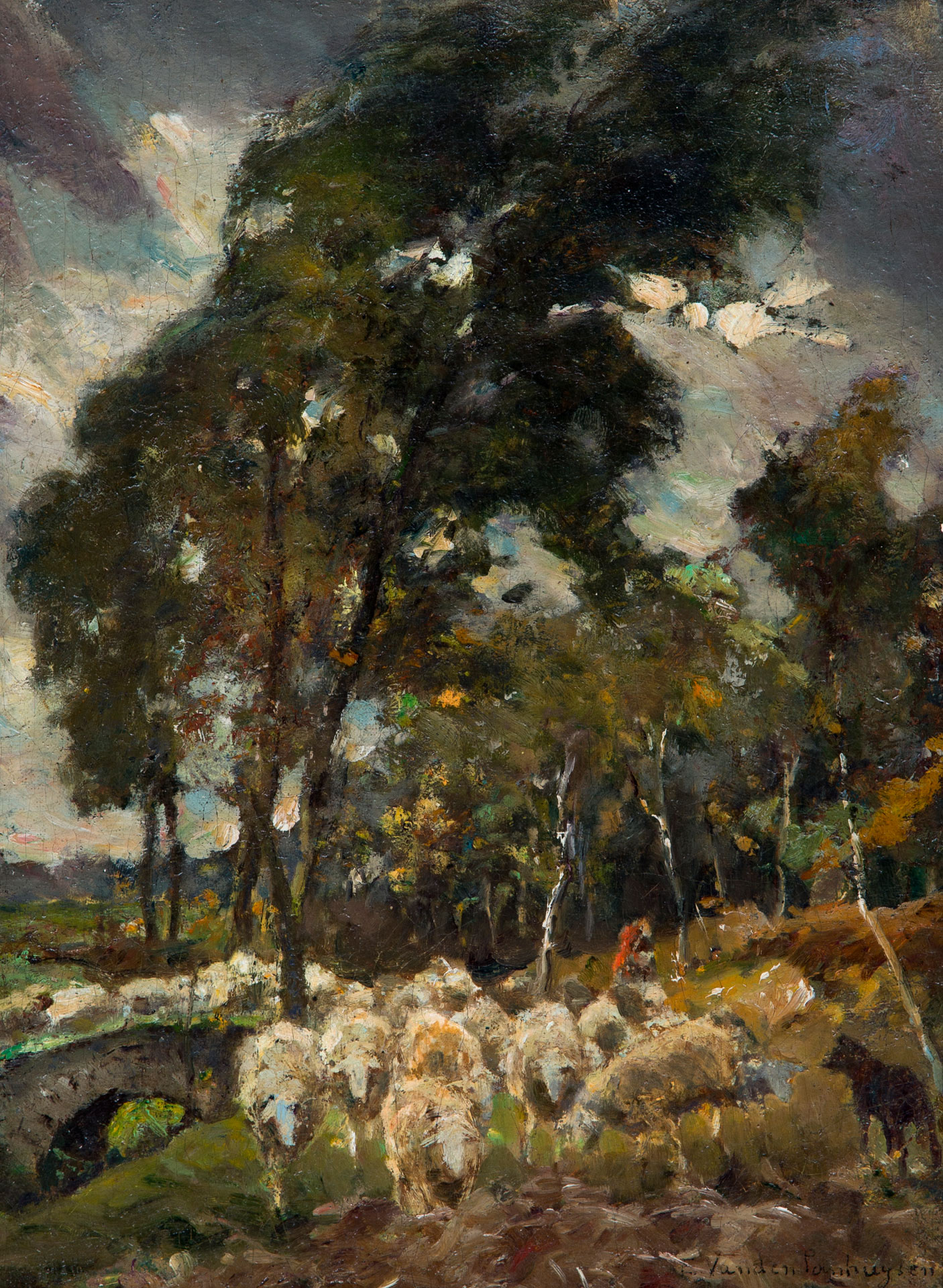
oil on panel
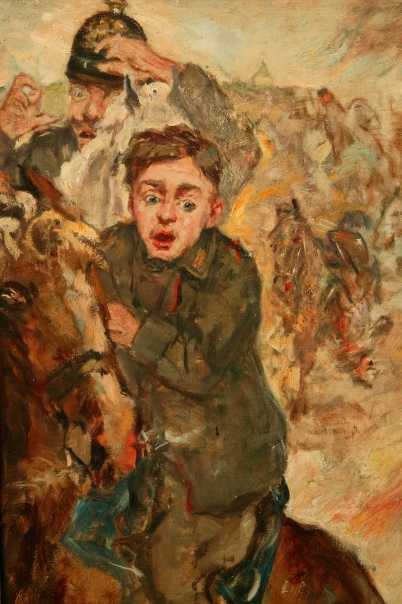
32 x 22 cm
First World War
oil on canvas
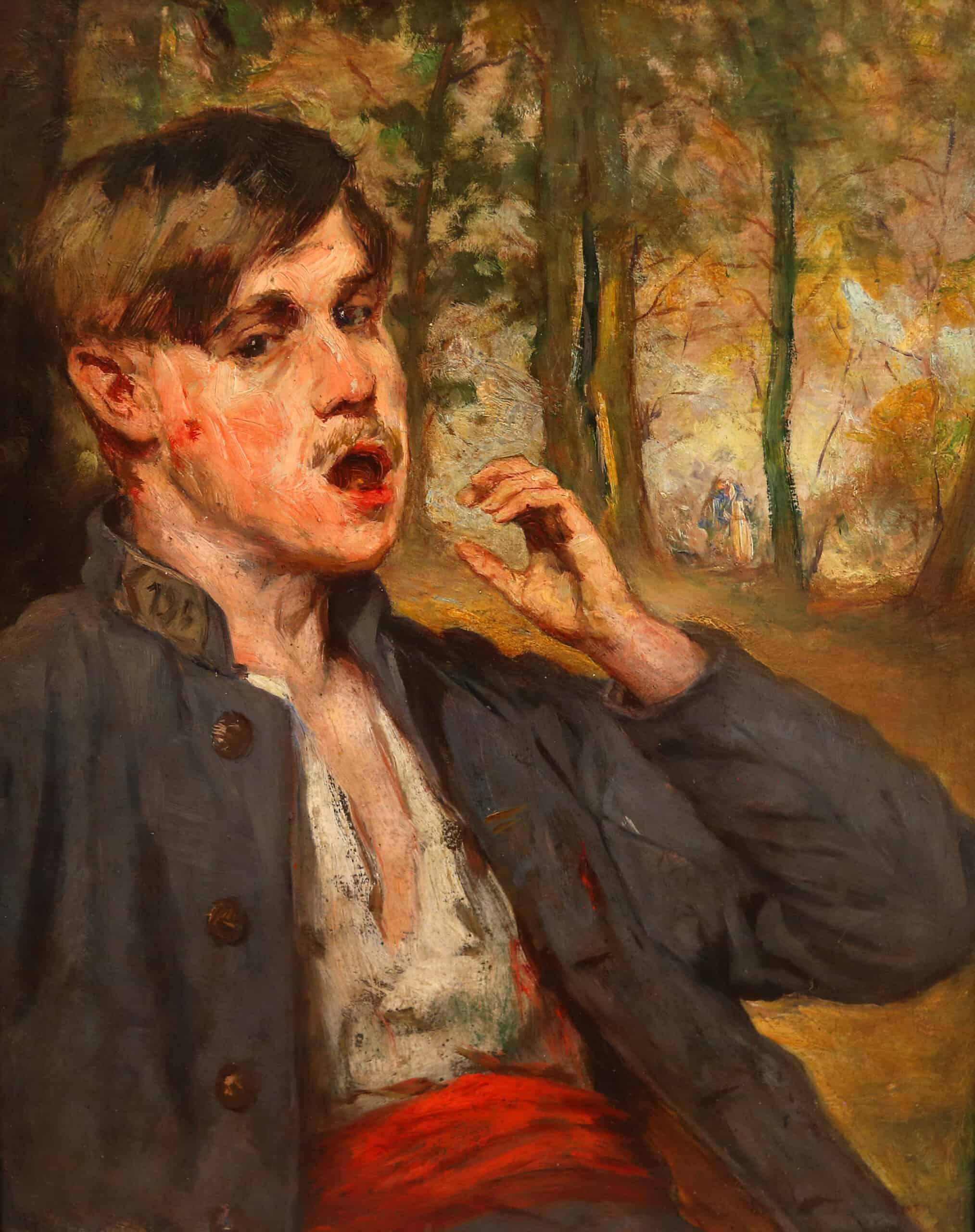
41 x 31 cm
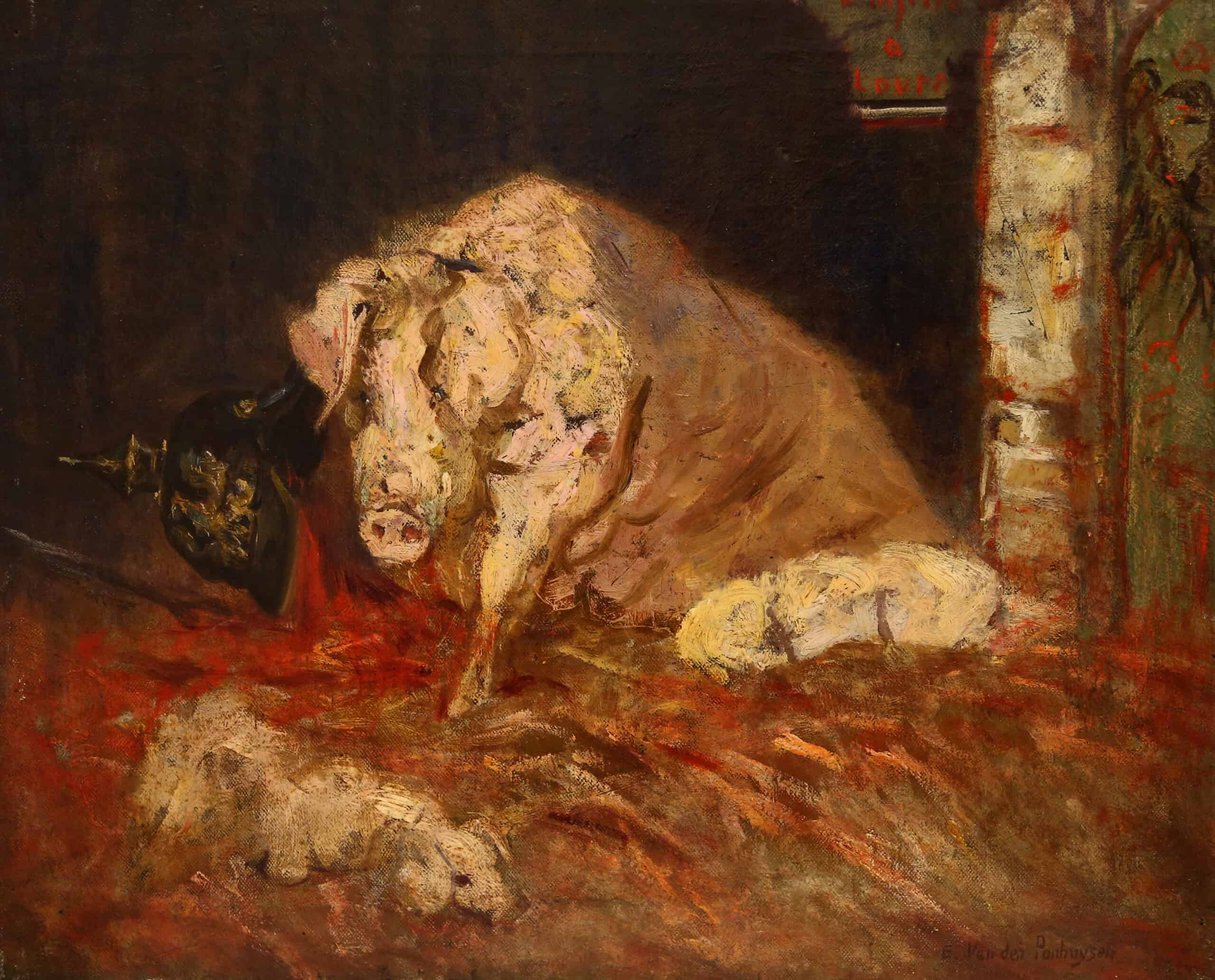
38 x 46 cm
Pig with army helmet
oil on canvas
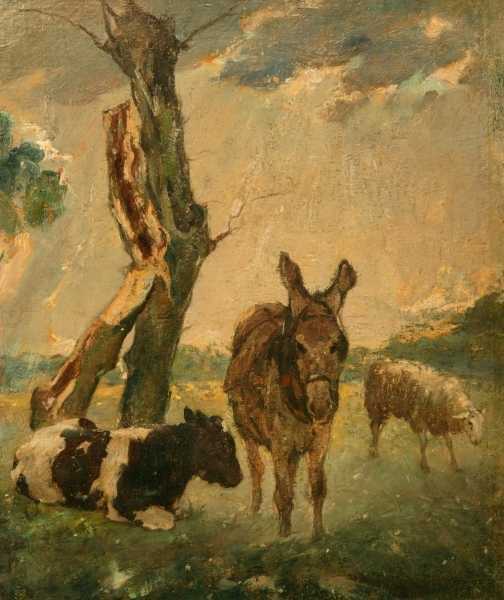
36 x 31 cm
Donkey
oil on canvas
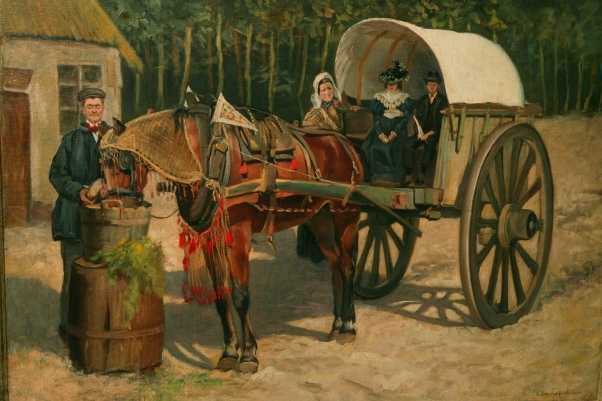
70 x 100 cm
Pilgrimage to Scherpenheuvel
oil on panel
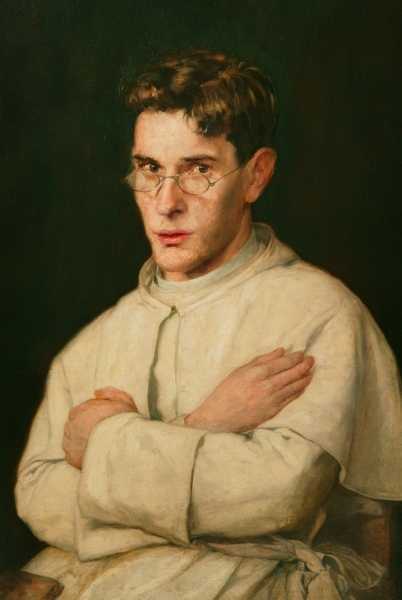
75 x 56 cm
Norbertine of Averbode
oil on canvas
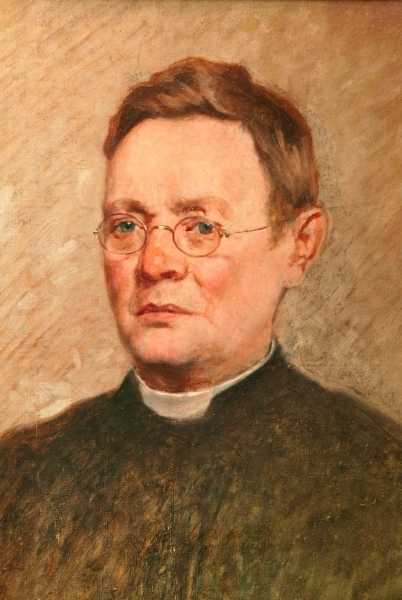
42 x 32 cm
Pastor
oil on canvas
Ernest Van den Panhuysen was raised in Aarschot, after the early death of his parents, by his foster parents Jan Noppen (carpenter) and Rozeke Van den Panhuysen. He always kept grateful memories of “Aunt Rozeke”.
He became a student of the Greek-Latin humanities at the Sint-Jozefscollege in Aarschot. He also followed classes for two years at the Municipal Evening School. Later he became a pupil at the Academy of Fine Arts in Leuven, where he had Constantin Meunier, among others, as a teacher.
In 1893 he drew an unlucky lot and was called up for three years of military service. During his time as a soldier in Antwerp he took the opportunity to follow classes at the local Academy of Fine Arts; later he was enrolled as a pupil at the State Higher Institute of Art in Antwerp, where the impressionism of his teacher Frans Van Leemputten made a deep impression on him.
On 12 July 1901 his painting “The Return” was awarded the “De Keyzer” prize, which enabled him to undertake a three-month study trip to Rome.
Meanwhile Van den Panhuysen was given a festive reception in Aarschot and was honoured at Aarschot town hall together with his teacher Frans Van Leemputten.
In 1905 he was appointed teacher at the Academy of Fine Arts in Aalst. Ernest Van den Panhuysen had in the meantime made the acquaintance of, and married, Maria De Coninck, daughter of Dr Fr. De Coninck, personal physician to Empress Charlotte of Mexico.
The couple settled in Grimbergen in 1906 and in Schaerbeek from 1914.
He died on 7 March 1929 as a result of being hit by a car.
After the Aarschot Local History Circle and the then town council had made contact with Mrs Van den Panhuysen, an agreement was reached in 1965, at her request, on moderate terms to transfer a large number of works by her late husband to the Town of Aarschot.
(…) When one entered his home one fell into a Noah’s ark. Everywhere one saw lions, tigers, camels, horses, cows, sheep, dogs, cats, etc., slumbering, grazing, resting, striding along or enjoying themselves there.This living fauna, although painted, formed part of the works of the great master that van den Panhuysen was. He understands the character of animals well and knows how to render it magnificently. Realistically accurate, sharply observed, sculptural and full of tenderness are his animal paintings in general. He has a sure hand, a feeling for line and colour, a very sensitive, gentle soul: his heart is a treasure chest of goodness. (…)
source: In memoriam: Ernest vanden Panhuysen Karel Rutgeerts, 1933, p. 32
- (…) Above all the religious, what a testimony of deep penetration into the human psyche; Van den Panhuysen was captivating to us in full creative drive.He could paint those religious so beautifully that no artist could equal him in this, because his mind penetrated deeply; because he felt sympathy, which could turn into enthusiasm, and because he was an artist and had power over the colours and could master the technique.In 1903 several newspapers gave very favourable reviews of his exhibited paintings at the Fine Arts exhibition in Brussels; in particular the portraits of the priors of the abbeys of Averbode and Grimbergen were much noticed and favourably judged. These splendid series of portraits will be a lasting glory to him; they are a splendid testimony to the deepening of his humanity. (…)source:In memoriam: Ernest Van den Panhuysen Karel Rutgeerts, 1933, pages 43-44.
- “In 1903 several newspapers gave very favourable reviews of his exhibited paintings at the Fine Arts exhibition in Brussels; in particular the portraits of the priors of the abbeys of Averbode and Grimbergen were much noticed and favourably judged. These splendid series of portraits will be a lasting glory to him. They are a splendid testimony to the deepening of his humanity. Honour to Averbode: the refuge of artists. For Averbode, by providing Van den Panhuysen with work, has pushed him forward and contributed powerfully to establishing his fame.”
- Download the digital version of the booklet “In memoriam: Ernest Van den Panhuysen” :
