Pieter Verhaghen
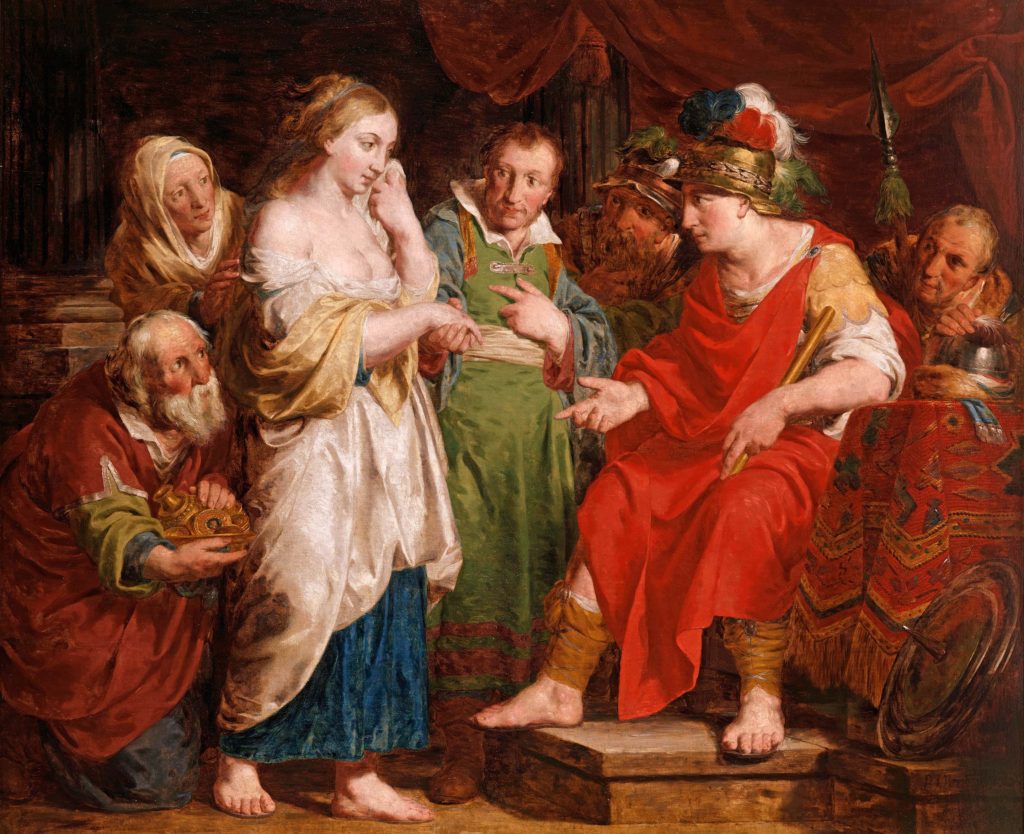
131 x 159 cm
The Continence of Scipio
1803
oil on canvas
M Leuven
After a military victory, the Roman general Scipio was offered a young woman as a slave. Her fiancé brought her to the army commander. He, however, immediately gave her her freedom back and also refused the offerings that her parents wanted to offer him in return.
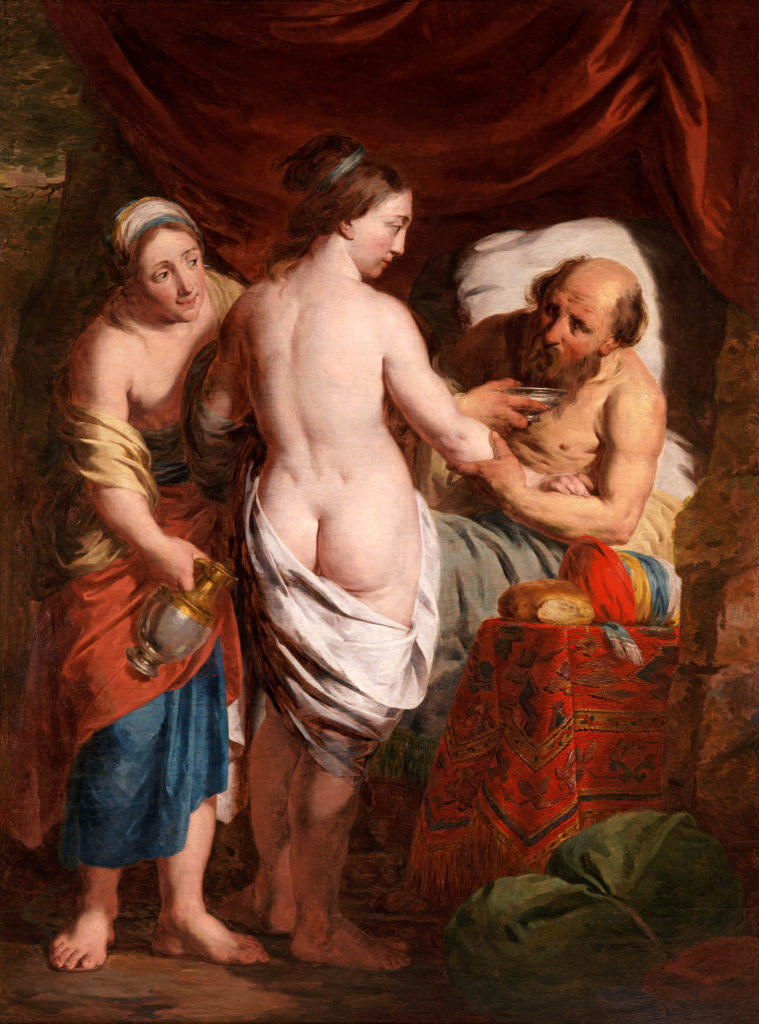
196 x 143 cm
Lot and his daughters,1780
oil on canvas
M Leuven
Lot and his daughters lived, after their flight from Sodom, in a cave near the town of Zoar. Both daughters were childless and decided to get their father drunk and seduce him.
1780
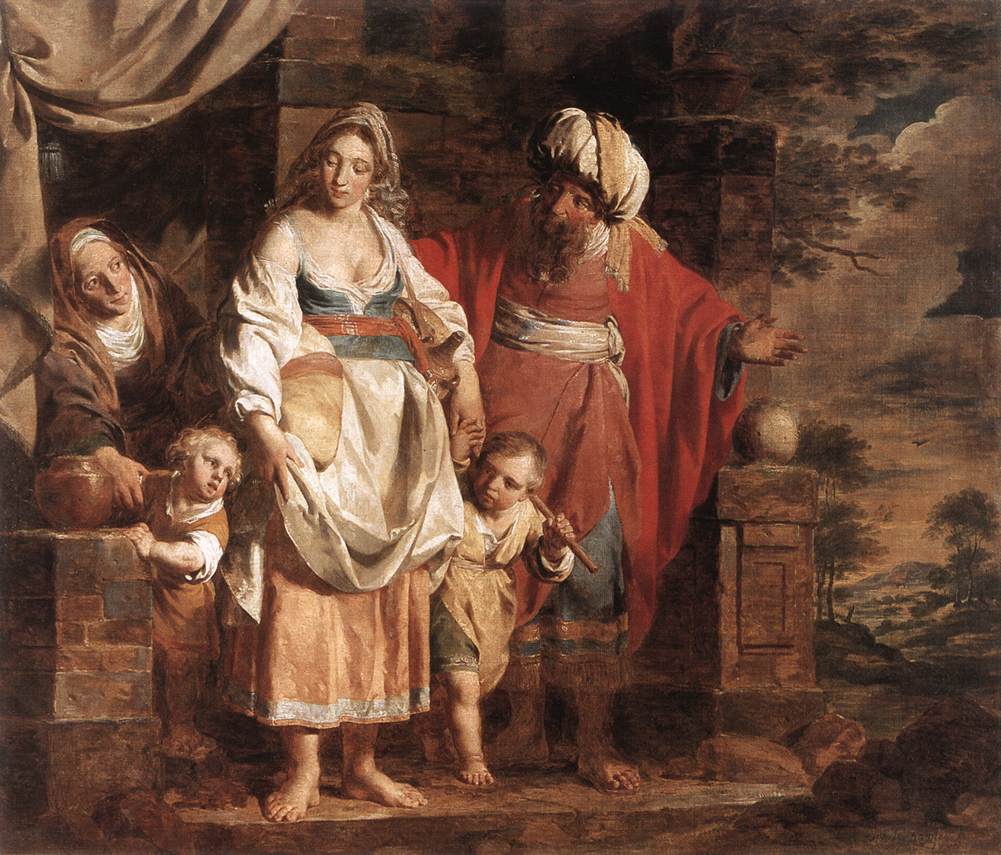
Abraham sends Hagar and Ishmael into the desert,1792
oil on canvas
Sarah, Abraham’s wife, remained childless. She allowed Abraham to father a son with her Egyptian slave. After some time Sarah too gave birth to a son, Isaac.
Sarah could not live with the idea that her son would have to share Abraham’s inheritance with Ishmael, and she insisted that Abraham send Hagar and her son into the desert.
1792
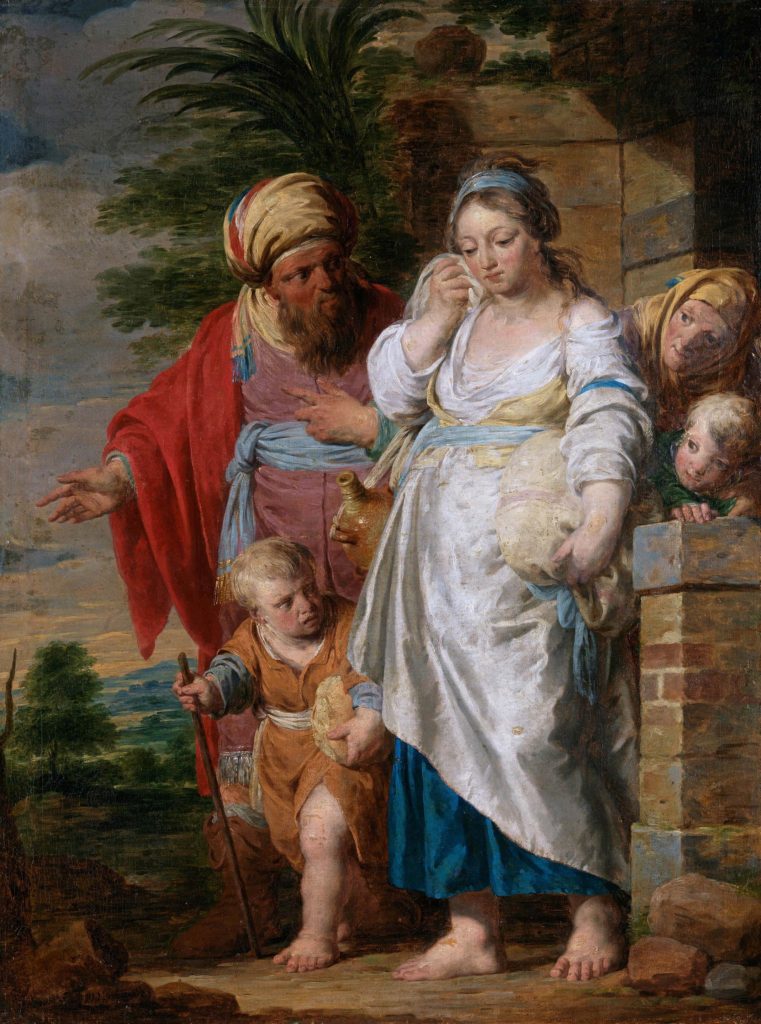
93 x 70 cm
Abraham sends Hagar and Ishmael into the desert
1792
oil on canvas
M Leuven
After God had confirmed that he would look after the unfortunate woman and son, Abraham sent them into the desert with a bag of bread and some water.
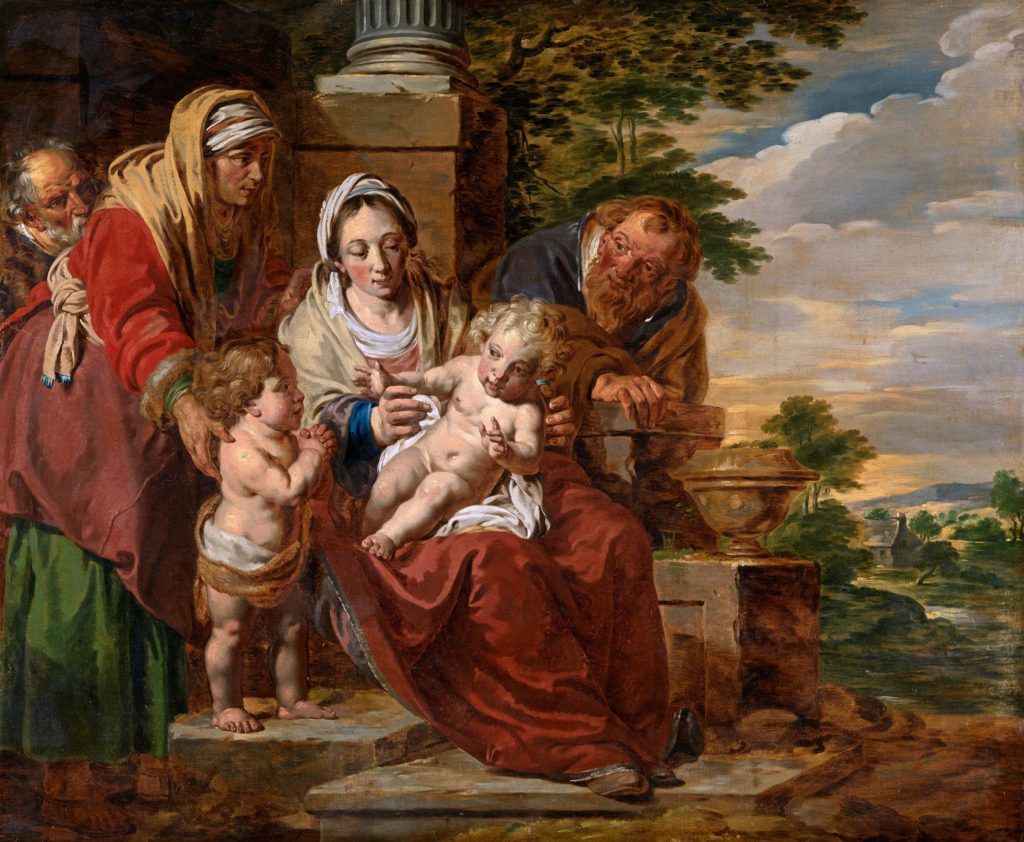
124 x 149 cm
The Holy Family with Elizabeth and John the Baptist
1800-1811
oil on canvas
M Leuven
Six figures are present: in the centre, on the threshold of a portal, sits Mary with her Son on her knees, the young Saint John the Baptist and his parents stand on the left, Joseph on the right behind Mary. A wide landscape can be seen in the background.
This work comes from the church of the Great Beguinage of Leuven.
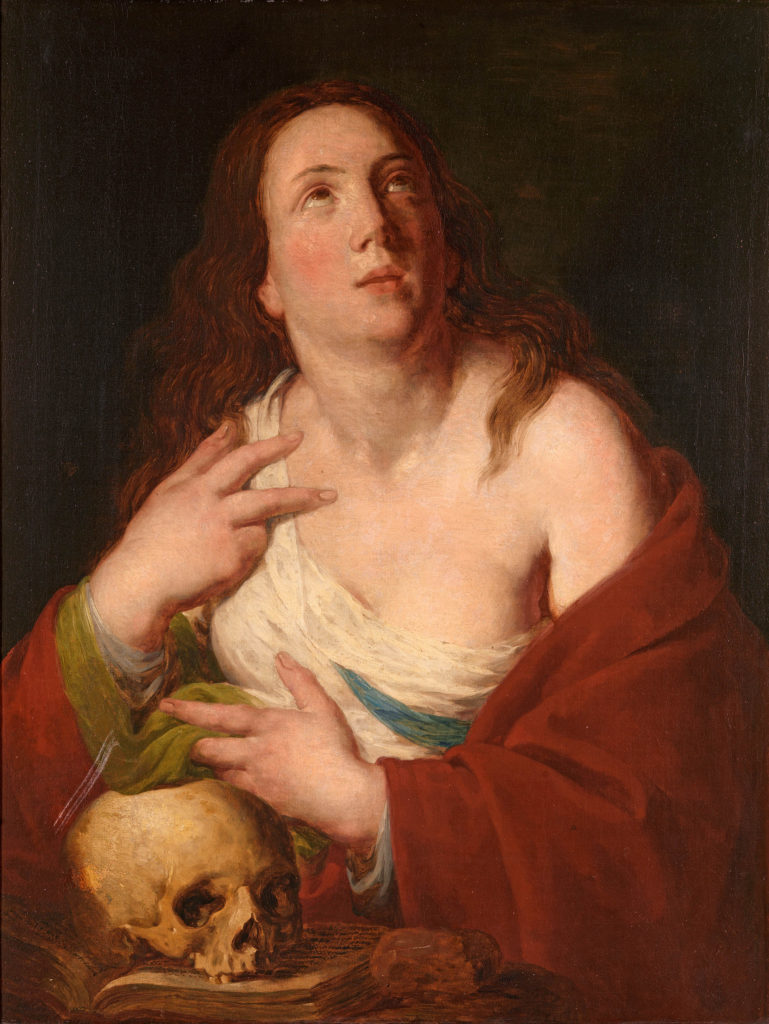
85 x 65 cm
The Penitent Mary Magdalene
1772
oil on canvas
M Leuven
A sensual depiction of a wanton woman whose sensuality is further emphasised by the bare shoulder.
Pieter Verhaghen made several works with an erotic touch.
In the foreground lies a skull as a warning that makes clear to the viewer that bodily beauty is fleeting and sensual pleasure is only temporary.
Pieter Verhaghen
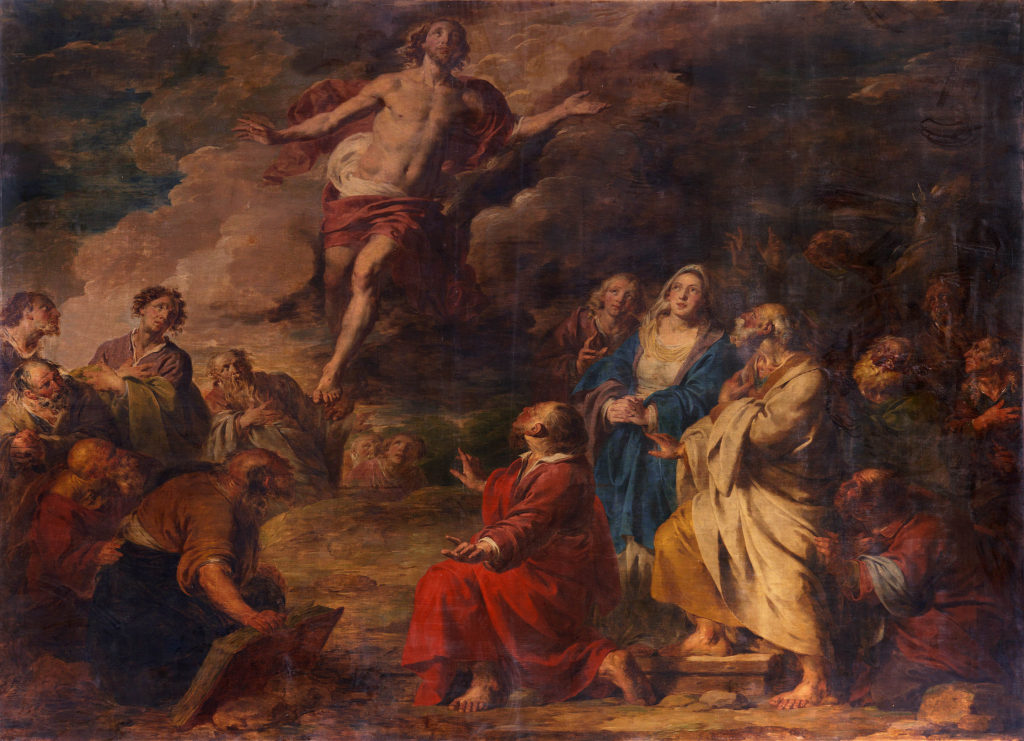
322 x 394 cm
The Ascension of Christ
1800
oil on canvas
M Leuven
Christ rises amid the clouds; Mary and the apostles are the silent witnesses.
In this work, with his drawing, use of colour and composition, Pieter Verhaghen reaches a high point in his oeuvre; the work was accordingly given a place of honour in Leuven town hall for many years.
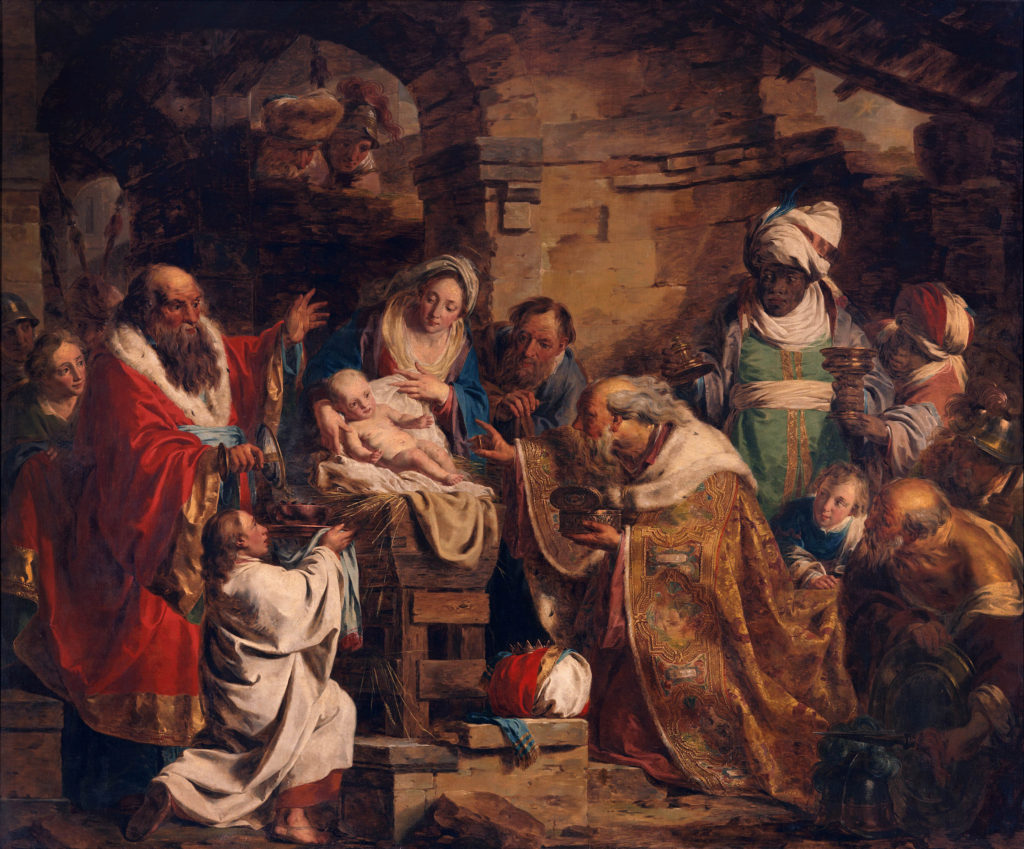
283 x 339 cm
Adoration of the Magi
1780
Oil on canvas
M Leuven
To the right of Mary, Caspar offers the Christ Child a gold medal that he has taken from a golden box, an ornamental box that actually depicts the gift that Pieter Verhaghen received from Empress Maria Theresa during his visit to Vienna.
Pieter Verhaghen made this painting for Empress Maria Theresa. She died, however, before Verhaghen had finished it. The painter did not want to part with it and it remained in the family’s possession until the city council bought it from the family in 1874.
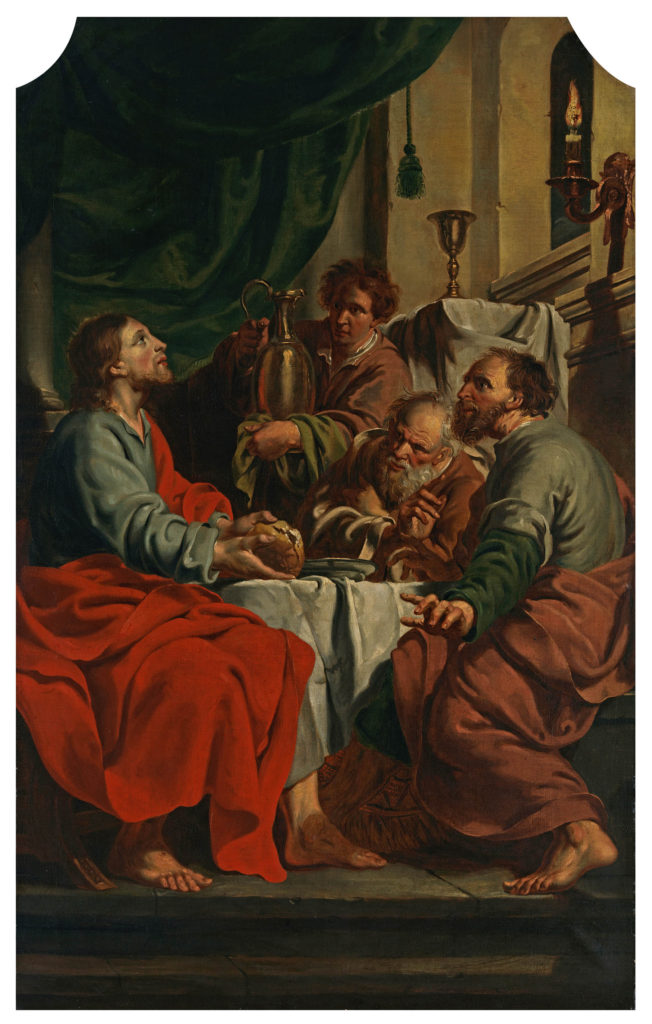
121 x 77 cm
The Supper at Emmaus
1780
oil paint on canvas
M Leuven
In total, Pieter Verhaghen is said to have depicted this theme more than twelve times, including in Rome for Pope Clement XIV and for the Sint-Norbertuscollege. He also painted a version there in honour of the Empress, which was placed in the chapel of Bratislava Castle.
Even though Pieter Verhaghen depicted this theme so often, he devised different compositions. Thus the work in Leuven resembles neither that of Park Abbey nor that of the Museum of Fine Arts in Brussels. This composition dates from 1780 and is regarded as one of the best works that Pieter Verhaghen painted for the open market.
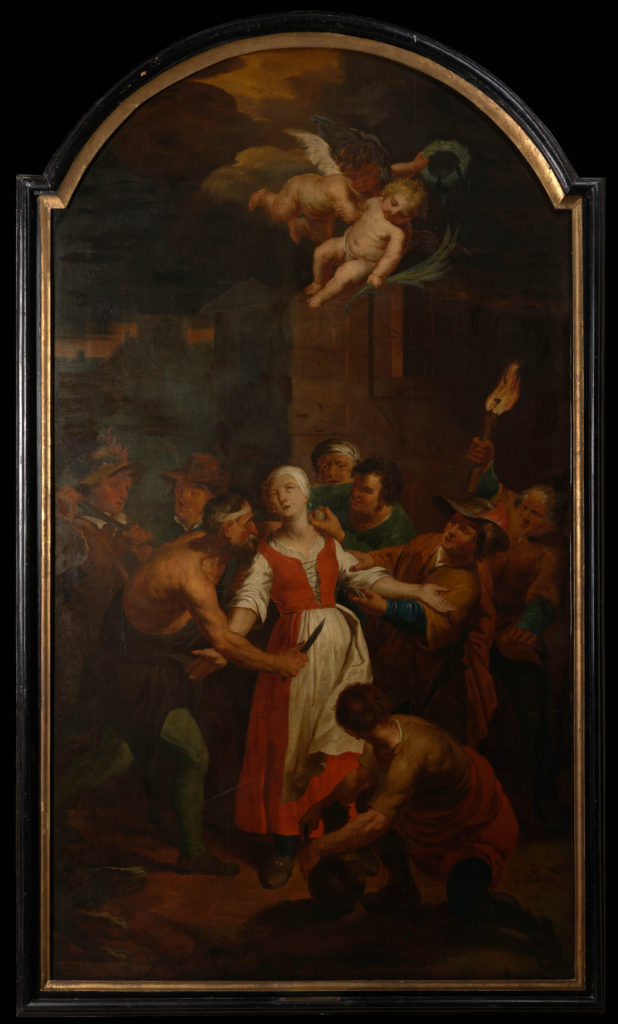
Pieter Verhaghen
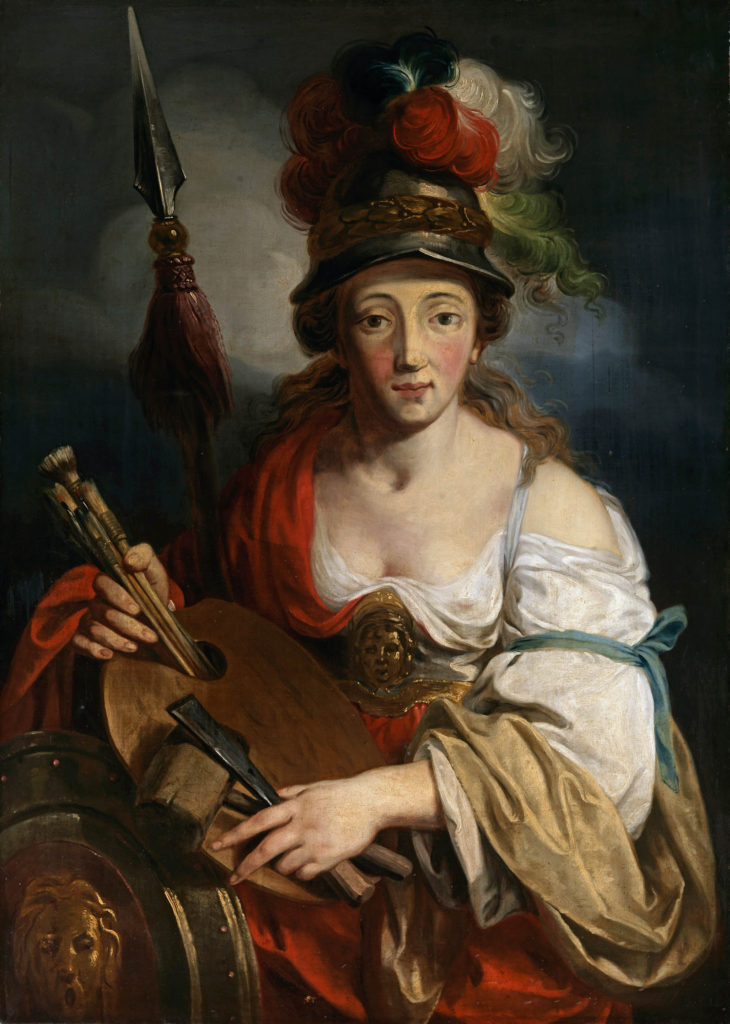
114 x 81 cm
Minerva
1773-1811
oil on canvas
M Leuven
Minerva, the Roman deity of reason and wisdom, was also the patron goddess of the arts and letters. Nevertheless Pieter Verhaghen depicted her with helmet, spear and shield, alongside the attributes referring to the arts such as brushes and the sculptor’s tools. This points to the close connection between the Roman-Etruscan deity Minerva and the Greek Pallas Athena. The latter was namely also the goddess of war and peace. Although Minerva was worshipped throughout the Roman Empire, it is only in the city of Rome that Athena’s war attributes were also assigned to her Roman counterpart.
This is an atypical subject for Pieter Verhaghen. As far as is known, he made only three mythological paintings: all three a depiction of Minerva. It goes without saying that he did not make these for his religious clients, but rather for private individuals. In the past, art connoisseurs criticised the lack of “nobility” in the goddess’s face, which contrasts sharply with the successful colouring.
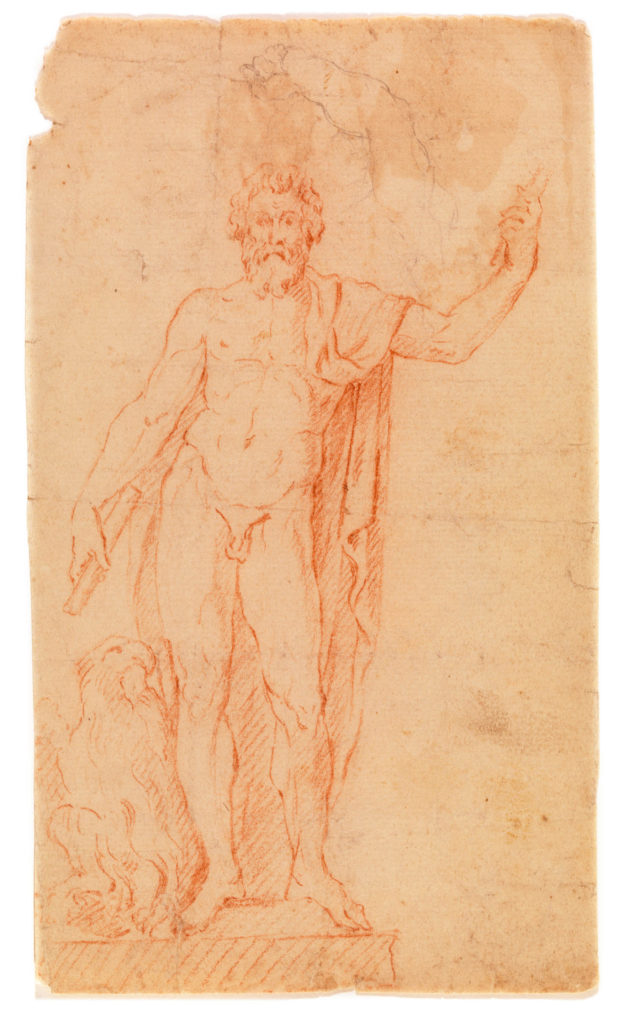
171 x 110 mm Aristotle accompanied by an eagle (sketch of an ancient male figure)
1771-1773
paper
M Leuven
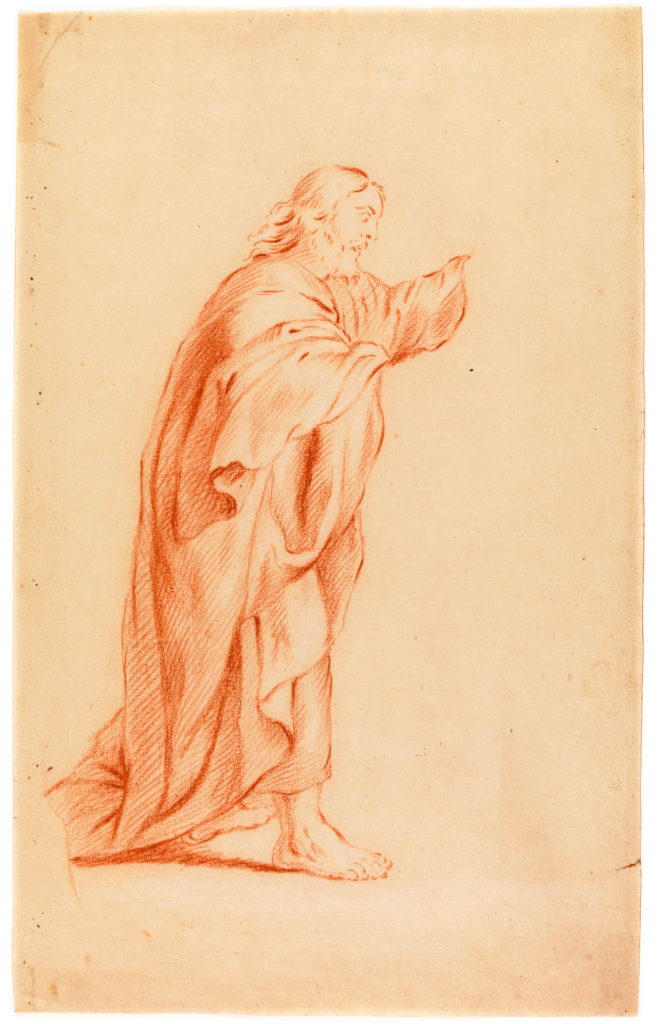
Figure of Christ
1744 – 1747
Paper, 426 x 263 mm
M Leuven
Pieter Verhaghen paid a great deal of attention to the folds and volume of Christ’s robe. In his painting too, Verhaghen gave the often very colourful robes of his figures a strong sense of tactility.
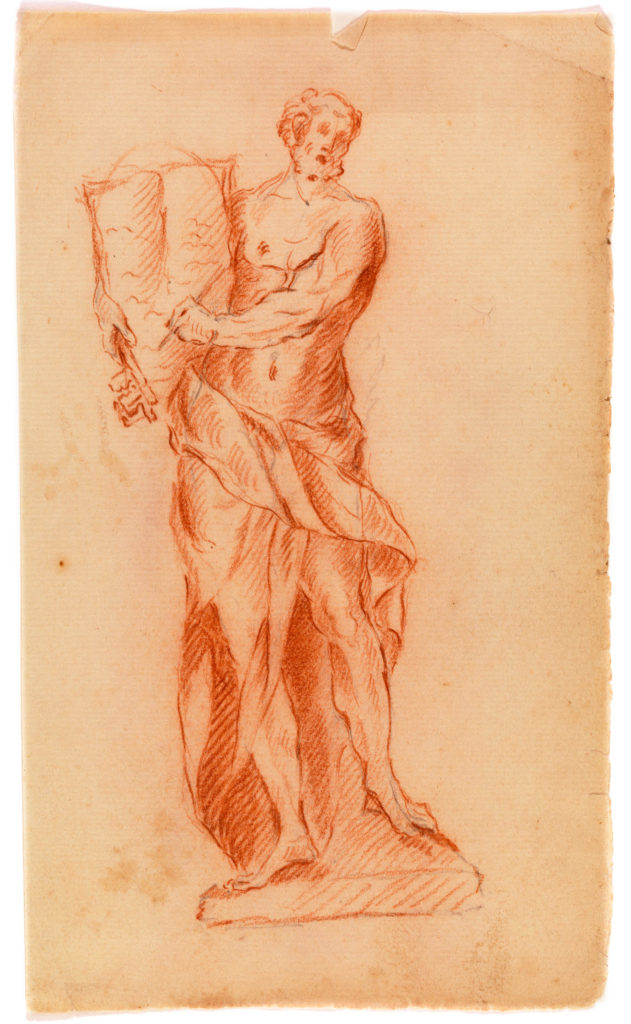
Peter with book and keys in hand
1771 – 1773
Paper, 172 x 110 mm
M Leuven
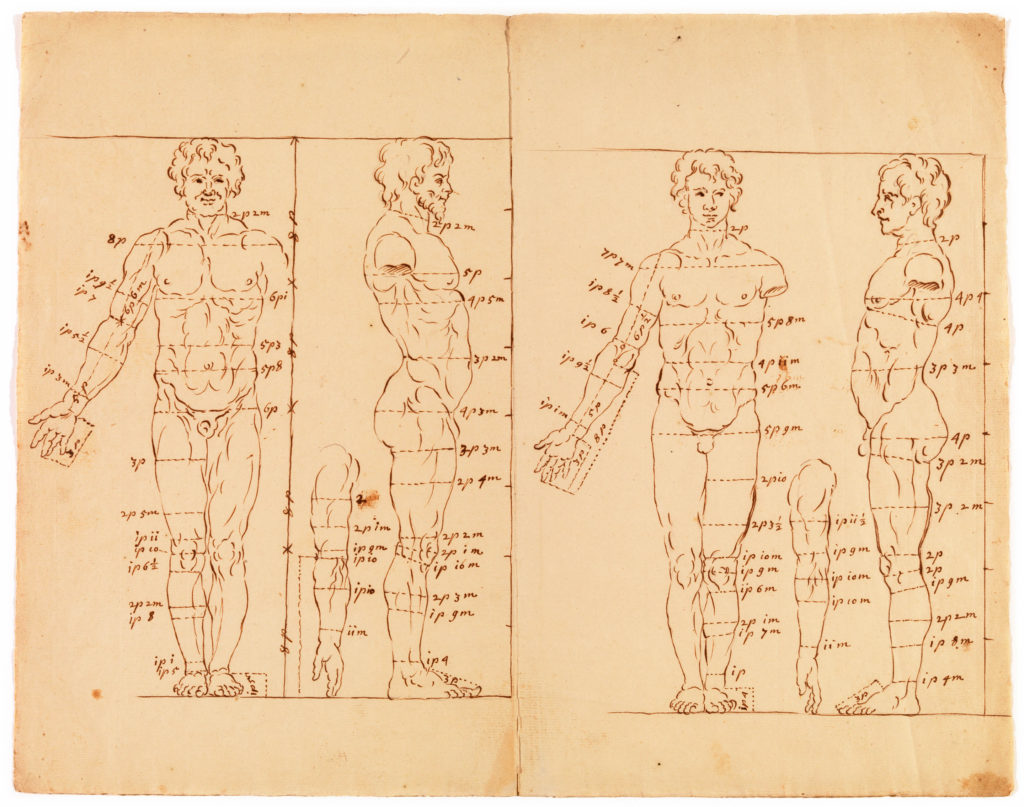
Study of the proportions of the male body
1744 – 1747
Paper, 313 x 388 mm
M Leuven
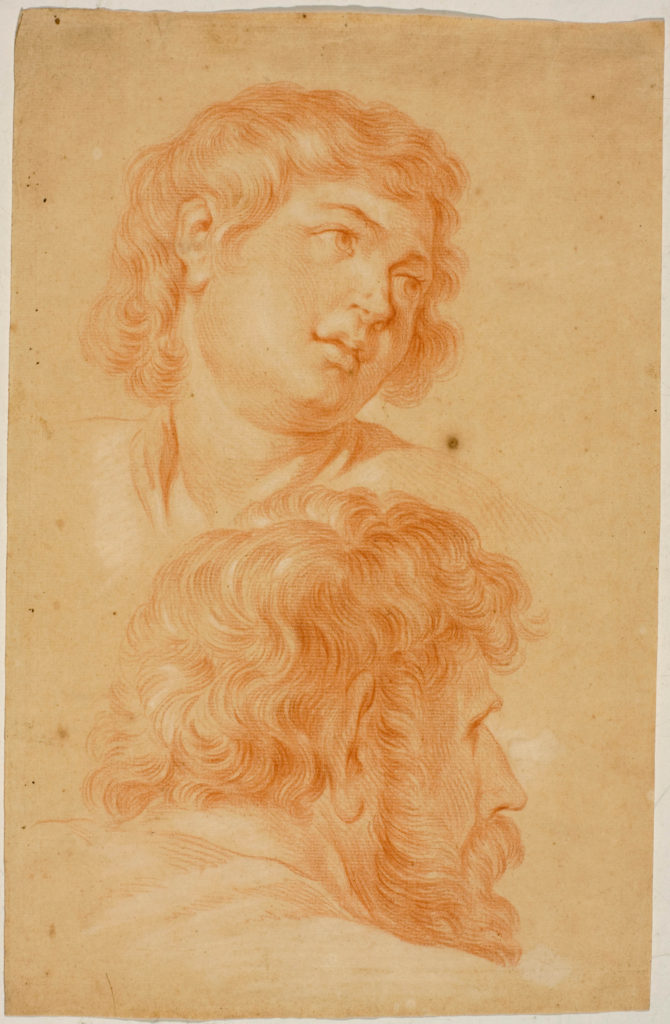
Two apostle heads
Eighteenth century
Chalk on paper, 388 x 251 mm
M Leuven
The younger figure at the top is shown in three-quarter profile from the front, while the older man at the bottom is shown in three-quarter profile from behind. The round cheeks, large eyes, pursed lips and smooth skin of the young fellow contrast sharply with the sharp facial features of the older man. The face and curly hair of both models are rendered with remarkable attention to detail. The fine hatching and even line work as well as the strong light-dark effect of this drawing in red heightened with white are all characteristics that point to a graphic source of inspiration.
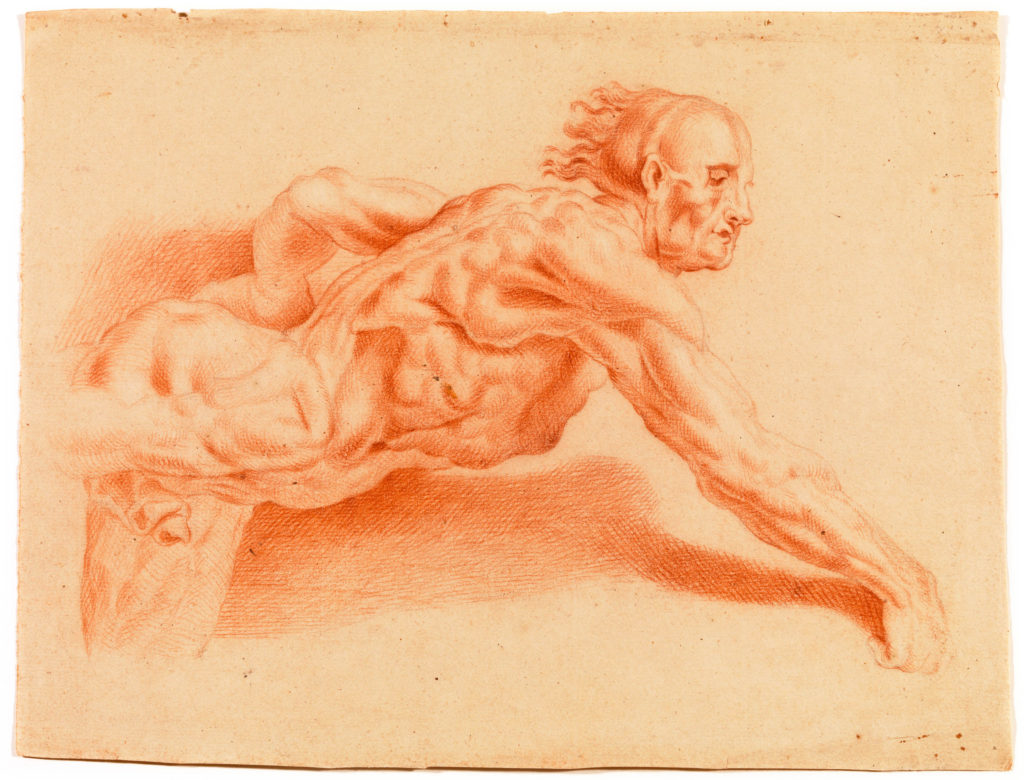
Écorché after Rubens
1744-1747
Paper, 303 x 236 mm
M Leuven
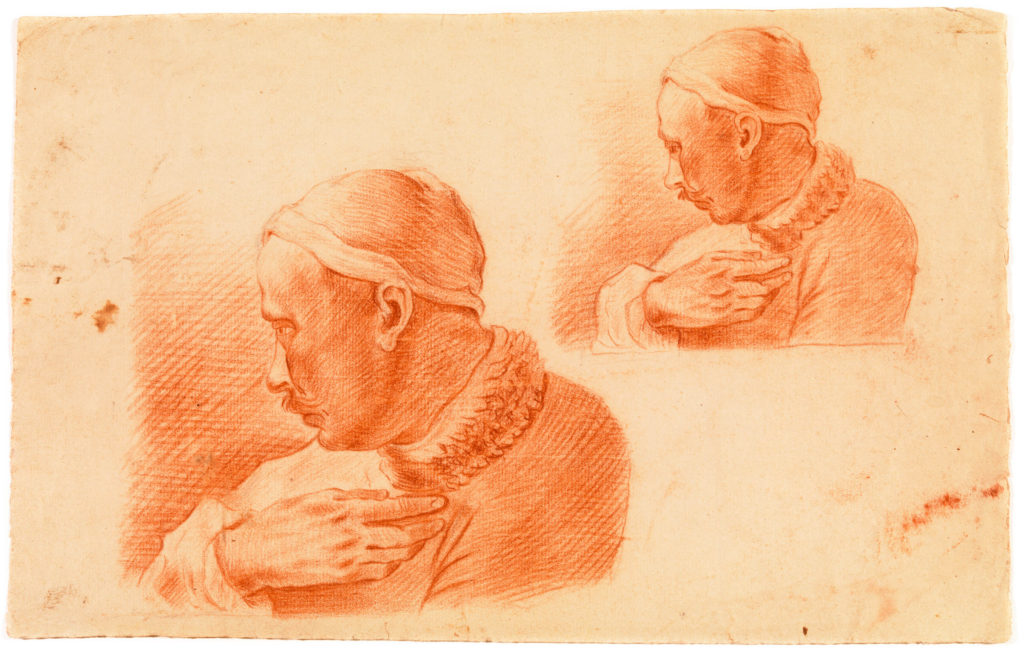
Two Moors
1744-1747
Paper, 206 x 328 mm
M Leuven
Pieter Verhaghen made a series of studies of a black model traditionally referred to by the term Moor. The sketch in red chalk exhibited here shows two identical depictions. The best-known figure of African origin in Pieter Verhaghen’s oeuvre is Balthasar, the black king who brought myrrh as a gift for the Christ Child.
Pieter Verhaghen was born in 1728 in Aarschot as the second son of Willem Verhaghen and Anna Verstreken. The family lived in the house Den kleynen Moriaen on the then Neerstraat, the present Theofiel DeBeckerstraat, near the Hoogbrug, in the historic inner town of Aarschot.
The Verhaghen family belonged to an ancient Aarschot lineage. Grandfather Jan Verhaghen was a surgeon or healer. The father of the future painter practised the same profession and, as alderman and receiver, belonged to the notables of the town.
In 1771 he became first painter to Governor Charles of Lorraine and from 1773 Pieter Verhaghen became first court painter to Empress Maria Theresa. He was received several times by the Empress and by Emperor Joseph II.
Not bad for a painter who was in fact mainly self-taught. He had had only a very limited training and learned his craft at least as much, if not more, by studying the works of illustrious masters.
In Aarschot, but also in Leuven and Antwerp, he was welcomed as a kind of national hero.
source: fragments from the book, Pieter-Jozef Verhaghen In het spoor van Rubens. Jan Gerits