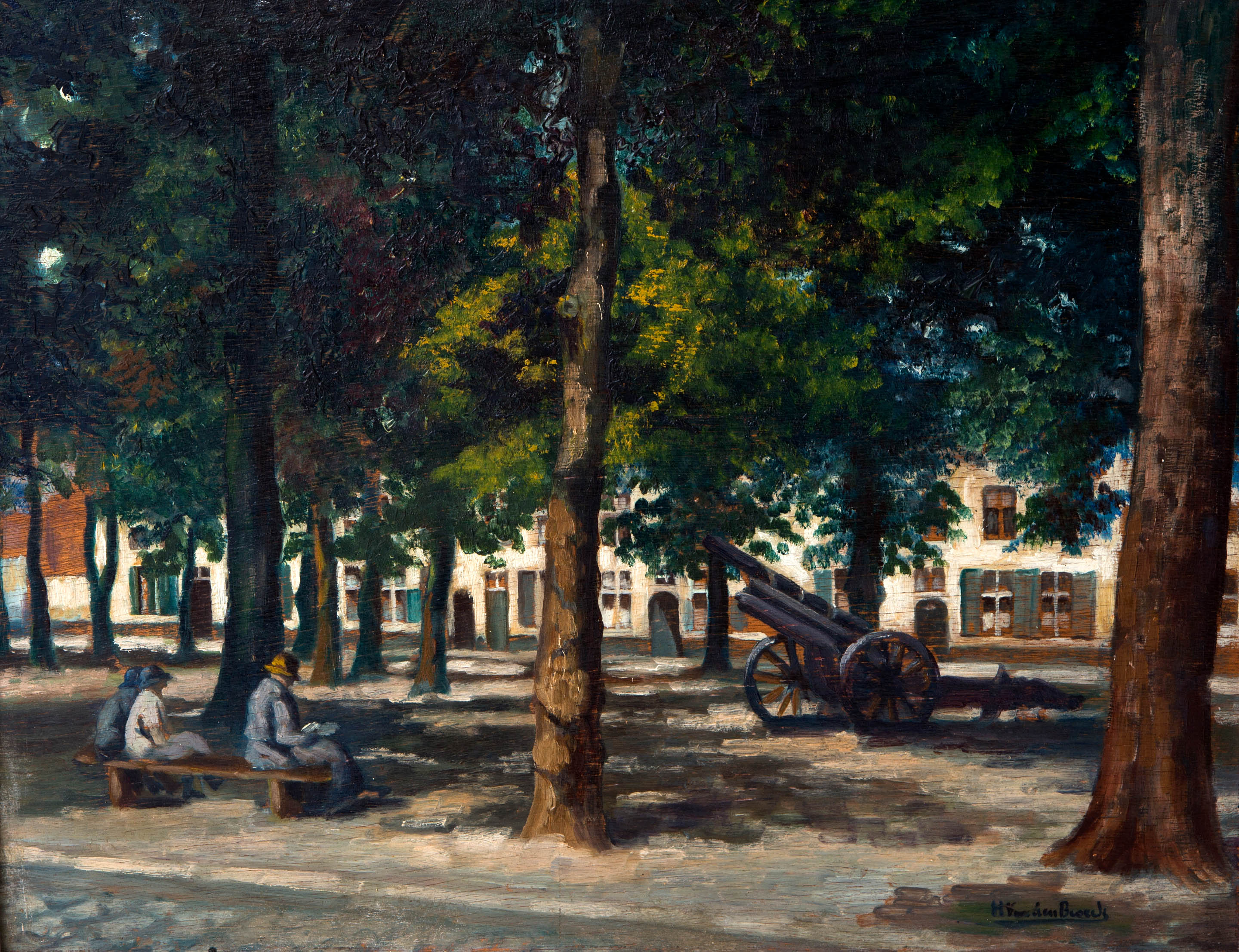
40 x 50 cm
A German cannon– Beguinage of Aarschot between WWI and WWII.
oil on panel
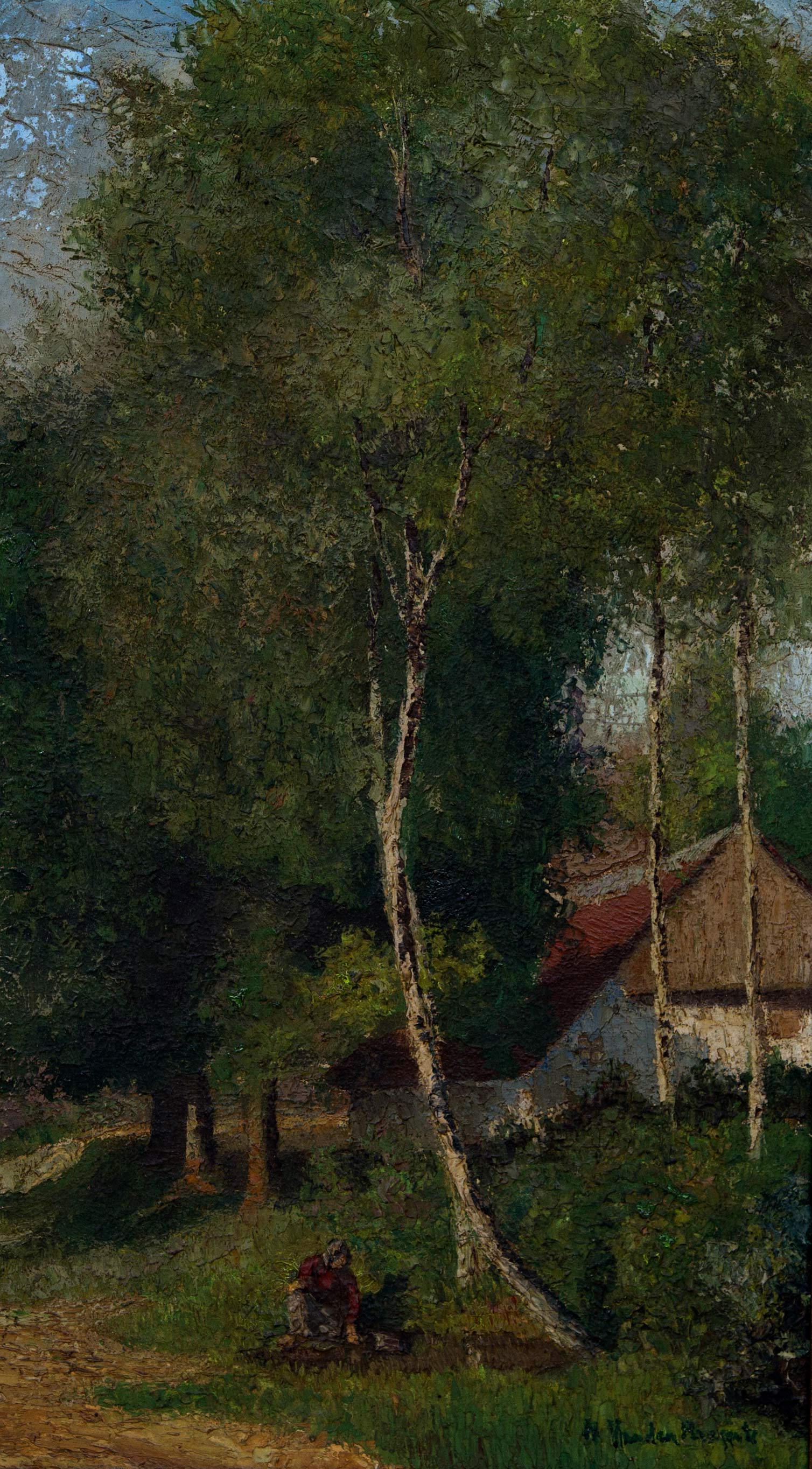
46 x 26 cm
Laundry in a puddle – Meetshoven – Aarschot
oil on canvas
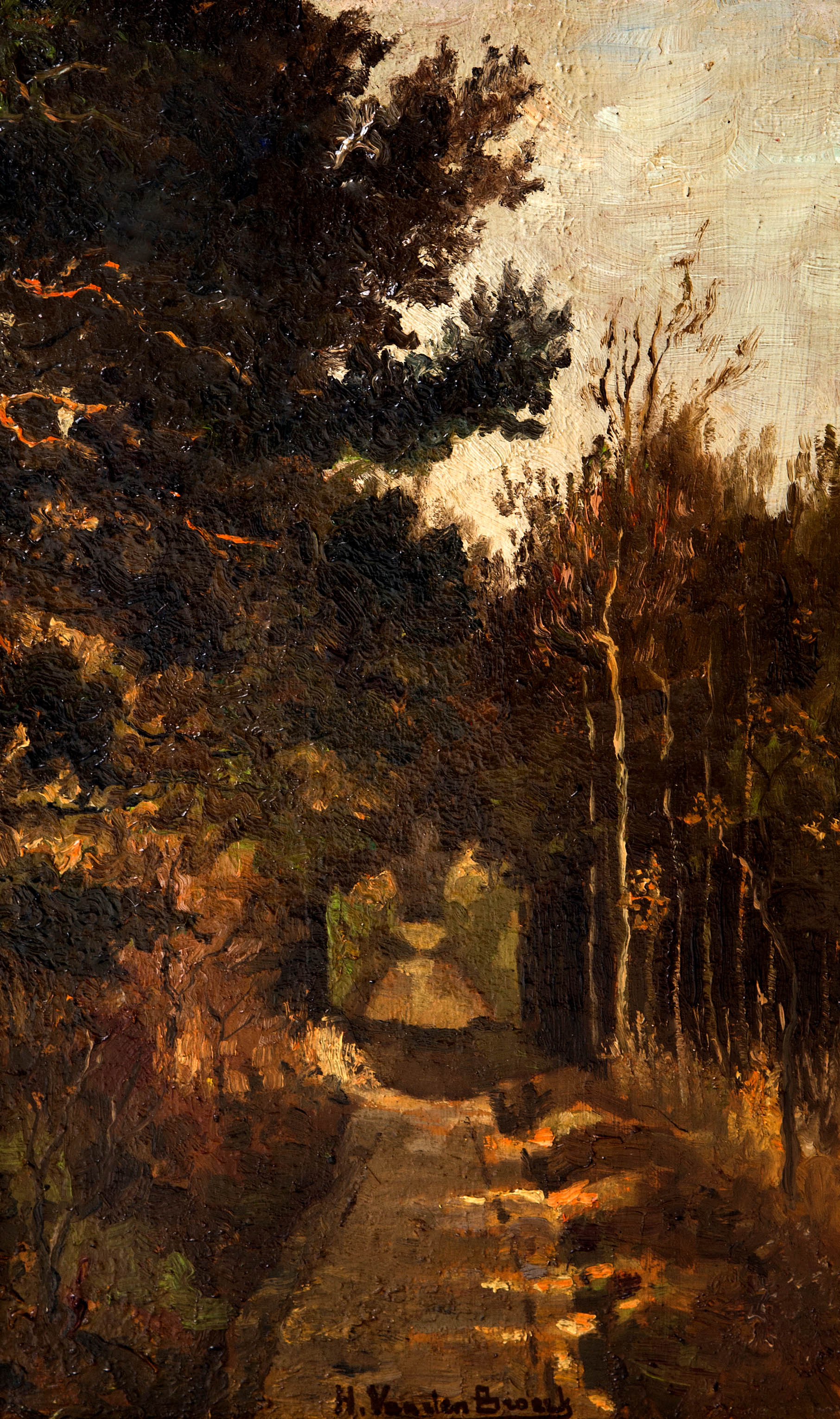
38 x 23 cm
Meetshoven –historic inland dunes and fens
oil on canvas
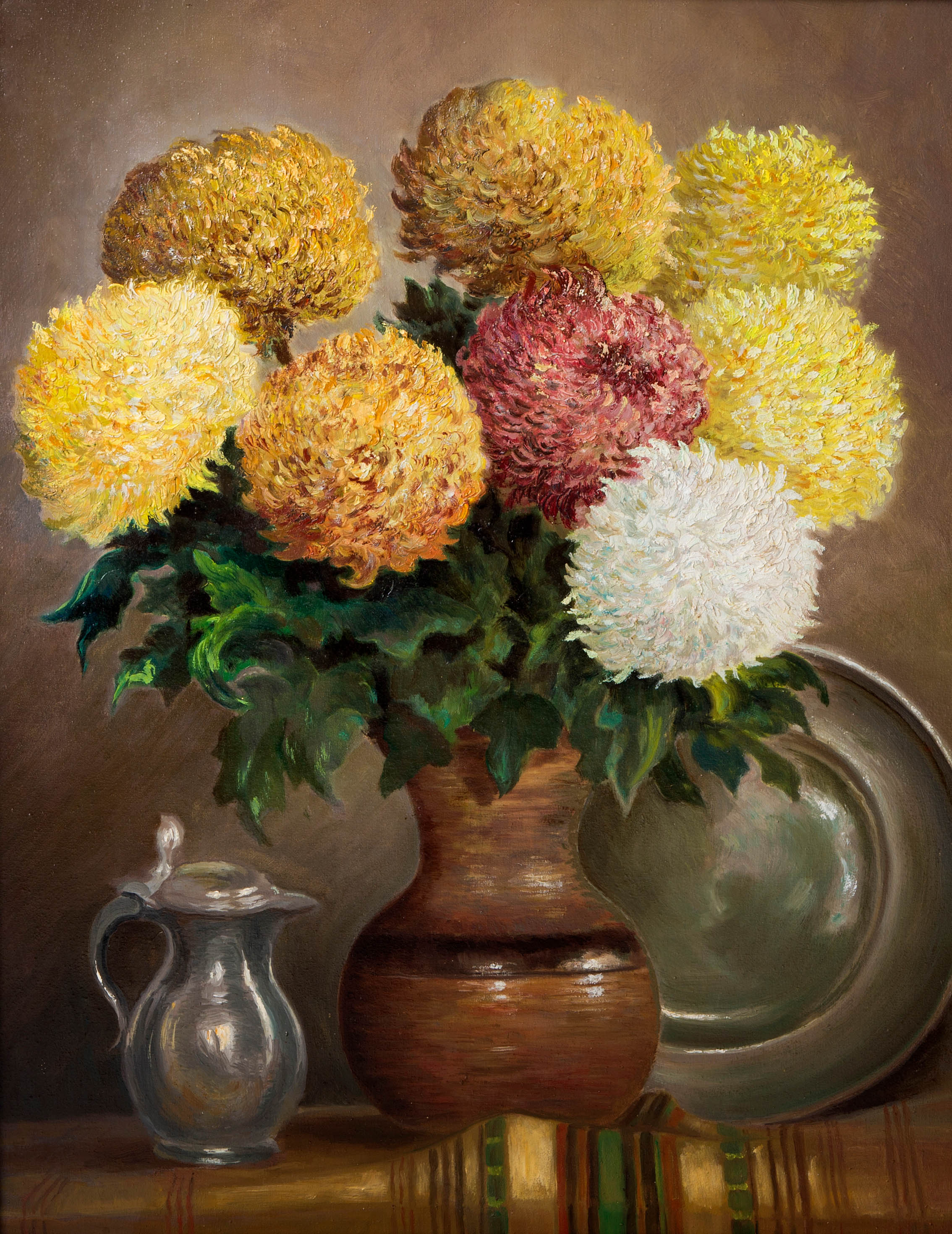
Still life with flowers
oil on canvas
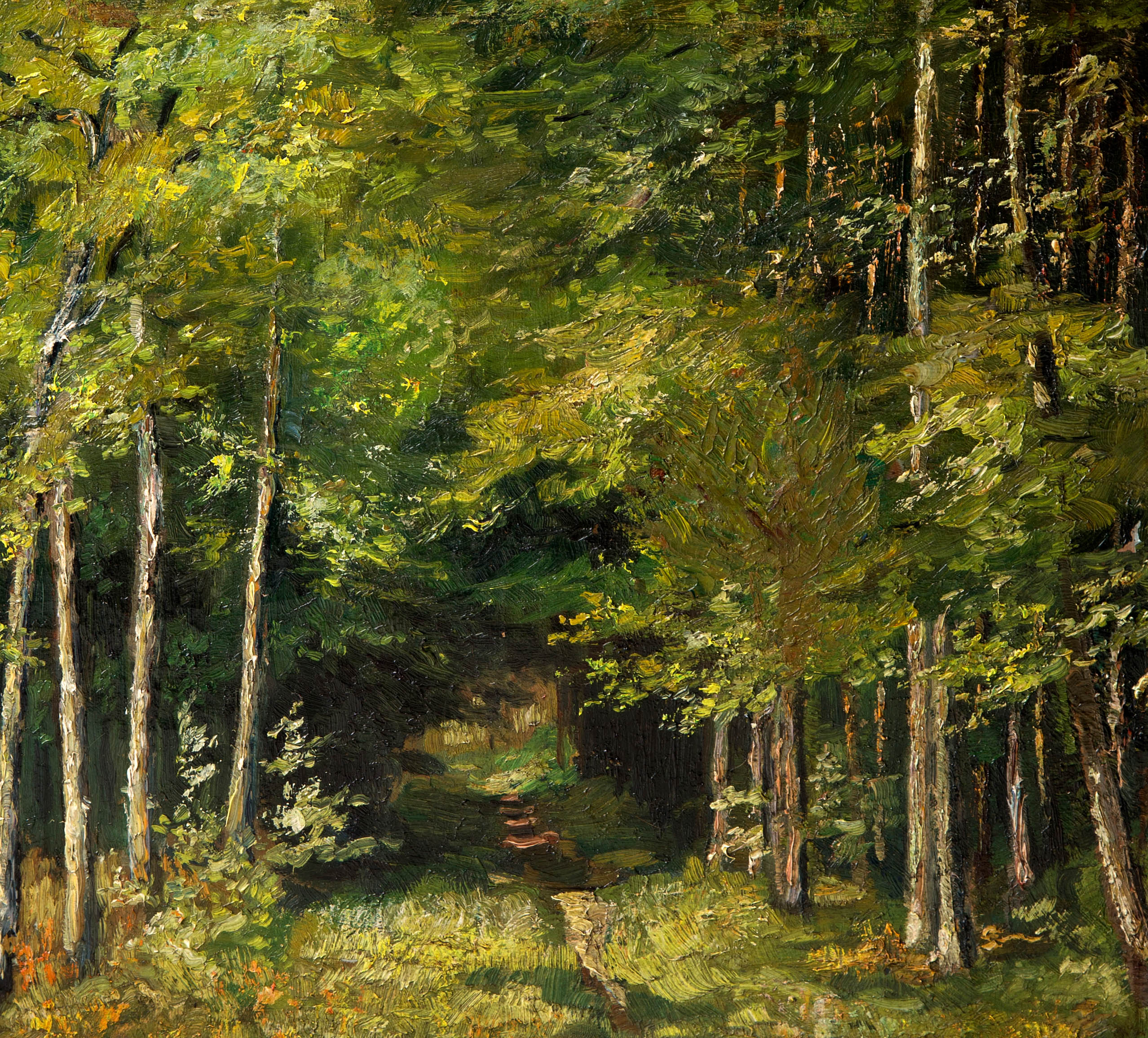
29,50 x 33 cm
Meetshoven –57 ha nature reserve in Aarschot
oil on canvas
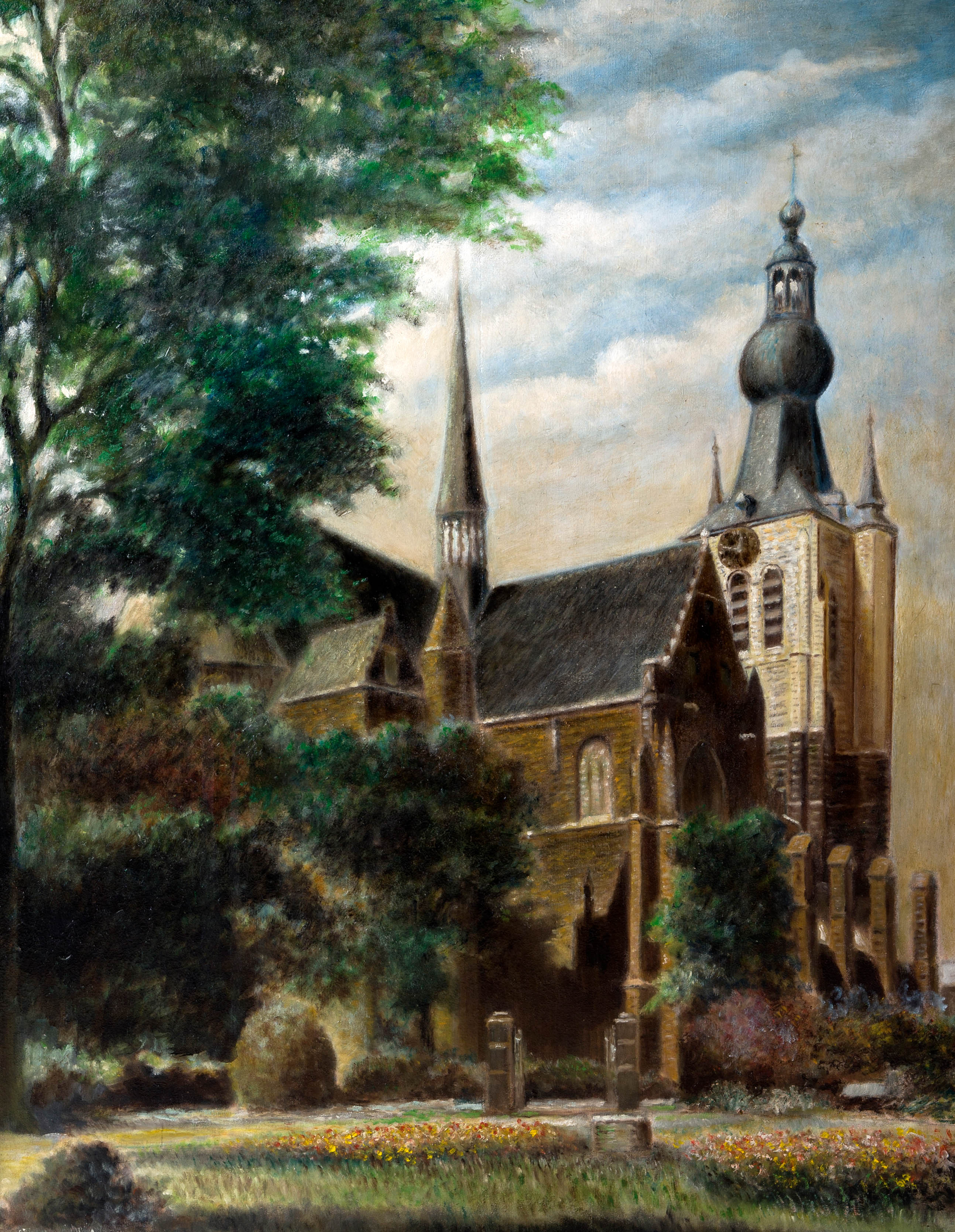
Church of Our Lady of Aarschot
oil on canvas
On the left bank, on the Hageland side, stands the church with its whimsical tower of apple, core and pear.Brigitte Raskin “De laatste stad aan de Demer”
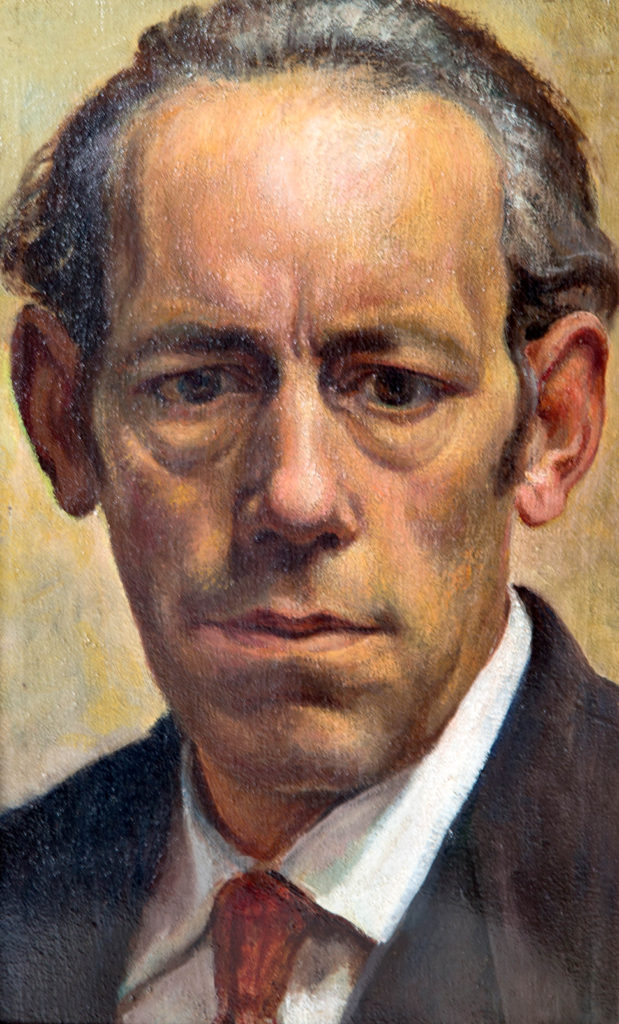
Self-portrait
oil on canvas
Hubert Van den Broeckwon first prize at the academies of Leuven, Brussels and Antwerp.
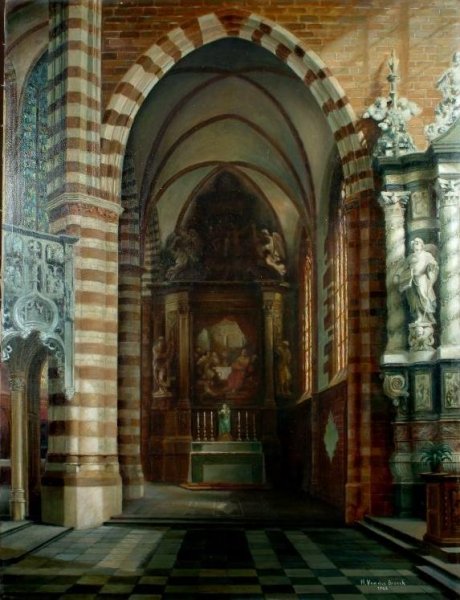
115 x 90 cm
St Anne’s choir – Church of Our Lady of Aarschot
A commission from the Coomans de Brachène family.
oil on canvas
–
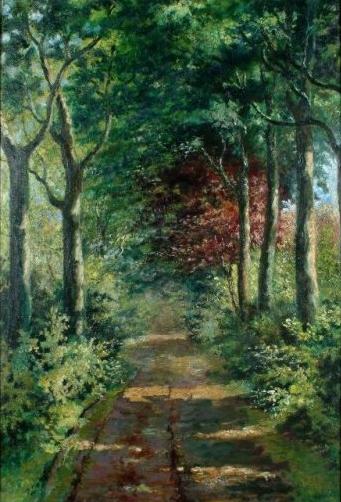
Meetshoven in Aarschot –Buzzard, sparrowhawk, kestrel and woodpecker can be found there.
oil on canvas
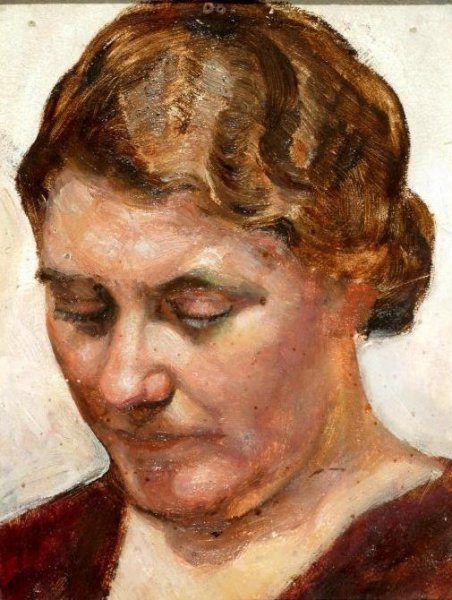
Josefien Van den Broeck Raeymaekers (1906-1985)
oil on canvas
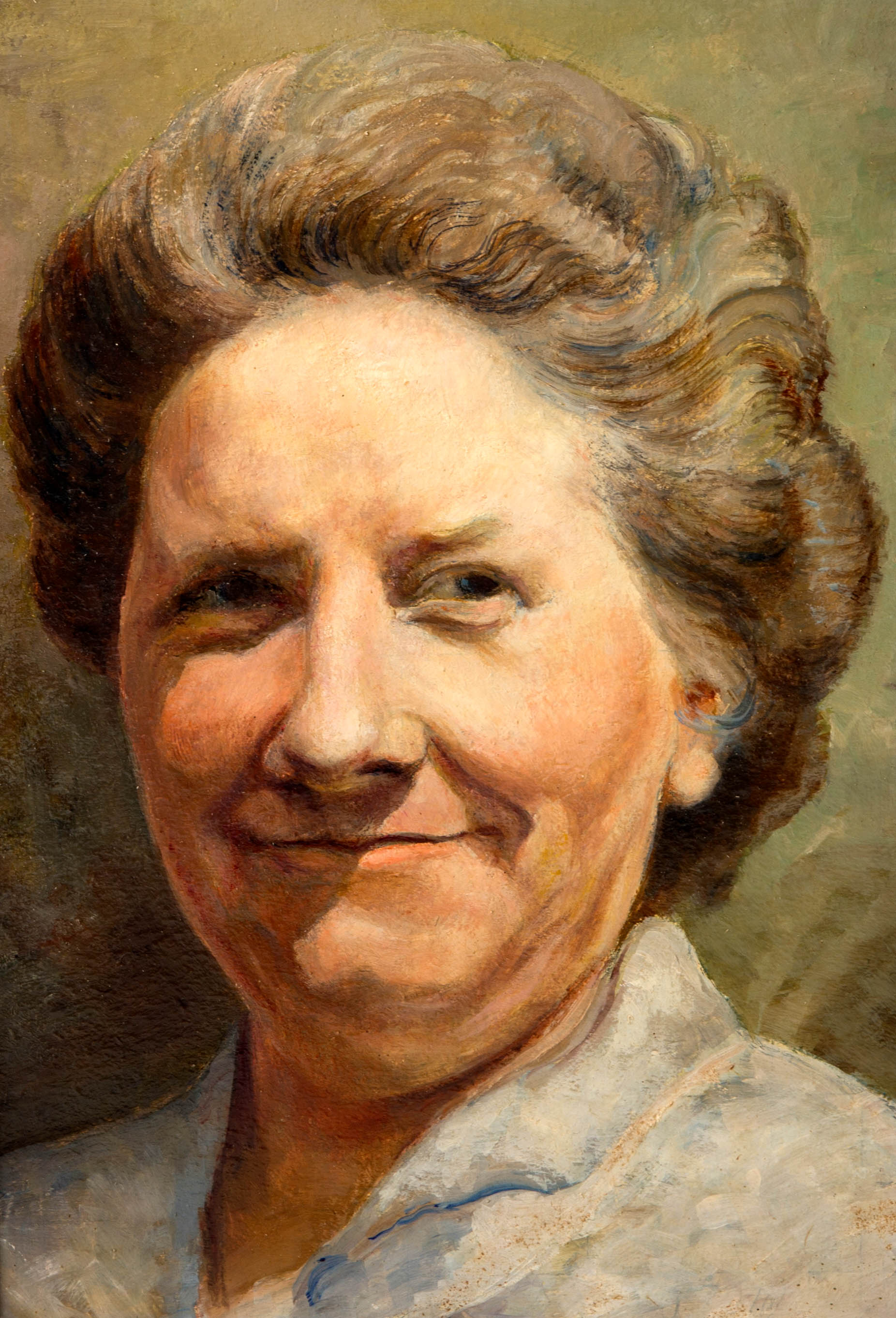
47 x 33 cm
Josefien Van den Broeck Raeymaekers (1906-1985)
oil on panel
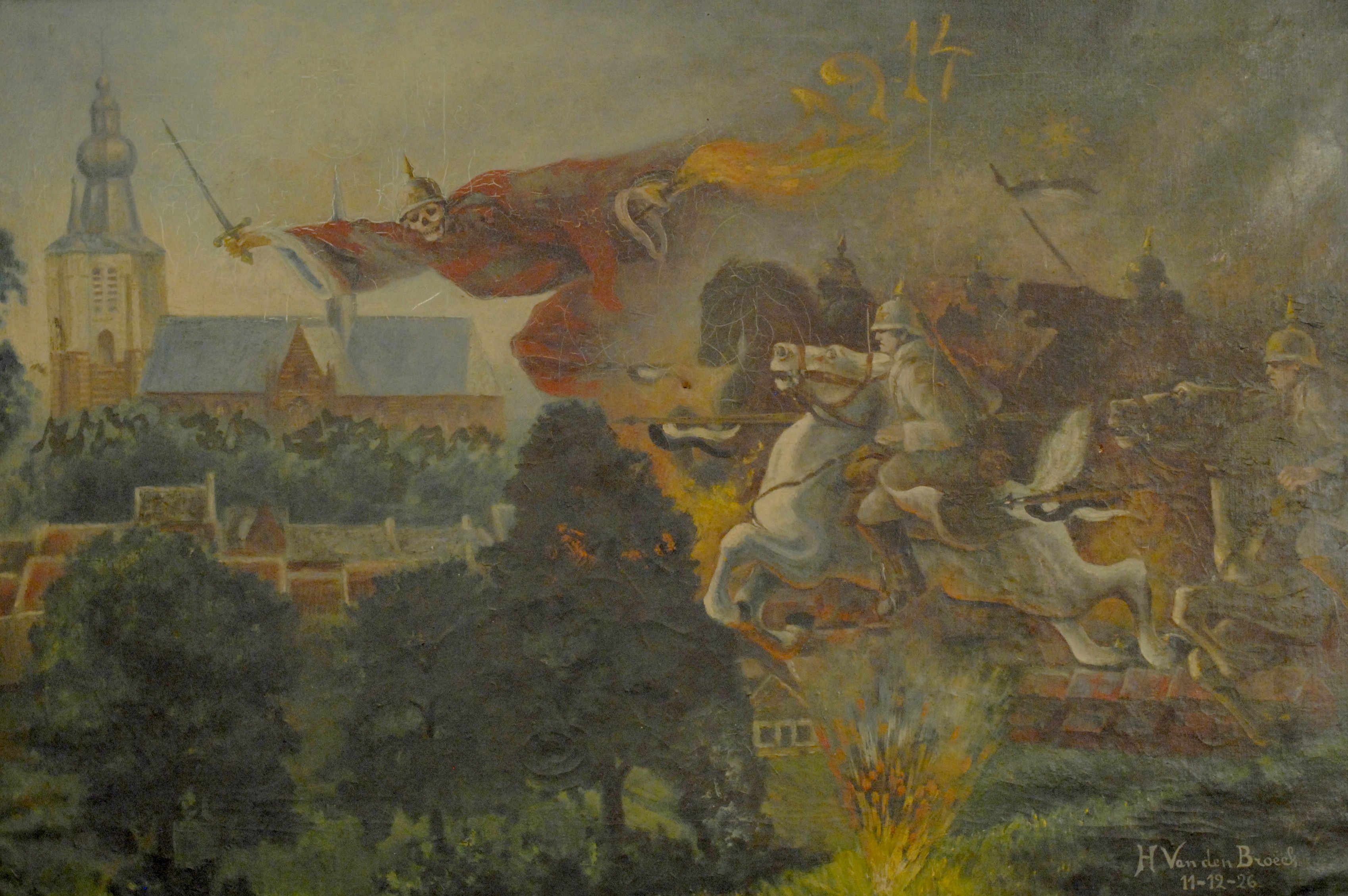
The War, 1914 1914 (1926)
oil on canvas
(1926)
(1926)
C.C Het Gasthuis – Aarschot
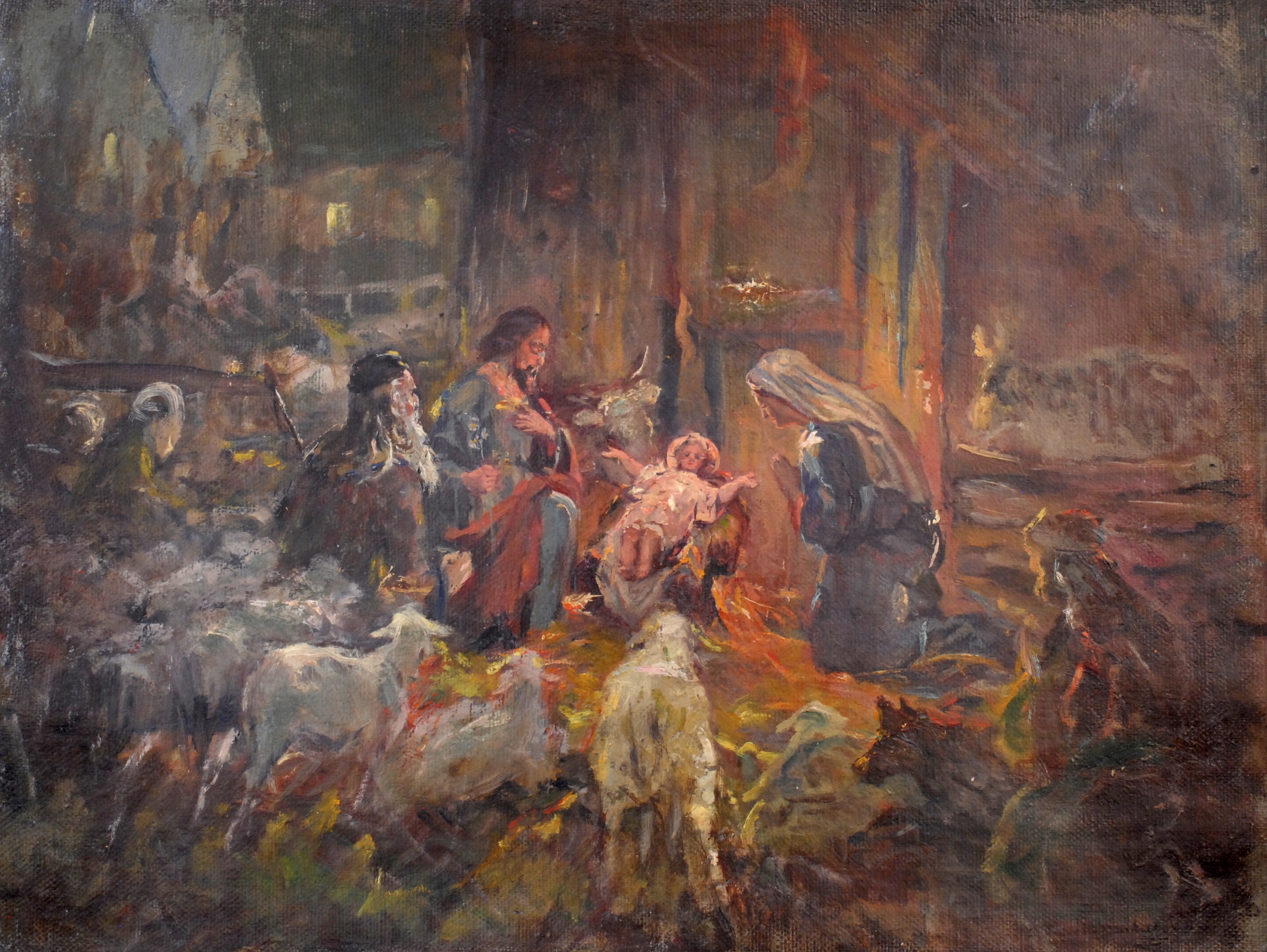
The Nativity scene
C.C. Het Gasthuis – Aarschot
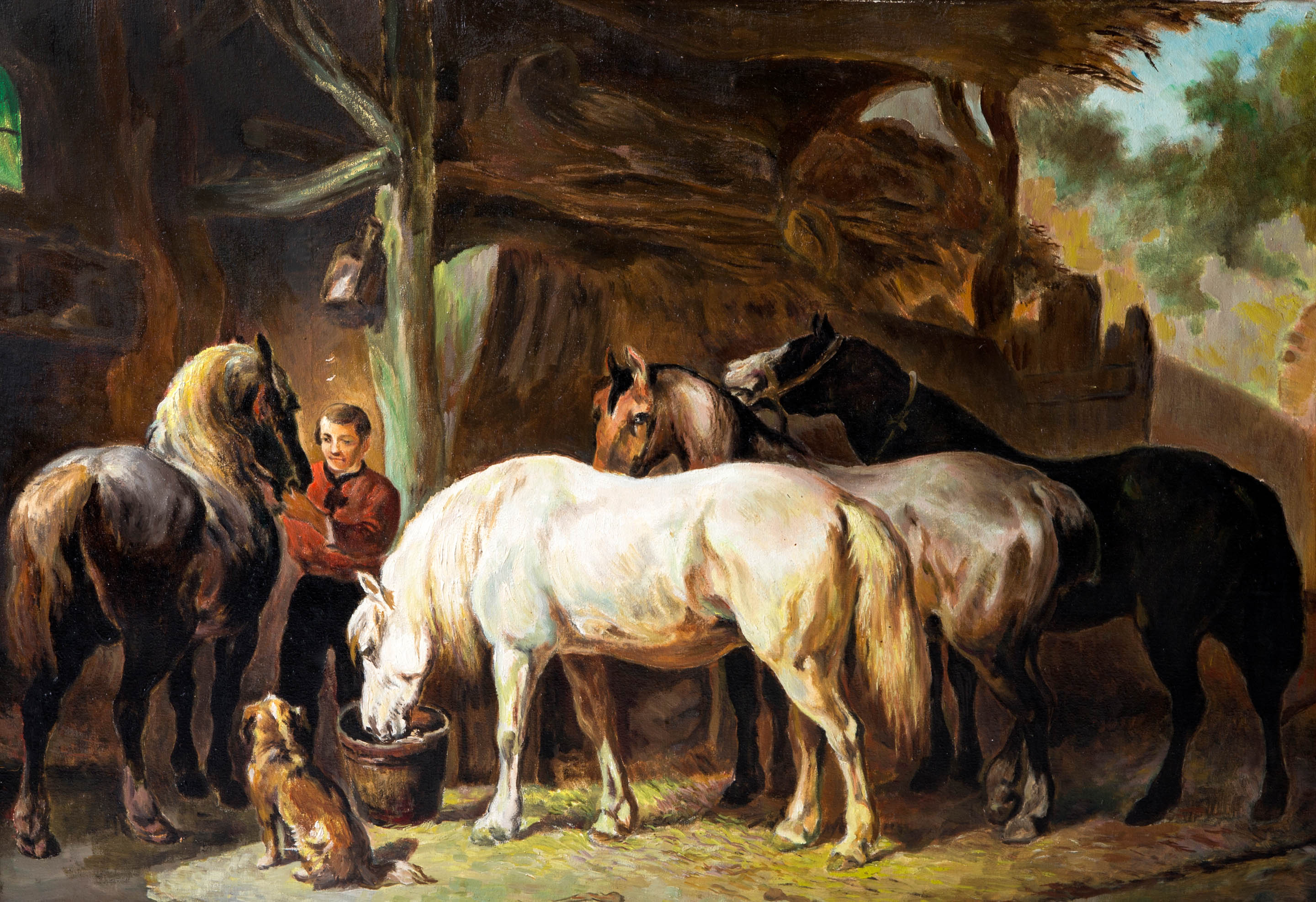
54 x 78 cm
oil on canvas
On request, Hubert Van den Broeck made reproductions.
.
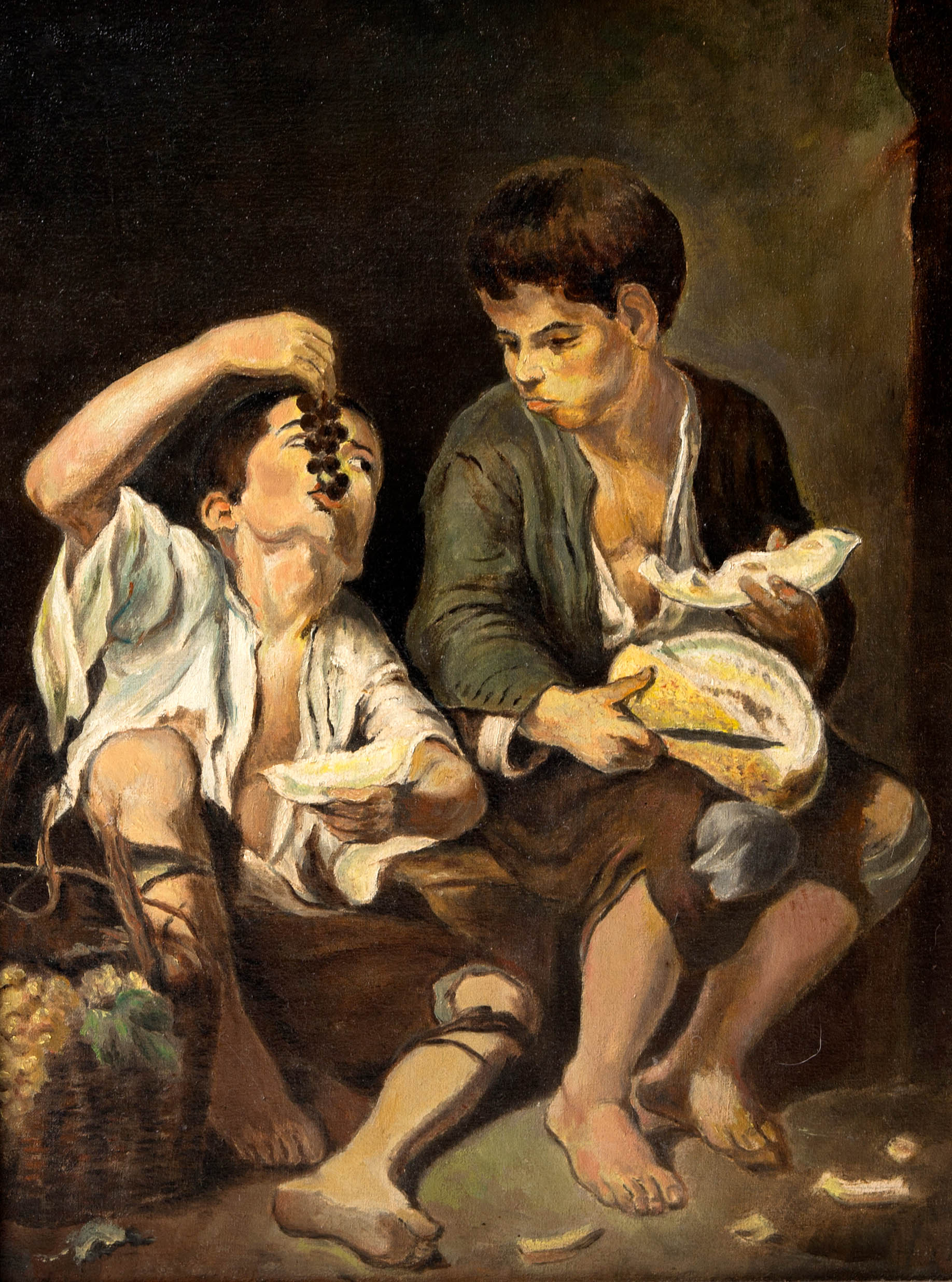
33 x 44 cm
Reproduction
oil on canvas
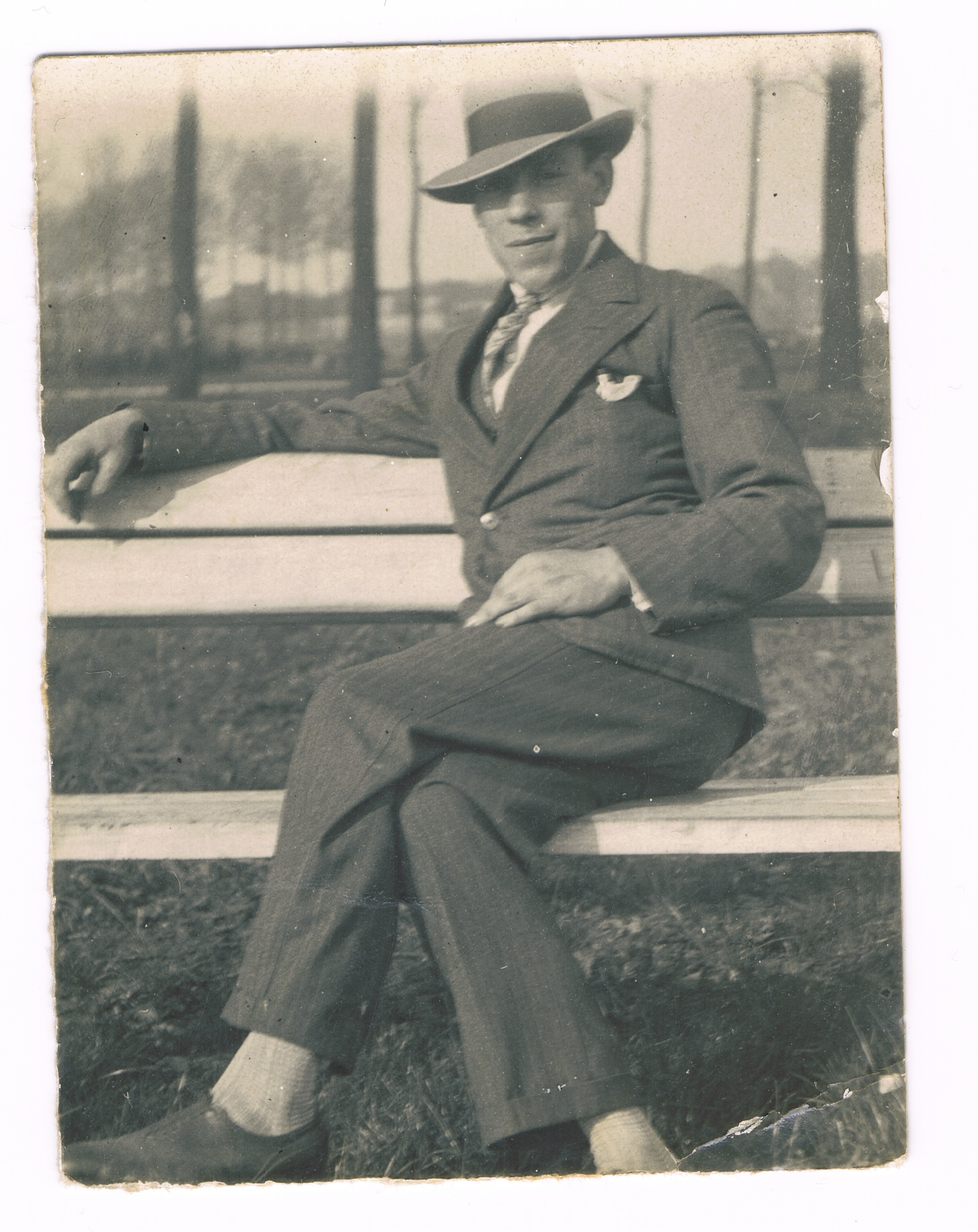
Hubert Van den Broeck
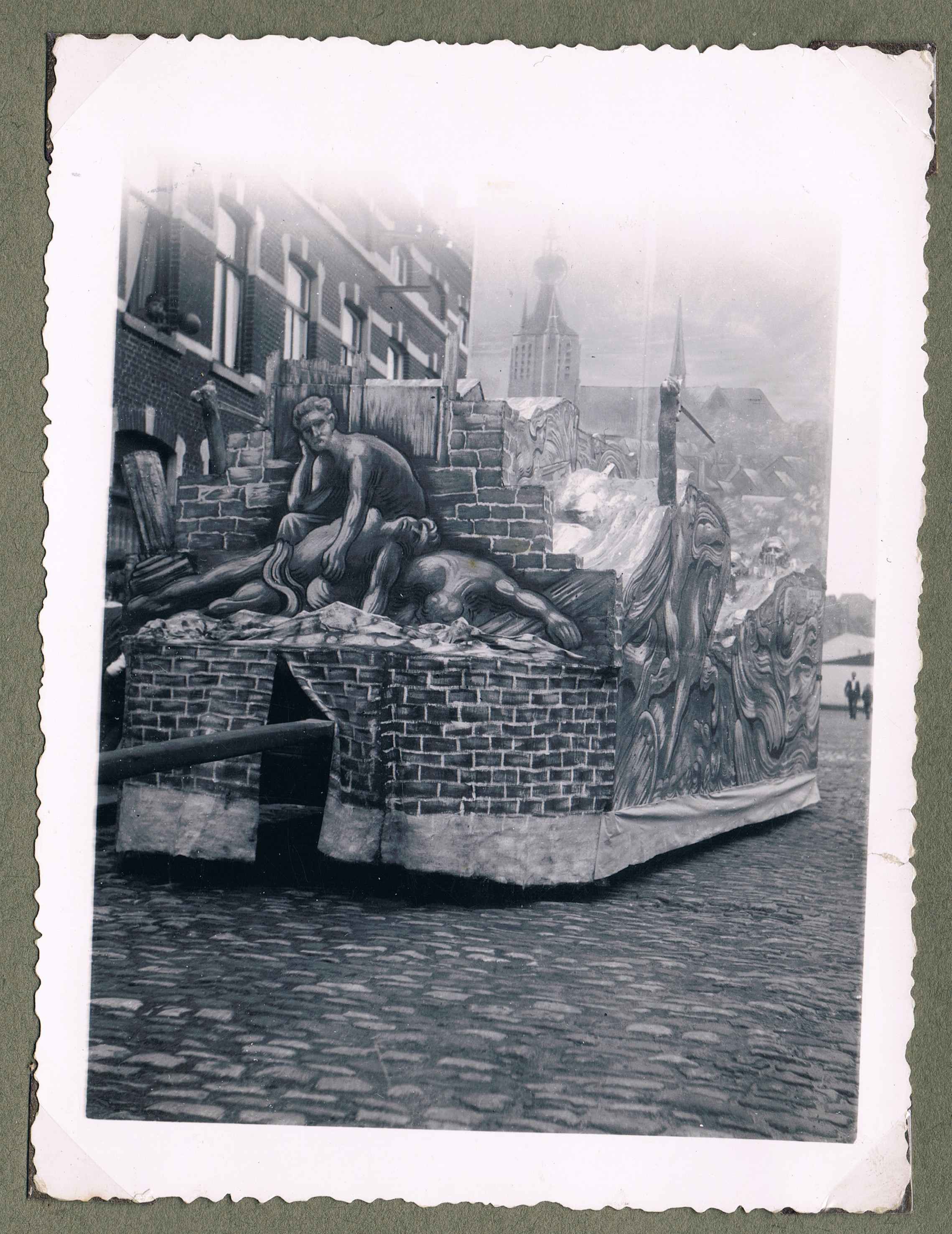
Float from the 1930 procession byHubert Van den Broeck.
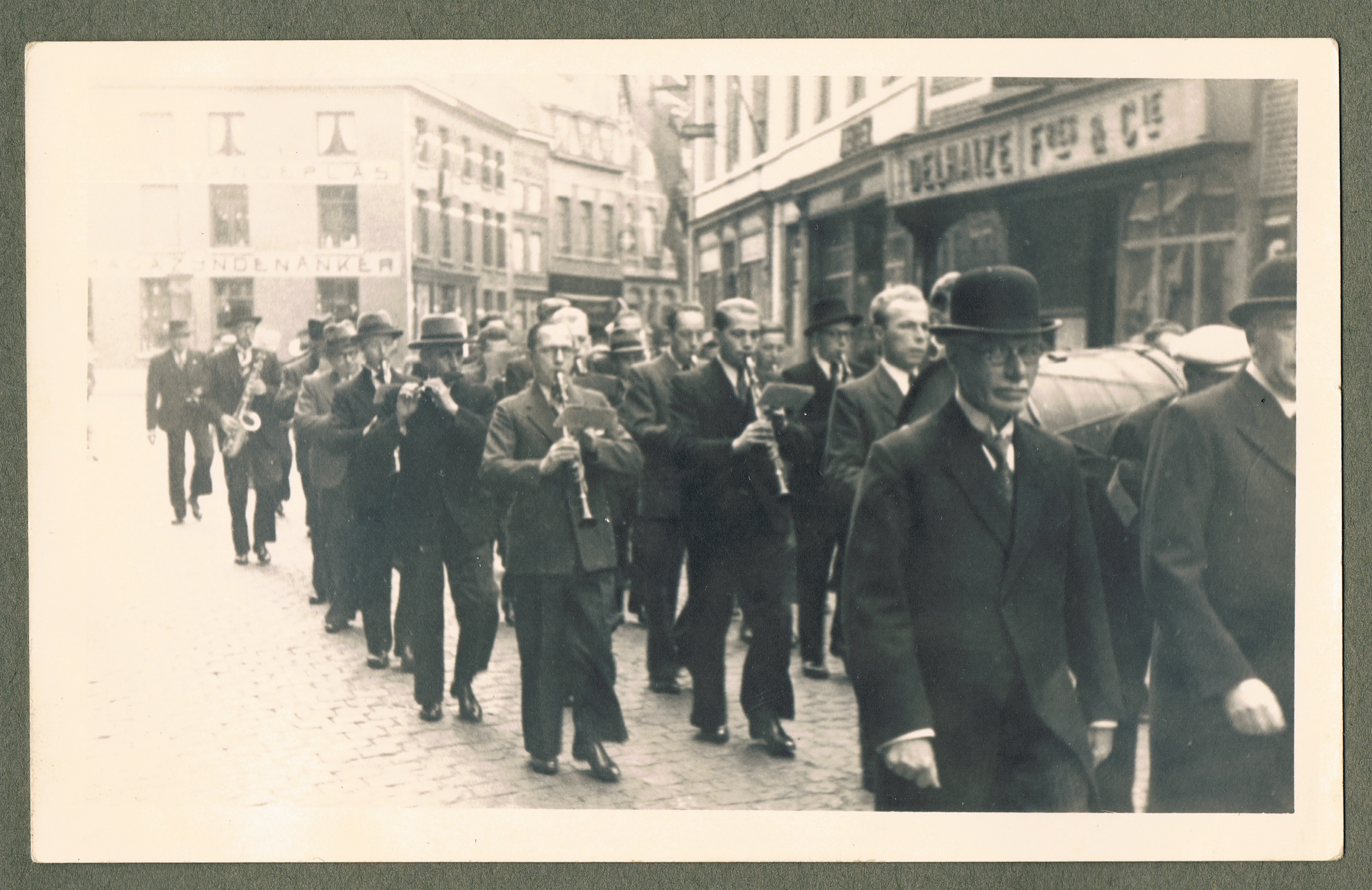
Hubert Van den Broeck– set painter and clarinet player for the Harmonie
Hubert “Betje” Van den Broeck
My grandfather lived behind us in a house on the Doornberg. Between our houses there was a little connecting path. As a child, “vava” (Betje) and “moemoe” looked after me very often during the school holidays. I have lovely memories of this…
How I remember “vava” as my grandfather.
Whistling (he could whistle very well, even imitate birds), he would sit very calmly rolling his cigarettes by hand. He was a smoker. I can still see those “loosely rolled” cigarettes hanging from his lower lip, already gone out and soaked with saliva. I sat for hours on his knee, where he would always imitate a horse. He also constantly drummed his fingers on the table to imitate a melody.
In the front room of the house he had his painting studio, where he could paint for hours and then of course forgot that he still had a cigarette hanging from his lip. In this studio stood a very old gramophone record player that had to be wound up by hand. There he played very old music, including the film music of Charlie Chaplin’s “Limelight”. We still have a number of those hard shellac records of his favourite music.
He was modest, loved simplicity and the small things… Drama, emotion and humour were combinations he loved. Music (he played clarinet in the Royal Harmonie of Aarschot, of which his father was a board member), film and photography were also his passion. In his cellar he also had a BIG old film projector (from a cinema) that had to be cranked by hand. During family celebrations (Christmas, etc.) all the grandchildren (myself included) would then go down to the cellar of their house, where he had made a “cinema”. With that old projector he showed films for us. Silent films from the years 1920-1925 by Charlie Chaplin, Shirley Temple, The Three Musketeers, etc. He had stacks of film reels lying in the cellar in large round tin boxes. The films were all black and white without sound. The only sound was the whirring of the projector. In the strong beam of light that came through a hole in a wooden wall (made by him) we also always saw in the projection the smoke swirling upwards from his ever-present cigarette.
His love of beauty knew no bounds. He painted the beauty of nature, of people, of architecture… An artist to his fingertips. Living and enjoying, sometimes working a little… His 3 children (Irène, Magda – my mother, and Leo) and 13 grandchildren were his treasures.
In the last few years of his life he suffered from dementia. He would sometimes run away unexpectedly from his home on the Doornberg. We knew where to go and look for him. He always walked in the direction of the great church of Aarschot, beneath which he was born, grew up and lived for most of his life. He made hundreds of paintings of the church, inside and outside. In the small yard at the back of the parental home in the Leuvense Straat in Aarschot they always had a view of the magnificent church tower.
Bert Van der Auwera
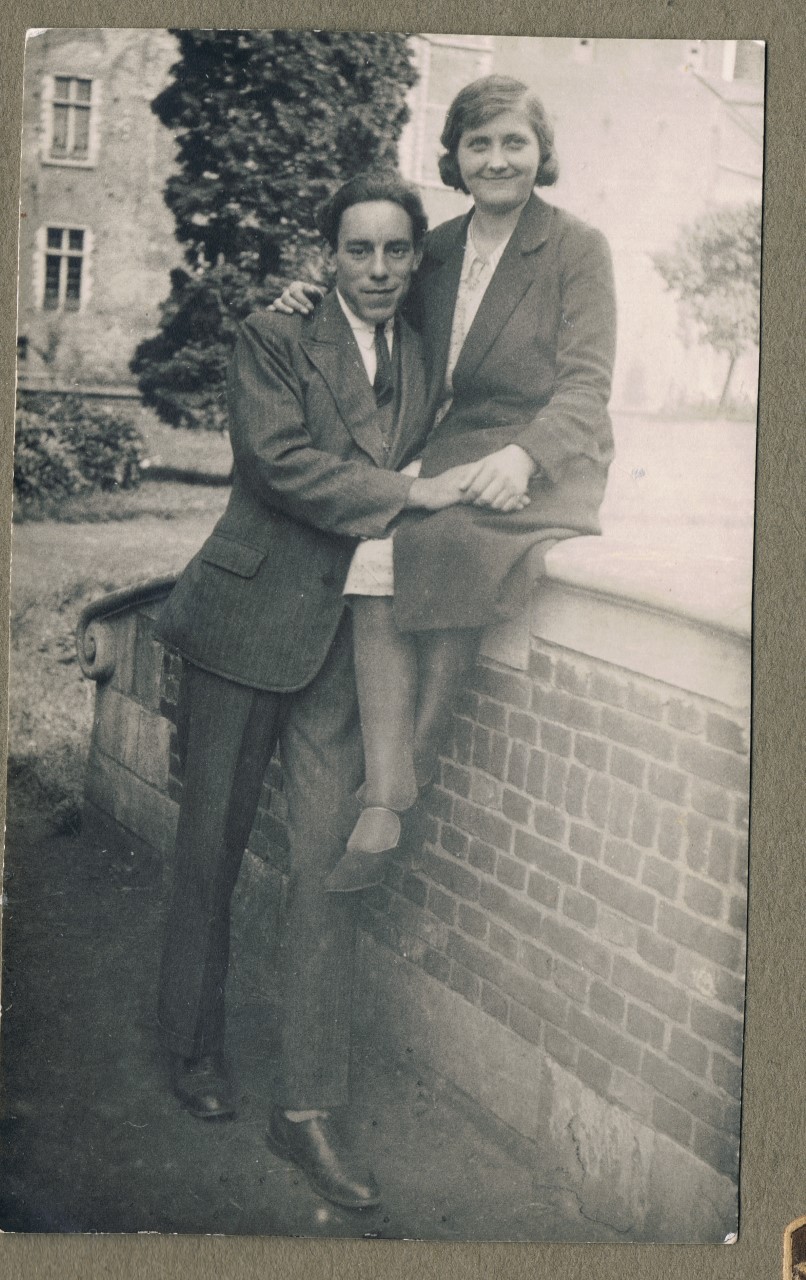
Hubert en Josefien Van den Broeck Raeymaekers
Born
in Aarschot on 13 September 1905.
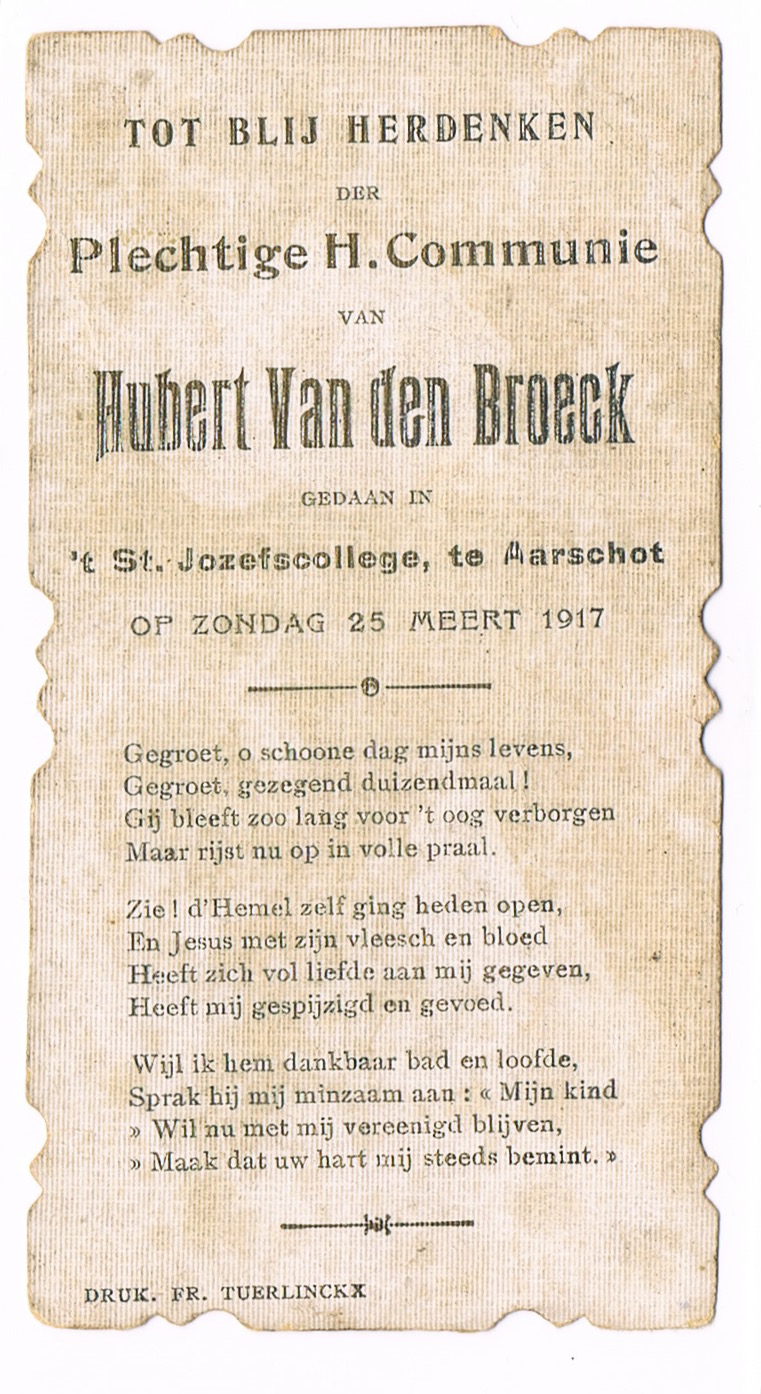
Hubert Van den Broeck attended the Sint-Jozefscollege and was then apprenticed to his own father, a furniture manufacturer.
At a young age he followed the course in decorative art at the drawing school. From his youth he had a gift for drawing and painting and, after his first successes locally, where he took the 1st prize every year, he went to the Academy of Fine Arts in Leuven where, in 1922, under the direction of Professor Alf. Delannois, he won the 1st prize with distinction in the Highest Course of Painting, together with the 1st prize with Professor Hodru in Drawing after the Antique, the Mask and the Proportions of the Human Body.
The following year, in the class of the same Professor Delannois, he obtained the 1st prize with distinction in painting from Nature and, with Professor Baltus, the 1st prize in Decorative Arts.
In the 1924-1925 school year he moved up to the Higher Grade (3rd year) painting from Nature and the Living Model and submitted two pieces that earned him the 1st prize with the greatest distinction; plus the 2nd prize in Decorative Arts with Professor Baltus.
Our able fellow townsman had now entered the painter’s career for good and from Leuven he moved on to the Royal Academy of Fine Arts in Brussels: but after half a year of serious study he had to do his military service. Nevertheless, in that short span of time he had obtained 5th place out of 18 competitors. In Brussels he had devoted himself to the study of the living model and portrait painting.
He also followed anatomy of the human body and animal anatomy, as well as the history of costume and perspective.
After military service he went in 1926 to the Academy of Fine Arts in Antwerp to learn to paint from life, also followed the class in portrait painting and was ranked first in both subjects.
And now our Bertje went his own way. He worked hard with his father in the extensive furniture trade, but still managed to find the time to devote himself to his favourite task, painting. He worked with courage and zeal and on several occasions we were given convincing proof of his budding artistic talent.
During the fair weeks of 1926 and 1927 he exhibited several canvases in the festival hall of the Aarschotse Eendracht. That was a revelation for many, and our young Aarschot artist was looked up to with admiration.
In 1930 he held an exhibition in the Municipal Schools and his works aroused general wonder and admiration.
Every year at the Cecilia festivities of the Aarschotsche Eendracht a few paintings by Hubert were raffled, and so he became better and better known and celebrated.
At the Historical Procession on the occasion of the 6th centenary of Our Lady here, our painter certainly played one of the greatest and most important roles: he painted the float of the Lace School, conceived the composition of the 2 floats depicting the destruction of Aarschot before the great catastrophe of the war of 1914 and the symbolic float depicting: Aarschot rising from its rubble after each of those bad times, and carried out the painting of these two floats.
We can also mention his contribution to the exhibition during the fair days (1937), where we could admire many a depicted dear little spot and corner of Aarschot.
Because of an overload of work he has stopped painting for quite some time, but we hope that he will soon take up the brush again to let us enjoy several more examples of his art.
We conclude: Hubert Van den Broeck is no longer an unknown painter, his name is made. His paintings are relished, praised and sought after. He made several good likenesses in portraits to order. His works have already found their way abroad, including to England.
Hubert Van den Broeck is one of our best young painters. Aarschot may rightly be proud of its art-loving son. We too point with pride and true satisfaction to his work and gladly grant him a place of honour among “Our Deserving Citizens”.
Source: “De Klok” no. 45, 30 September 1939 – Our Deserving Citizens (61) by J. Dille
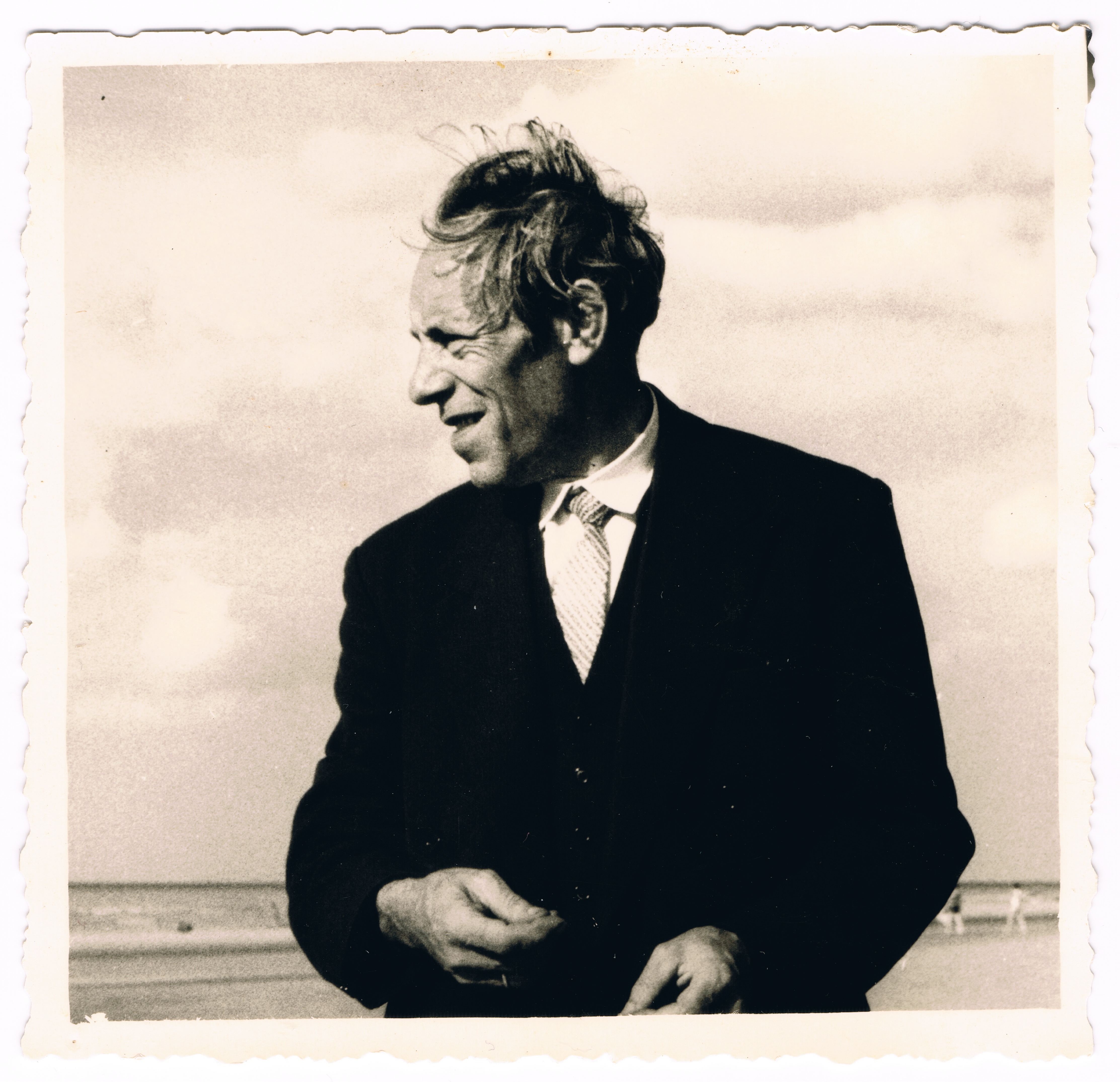
Hubert Van den Broeck
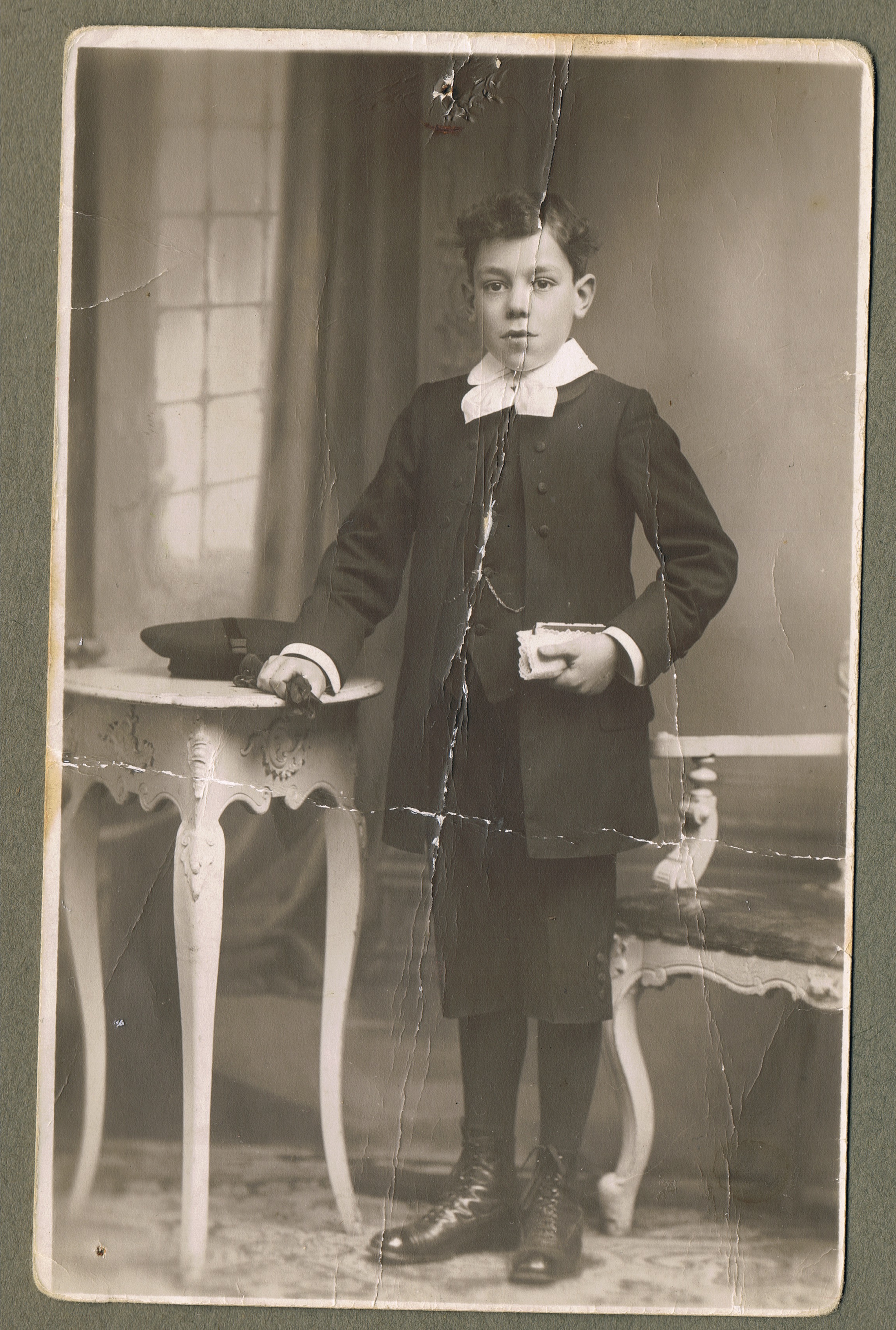
Hubert Van den Broeck
—