XIII Notary
Mia Jamar, a pity, but true!
It is 1960. Frie and Mia met in a rather unusual way.
In Betekom stands the brewery “De Sleutel”, owned by Louis and Theo Smedts. Louis lives in Keerbergen. His daughter Tania studied together with Mia during their secondary school years at the boarding school ‘L’institut des Dames de Marie’ in Brussels. She has meanwhile reached marriageable age, so the search for a suitable husband becomes pressing. For two years already Tania’s mother has been trying to snare the young notary as a son-in-law.
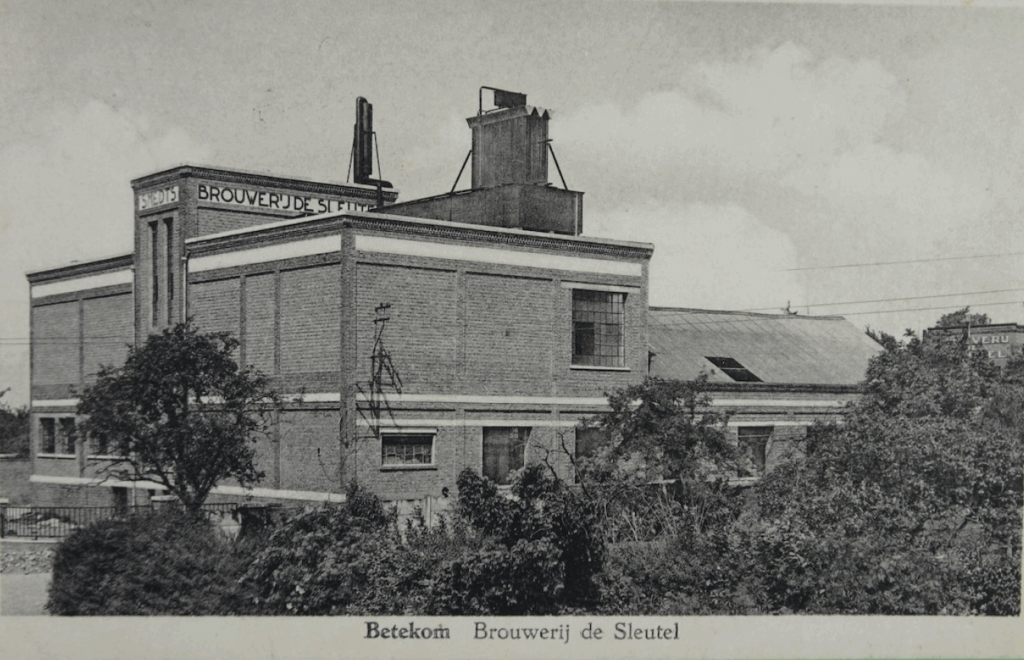
Frie is summoned to “De Sleutel” to mediate between the two brothers. Given the brewing giants in the area and their expansions, Frie does not believe in a future for small family breweries. He advises the brothers to hand over the business before it is too late. Louis thinks he will fare well by following Frie’s advice.
Theo Smedts is surrounded by Lode Claes: a well-known Flemish-nationalist politician, publicist and banker, and his ally Notary Daels from Mechelen. They already let it be known that they will oppose Frie’s advice. They are Nazi sympathisers and collaborators who put their self-interest first and – to put it mildly – are no fans of the ‘notary’ from Aarschot. Theo sees a chance to grow and decides to buy out his brother’s shares. Frie calls Theo and his cronies “collaborators from the war years”.
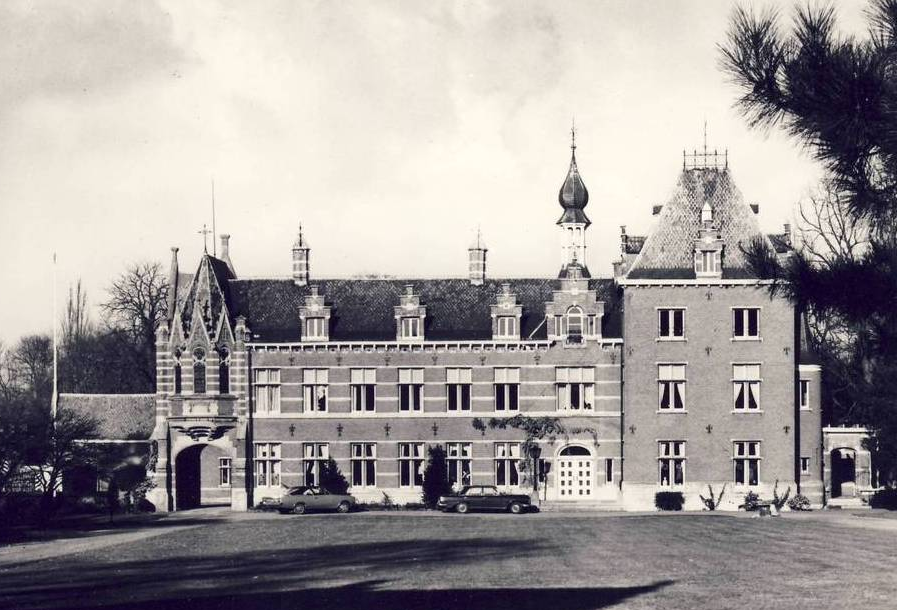
Rega’s Hof in Rotselaar
Together with his spouse, Theo leads until then a luxurious and mondaine life. In their castle ‘Rega’s Hof’ in Rotselaar they organise salons, balls and other gatherings which the beau monde is only too happy to attend. Every week a Brussels florist comes and showers the castle with bouquets. They have caviar on the shelf, they buy the same Cadillac as the Kennedys, and even go to Saint-Tropez by helicopter.
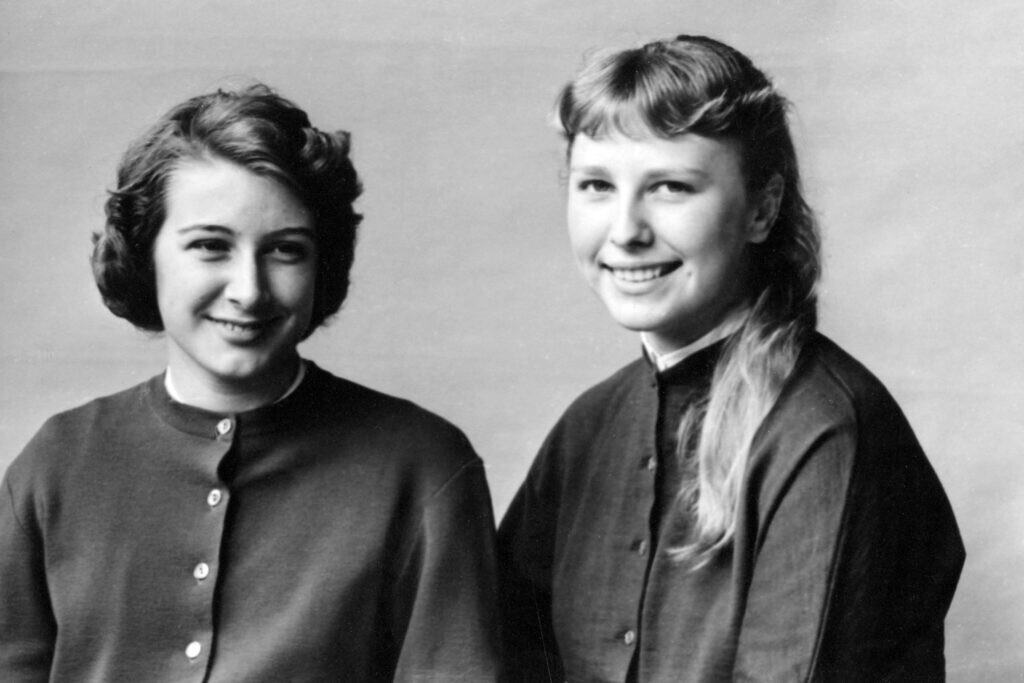
Tania and Mia
Young niece Tania Smedts is allowed to bring her marriage candidate Godfried Van Kerckhoven along to such a soirée mondaine. The guests look on tensely: but suddenly Mia Jamar (20) appears on the scene. Tania’s childhood friend must not miss this party. It turns out to be convenient, because Frie falls head over heels for her. That evening Mia calls off the marriage deal between the brewer’s daughter and the notary. Tania may pack her bags. For Frie it is now the Limburg beauty’s move.
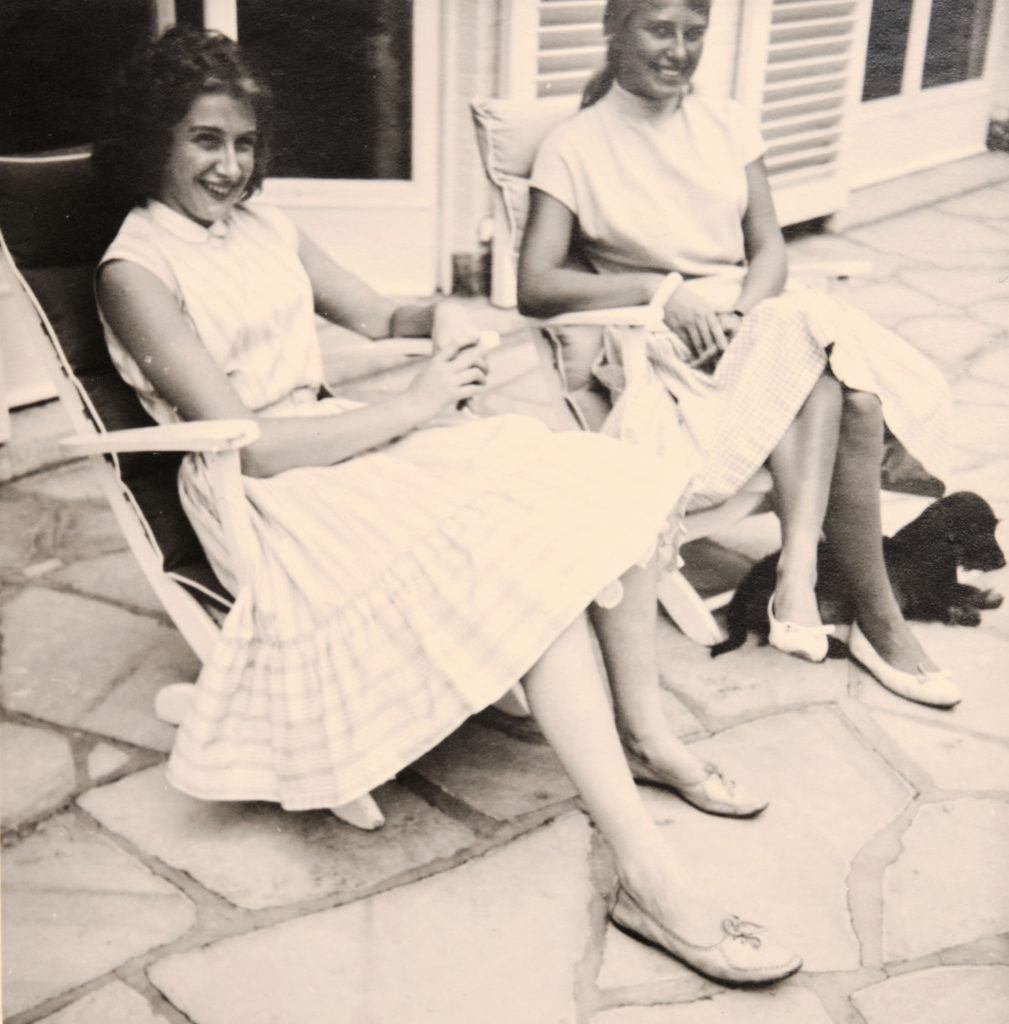
Tania and Mia had a close bond but to Tania’s great sorrow her friend will marry the young notary.
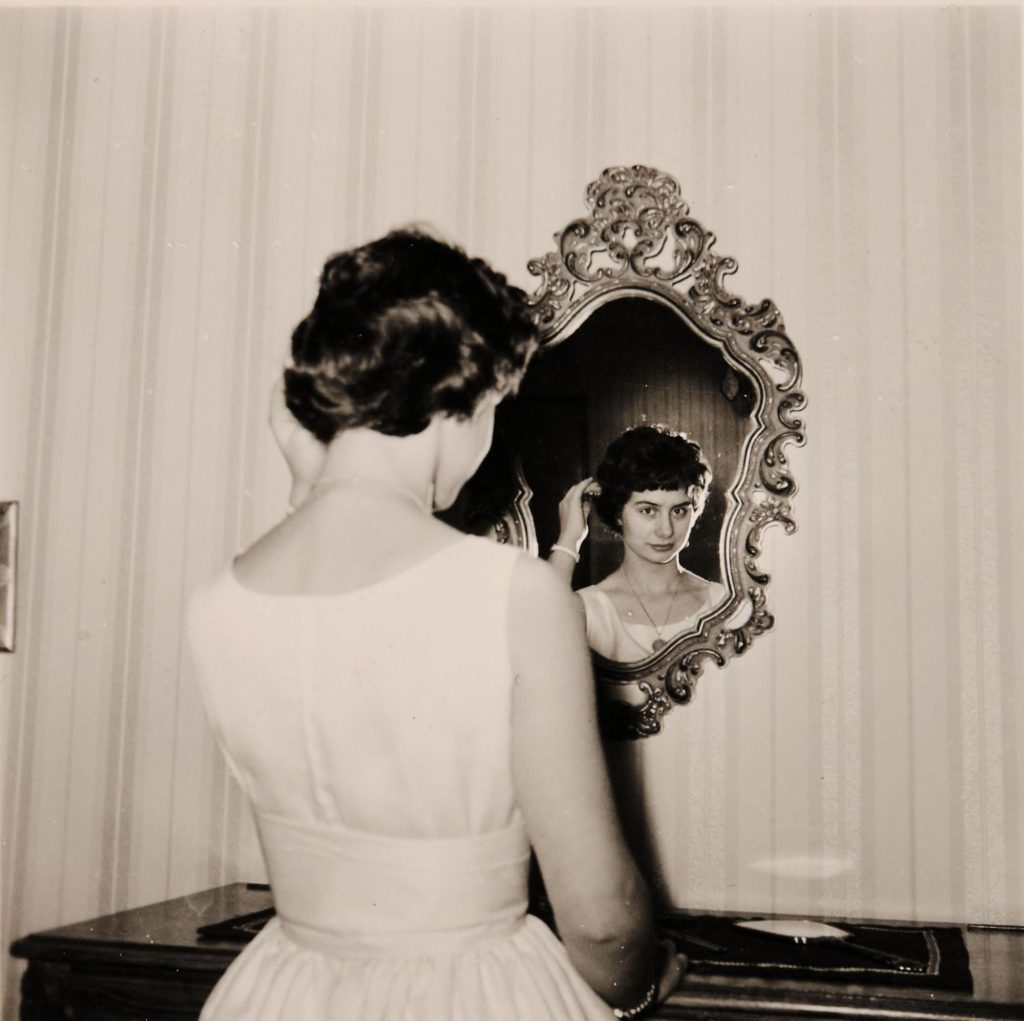
Rita Tuerlinckx, admirer of the ambitious Frie, also goes hungry (photo: 1958)
Shortly afterwards “De Sleutel” goes under. The castle residents lose all they have. The branch of the Smedts family that followed Frie’s advice is better off. Widow Josepha keeps her large villa in Keerbergen. Widow Lieve has to make do with the caretaker’s lodge of her ‘Rega’s Hof’, until she can no longer pay the rent there either.
Well beyond her 80th year, Josepha gratefully keeps wearing down the doorstep of Frie’s notary office. Authoritative, in a tight skirt suit and on high heels, loudly lamenting that Mia had really blown the whole business up! Loudly, because her husband could not hear well but had nevertheless listened well to Frie…
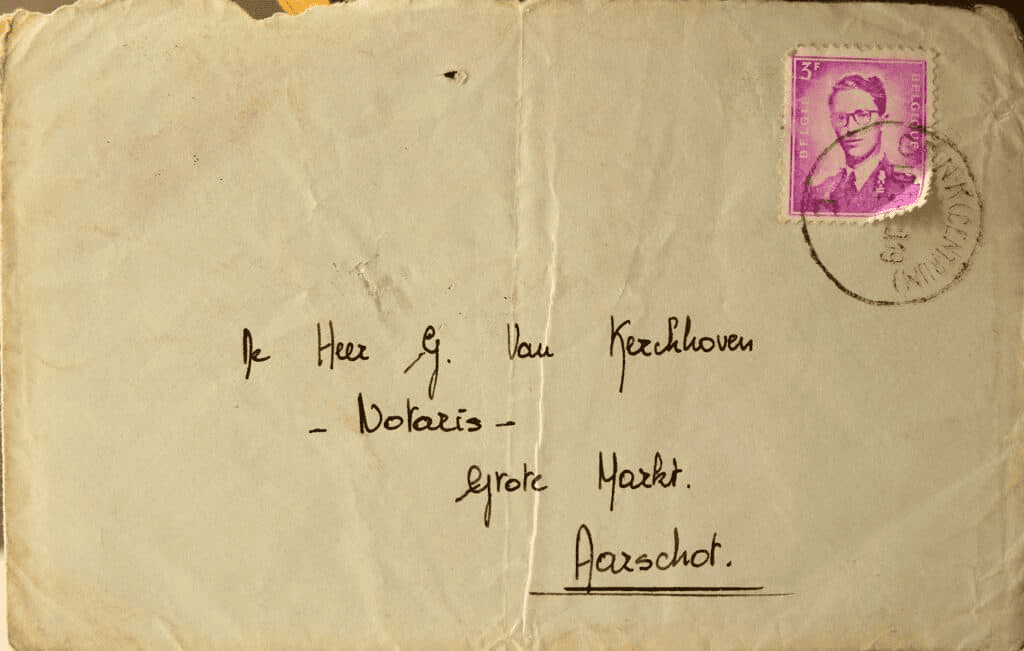
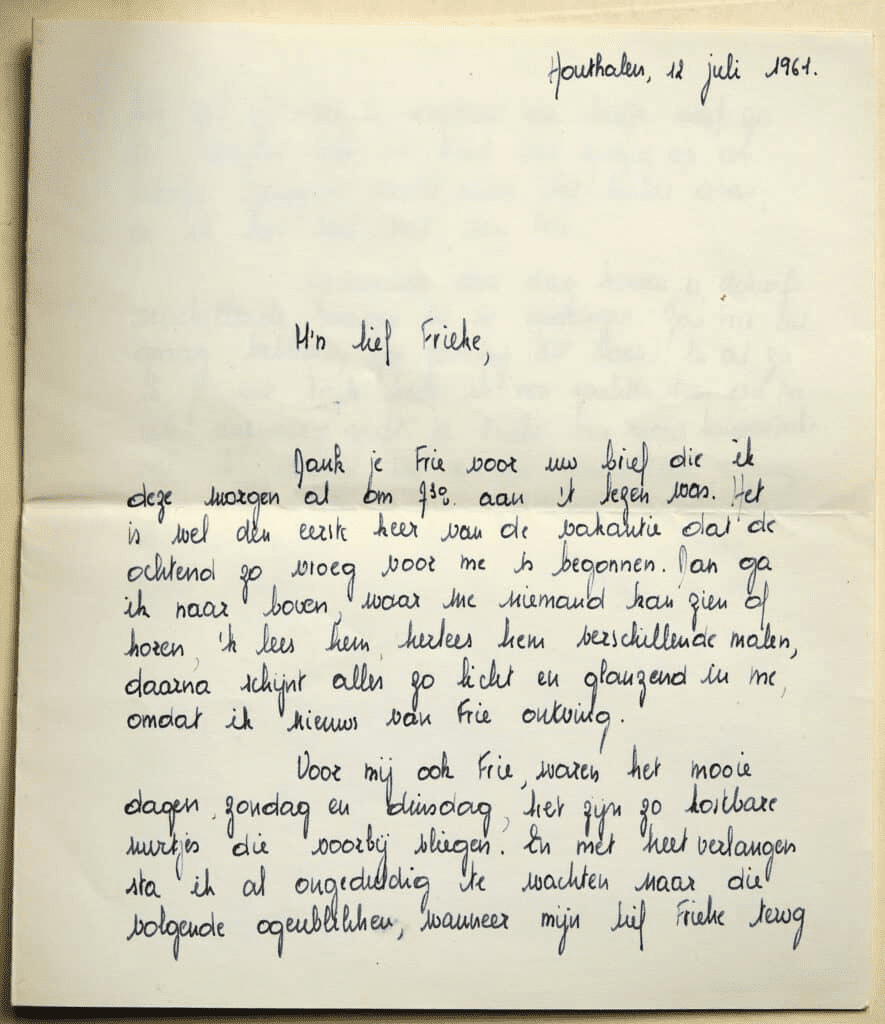
What does the letter that Mia writes to Frie say?
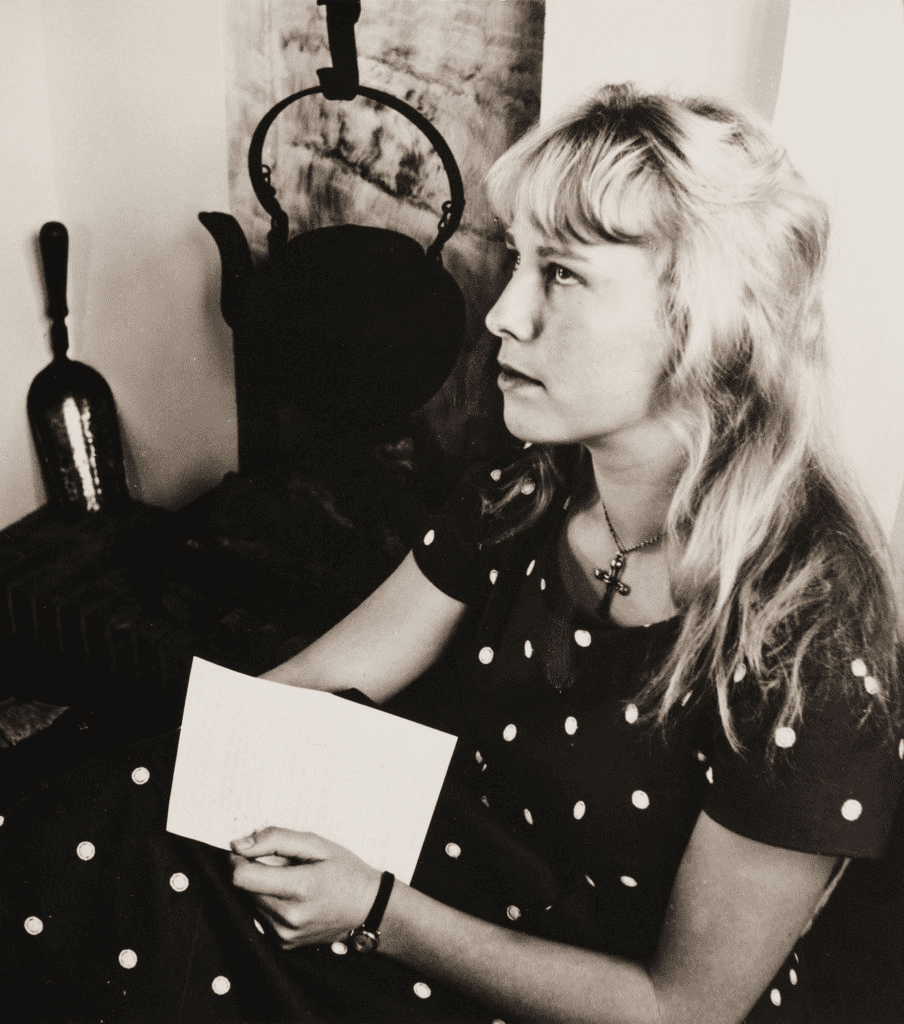
Une ambition au féminin
Although one almost feels awkward entering the intimacy of their couple, one cannot help being moved when reading it:
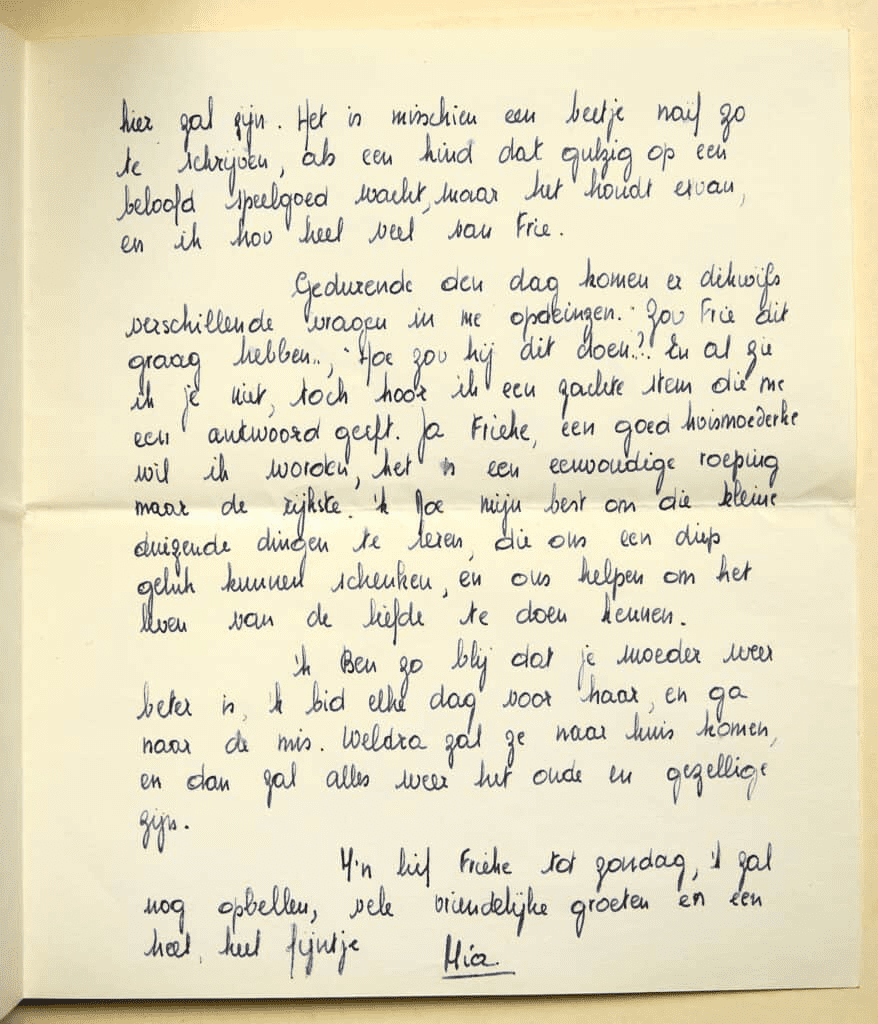
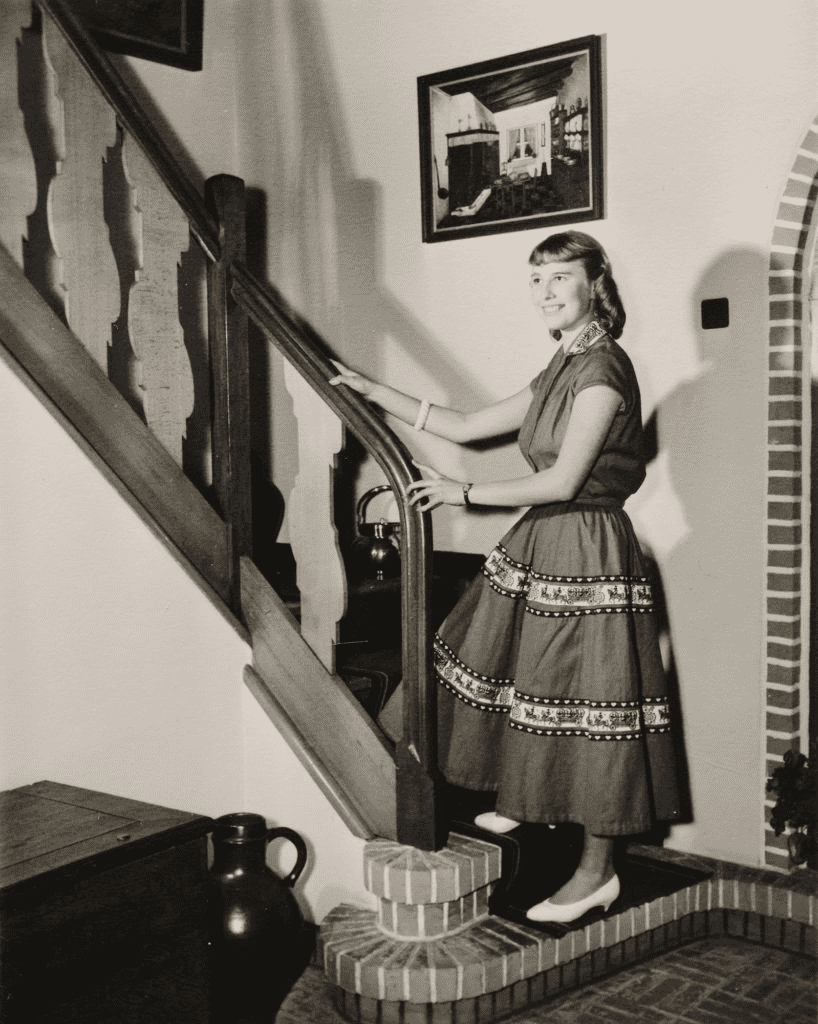
In the parental home there are little paintings by Mia’s hand everywhere.
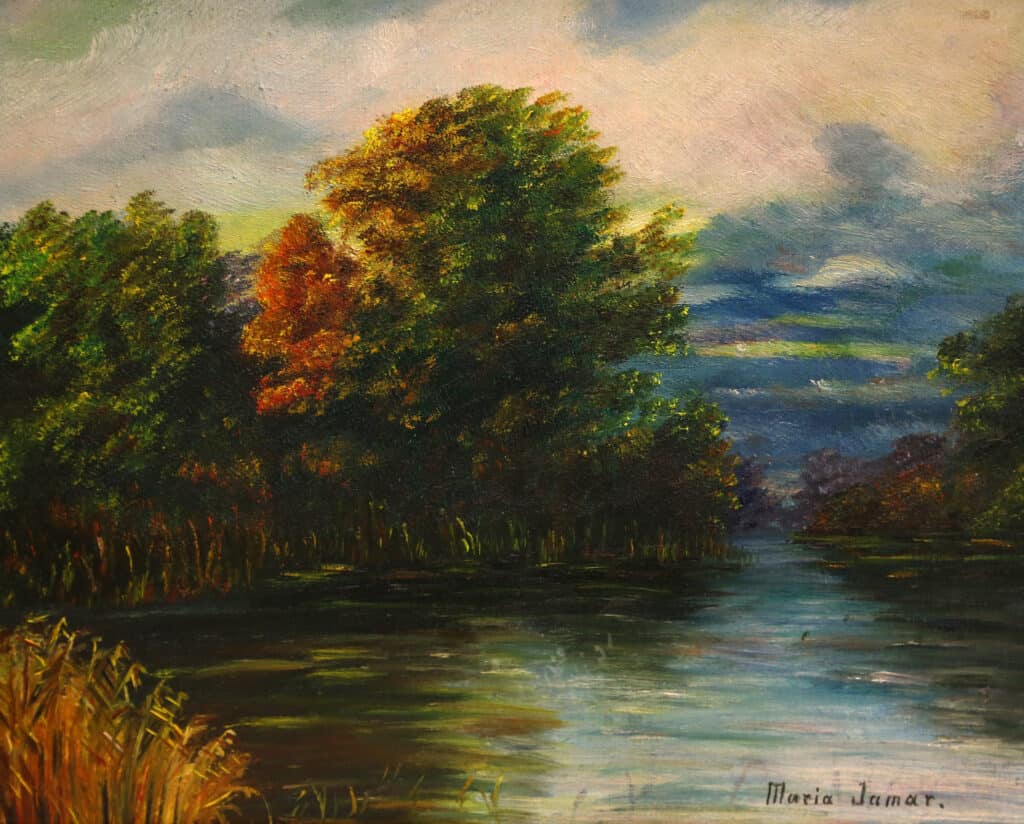
Landscape by the hand of Maria Jamar when she was 15 years old – oil on canvas – 1955
“I grew up without television or internet, so I spent my youth largely reading, playing piano, singing or painting. I often drew in *poetry albums.” – Mia *booklet that circulated among pupils in which they made drawings and illustrations and wrote poems
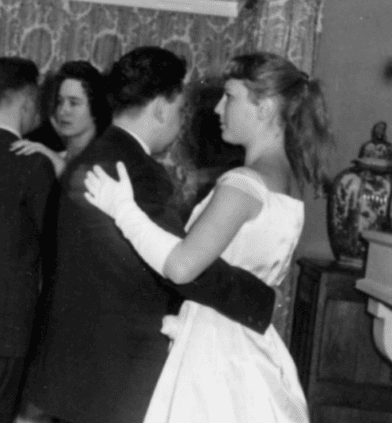
Frie dances with Mia
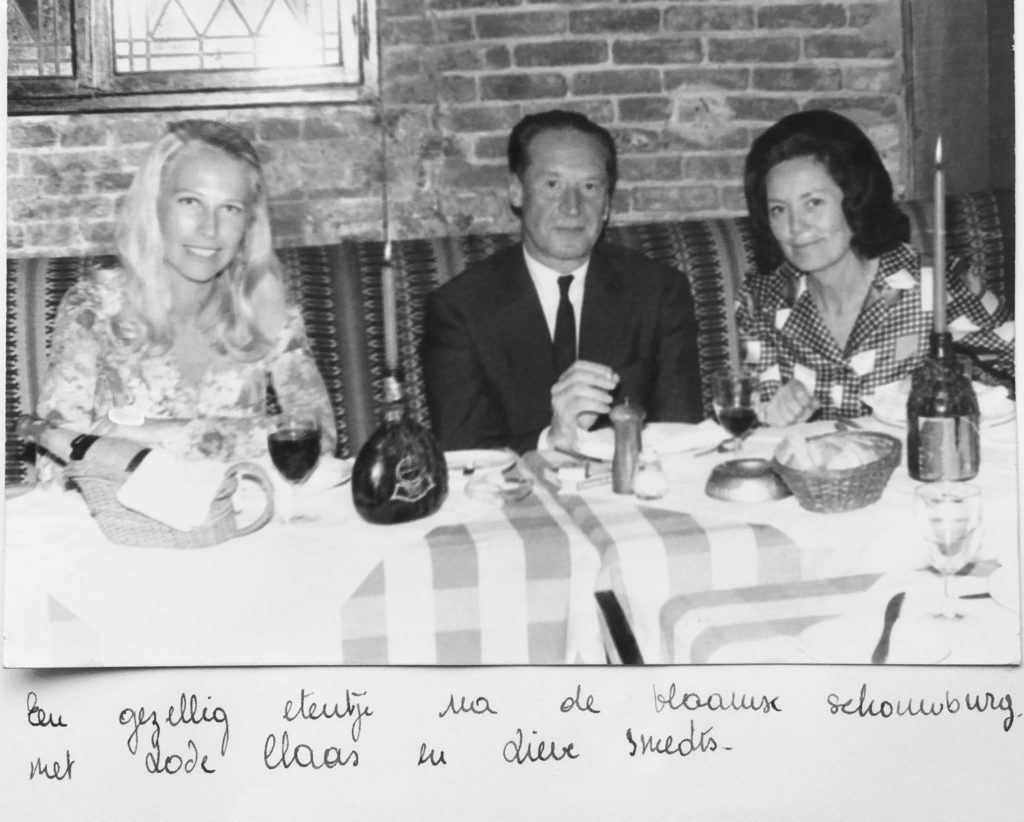
Mia, Lode Claes (1913-1997) and Lieve Smedts
Mia and Frie make pleasant Sunday afternoon outings to Brussels and often go to the Ancien Belgique for performances by, among others, Charles Aznavour, Charles Trenet, Gilbert Becaud, or historic performances at the PSK by, among others, Elisabeth Scharzkopf. Mia has the habit of doing her shopping in Brussels. Lode Claes urges Mia not to deny her mother tongue and to address everyone first in Dutch. She follows this advice. Most of the time the reply from Brussels shop staff, hairdressers, waiters and so on is: “I don’t understand, I don’t speak Flemish.” Mia replies every time: “Don’t worry, I can just as well continue in French.”
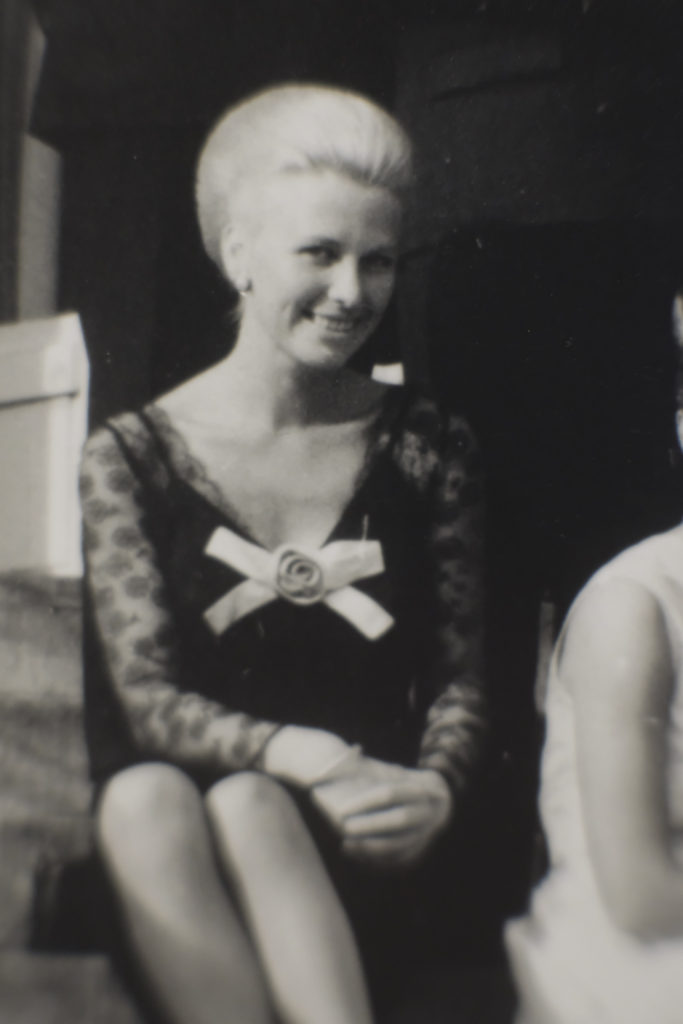
“A l’origine d’un portrait, il y a toujours la gourmandise.” – Catherine Nay (photo: 1964)
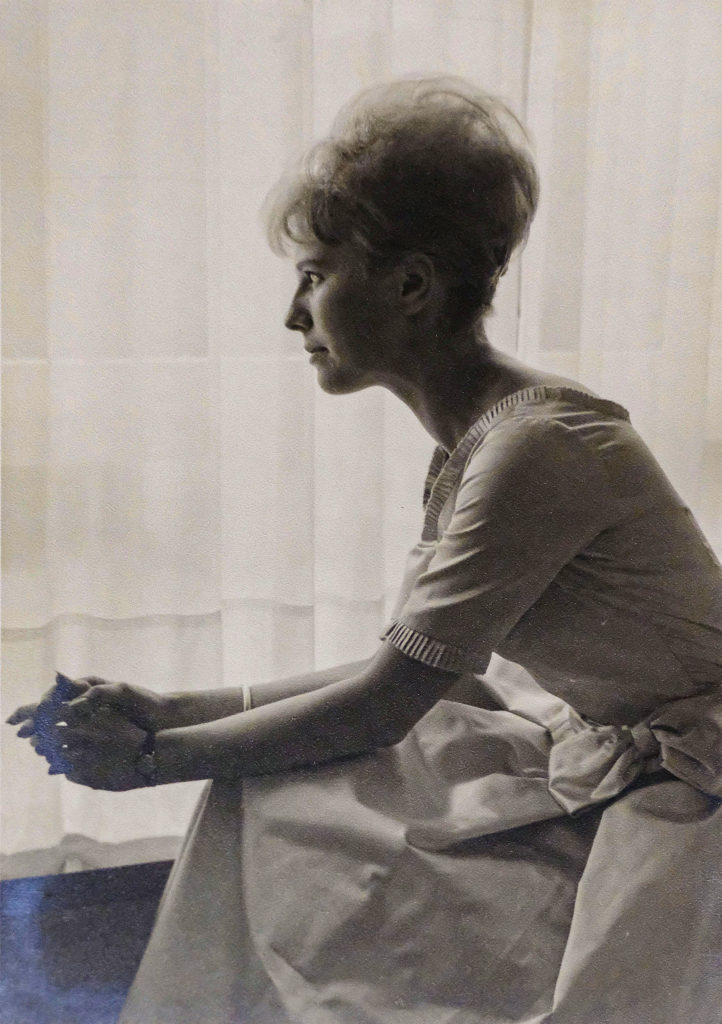
Mia from Houthalen, recently engaged, will later in the year also sign the marriage certificate there with Godfried. (photo: February 1961)
“You can’t catch flies with vinegar.” – Mia
Mia has made the step up: her face beams with pride. Mia knows she is not the first choice but it will nevertheless be a love match. On meeting her future mother-in-law, the latter is said to have sighed “My little Frie, that girl is far too beautiful for you!” Yet Clementina warmly welcomes his fiancée. They often spend time together and confide in each other. Every afternoon Mia visits Tineke.
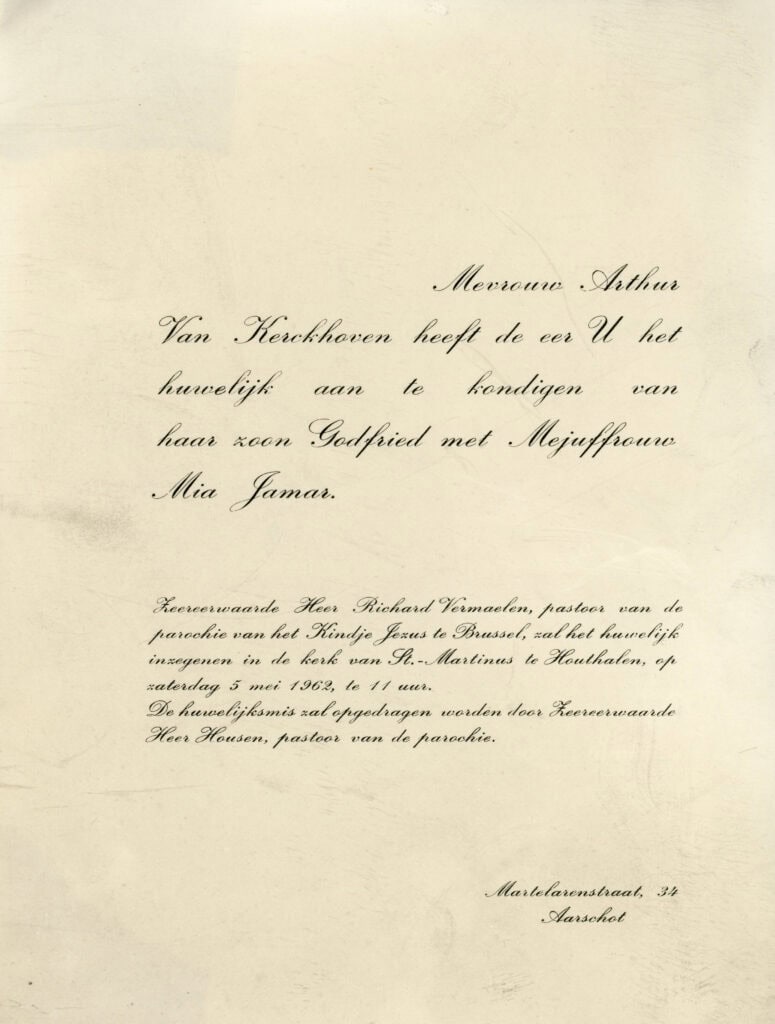
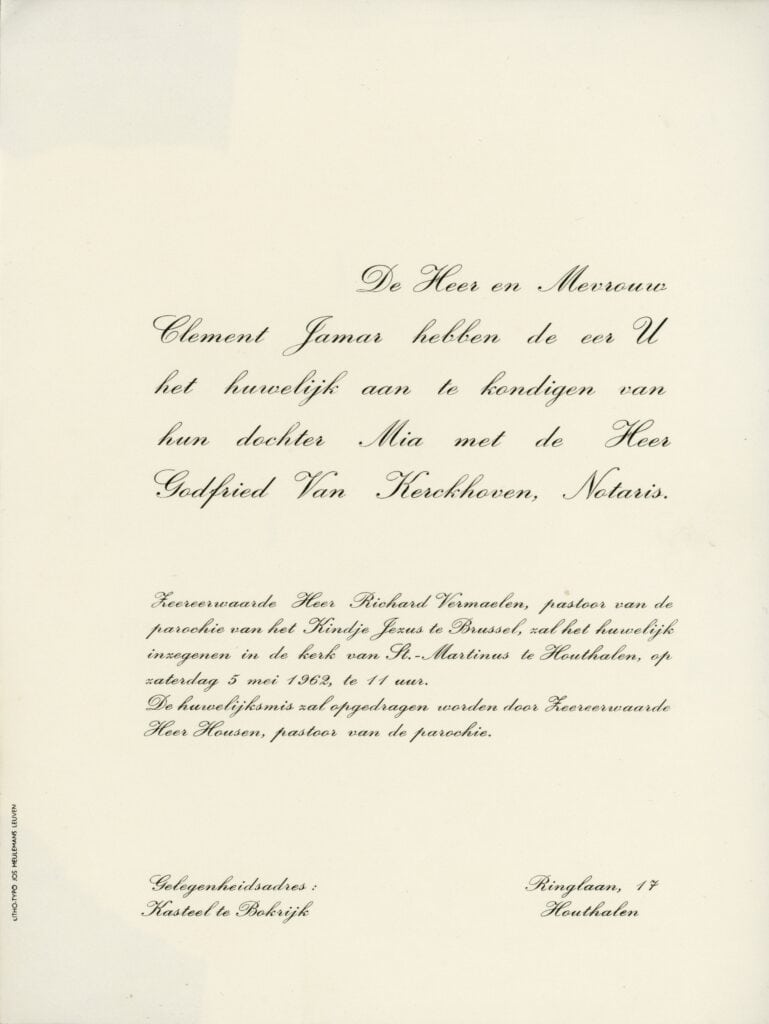
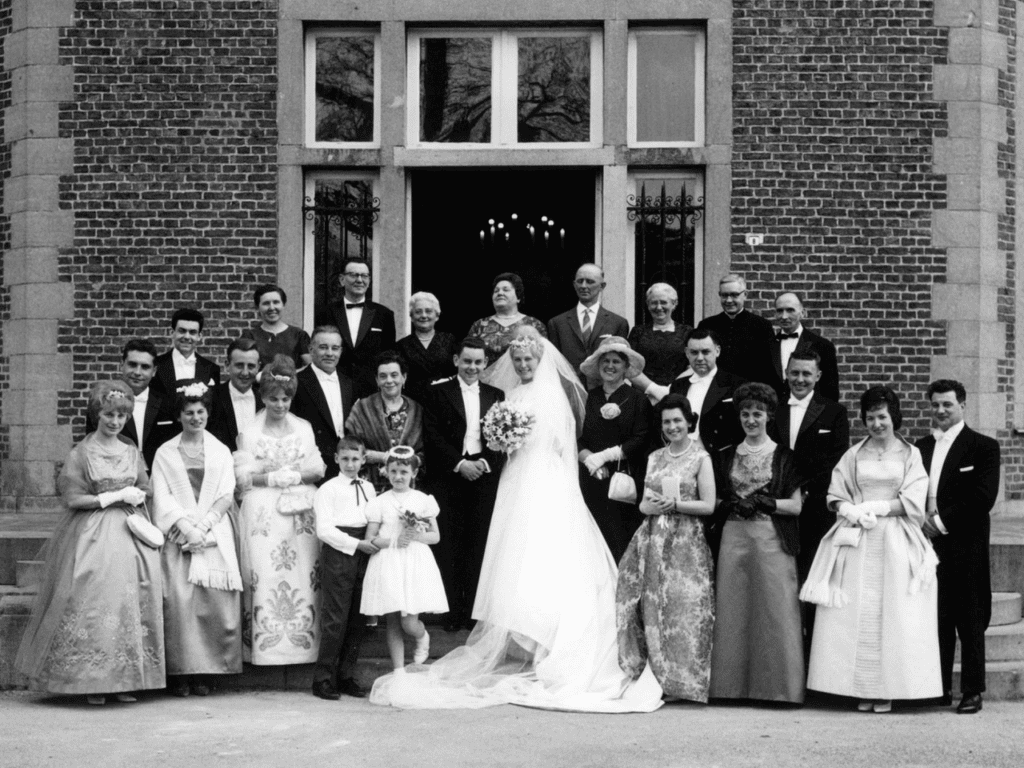
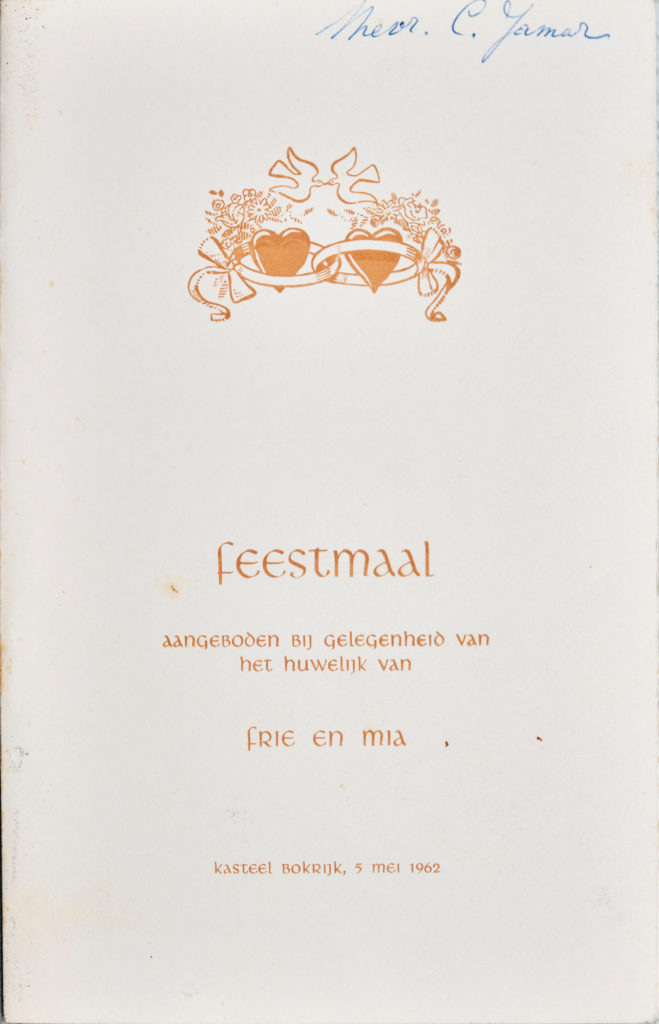
“It had rained for weeks but that day the sun shone and the aperitif was taken outside. My parents paid for the party and the engagement and wedding rings. That is how it went in those days. In Houthalen they thought it a pity that I married a stranger and went to live far away.” – Mia
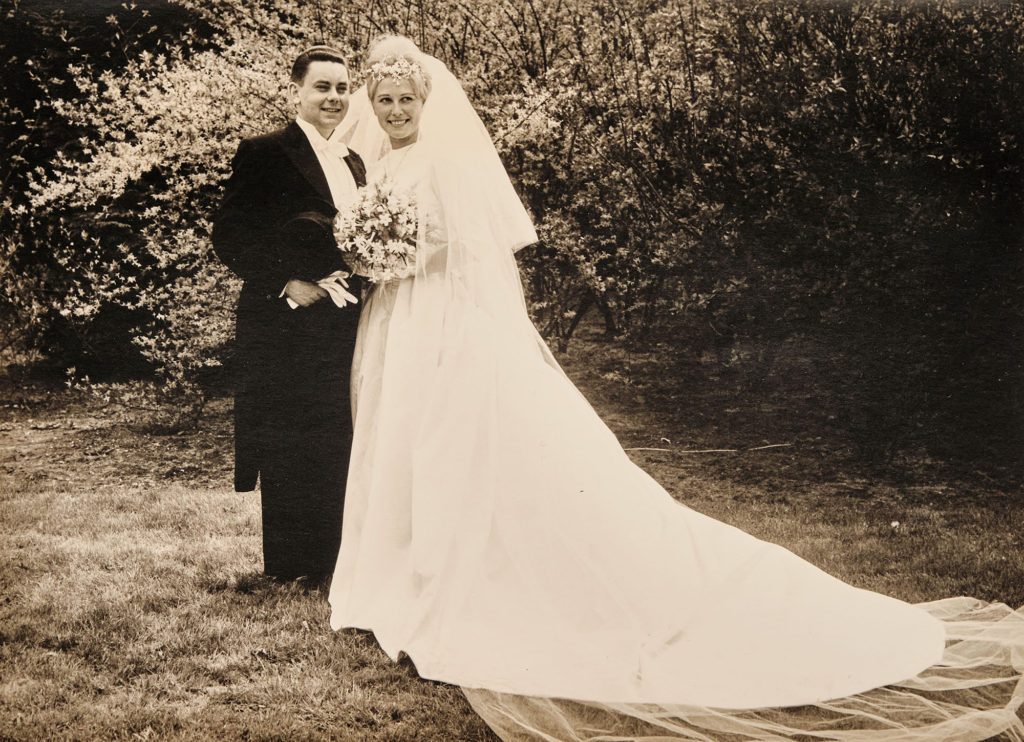
Frie marries Mia on 5 May 1962 in the Sint-Martinuskerk in Houthalen and lived happily ever after?
Temporary home on the Albertlaan
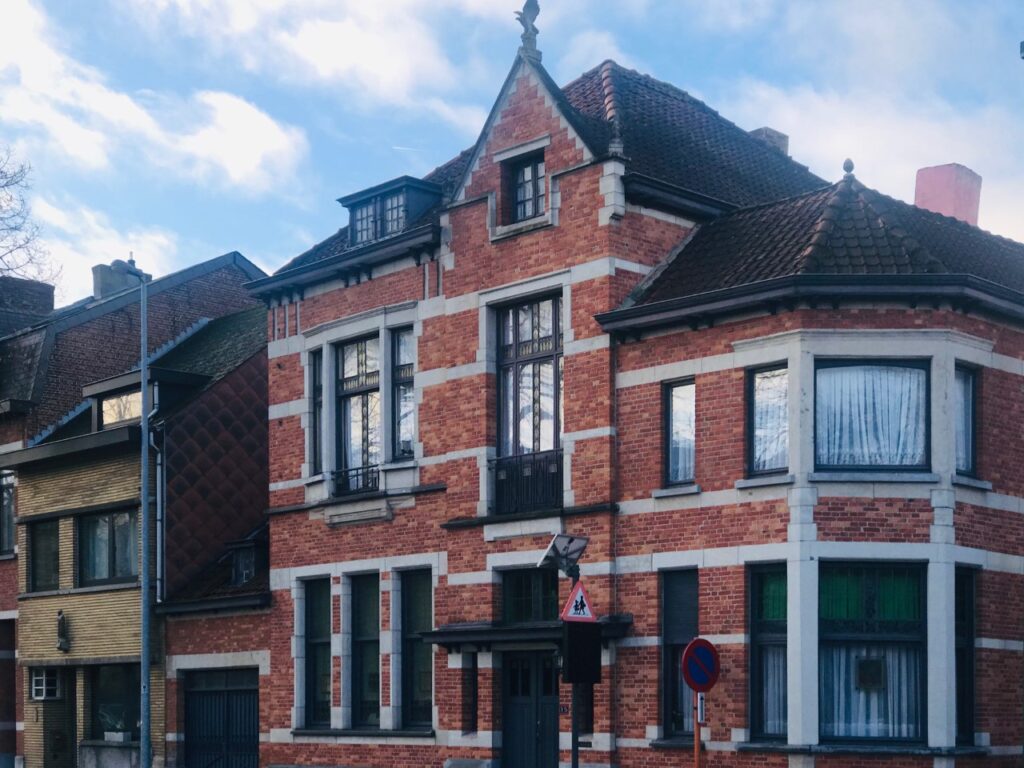
The couple lives from 1962 to 1964 in the modest yellow little house on the left in the photo. Rita Van Roey is their landlady. The residents heat themselves with a ‘feu continu’ (small coal stove) on the ground floor. During the winter months it can get quite cold upstairs. “When it froze, there was ice on the house. Madame had a cold all the time!” – Anna, housekeeper
On the corner of the Albertlaan and the Fabriekstraat live the architect Victor Van Roey and his old-maid daughter Rita.
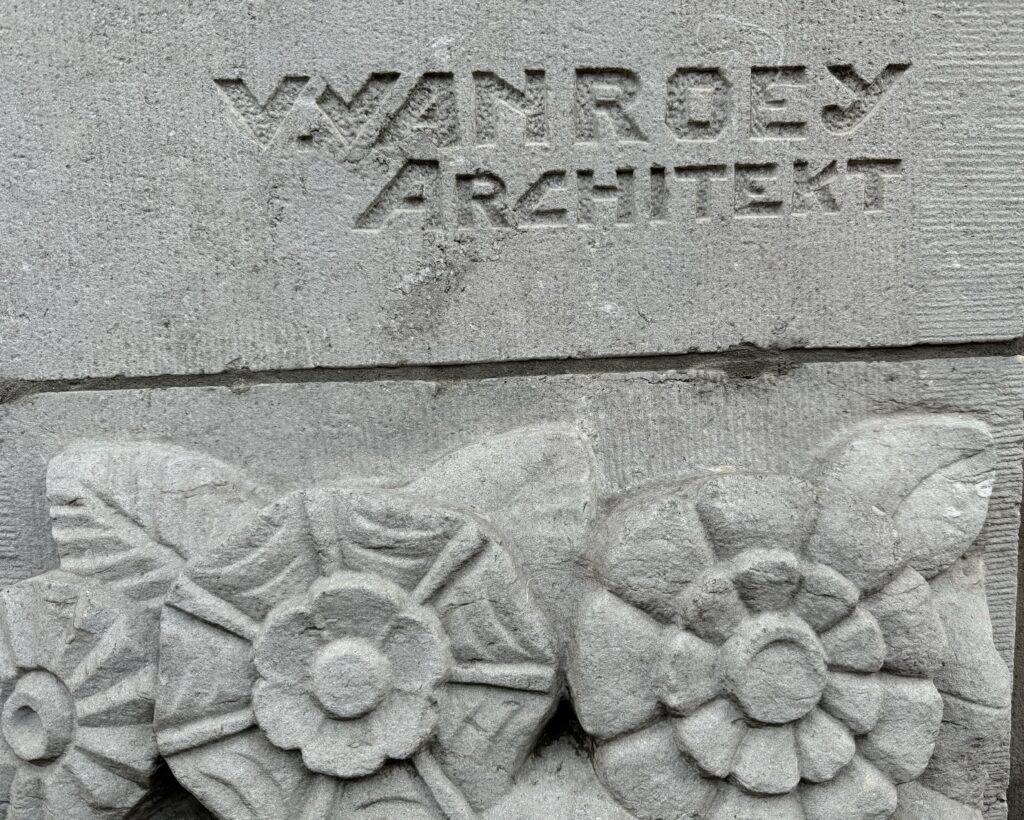
Rita is known in Aarschot mainly thanks to her father, the architect Victor Van Roey (1886-1968)
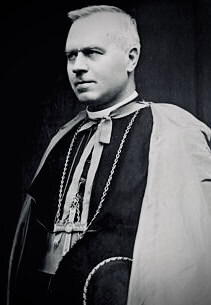
Jozef Van Roey (1874-1961), one of the most influential cardinals ever, is Rita’s uncle
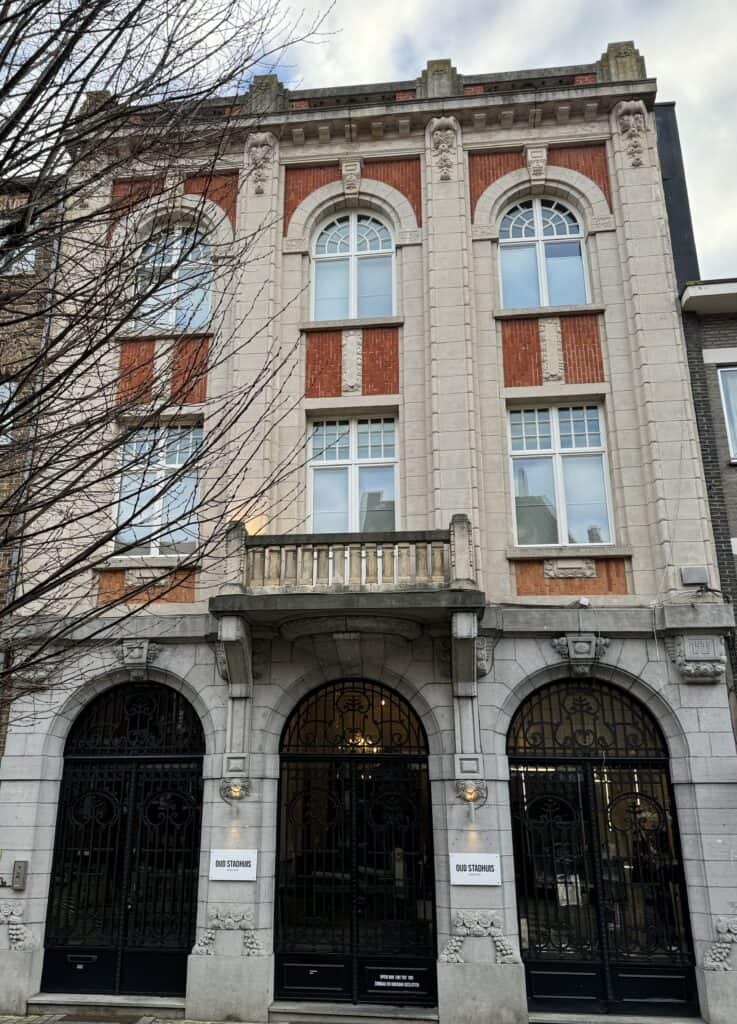
Architect Van Roey designs, among others, the Art Deco bank building J. Nagels in the Bogaardenstraat (now the fashion shop ‘Oud Stadhuis’), the Sint-Jozefscollege (Elisabethlaan wing), the church of Berkvijver, part of the Tuinwijk.
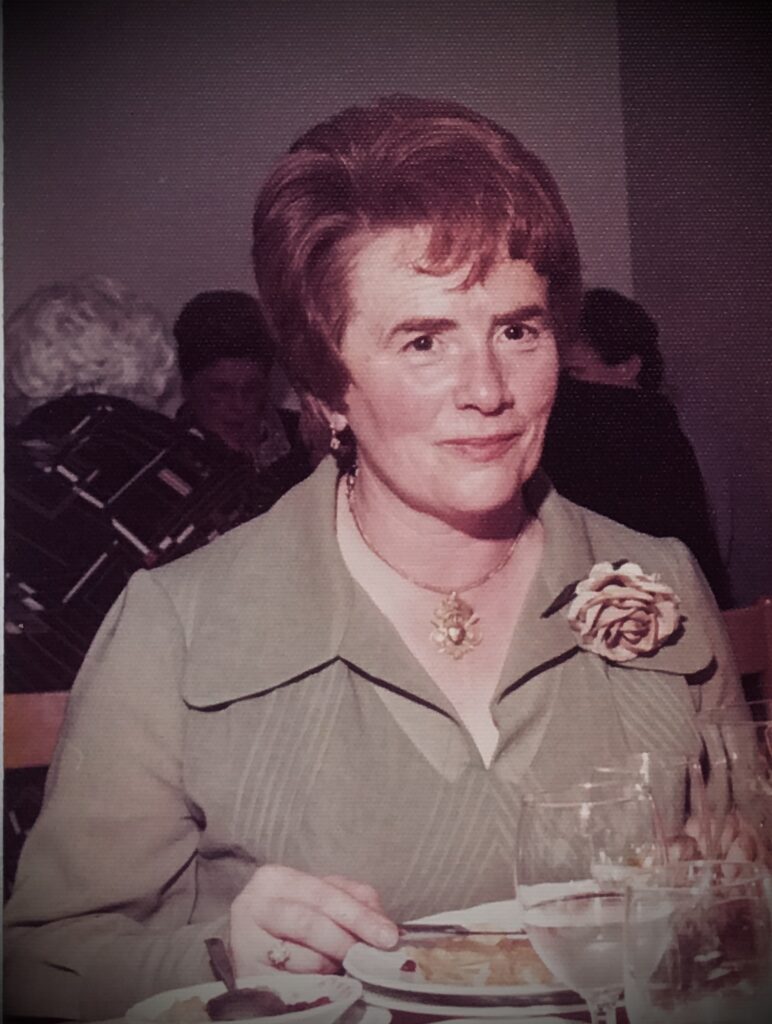
Margareta „Ritje“ Van Roey (1925-2004) (foto: 1976)
Ritje Van Roey is a jack-of-all-trades in the household. She and Mia seem opposites, the Aarschot bourgeoise (37) and her Limburg tenant Mia (22). And yet they are as thick as thieves. Ritje takes Mia by the hand like an enthusiastic guide and turns her into a gifted kitchen princess. Rita does not hesitate to lecture Mia on how an Aarschot bourgeoise ought to behave. “She couldn’t cook, not even make coffee.” Rita is for years an adviser at the women’s association ‘Markant’.
“In 1999 I took part in the municipal elections and received a visit from Ritje, who got around by bicycle in all weathers. She announced briskly that she always voted for female candidates and left immediately. Against all expectations I was elected and Ritje came back. She called me ‘vote-getter’ and invited me to dinner in Brasschaat. From Rita I received a crystal dinner service that she had inherited from Cardinal Van Roey. In 2004 Ritje died in her sleep in the house where my parents once lived.” – Pieter
Behind every great man stands a great woman. In Godfried’s case that is Mia Jamar. She decides to move the notary office on the Grote Markt and the home on the Albertlaan to the Elisabethlaan.
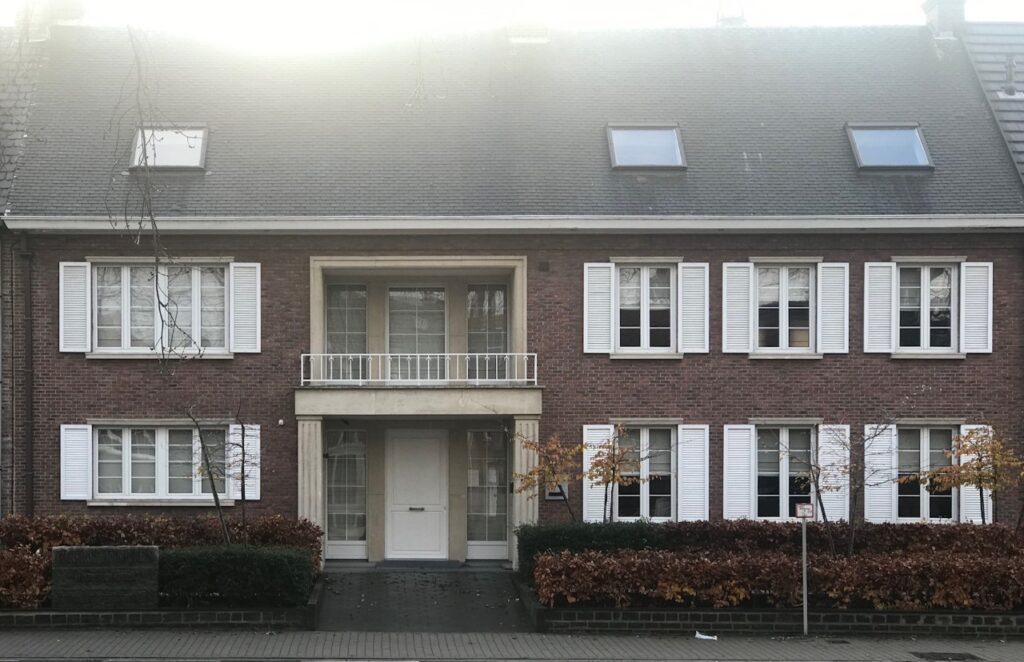
Aarschot – Elisabethlaan, 15, by architect Beeck from Lier
The Aarschot notary Godfried (34) and his wife Mia (24) move to the Elisabethlaan. Rule of thumb from his mother Tineke: “Renting makes strangers rich in their sleep. Frie and Mia must own their own house.” Tineke gives them five building plots for this. The building becomes both office and home. Godfried has doubts about moving the notary office from the Grote Markt to the Elisabethlaan, but afterwards he is delighted with the enterprising spirit of Tineke and Mia.
“During my early childhood I live in this house. On the first floor the double window on the left is my bedroom. The two windows on the far right are Gert’s bedroom and the window to the left of those is Ilse’s. The room of Mia and Frie is at the back on the right. From the age of nineteen I live there again, above the notary office, until 1999. In front of every window I put flower boxes of surfinias in five pastel colours, plant daffodils and tulips, and mow the lawn. The first year my efforts are greeted by my parents with blazing rows, after that they calm down. Two ‘old maids’ from the Astridlaan, Hortense and Clementine, pass by arm in arm in the morning, wearing a trench coat and a triangular scarf or plastic rain cap on their heads. Each time they inspect my work. The only thing they remark: ‘My boy, the weeds are growing. You’ve got quite some work with that.’ At noon they pass again but then stumbling one behind the other, one more drunk and choleric than the other. It happens that everything is vomited into ‘den dowakeleir’. For the Sint-Rochus illumination I fill the facade with coloured crystal tea lights from Val Saint Lambert, which still come from grandmother Tineke Van Dyck. Then the greying spinsters come back, ‘all fussed up’: ‘It is really not a good idea to put those little lights up. They will burst from the wind. And you are on the west side. Mark my words…’ One of them was a tax official in Brussels. After father’s retirement, ‘den doewedgruiver’ (the gravedigger), father’s name for an undertaker, settles in this house.” – Pieter
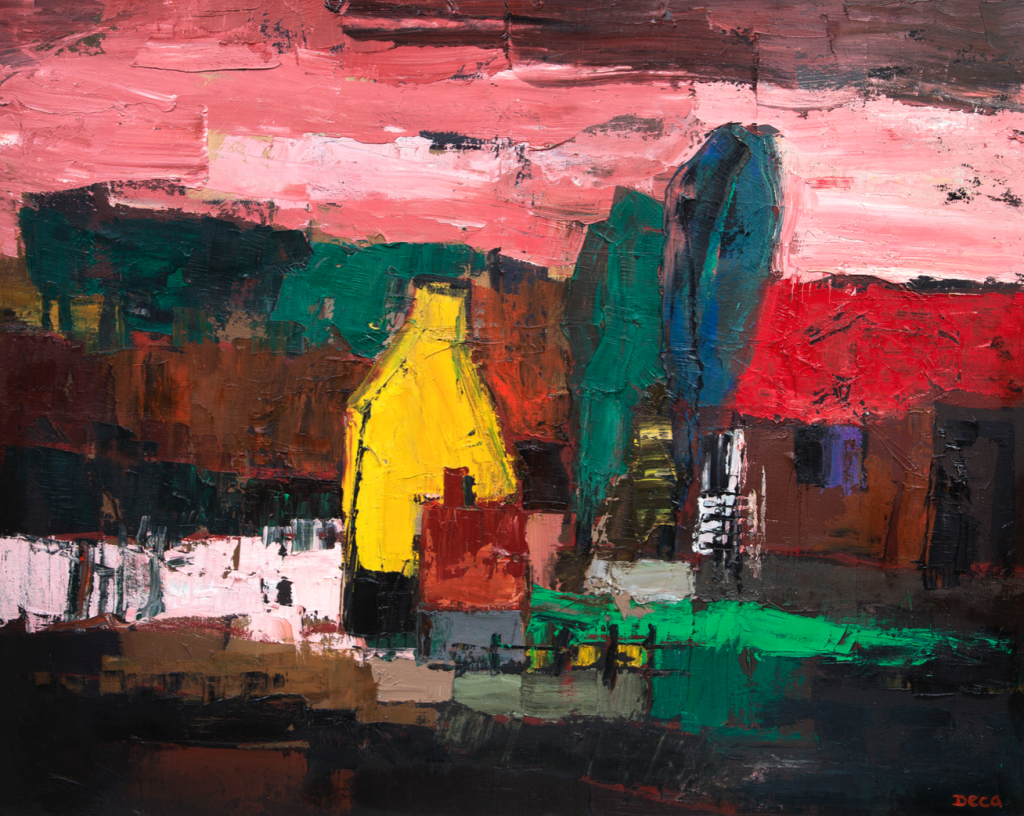
The painter Miel Deca (1920-1980) and Godfried are neighbours across the street. There are trees on the Elisabethlaan. The tree between their houses is dying. Miel’s nearest neighbour in fact saws off the branches at night: “So as to have a clear view of what goes on at the notary’s.” With Deca’s paintings, emotion is never far away. Deca paints for a large part of his life that one dead tree, which he looks out on from his house. Towards the end the artist compares himself to that tree. “Trees die standing.” – Miel Deca
“Making a work of art, that is surely playing God” – Benno Barnard
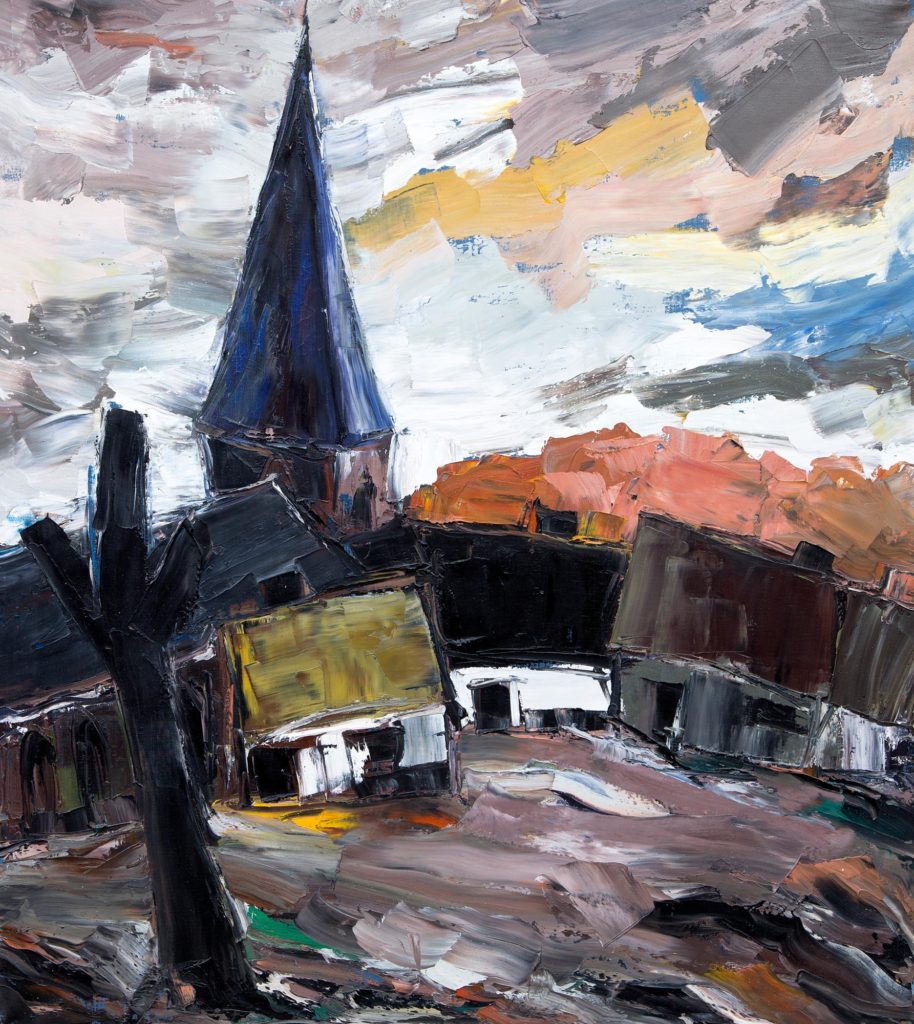
Trees die standing – acrylic with palette knife on canvas – Miel Deca
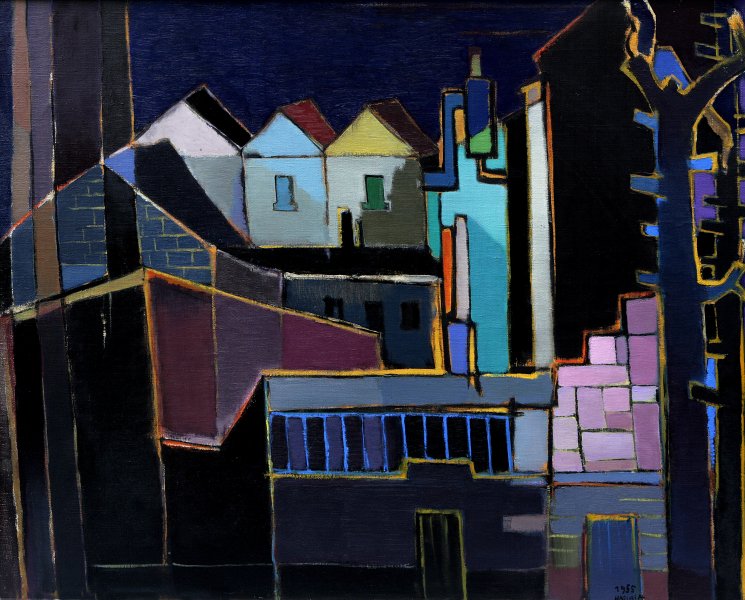
’s Hertogenmolens by Maurice Haccuria
Another neighbour, Maurice Haccuria (1919-1991), tries to sell a painting of his own hand to the traditionally minded Frie, but modern art has to lose out – however good that art may be.
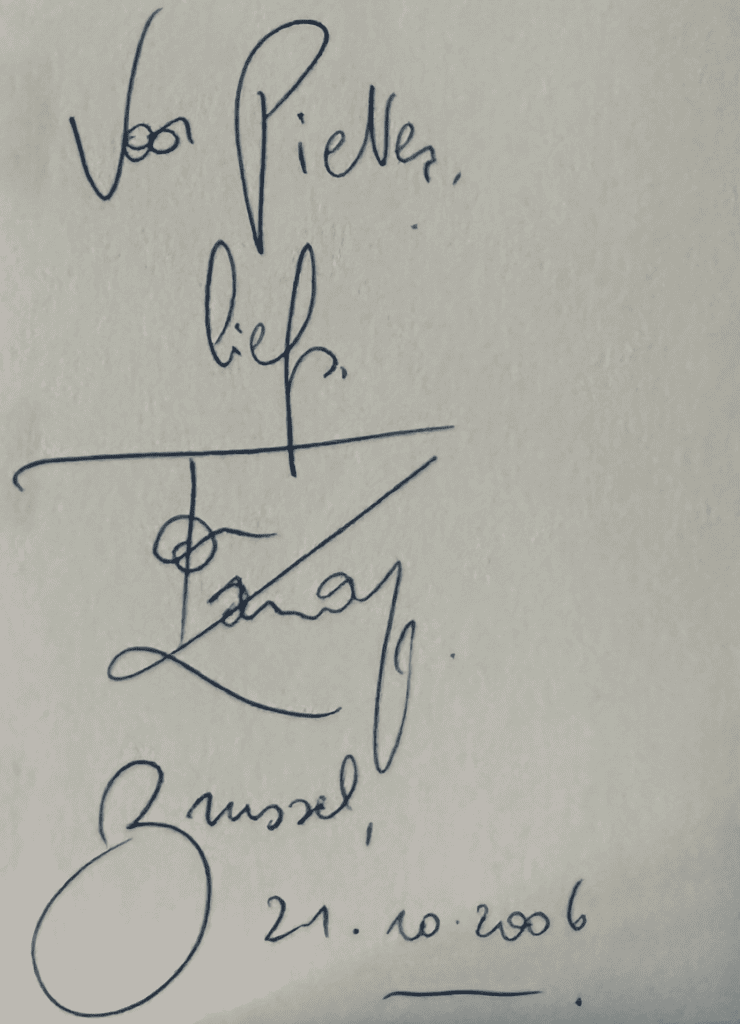
“Artists describe identities. Ideologues prescribe them. Neither group is entirely right. Artists admit this wrongness and make a profession of it anyway. Ideologues never admit their wrongness and just as well make a profession of it.” – Tom Lanoye
Beech armchair covered with petit point tapestry by Mia
(1963) Given the place taken up by carrying out notarial duties, horse riding and going to mass, little time remains for his wife. Mia no longer goes to church. In her first year in Aarschot, Mia embroiders with the patience of a nun a Louis XV chair in ‘petit point’. You can imagine that Mia will not stay at home for long and will no longer bend to her new surroundings.
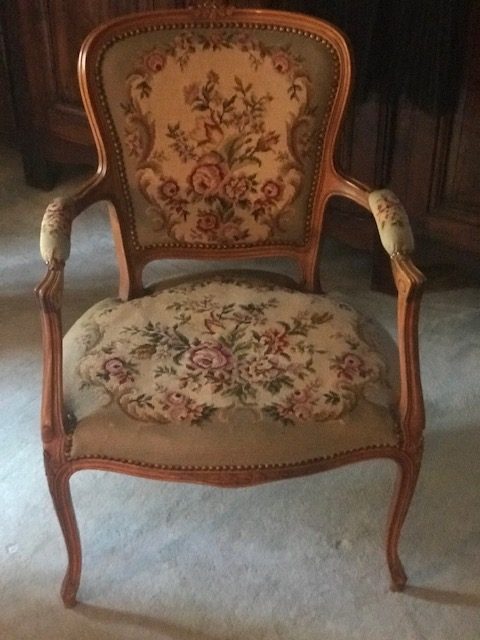
(1962) A Louis XV chair made by Mia. A devoutly embroidering Mia could clearly count on more approval at that time than the later glamorous, independent beauty.
art historian Josée Lehon explains (recording: 2023)
At the same time Mia and Frie take on numerous charity works. They support the project of Father Pire by financially supporting a poor family from Vienna. Father Schwartz is sexton at the Peterskirche. His children Rössli come to Aarschot and Provence on holiday during the summer months. Mia and Frie visit the Schwarz family several times. Even as adults Rössli, Robert and Rheinhard remain grateful to come to Aarschot.
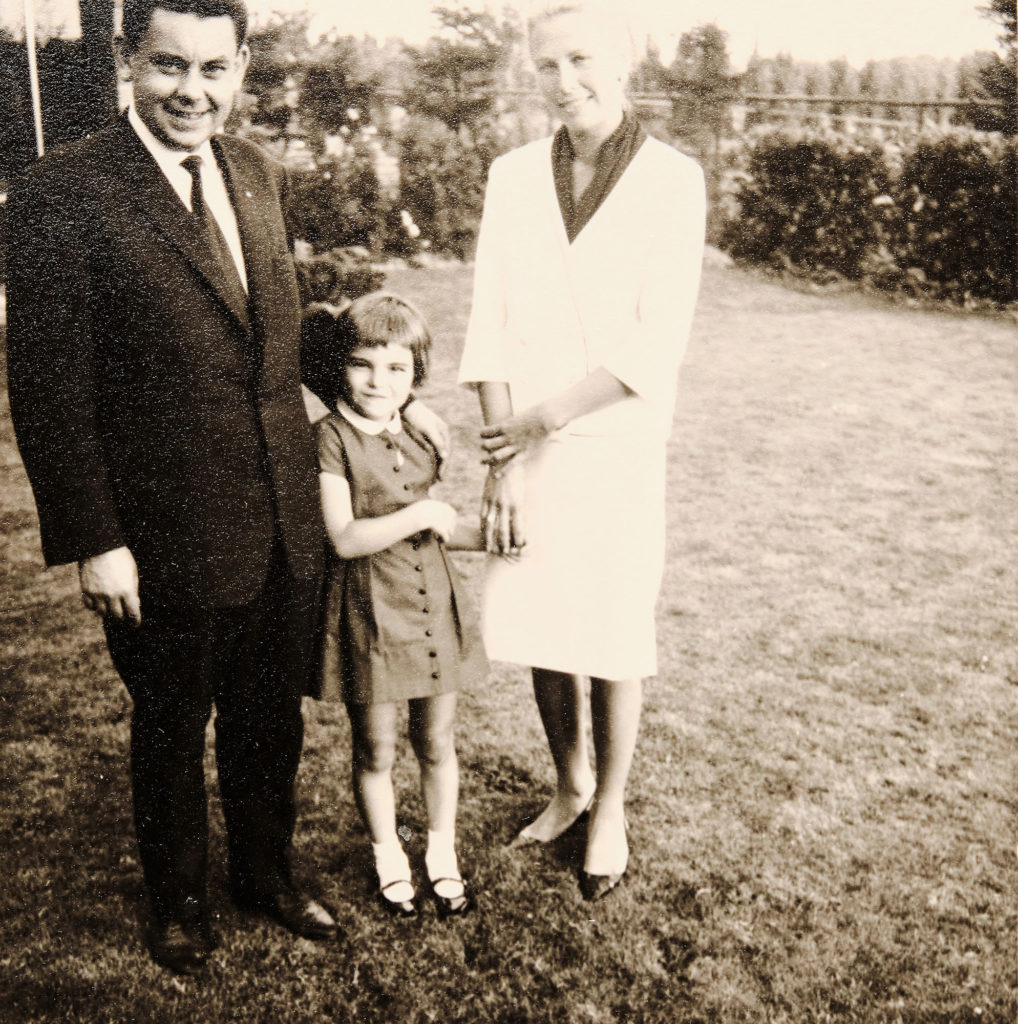
Frie, Rössli Schwarz and Mia
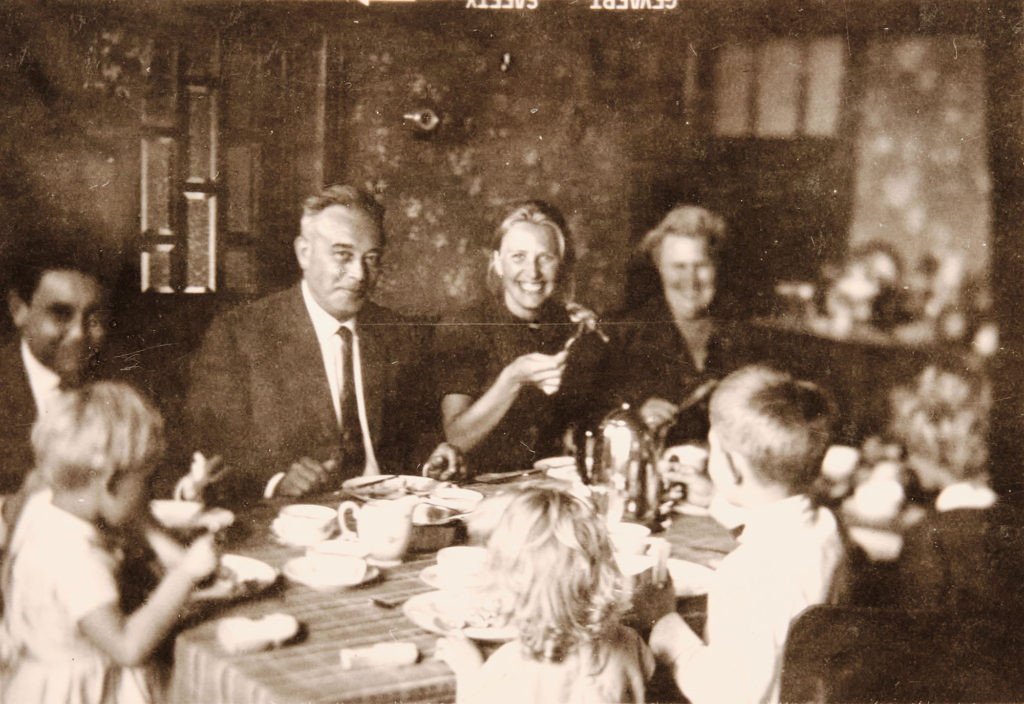
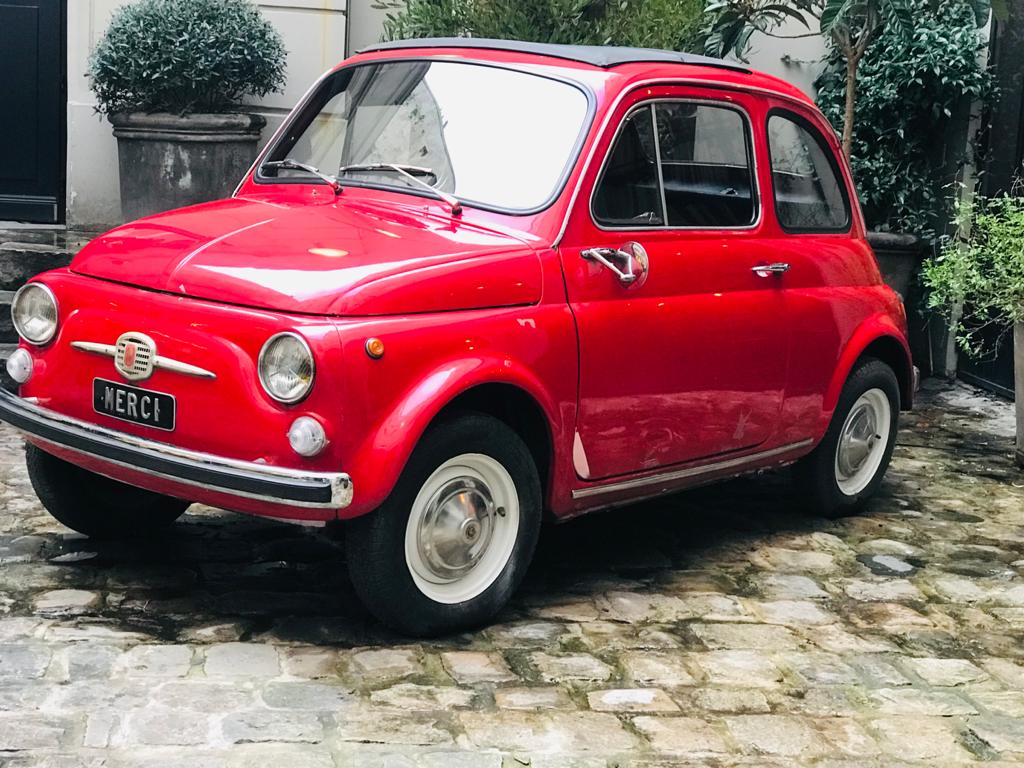
In a red Fiat 500 Rössli and her brothers drive from Vienna to Langdorp. Reinhard becomes manager of the world-famous Vienna Boys’ Choir.
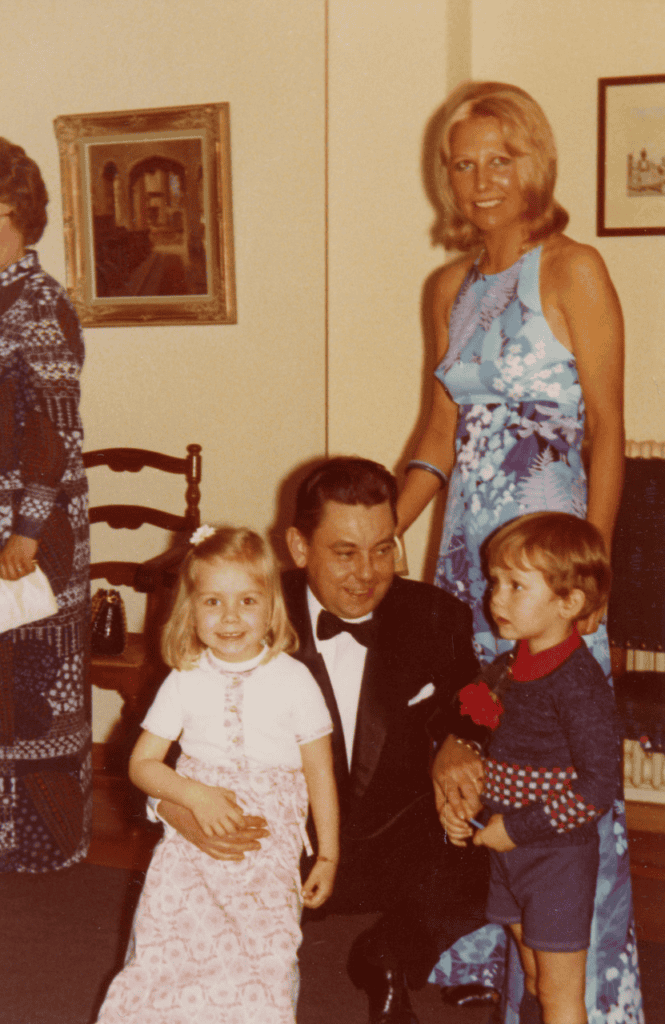
Ilse, Frie, Mia and Pieter (photo: Aarschot, May 1972)
Clairette Serneels, on the left in the picture, as usual has something sharp to remark: “The Van Kerckhovens have always been the pillar-biters (pillar-biters = hypocrites) of Aarschot.”
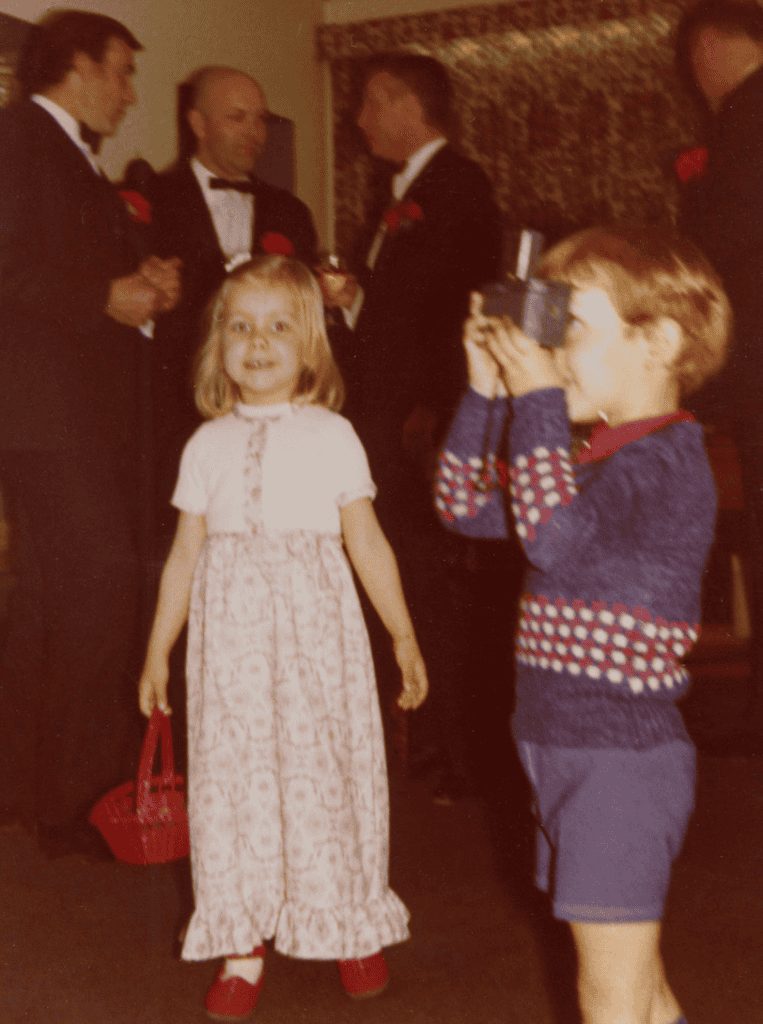
Evening party on the occasion of ten years of marriage. The gentlemen guests receive from Ilse a gift box of soap and the ladies a silk brooch from Pieter.
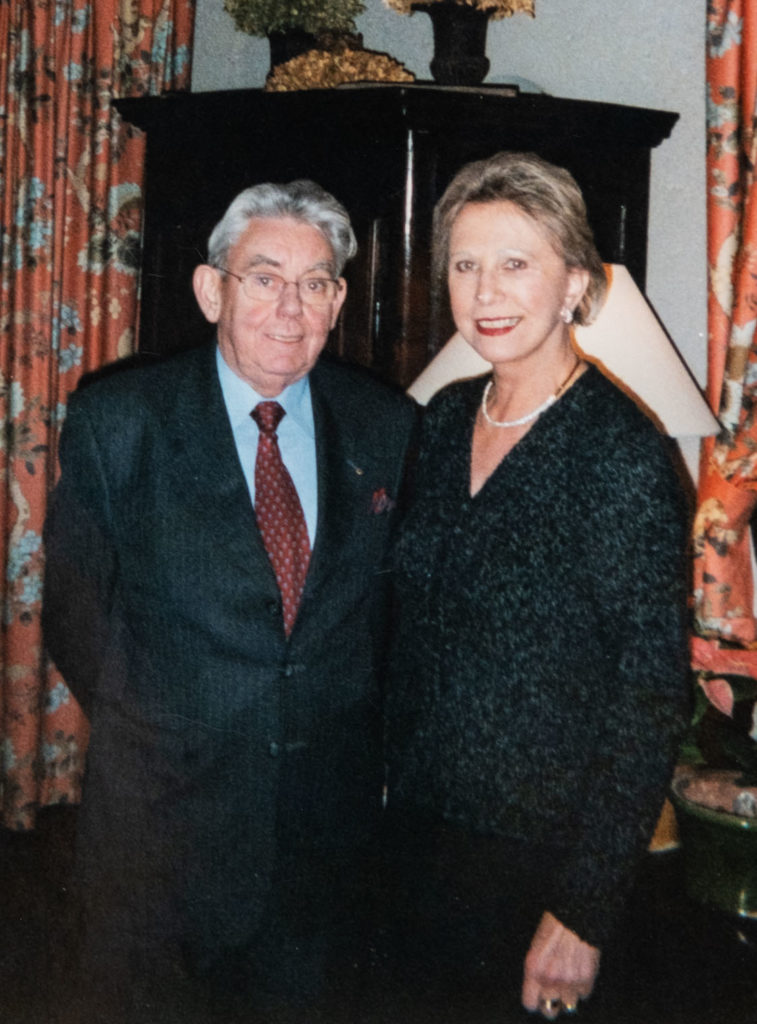
Frie and Mia (photo: 2001)
XV Trop aimée >>>