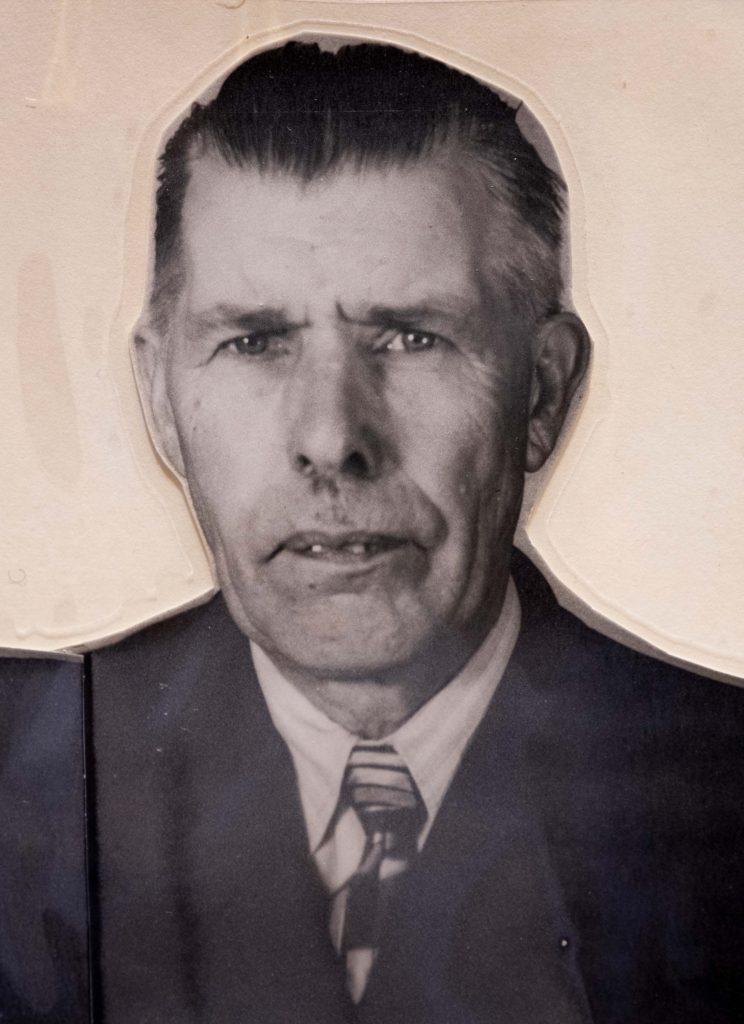
Soo de Wender – Sooi Van Braeckel – mayor of Langdorp
A forgotten figure in Wolfsdonk is without doubt “Petrus Franciscus Van Braeckel”, born on 23 May 1885 and died on 2 January 1962.
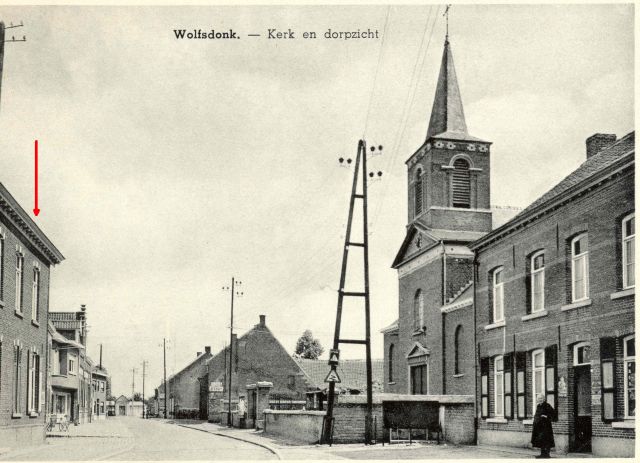
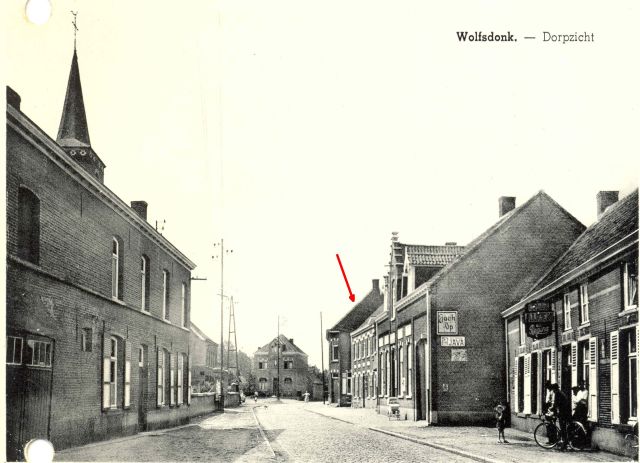
Soo lived with his family in the middle of the village, diagonally opposite the church, and directly opposite the present shop “DE PANDA”.
He was a coal merchant, had quite a lot of land, was a small farmer with some cattle, pigs, chickens, fruit trees… And he also worked many woods where timber was felled and sold for the mines.
Spicy detail: besides being a dealer in potatoes and coal, he also had a little liqueur shop; he liked them himself too.
POLITICS:
In 1946 he became mayor of Langdorp. He was asked to stand on the list and take part in the elections, which, after much insistence, he agreed to with a quip: “Then put me last on the list, but mind you, if I get the most votes I want to be mayor”.
What he had not expected was that he did indeed get the most votes and became mayor.
He was mayor from 1946 to 1953.
In 1953 Soo got even more votes, and should logically have become mayor again, but political scheming ensured that someone from Langdorp became mayor.
In 1953 he no longer wished to stand; he was fed up with it.
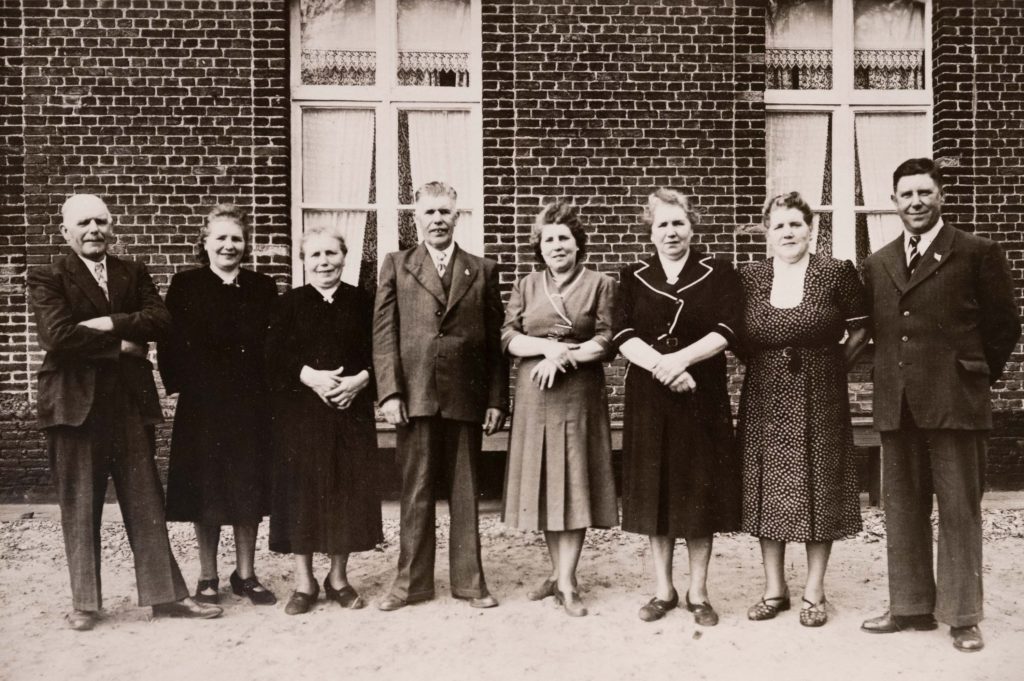
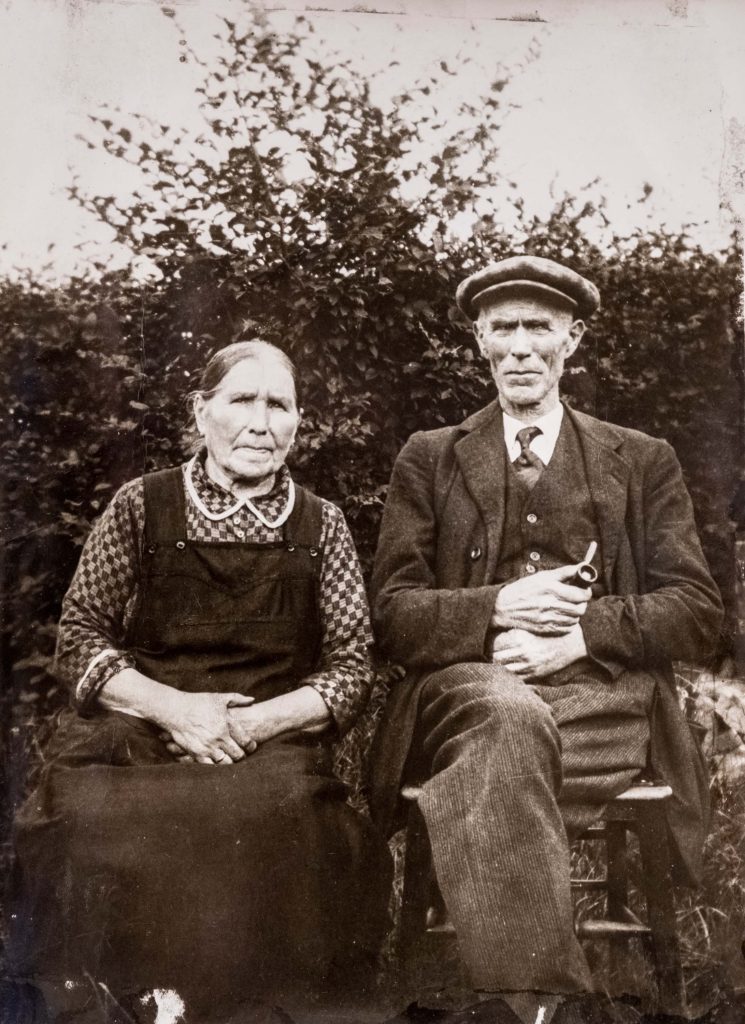
parents of Soo de Wender:
FAMILY:
Soo van de Wender was married to Mathilde Verrijdt (1890-1960).
The couple had 10 children; 6 boys and 4 girls. As was customary at the time, the boys were allowed to study and the girls stayed at home to help with the housekeeping, the café and the shop. To sketch Soo’s character, we let his daughter Elza, my mother, (9 May 1921 – 1 January 2000) speak:
“In winter, people who were struggling always came to our house to fetch empty potato sacks to put on their beds against the cold. My father gladly gave them away.”
“Once he was checking his accounts and found quite a lot of unpaid bills, especially from people who were struggling. His wife asked him what he had found there and whether she could look at them too. And Soo said: ‘Girl, it is better that you do not see and know that, then you will not get a headache from it either, we will never see that money anyway’. And he put the unpaid bills into the burning stove.”
“Someone from the neighbourhood had been coming to fetch coal from Soo for 2 years and had not yet paid for it. In the third year, just before winter, when he could no longer get coal from other merchants because he could not pay, he came to Soo for coal all the same. And Soo said: ‘I know that you cannot pay, and yet I will give you enough coal, I will not leave you and your family out in the cold in winter, you know it, you can always come here’.”
A few stories told by his son Herman Van Braeckel, January 2020. Herman died in October 2020.
Jan Kerckx, Jan van Elza van Soo van de Wender, grandson.
5 September 2019
Photos of the main street in Wolfsdonk from the opposite viewpoint. The red arrow points to the house of Soo van de Wender in the village of Wolfsdonk.
Uncle Herman tells.
Herman van Braeckel was the youngest child of Sooi van De Wender (Frans Van Braeckel).
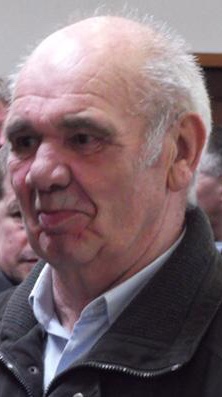
My father was a very good man, as was my mother for that matter, to his family but also to the people around him. If he could, he would help everyone.
He came from Blauwberg, where his parents traded in wood and coal; they worked woods, and the wood was used to support the galleries in the coal mines.
In Wolfsdonk my father did the same: he managed woods and sold the timber for the coal mines. He sold coal (“hulle”, as they say here). In the early period my father carted the wood away in a cart drawn by a cow, which was taken to Averbode, to den Eyk, where there is now a restaurant. There was a tram line there, and from there the wood was transported on to the coal mine by tram.
My father also ran a café and a liqueur shop. On the first floor of his house plays were even staged in the past by the people of Wolfsdonk.
He had one of the first cars in Wolfsdonk, a convertible; on Sundays he drove around the cobbled and dirt roads with a group of young people from the neighbourhood (about ten). He would then take them on a tour through Testelt, Zichem, Scherpenheuvel, Averbode, Blauwberg and Herselt. Quite an experience for the young people of the time.
He bought the liqueur for his liqueur shop through a merchant from Zichem, who obtained his goods from Freyns in Hasselt. Once a year he went by bicycle to Aarschot to taste the liqueurs there; on the way back this quite often ended in a ditch because he could no longer judge the road properly.
Sooi van de Wender was a good friend of Sus van Jo, Senator Vanderborght; at election time he walked around with a board on his chest and back advertising for Sus van Jo.
My father’s political career: he became mayor of Langdorp-Gijmel-Wolfsdonk.
Once Sus van Zjo (Senator Vanderborght) asked Sooi to put himself on his list for the municipal council elections. This was in the year 1946. After much insistence Soo van de Wender did so. He was in last place on the list. At the elections he alone had more votes than everyone in his party put together. That is how he became mayor. At the following elections he had even more votes, but Senator Vanderborght had promised the mayoralty to someone else. Why? I do not know. But the story goes that in those days, if you stood at Aarschot station and asked where Langdorp was, people pointed with a finger at a lonely little light burning further away in the village of Langdorp. That is where Langdorp lies. Nothing happened in Langdorp; in the surrounding villages roads were laid and works carried out, and Langdorp lent money from the municipal coffers to other villages; in Langdorp not a single cobblestone was moved. Sus van Zjo, senator and municipal treasurer, ruled. Was there a conflict between the mayor and the senator?
A mayor may not earn anything from the municipality and, if he is a merchant, he may not do business with the municipality or earn anything from it. In Langdorp there were three coal merchants who were allowed to supply coal to the municipality: someone in Langdorp, someone in Gijmel and someone in Wolfsdonk, Sooi van de Wender. Sooi was not allowed to supply coal, and it was decided to order the share of coal that he normally supplied from his brother in Herselt.
One day the senator, also municipal treasurer, comes in with the invoice for the coal for Sooi’s brother, announcing that he will give the money to Sooi, who can then pass it on to his brother when he sees him. My father refuses and says that this is not legally possible. But a few days later the senator comes back when my father is not at home, and my mother Mathilde Verrijdt signs for receipt of the money.
The consequence of all this was that my father, Soo van de Wender, had to account for himself to the public prosecutor in Leuven and that he could not become mayor.
At the next elections Dams and Vanhuyzeghem of the other party came to ask Soo to stand for them, but he refused. Disgust for politics had taken hold of him for good.