<< XVIII Steenheuvels
ANNA AND MARCEL, 39 YEARS IN THE SERVICE OF
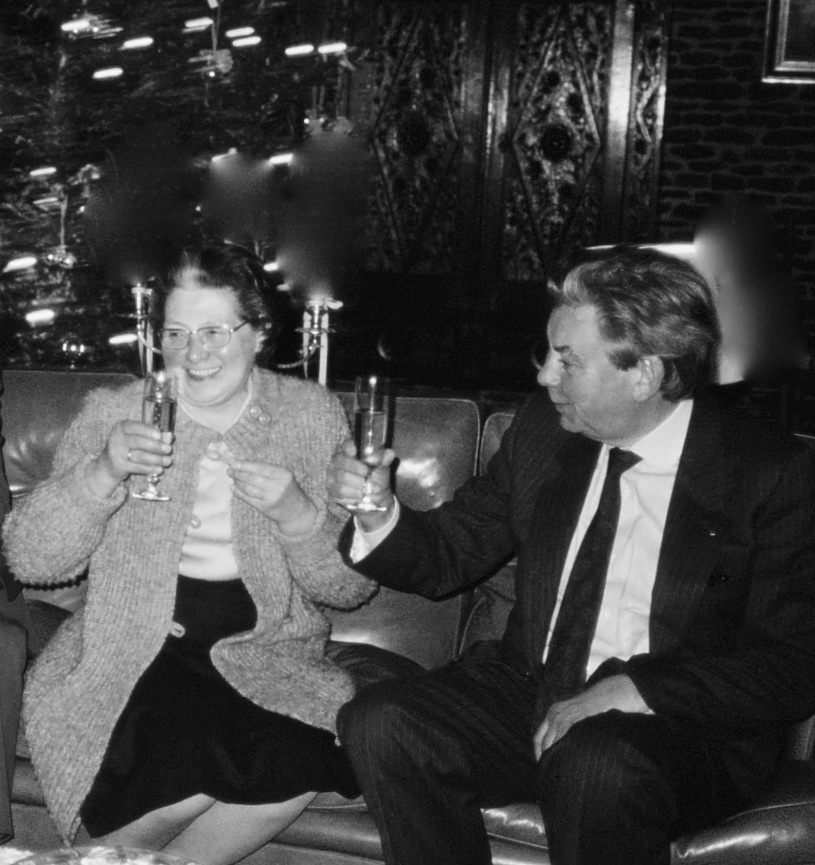
Anna and Marcel are invited every year for the Christmas drinks (photo: 1987)
This episode is about Anna, who is hired shortly after the wedding of Frie and Mia, and subsequently her husband Marcel.
Anna (1926-2005), originally from Nieuwrode, lost her father early. Frie remembers Anna as a young girl who came on foot to Aarschot in all weathers. She pushed a cart of strawberries or eggs to sell at the Thursday market.
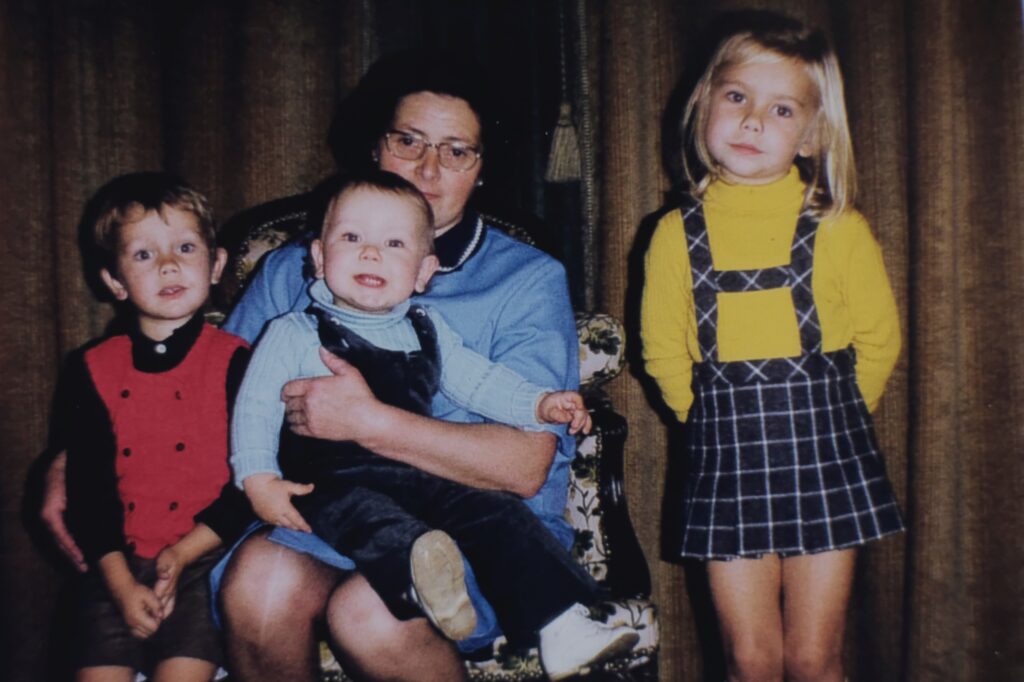
Pieter, Anna, Gert and Ilse
Through her permanent presence Anna plays a key role in the upbringing of Ilse, Pieter and Gert. Their upbringing is like a relic of the 19th century. They are attached to the servants and enjoy every moment and the smallest things, such as helping to gather eggs. Anna sells those eggs to the dairy woman. Various traders sell at the door. In a surge of deep pride Anna hands over the takings to ‘monsieur the notary’. Difficult Mia claims to keep only old eggs. The fresh ones are for the staff’s children and that dairy woman.
The caretakers never go on holiday. The only time they go to Brussels is to look up at their son François who stands guard in front of the Royal Palace. Once the national border is crossed to visit their son, the soldier Michel, in Lüdenscheid.
They live in the caretaker’s lodge. Anna is totally devoted to her ‘monsieur the notary’, as she always calls Frie. Anna calls Mia ‘t wadam’ and Pieter ‘Wanneske turrelut’.
“Go and look for them yourself! Such good and honest people. You can’t find those anymore.” – Frie
“You’d have done better to marry her. She’s completely your style!” – Mia
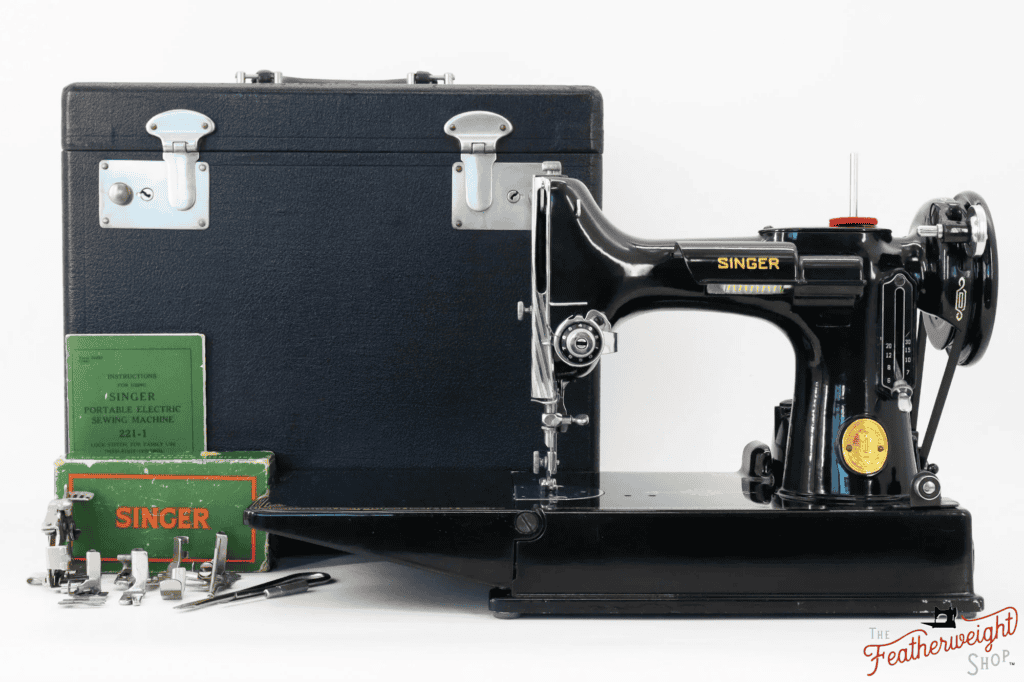
Pieter: I was allowed to take the Singer out of its case, set it up and watched admiringly as Anna mended clothes.
Tineke Sas: Mia was lucky that you didn’t secretly use that machine to restitch her chic wardrobe by André Courrèges and Chanel into new ‘Pieter creations’!”
Pieter: I sometimes pulled the plug of a running washing machine full of Mia’s cold wash and reprogrammed it to 90°”
Anna: That Pieter breaks E V E R Y T H I N G.
TOUCHING: THIS IS ANNA’S PET NAME FOR MR PROPER

Every now and then a little bit of information comes out about the housekeeper that brings a real smile to your face. That is certainly the case when reading this nice bit of trivia about Anna and Mr Proper. Anna appointed him her cleaning product. Her darling follows in the footsteps of the liquid soap D’❤️OR, to which he will officially hand over power from the mid-70s.
“‘the little clean man”
It gives Frie peace to drop in on Anna and Marcel for five minutes after work. When a football match is broadcast, he stays with them all evening cheering along. The children secretly follow the Flemish tragicomic series ‘De Collega’s’ (1978-1981) at Anna and Marcel’s. “My children are not allowed to watch that. Very unhealthy, that milieu…” – Mia Oops, Pieter has spoken out of turn again. A ban follows on watching TV at Anna and Marcel’s.
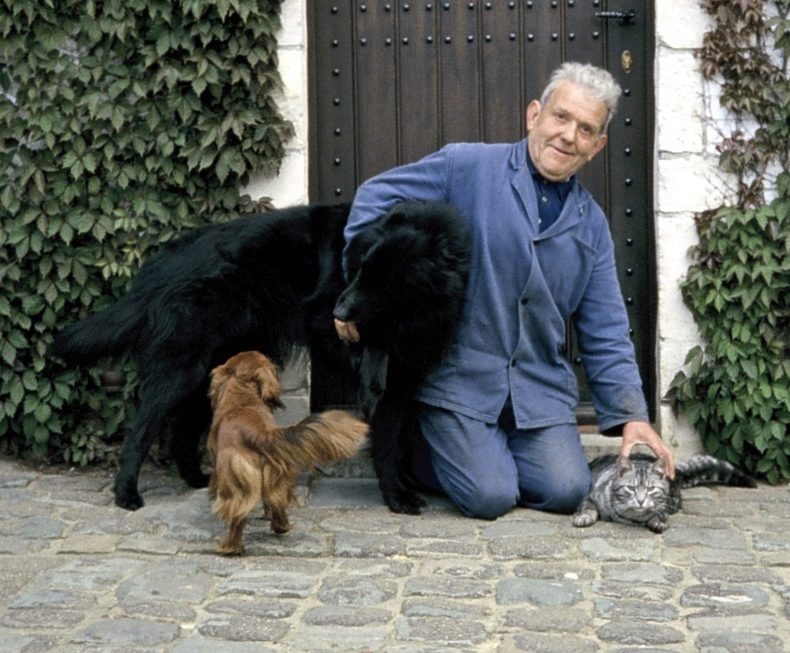
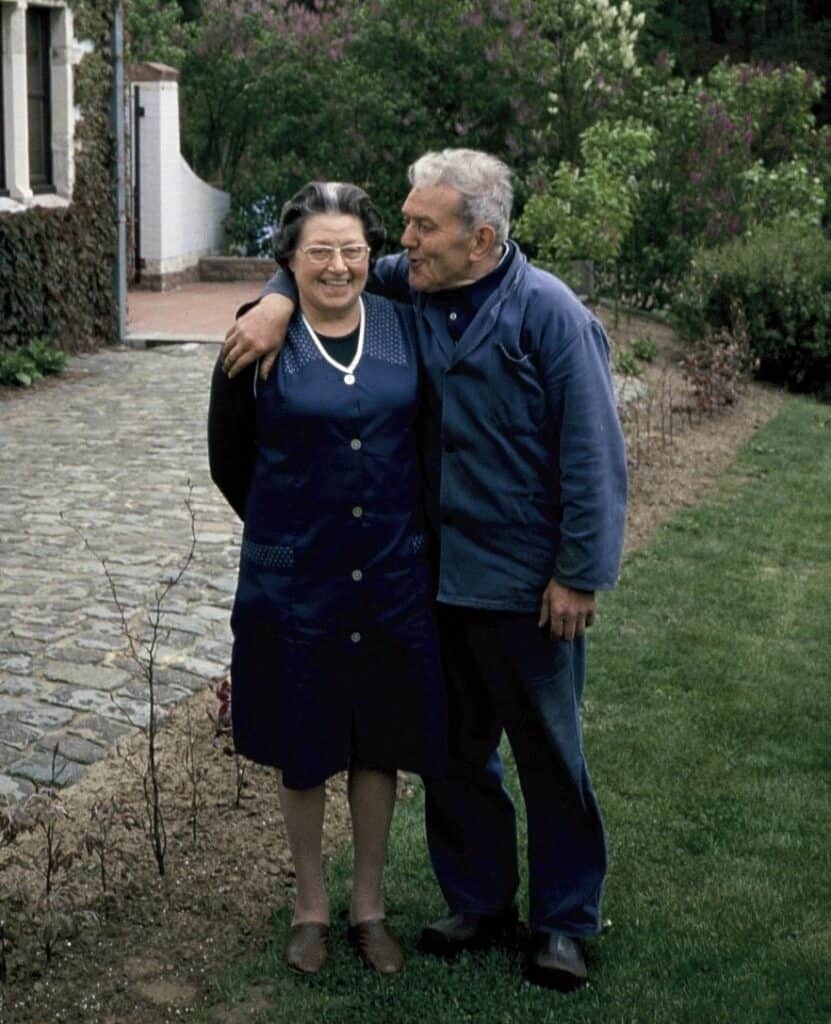
Marcel Verrijt (1924-2010) with the Groenendael ‘Fidèle’, dachshund ‘Nolleke’ and the ‘Minou’
Marcel, originally from Houwaart, gardens (‘works the land’, as they say in dialect) and looks after the animals. He wears wooden clogs.
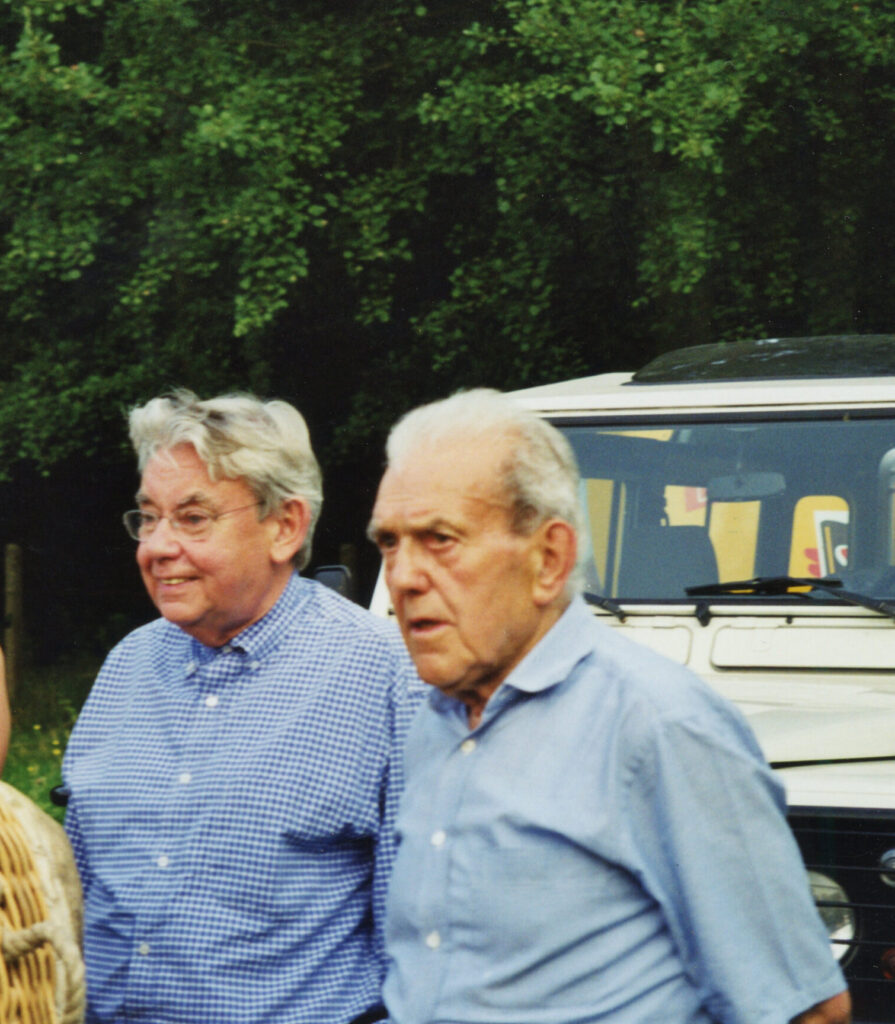
Marcel with moved Godfried who turns 75 today. Ilse arranges a balloon flight. (photo: Wolfsdonk, 14 August 2005)
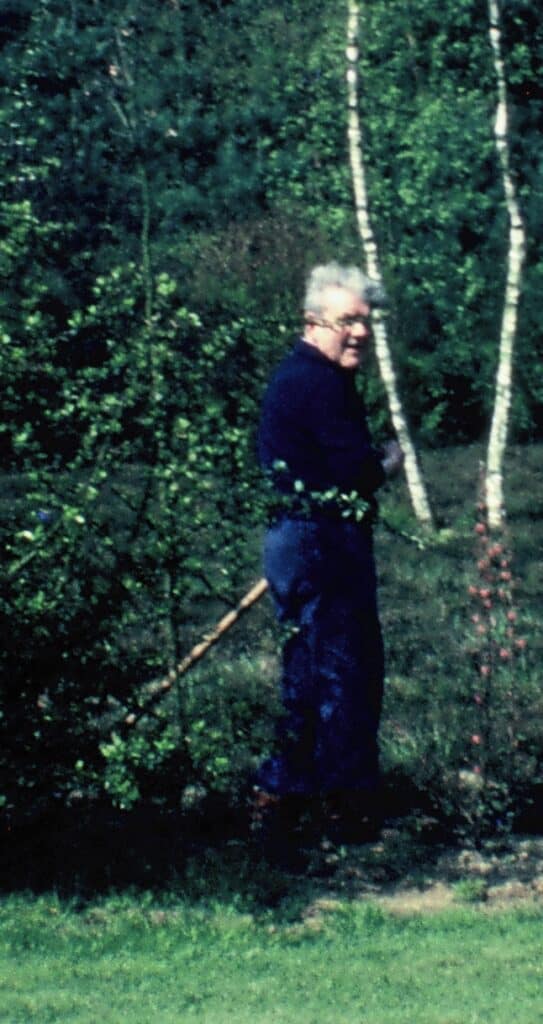
“L’esprit est comme un jardin, si tu n’y plantes pas de fleurs, des mauvaises herbes y poussent.” – Victor Hugo
The working man has funny sayings:
“Labour ennobles, but nobility does not labour.” Celleke, as a young scamp, was summoned by the parish priest for a dressing-down because he had refused to greet old Baron de Troostenbergh, in French at that, and to take off his cap when the latter passed with horse and carriage.
“Think before you begin.” Reflect before taking an initiative.
“Live and let live.” Respect everyone’s way of life.
«I don’t let it put me off my food.» Whatever happens, I think of myself first.
«That one doesn’t have to go to work anymore either.» When someone has died. Frie makes sure there is always a little glass of beer ready for Marcel. ‘E pi-jerreke’ (Horse-Ale), as he calls it.
& Anna repeated:
“Let’s make a start, said the fox to his hen. The cock was the first to go!” (When starting a job.)
“Jesus Mary (silence) Joseph would not have counted.” (When something went wrong.)
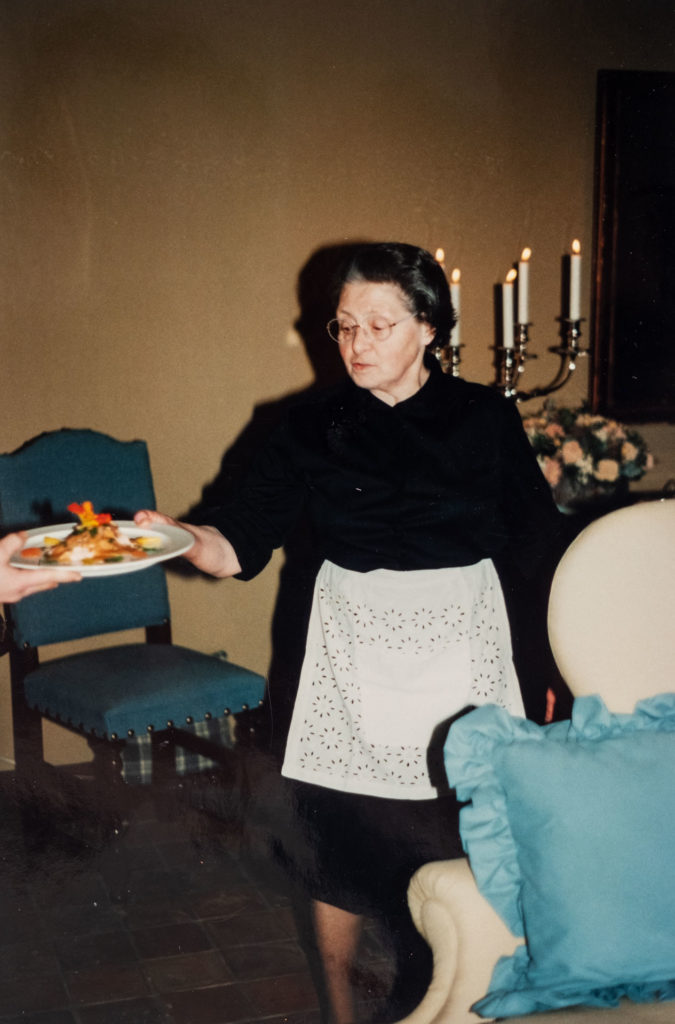
Anna is dignified. Because for thirty-nine years she was a model of professionalism; nothing but respect.
The children are asked to give Anna a hand. It happens that guests discreetly leave an envelope with a tip for Anna under their place card.
Anna judges the guests on their knowledge of etiquette. How is it actually done, Anna?
Guests do not bring flowers themselves. The florist must deliver the bouquet in advance.
The cutlery is laid face down. This ensures that the monogram can be seen. Only in restaurants is the table ‘laid face up’. The dessert spoon and fork always lie above the plate.
Sit up straight and your back must never touch the back of the chair.
The napkin is unfolded, but not completely; it stays on the knees as a long, narrow, triple-folded strip.
One should not say ‘Enjoy your meal’. Whoever expresses the wish that the cook’s food will taste good seems to doubt it.
Under no circumstances does one ever bring the knife to the mouth.
To Mia’s great delight: Anna carefully observes all the guests. With her dry humour she afterwards reports with glee on who was not master of the protocol at Steenheuvels.
Toe-curling tensions between Anna, Mia and Pieter. (around 1984)
P: Anna! Anna!! Annaa!!!
A: Yes, Pieter.
P: Where is mummy?
A: She’s in Brussels again.
P: What is she doing there?
A: Planting potatoes! Now she’s talking again about putting an arbour in the garden. There’s work enough as it is. On Monday Mon is coming to break up the concrete. And the notary, he knows nothing again. If it could all stay as it is, that would be fine too! The day will come when we are no longer here. Because has she ever peeled a potato herself? Has she ever put her hands in a wash tub herself? I don’t think so. The dog is barking. A car is coming. There she is, madam.
M: Ohh, what lovely weather today! If it stays like this, I can have the aperitif for my dinner on Saturday outside!
A: They are forecasting rain, though. And frost tonight. Then all her flowers will be ruined...
The fairy tale of a real queen
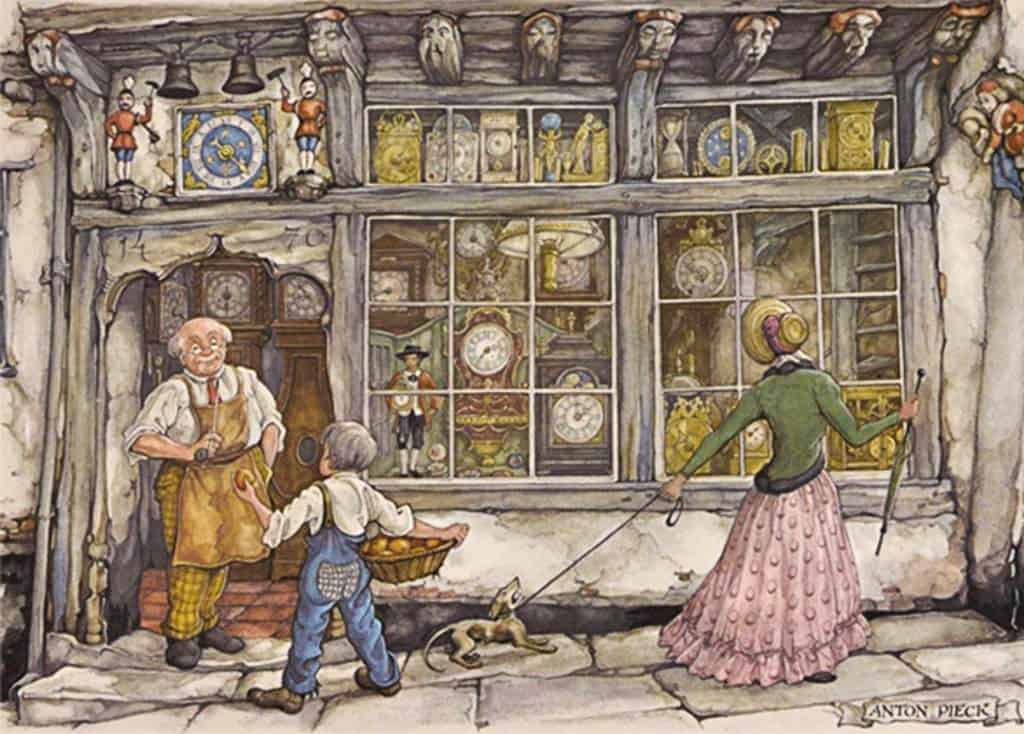
Anna is an admirer of the scenes of the Dutch painter Anton Pieck (1895-1987). Several of his romantic drawings adorn her interior. At Christmas Pieter sends Anna and Marcel a card from the nostalgically idealised past.
One of the most beautiful fairy tales in the Efteling’s Fairytale Forest has a particularly royal origin. The story of The Indian Water Lilies was in fact devised and written by none other than the Belgian queen Fabiola (1928-2014). In 1966 the fairy tale came to life in the Fairytale Forest. In the Anton Pieck Museum various original design drawings by Anton Pieck for this enchanting attraction can be admired.
The fairy tale
In the story an evil witch is jealous of the seven daughters of the star queen. These little princesses dance at night in the moonlight and radiate a light, fairy-tale beauty. Out of jealousy the witch lures the girls to earth and enchants them. She changes the little princesses into white water lilies, which may only bloom when the moon shines. By day they must remain closed.
Thus the water lilies become a symbol of beauty and of loss, for the little princesses can never again dance freely under the starry sky.
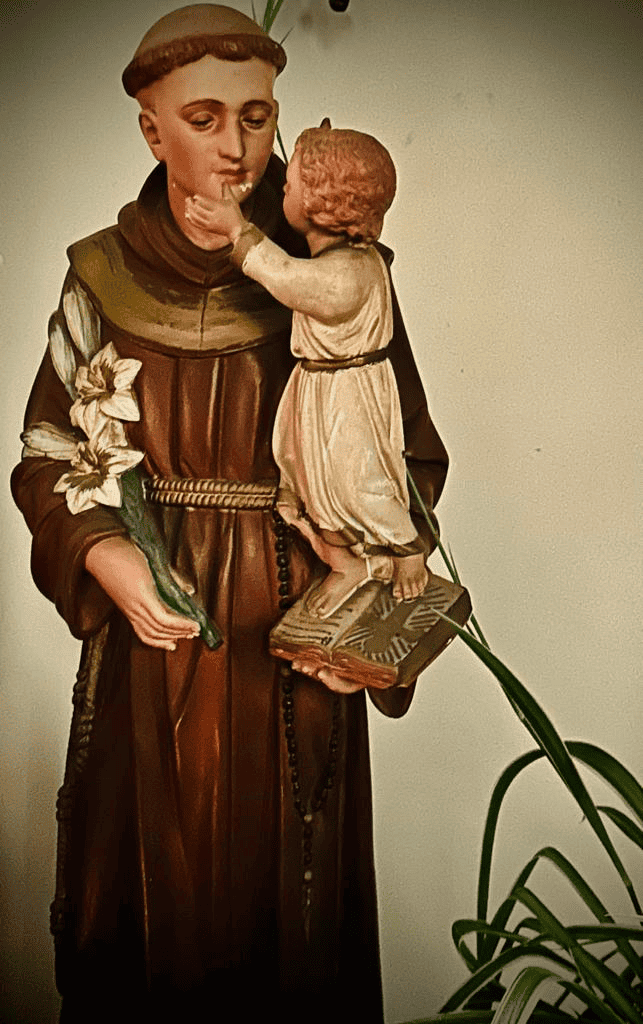
This patron saint stands for hopeless and lost causes, and also helps in finding a job. The white lily is the symbol of chastity. This statue of Saint Anthony once ended up in the Demer but was fished out at ‘s Hertogenmolens. The statuette of the preacher now adorns the Sint-Lambertuskerk in Nieuwrode, where Anna was baptised, made her communions and married Marcel.
As a child Anna had to work hard. Once a fireball flew into her bedroom at night “and it bounced from one wall to the other and then went back out through the window. Luckily I stayed lying under the blankets,” Anna tells. Another time at night the whole roof of the house flew off with the wind. Anna went to help the little nuns of Sancta Maria make communion hosts. Her sister Gusta once pushed a drawing pin into the wall and “the pin went through the head of the drawing pin and stuck in my thumb”. Anna then had to pull the pin out. And the neighbour could not get his wedding ring off any more and he pulled so hard on the ring that “the skin of his finger came off with it”. Pieter gets a kick out of those anecdotes but Mia asks to stop telling such dreadful stories.
Will you help?
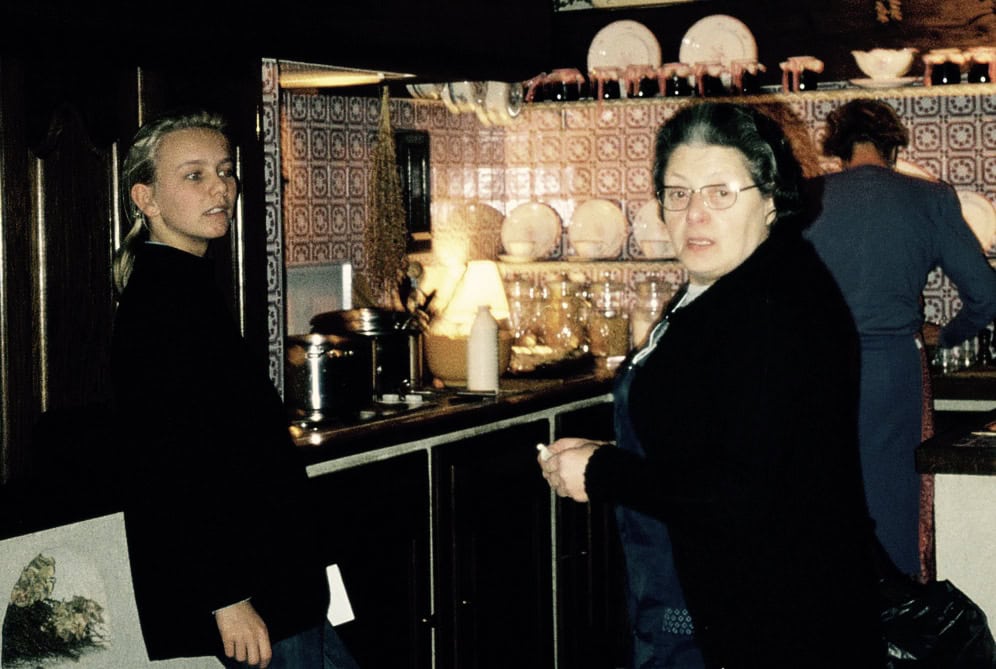
Ilse watches Mia and Anna making jam together for Godfried. Note on the rack the jam jars with handmade fabric covers. “I’ve got a cold coming on, though.” – Anna
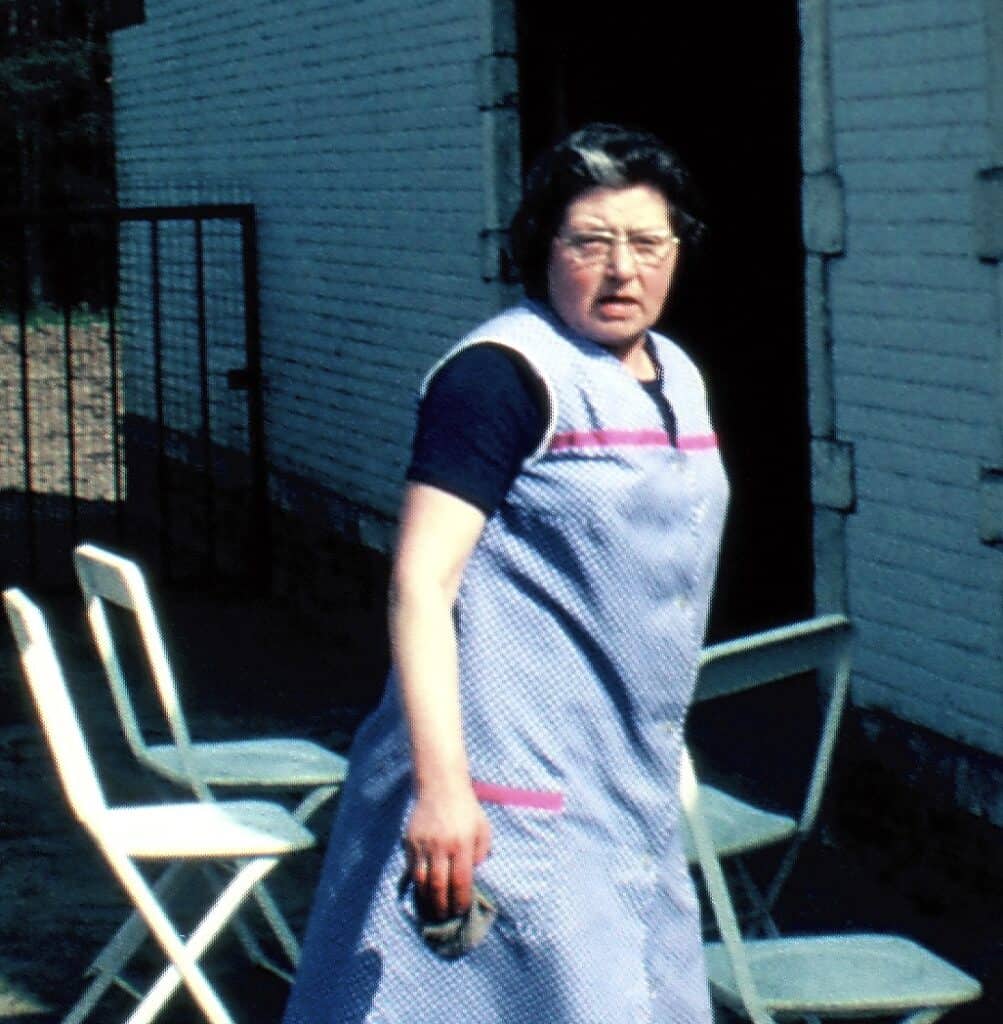
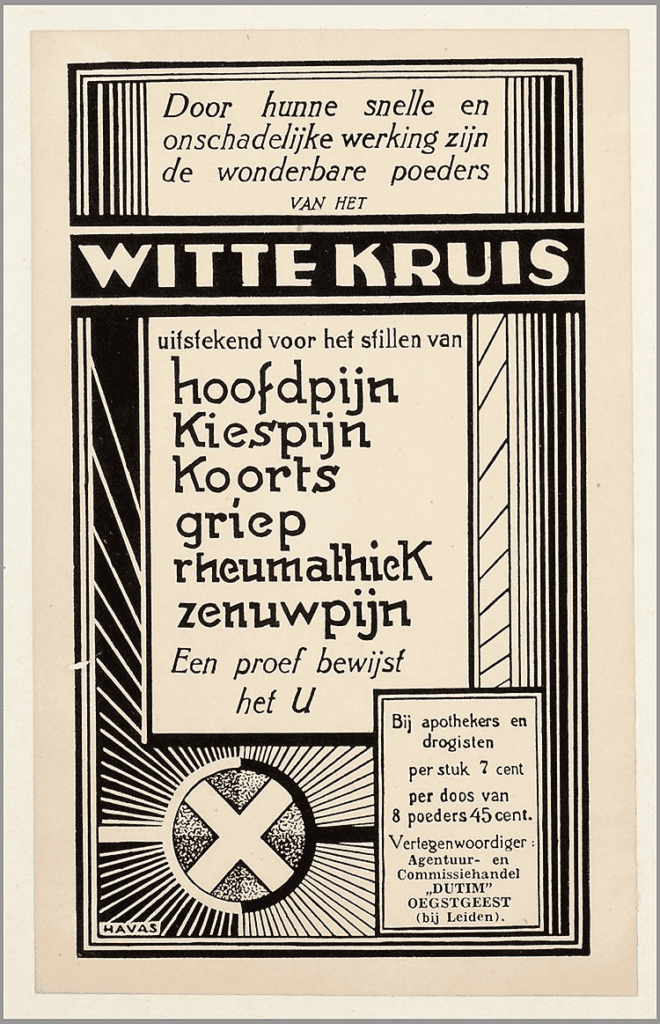
Anna swallows a whole mountain of White Cross powders. Popular with workers to be able to perform long and monotonous work. The addictive effect and the harmful side effects were only discovered gradually. “When that Pieter plays the piano, the powders are no match for the headache. Could he stop for once? Then it would sound much nicer.” – Anna
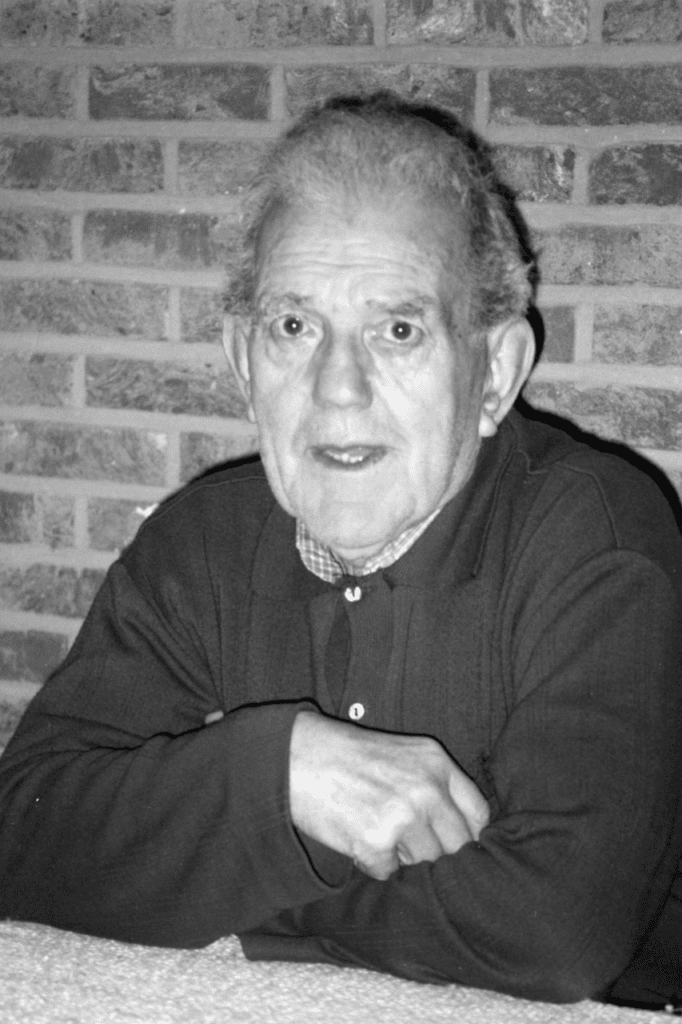
Portrait of an “authentic person” Marcel Verrijt
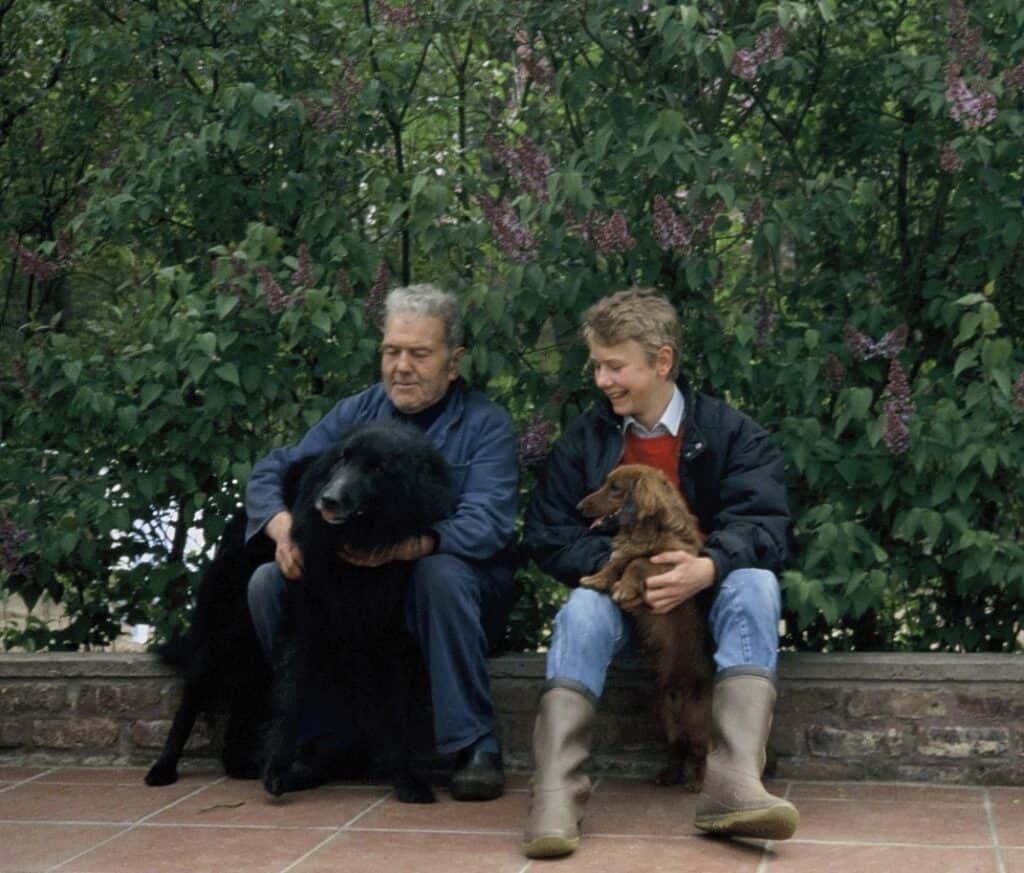
Marcel and Gert with Fidèle and Nolleke
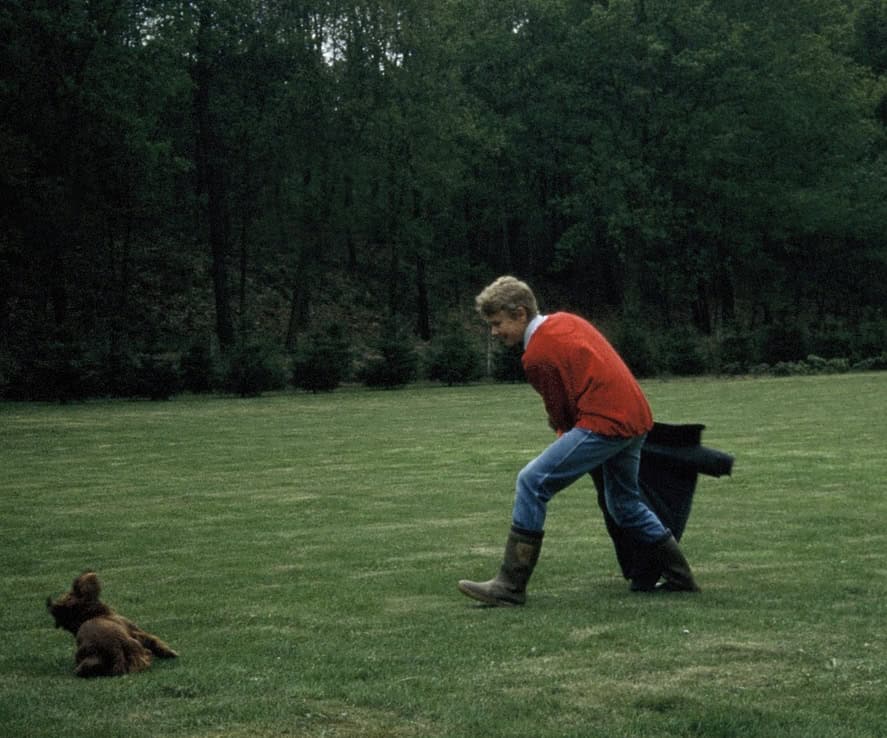
Gert
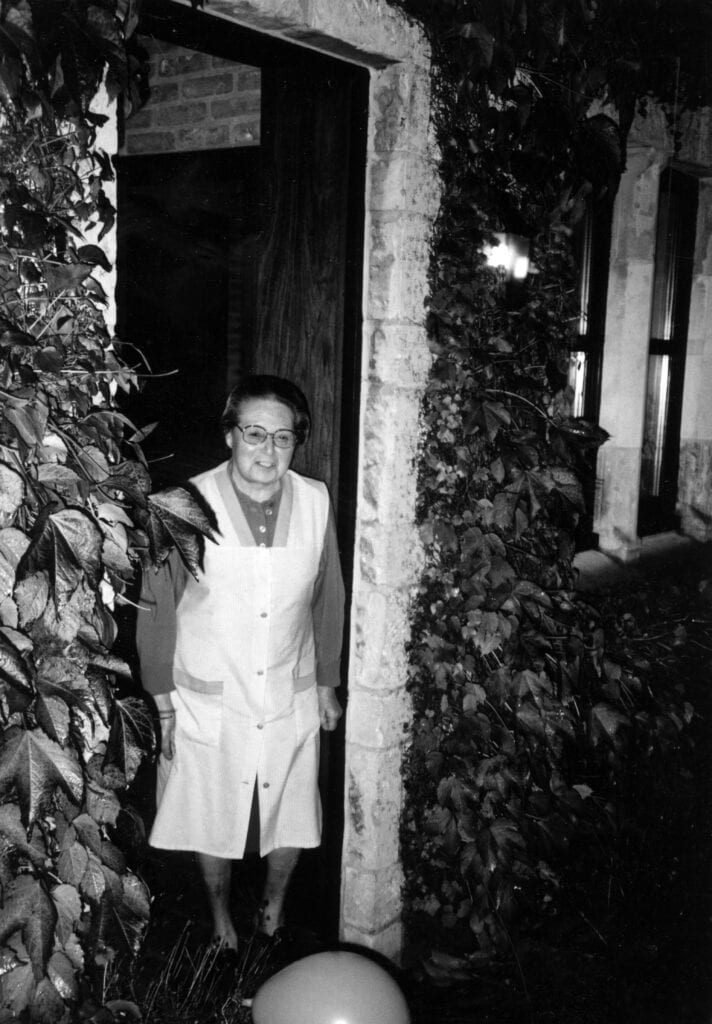
Anna Verrijt Van Hoovels
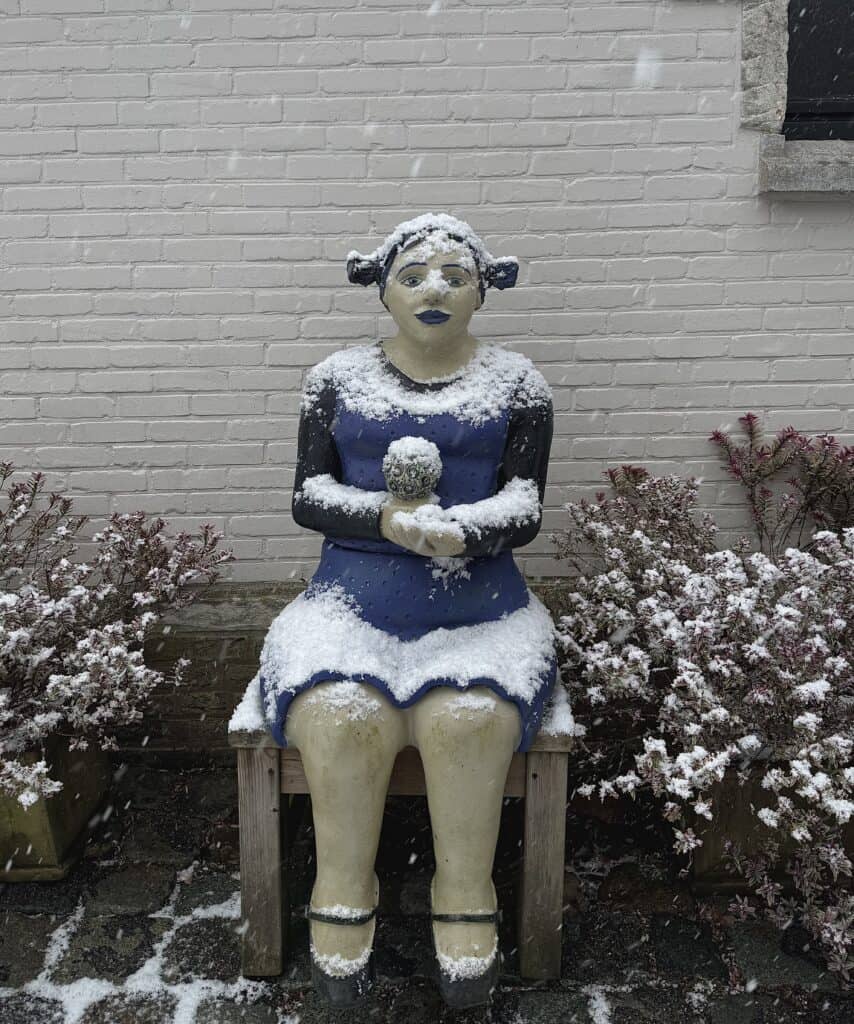
This simple statue of Anna stands close to the entrance of the house where she lived. It shows Anna in her blue overall and was designed by a Dutch artist. “Il y a quelque chose de plus fort que la mort, c’est la présence des absents, dans la mémoire des vivants.” – Jean d’Ormesson
On the death of Sterre
Do I dream, and is it night, or has my Star vanished?
I am awake, and it is broad day, and I do not see my Sterre.
O Heavens, who forbid me her countenance,
Speak human language, and say, where has my Sterre gone?
Heaven resounds, I hear it through my moaning,
And says, my Sterre stands in the holy realm
Where she beholds the Godhead, where the Godhead beholds her,
And, if laughter joins in there, laughs at my vain weeping.
Now Death, now sob, no sooner appeared than gone,
Now, passage of a stone, of a gemstone into life,
Thin partition, stand near; I shall gratefully forgive you;
Come, Death, and free me soonest from these fevers:
I long to see floating together in the eternal light
My Salvation, my Love, my body, my God, my Star, and me.
Sterre – Suzanna van Baerle (died 1637)
1638) Author: Constantijn Huygens
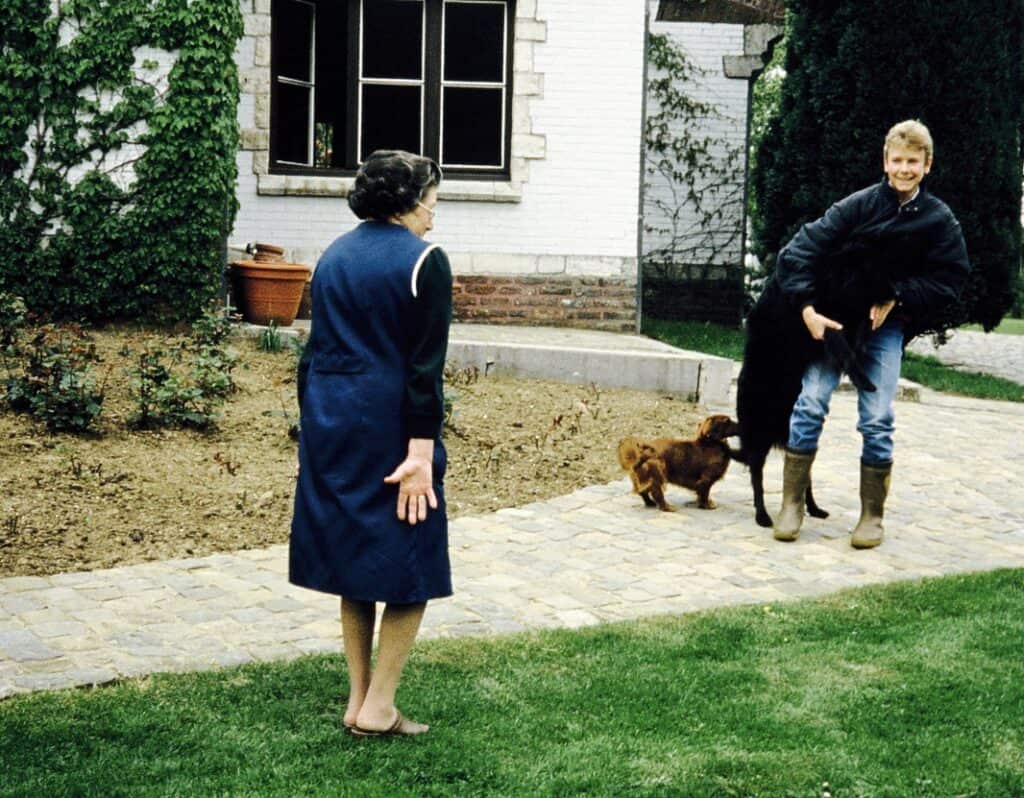
Anna and Gert with Fidèle and Nolleke