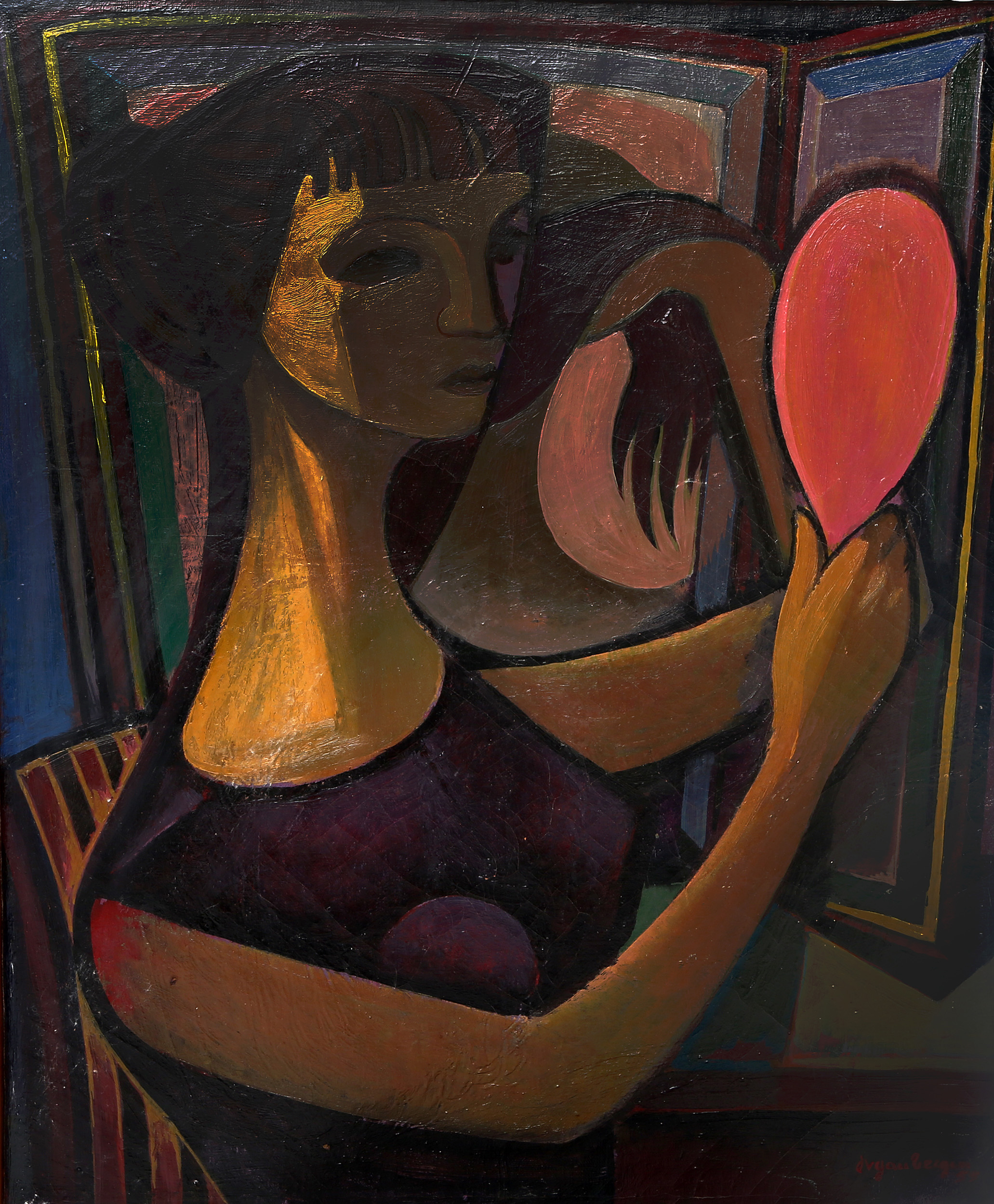
55 x 45 cm (1955)
Woman with a mirror
oil on canvas
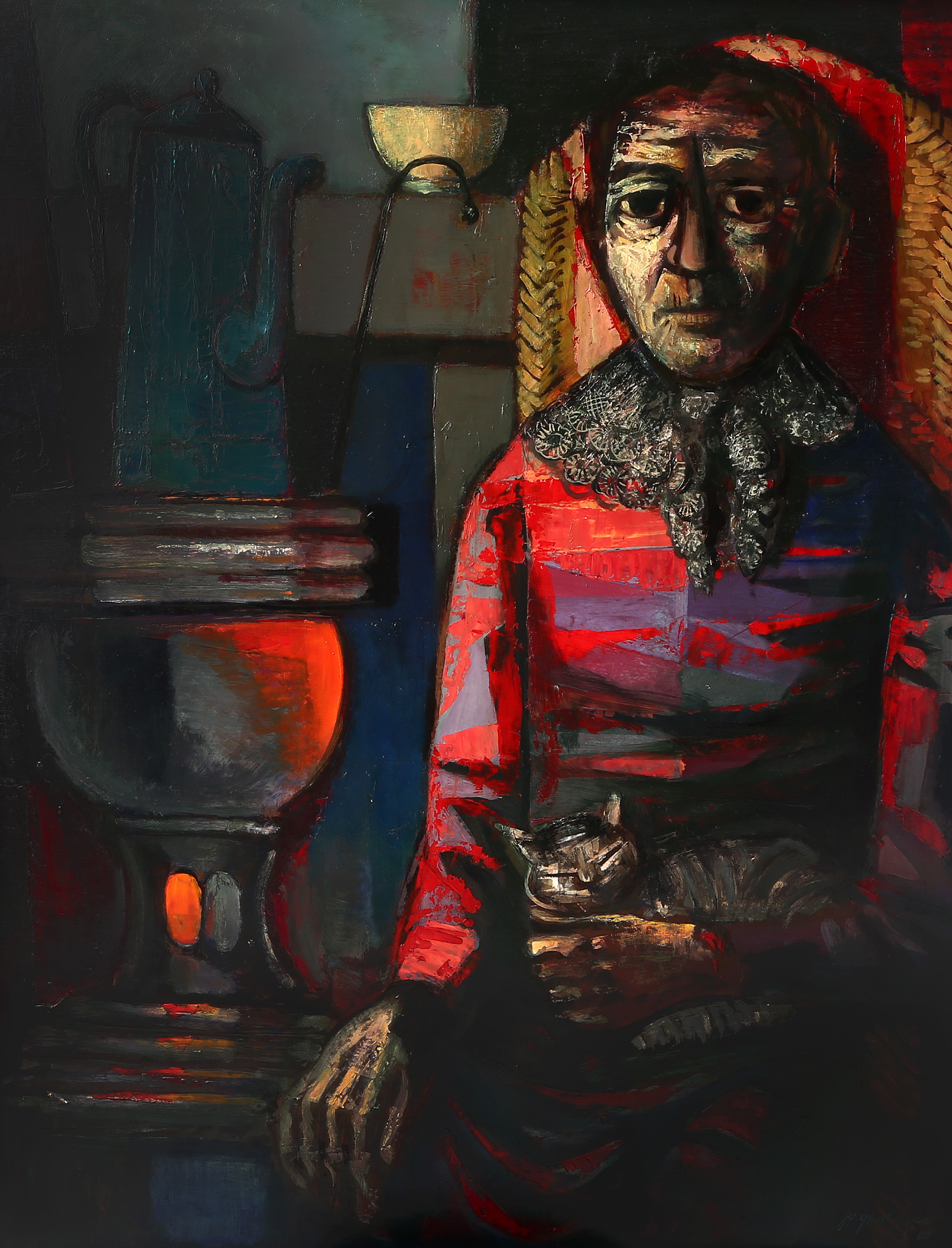
100 x 80 cm
grandma with cat
oil on canvas
This painting was made in the 1950s. It hung for years in the quarters of the Picpus fathers in the monastery buildings of the Damiaaninstituut in Aarschot. When the last fathers left the Damiaaninstituut in 2017, this painting was rediscovered. The management of the Damiaaninstituut (Mrs Myriam Borremans) decided to return the painting to the family of Juliaan Van Gaubergen via his granddaughter, Karolien Van Gronsveld, who is a teacher at the Damiaaninstituut.
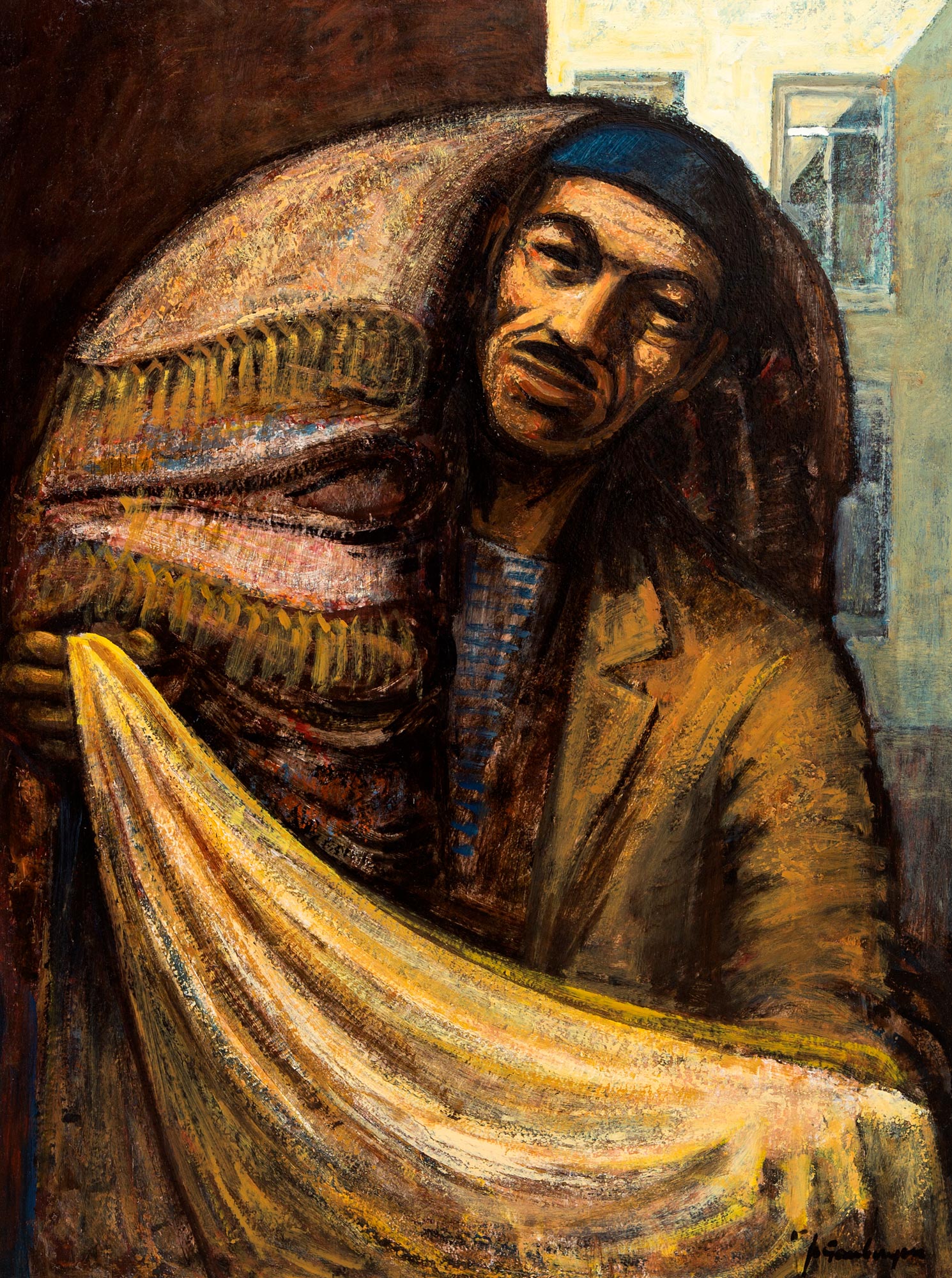
80 x 60 cm
The carpet seller
oil on panel
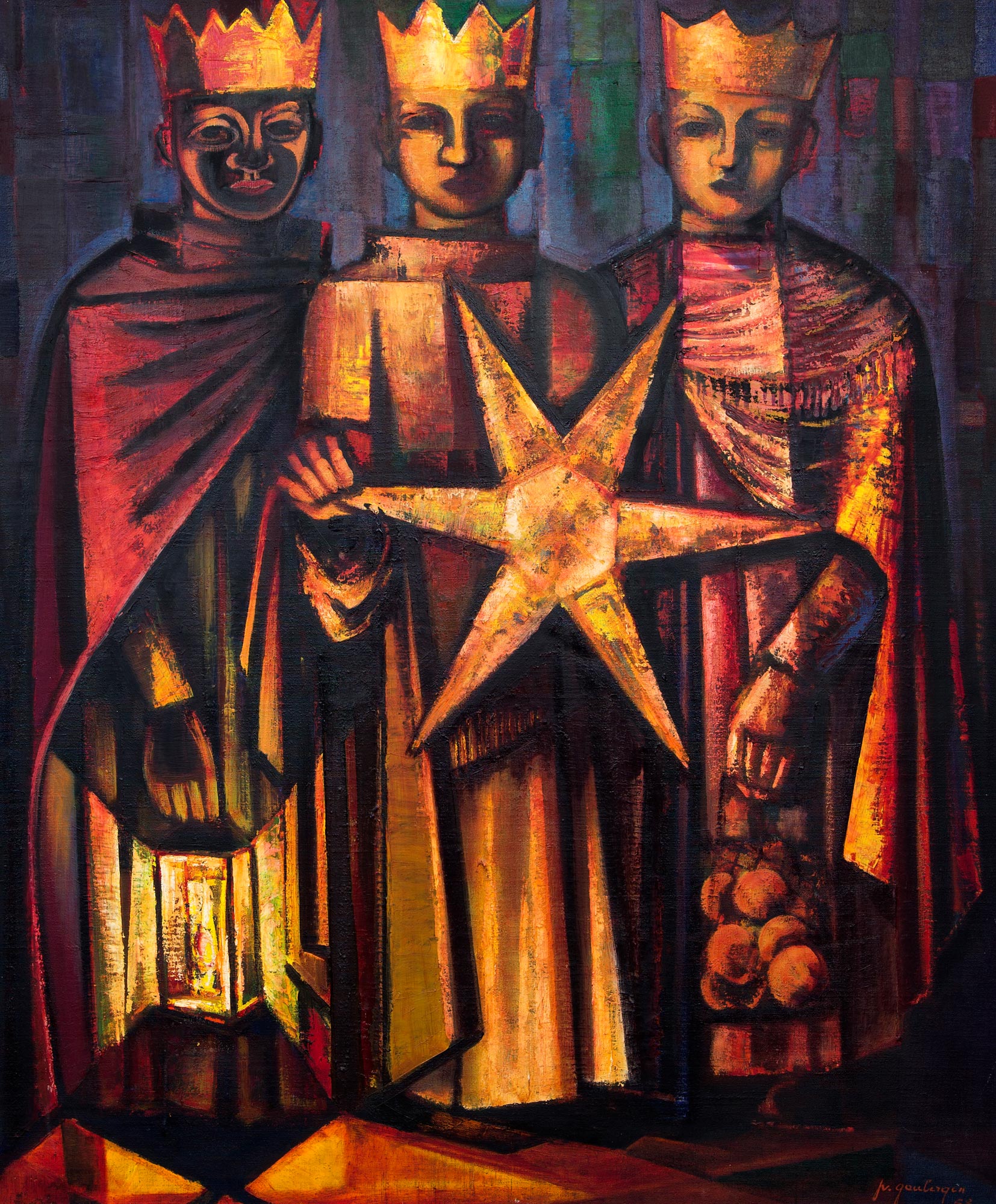
120 x 100 cm
The three kings
oil on canvas
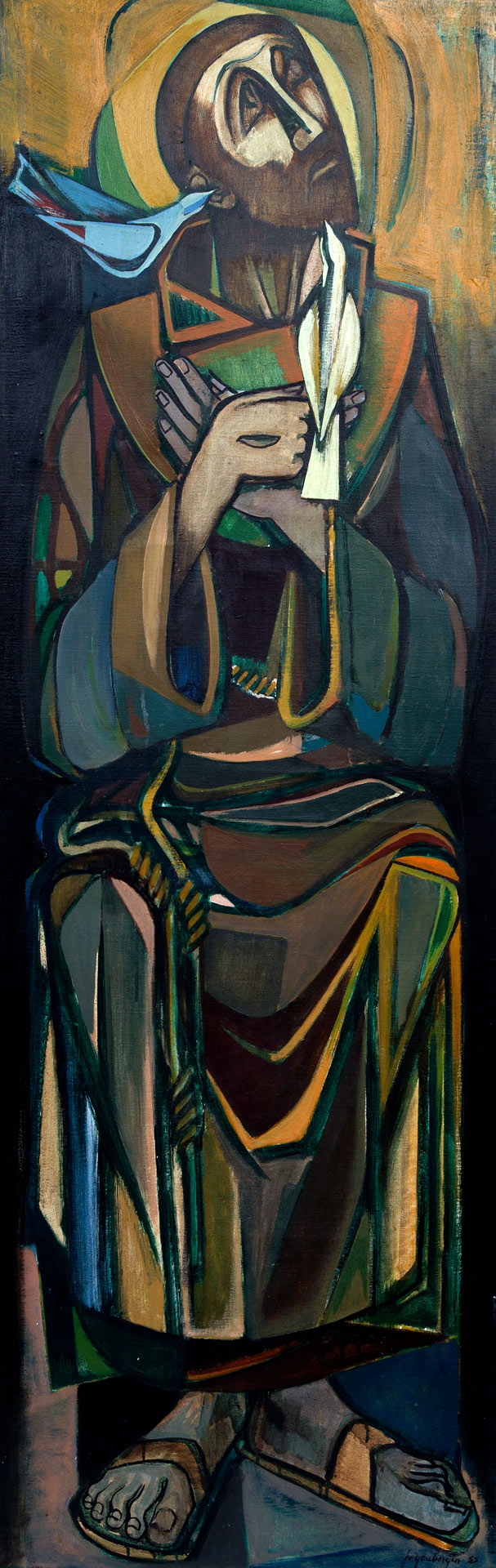
150 x 50 cm
Saint Francis
oil on panel
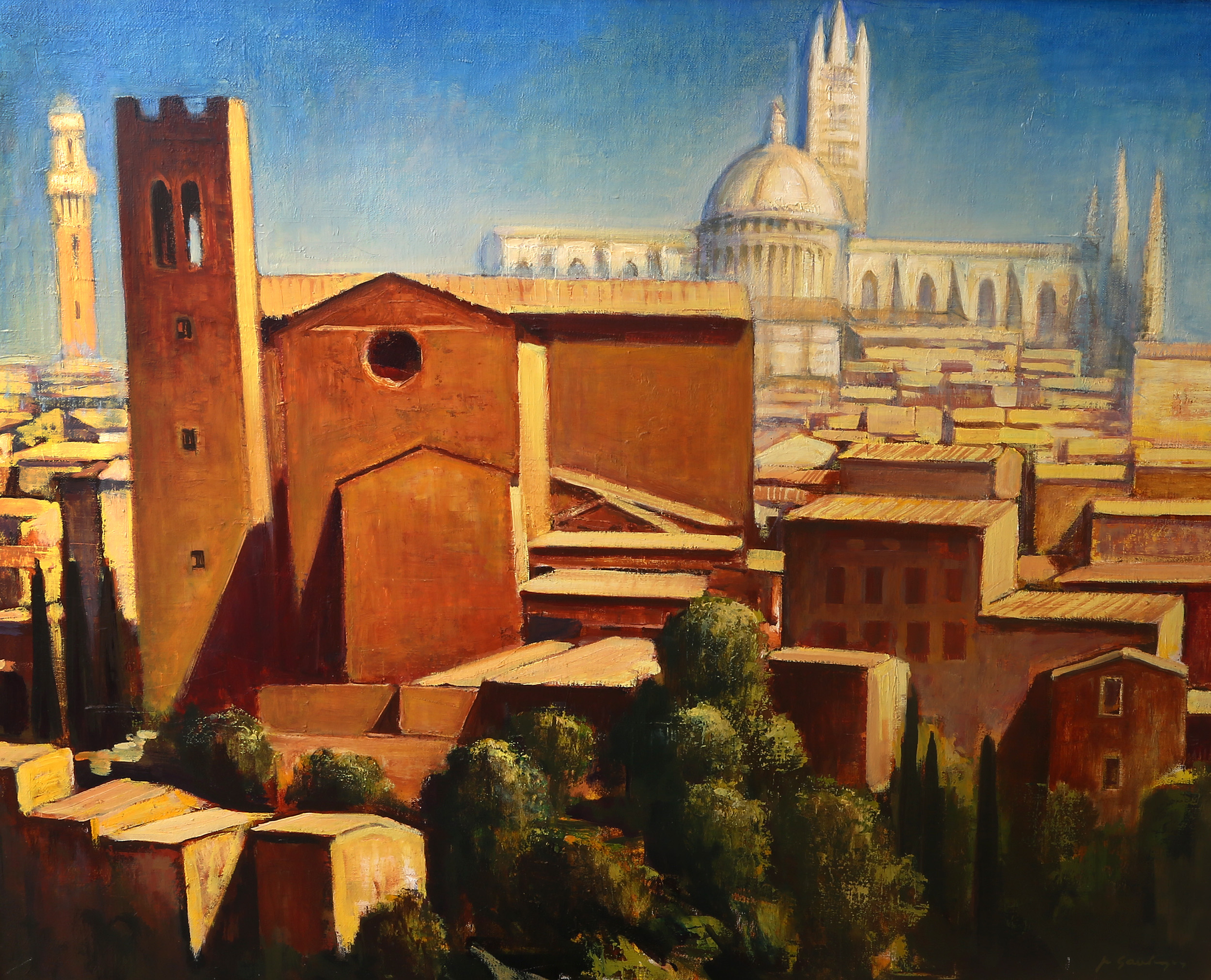
80 x 100 cm
Siena (1964)
oil on panel
Long before cycling in Tuscany became a craze, the painter undertook a study trip to Italy in 1964, visiting the country from the west coast to the east coast (from Massa Maritima, Volterra, San Gimignano, Siena, Perugia, Gubbio, Urbino to San Marino) …. by bicycle, and afterwards painted a few Tuscan landscapes. Although he was overwhelmed by the Italian landscape and the paintings of the Italian masters, the Hageland landscape continued to intrigue him.
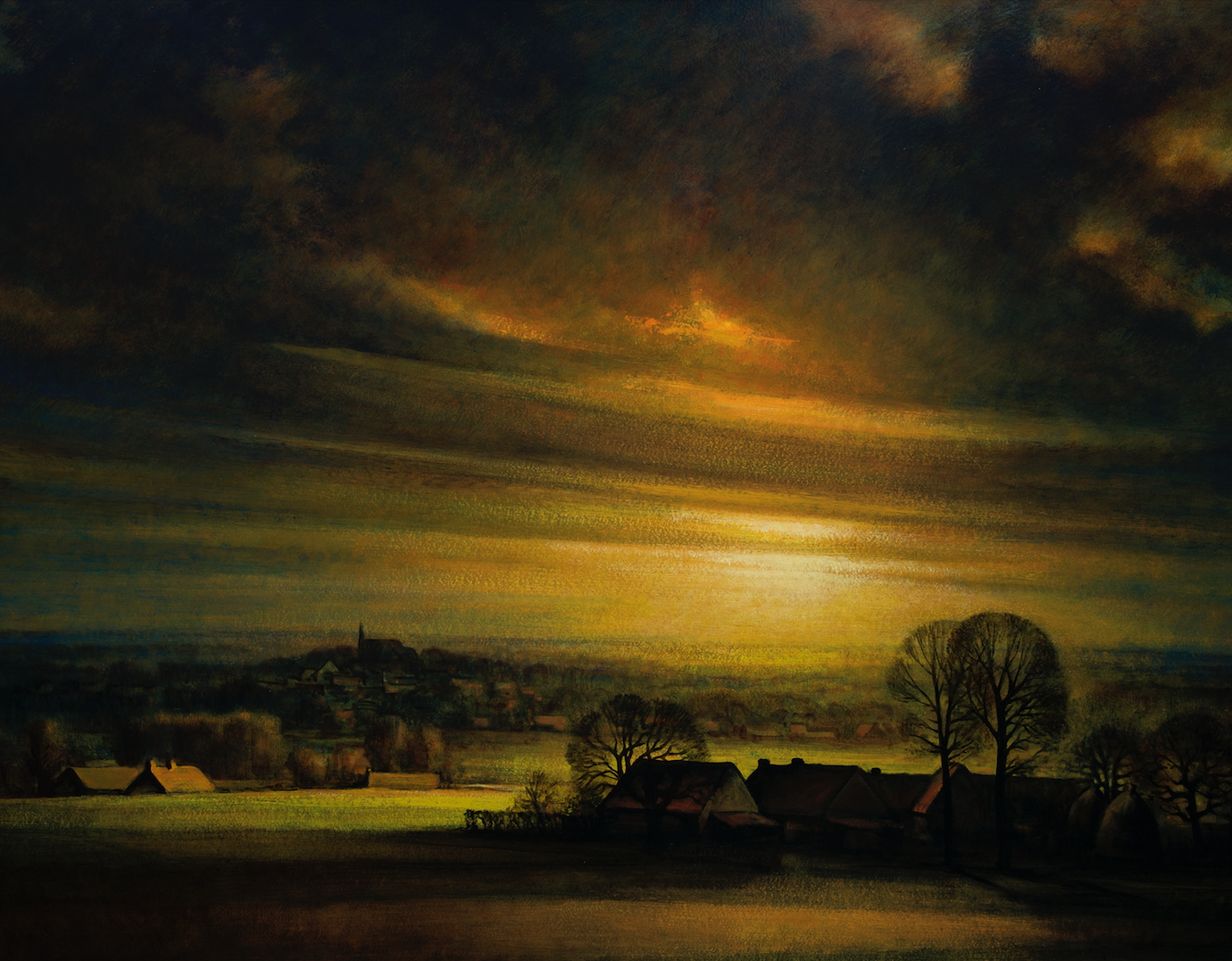
100 x 120 cm
Hageland
oil on panel
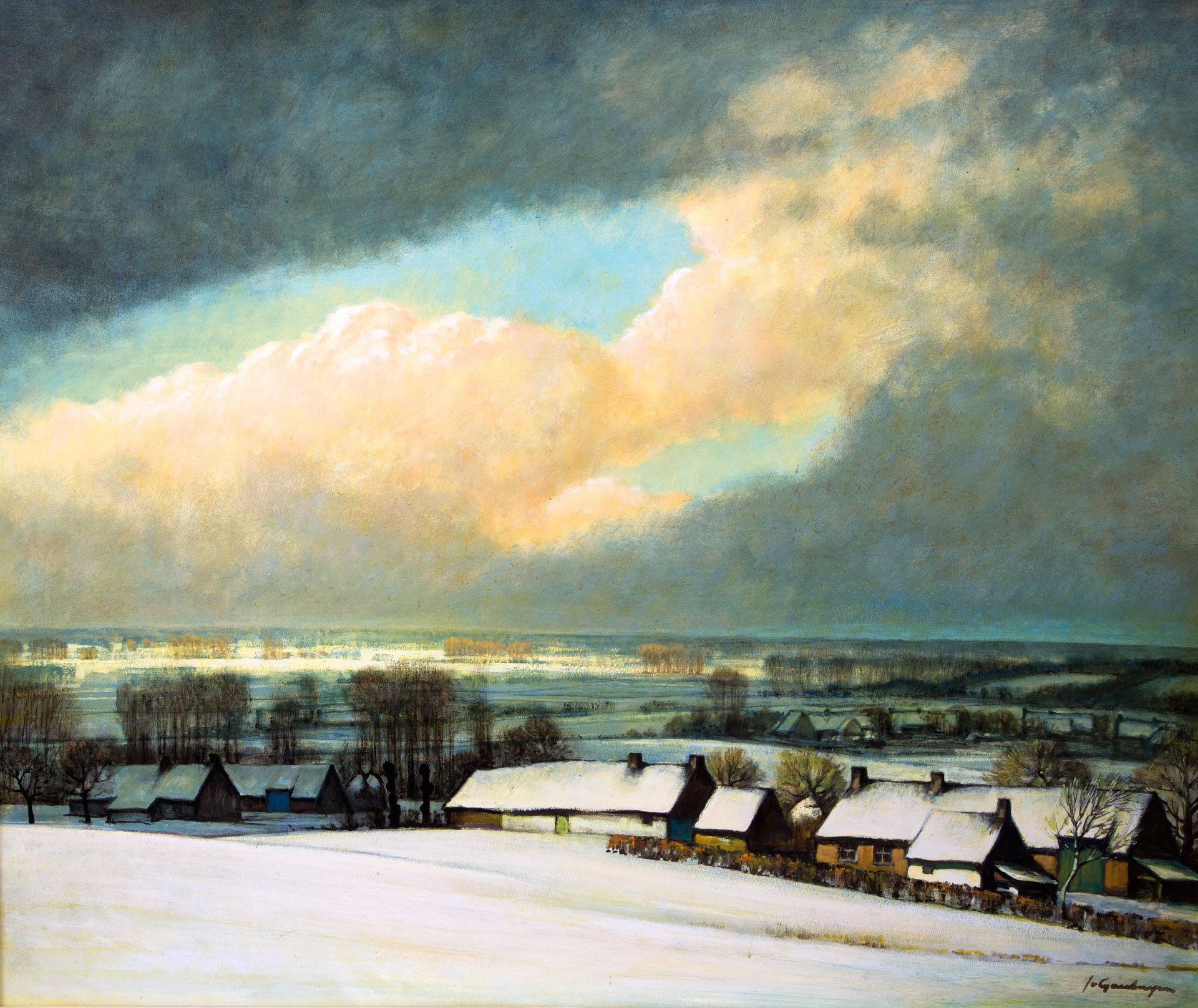
100 x 120 cm
Langdorp
oil on panel
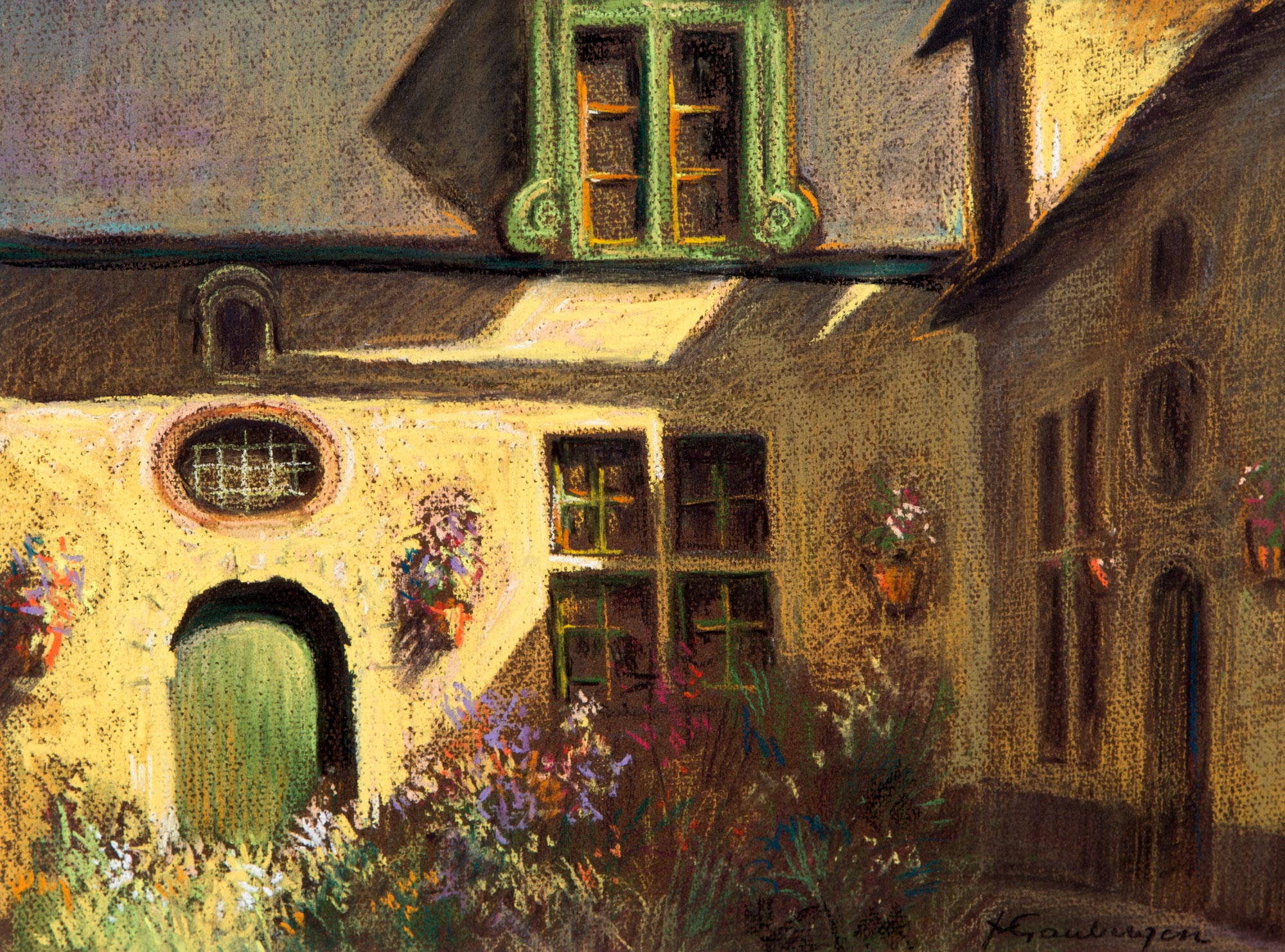
30 x 40 cm
Beguinage Aarschot
pastel
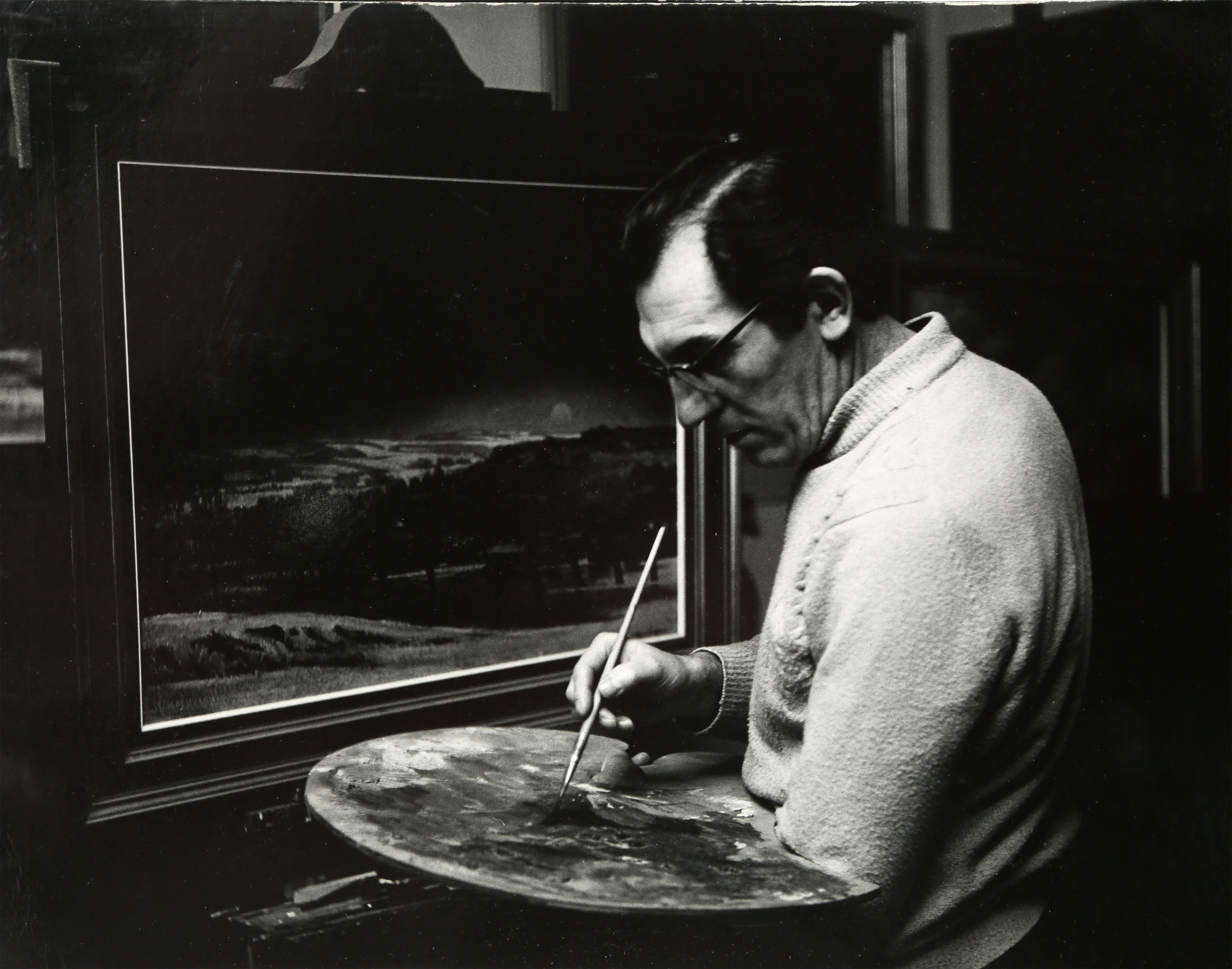
Juliaan Van Gaubergen
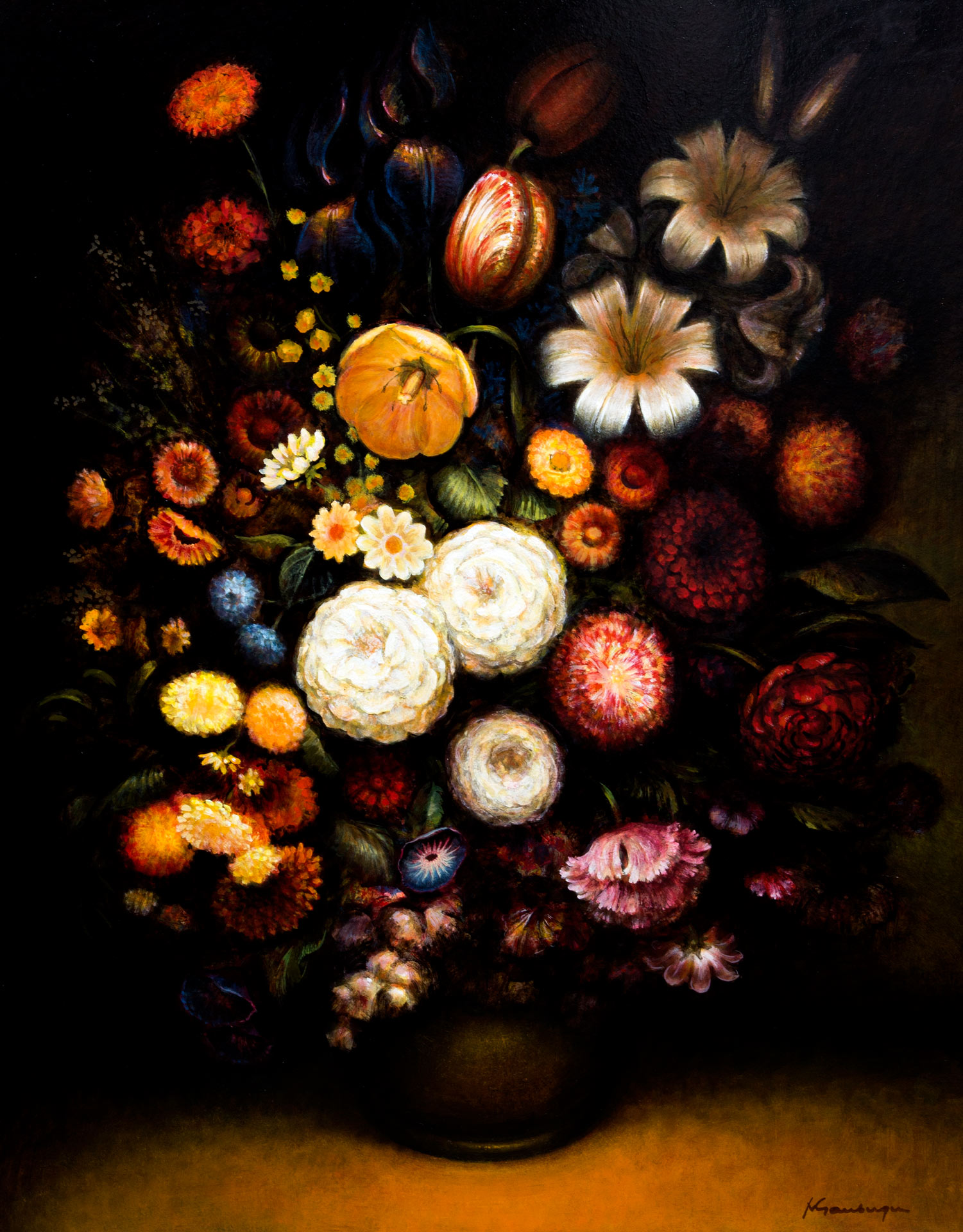
100 x 80 cm
Still life with flowers
oil on canvas
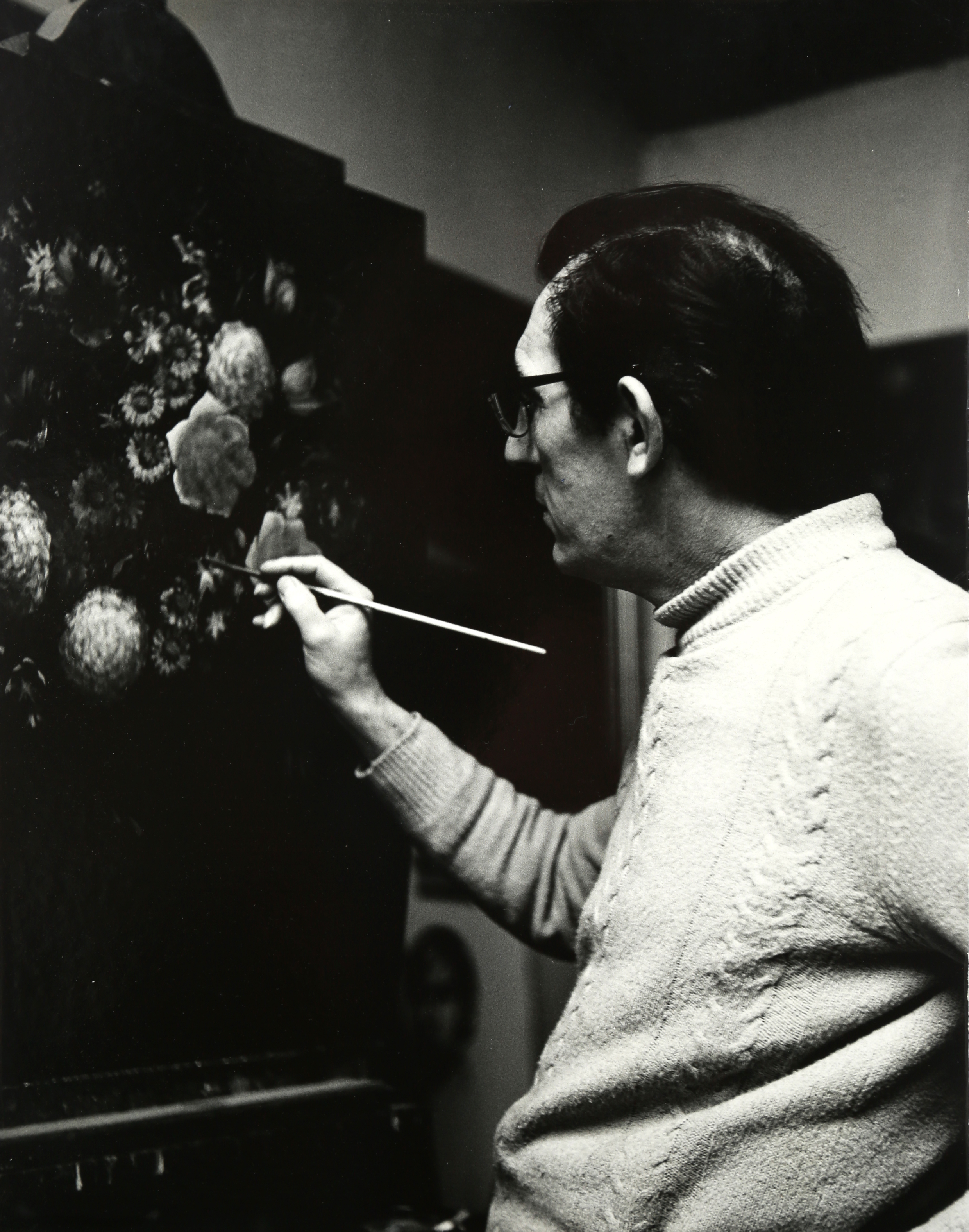
Juliaan Van Gaubergen
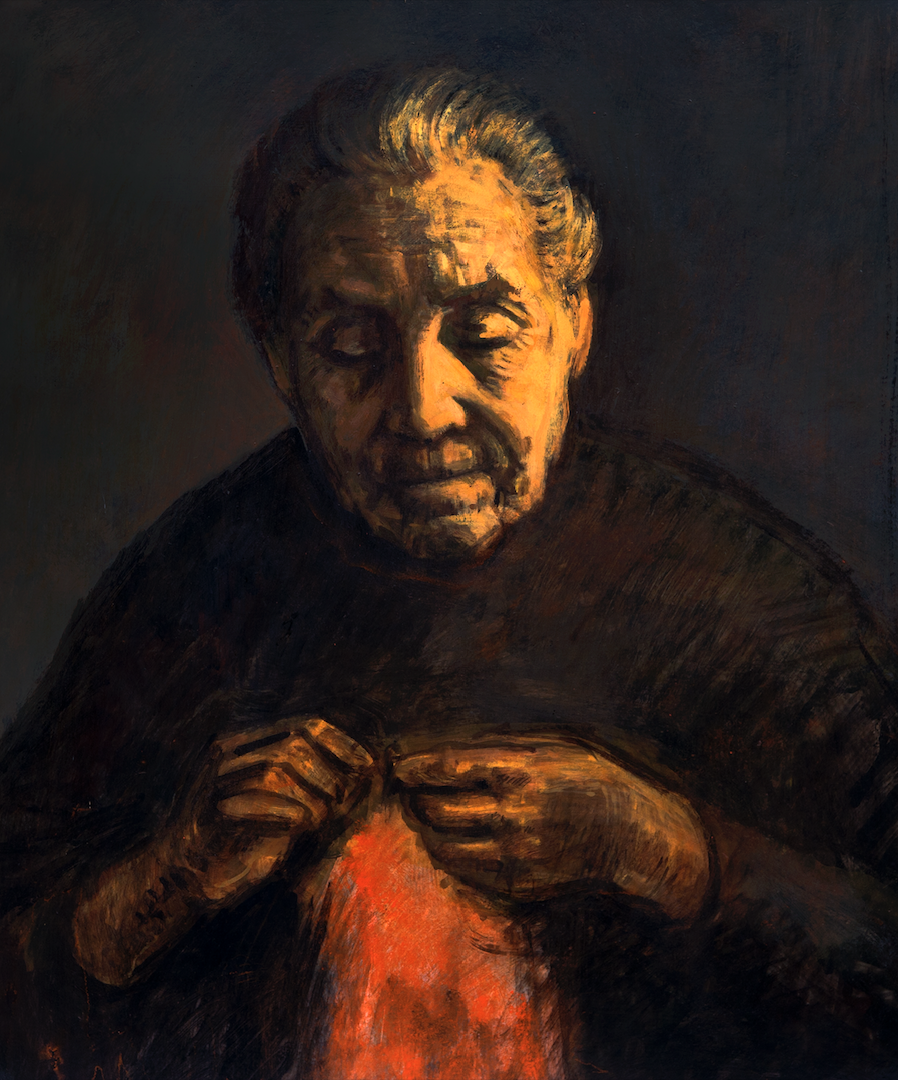
62 x 52 cm
Maria Van den Broeck Hermans (1878-1981)
oil on panel
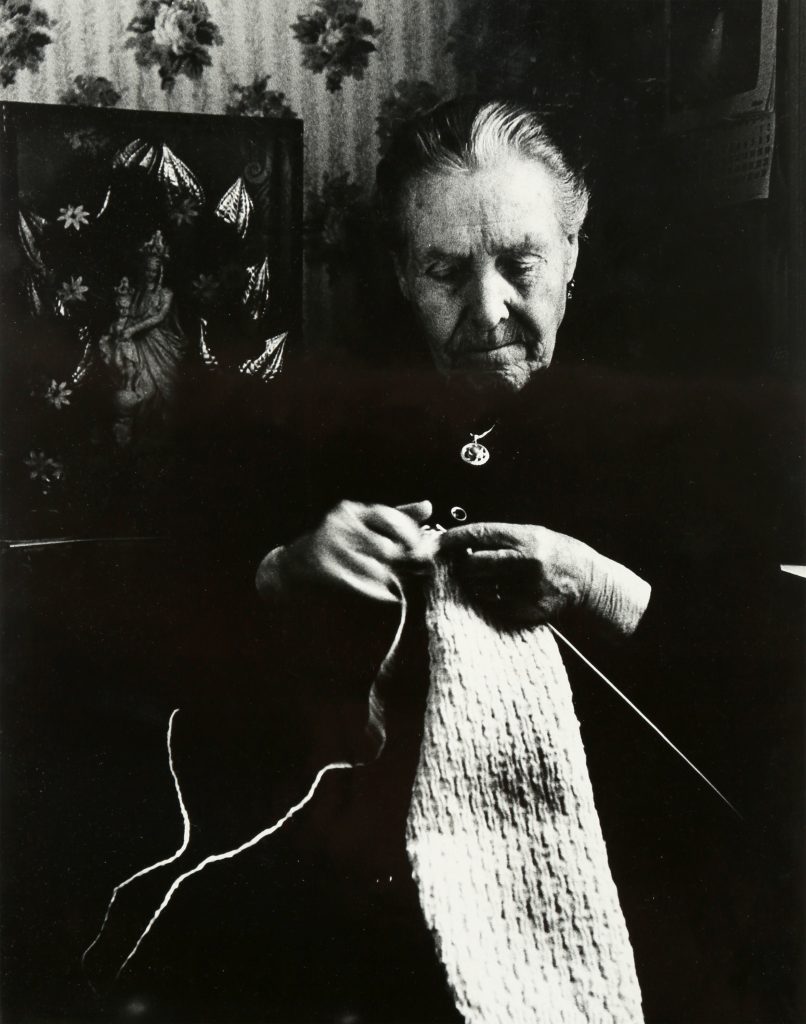
Maria Hermans (1878-1981) photo: Paul Haepers
Inspiration for the portrait:
There is actually no relationship between Juliaan and Marie. My dad’s hobby, photography, led Juliaan to paint portraits. My dad photographed quite a few people; (there is a whole collection of me, Jan and mum, because we were often ‘victims’ of his experiments). They were black-and-white photos that he developed himself. So there was also a portrait of ‘our pijt’. She lived in a back house with her daughter, Rosa Van den Broeck.
Pijt is thus my great-grandmother; she was always dressed in dark clothes, in rude health, lived like a lord, completely carefree and very simple. She had no fixed mealtimes, ate only when she was hungry. Whether that was healthy food? I doubt it by today’s standards! Her breakfast was often a ‘drop with sugar lumps’, a fried piece of pork with a great deal of gravy, … and from time to time an Aarschotse Bruine or a Trappist.
Anecdote: she loved playing cards, she went playing cards almost daily in Meetshovenbos and of course a good beer went with that. One morning she was standing with my dad in the butcher’s shop of uncle Jos and aunt Lina (our dad’s sister and brother-in-law) and said she did not feel so well. My dad asked what was wrong and this was the answer: ‘Yesterday I went to play cards and drank 6 Trappists!’ My dad’s answer: ‘I understand, I would not feel so well the next day either!’ People laughed about that very often afterwards, but that was pijt to a T.
There was once an article in a newspaper, by a journalist. At the age of 96 she was hitchhiking because her bicycle had given up, and he had picked her up. She then told her life story, but I do not have that article. I will ask around in the family to see whether anyone still has it.
She dressed functionally: no fashionable fuss with her. As small children we had great fun when we saw the washing hanging outside!!
Nicole Haepers – great-granddaughter of Marie and niece of Juliaan Van Gaubergen
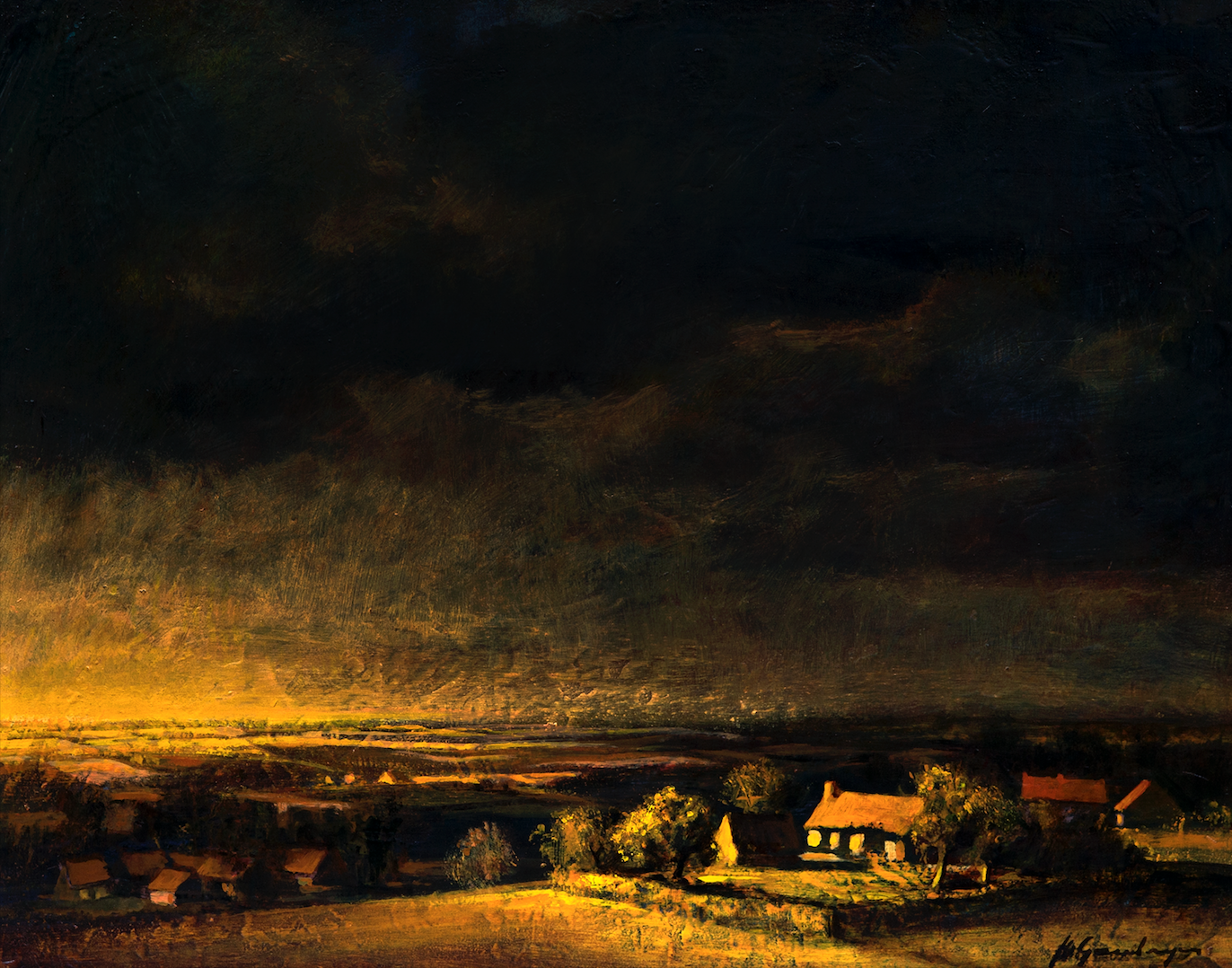
43 x 54 cm
Hageland
oil on panel
The Hageland is a natural region in eastern Brabant known for its hilly landscapes.
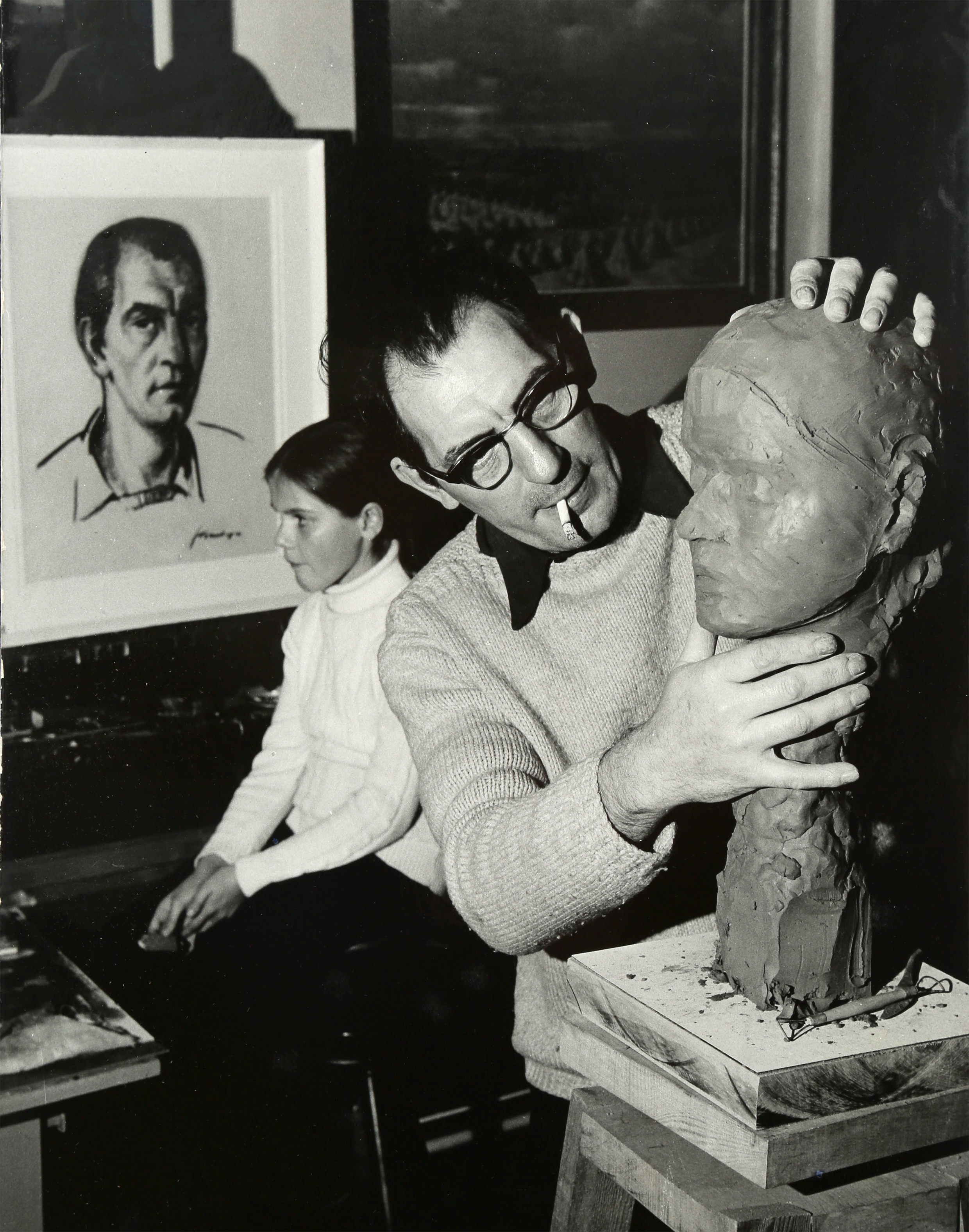
Van Gaubergen modelled the head of Nicole Haepers on the occasion of her Solemn Communion.
.
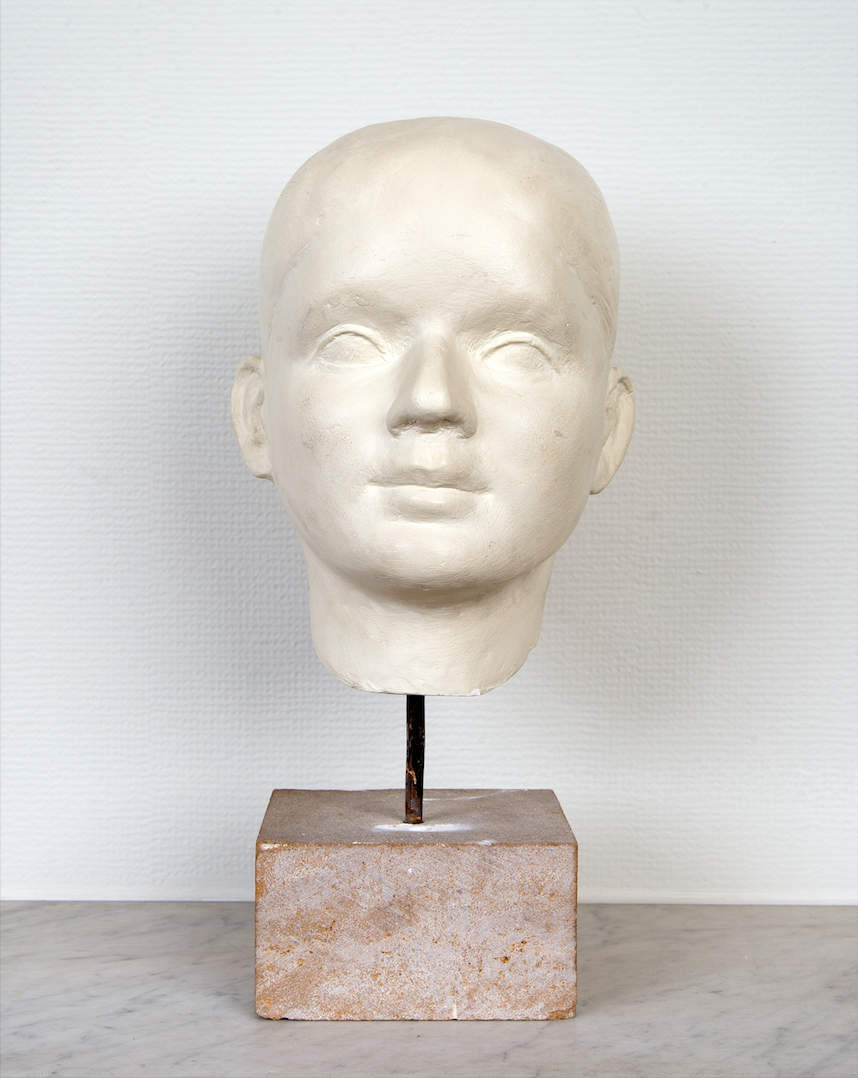
Nicole Haepers
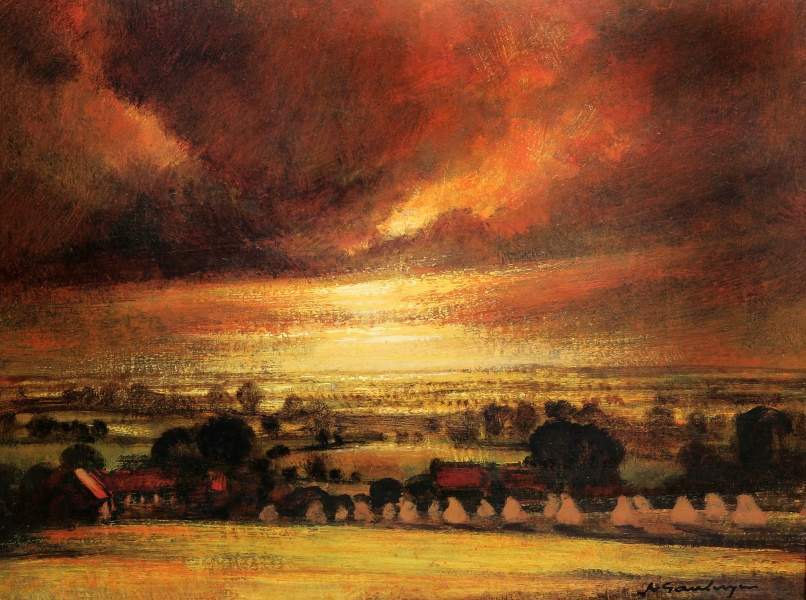
43 x 54 cm
Hageland
oil on panel
Juliaan Van Gaubergen belongs to the select group of excellent painters, such as Pieter Jozef Verhaghen, Maurice Haccuria, Jacques Van Den Seylbergh and Miel Deca, whom our old ducal town has produced. He was largely self-taught, but nonetheless must be counted among the better contemporary painters and graphic artists. Although he had a rather hard and difficult youth, having to help earn the family’s keep as early as age 16, in his free time he always remained true to his real passion: art.
The young Van Gaubergen in fact closely followed the evening classes at the then drawing academy of Aarschot for several years, and we therefore situate his first “expressionist” painting in this period. In the context of his growing interest in art history he undertook several study trips to the “great” museums at home and abroad and in this way tried to test his theoretical knowledge against “the real thing”. It was through this constant eagerness to learn and his open mind that he came into contact with the modern European great masters, such as Paul Cézanne.
The encounter with the work of this founder of Cubism and a later visit to the stained-glass windows of Chartres were combined by Van Gaubergen into a delightful synthesis in a series of monumental creations whose central theme was the glorification of nature in and through certain saintly figures. The influence of the French master proved so strong that Van Gaubergen ventured on a brief Cubist adventure himself. This shift towards the more abstract, in which nature and reality were abandoned, could not satisfy him, however. Nature was for him a primordial given which he could not or must not renounce if he did not wish to deny himself. After this short period of unfaithfulness to his beloved themes, man and landscape, he finally developed a very personal style that connected strongly with the Flemish expressionists à la Permeke.
His study trips through Europe also brought him to Italy, the land of the classical fine arts, but even the Italian travel impressions could not make him forget the Brabant man and his hilly landscapes. Around 1963 – 1964 Van Gaubergen therefore returned definitively to his roots. The hilly landscape of the Hageland with its open and broad vistas, man in his daily doings, the old crafts and the disappearing expressions of typical country life of former times, all this was close to his heart.
Local heritage values were for him a constant source of inspiration and artistic creativity or, as he himself liked to put it, his church and his liturgy. In this way he created a local-history documentation that not only confirms and honours his artistic talent, but will also remain of great importance for the study of the old trades. We therefore gladly associate ourselves with a statement by Hugo Verriest, who said: “Genius is a diamond that always and everywhere sparkles. Having talent is an uncut diamond that can lie in the shadows for a long time, but once it starts to sparkle, it sparkles for good”.
text: Aarschot Local History Circle
book:Juliaan Van Gaubergen. Schilder van mens en landschap in het Hageland – 1972 by Trudo Jan Gerits
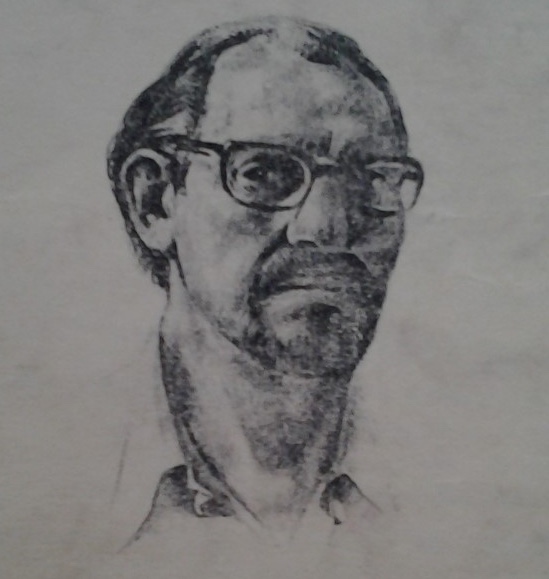
Self-portrait
Juliaan Van Gaubergen – Brabant painter –
Was born in Aarschot on 2 October 1921.
Van Gaubergen was self-taught, but nevertheless a capable draughtsman, graphic artist and painter.
He had always been a restless seeker, who remains dissatisfied with every success.
His greatest source of inspiration was his homeland, the Hageland, which he sang poetically with full colours and ethereal light; always driven on by the clouds, the seasons and the love for his country.
appendix
Brabant painters exhibit – Town of Werl – 1979
How I remember uncle Jules…
As a child I remember my uncle Jules as a born storyteller. He regularly dropped in at our home in the Wissenstraat. My mum would then put on a pot of coffee and around the kitchen table there would be hours of stories about the past, about WWII, about work, about life in those days at ‘s Hertogenmolens, … I kept very quiet so as not to miss anything of all that fascinating talk. Uncle Jules told about other Aarschot painters, about his visits to exhibitions by De Saedeleer, etc. The kitchen was shrouded in the cigarette smoke of green Michel and the stories rolled off his tongue.Sometimes sad stories, sometimes hilariously funny stories.
Like clockwork my dad and I also visited his studio on the Steylanden. My dad could not often leave without me, so keen was I to come along. We always walked straight to the studio, which was packed to the rafters with paintings. For ringing the front doorbell invariably gave the same scenario: aunt Maria opened the door and said: “He is in his studio.” The smell of oil paint met you on opening the door and uncle Jules was passionately busy painting, drawing in charcoal or modelling. When we came in, he stopped and showed the work of the past days or weeks. My dad then had to give his opinion. In a large mirror we looked at the paintings and uncle Jules explained how he brought depth into the work, or with which colours he worked and how Brueghel got his colours and how he also wanted to achieve that, but with modern paints just could not manage to obtain the same effect,….
He painted true to nature and the Hageland landscape was his source of inspiration. In fine weather, but also when the sky was filled with heavy clouds, we sometimes went out. By car the radius for exploring was bigger! The area around Tielt-Winge offered a lot of inspiration. Uncle Jules then made my dad stop on top of a hill and he stepped aside with his sketchbook for a moment to put a few impressions in pencil into his sketchbook.
When he came back to his studio, he set to work immediately. Not dozens, but hundreds of begun oil paintings were standing everywhere. One day my dad suggested doing ‘something with them’, because ‘it was a pity that nobody could enjoy them’. And that was the starting signal for a whole series of exhibitions. In Tongerlo, in Averbode, in Keerbergen venues were found to exhibit all this splendour. I can still see them leaving with a heap of paintings in our dad’s Beetle Volkswagen. The Volkswagen van of aunt Lina and uncle Jos was also used at times to get everything into place. Sometimes they had to drive more than once to get everything there. My dad did this very gladly, but at a certain point thought it was time to “think about a car of his own”. Uncle Jules was startled by this proposal at first, but still took the time to go to a garage. And yes, one evening the doorbell rang, uncle Jules stood beaming with delight, because “he had bought a little DAF”. Wonderful, really, now the world truly opened up for him and the family.
A few weeks later he was at the door again with news: ‘We’re going on a trip!’ Rome was the destination, by camper van and with the whole family. The evening before departure he came to show off the loaded camper van and off they went. You can imagine how perplexed our dad was: “Let’s hope that turns out well!”, he said anxiously.
A childhood dream of uncle Jules, to behold with his own eyes those magnificent works by Michelangelo, Leonardo da Vinci,…, came true. After a wonderful trip he came to tell us about his experiences
A story I will never forget and which we had a lot of fun with is that he drove into Rome with an escort of the Italian police! He could tell it so vividly, perhaps exaggerated here and there, that it has always stayed with me.
He made many more trips and a great many landscapes were afterwards put into oil paint. An impressive number of paintings is the result.
Charcoal and clay were materials that were not strange to him; he mastered those techniques too. For my Solemn Communion he modelled my head: a true-to-life result.
At a certain point he began painting flower arrangements; he knew how to conjure up magnificent bouquets. An impressive portrait of my great-grandmother (our pijt), Marie Hermans, hangs proudly in my living room. His sketches of grain threshers, portraits in charcoal of men markedby life,… nothing was strange to him.
Uncle Jules is a painter who may be counted among Aarschot’s gallery of greats, seen through the eyes of the child I was. To this day I still enjoy his work; the paintings my parents had now adorn my home.
Apparently drawing talent was not unknown in the Van Gaubergen family; my mother, Jacqueline, had this talent too. Because of her busy activities as a housewife and seamstress she did not make much time for it. One day uncle Jules urged her to “try something” too. And yes, in no time there was a studio at our home as well; the attic became her place and the smell of oil paint filled the house. Uncle Jules came to have a look regularly and became her best teacher. Even so she did not want to show her work publicly and the works piled up in the attic too. When clearing out the parental home after the death of my dad, Paul Haepers, my brother and I divided up the works. And now they adorn our homes alongside the works of uncle Jules.
To my regret I did not inherit the talent. But I enjoy it all the more!
Nicole Haepers