BRIGITTE RASKIN, one of the most important Flemish women writers, comes from Aarschot. She has a degree in history and is a journalist.
Brigitte Raskin exchanged her combined career as journalist and teacher for writing after her debut Het koekoeksjong was awarded the AKO Literature Prize in 1989 and the Prize of the Flemish Reader in 1990. Historical research is usually also the starting point for her literary work.
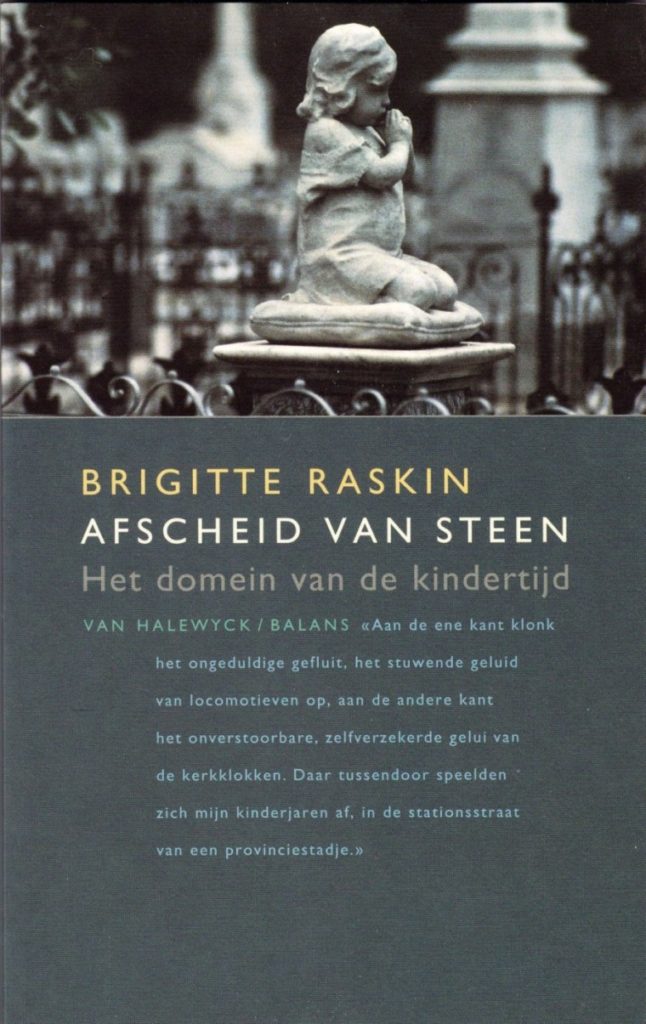
AFSCHEID VAN STEEN : Het domein van de kindertijd
The autobiographical stories in Afscheid van steen are set in seemingly banal Aarschot, a city of chocolate, after the brown ironstone from which the church and the facades of the town houses are built. Brigitte Raskin returns to this town and the house of her childhood in many ways. Walking through memories, she tenderly but resolutely leaves the domain of childhood behind her.
DE EEUW VAN DE EKSTER
The life story of the writer’s uncle, Father Raskin (1892-1943), who was a missionary in China. In the Second World War he became an army chaplain, sent messages to England, was imprisoned by the Germans and beheaded. Brigitte Raskin visited the places where her uncle lived and worked and travelled to China in 1991.
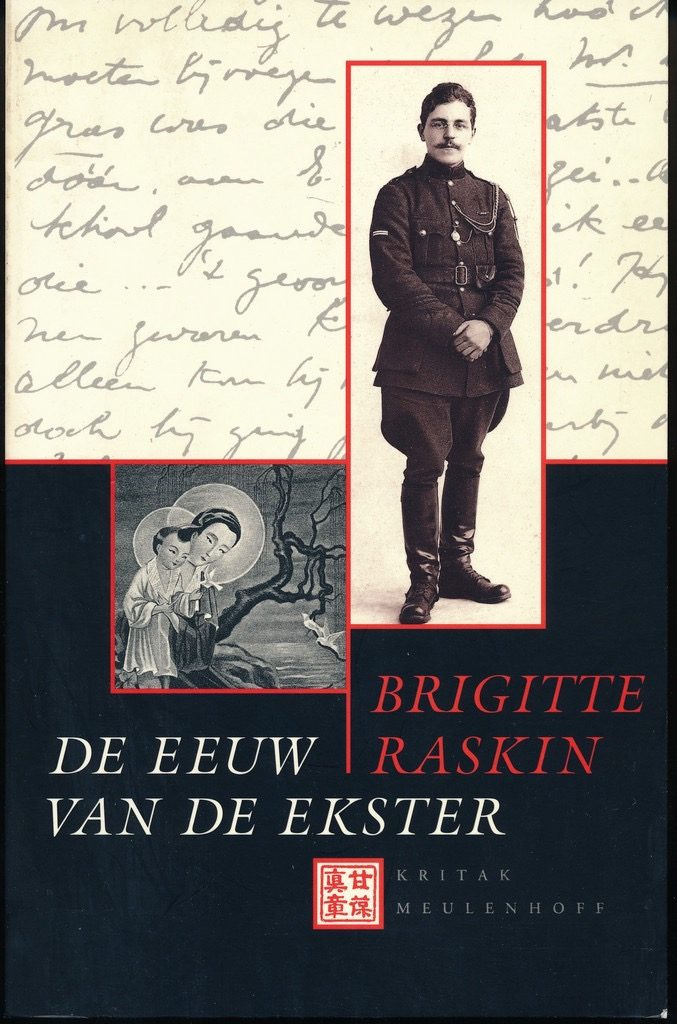
Father Raskin is a local hero (his statue stands in Aarschot) and like every hero he is a problematic figure. In her attempts to put that problem into words, Brigitte Raskin comes ever closer to a truth that is at once very intimate and for all time.
HET KOEKOEKSJONG – ‘A penetrating picture of the past half century’
AKO Literature Prize
Prize of the Flemish Reader
“Then began the endless wandering of Frans, the ‘cuckoo chick’, from a step-grandfather to homes, rented rooms and prisons.”
“A person can be dead as a doornail like Frans Maes, or live on like my mother in memory. One dead person is not the other..”
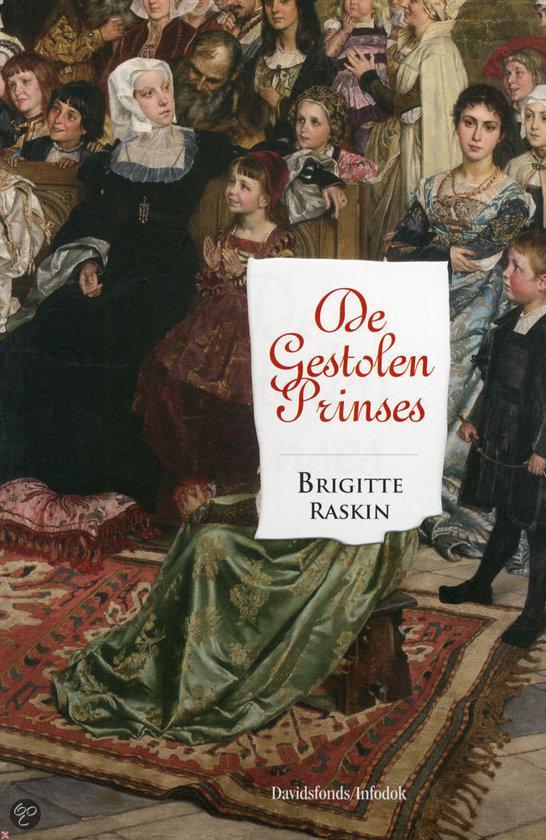
DE GESTOLEN PRINSES – The life of Princess Isabella (1501-1526)
An older woman tells how she once cut a piece out of an old painting in the town hall of Mechelen. Why she did this slowly becomes clear and appears to have everything to do with her fascination with the life of Princess Isabella, the younger sister of Charles V. The story of this unhappy princess is based on facts.
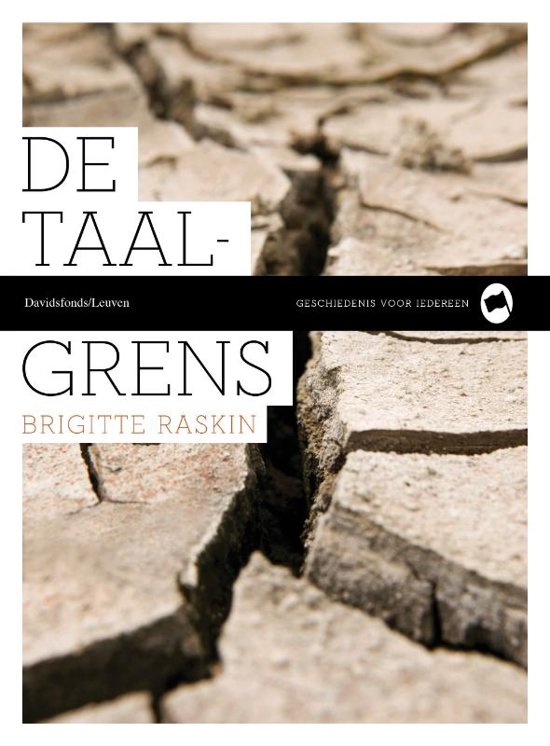
DE TAALGRENS : of wat de Belgen zowel verbindt als verdeelt
How did the Germanic-Romance culture and language border come about in Europe? What problems did bilingualism bring to Belgium?
The series Geschiedenis voor iedereen fills the gaps in your historical knowledge.
BIOGRAPHY
25 July 1947: Born in Aarschot as the fifth of six children in a Catholic middle-class family. Her father, Paul Raskin, was a justice of the peace. According to her website she received a “Christian, middle-class and studious upbringing”. In her youth she was active in the local girl scouts.
18 March 1959: Her mother Maria ’s Heeren dies when Brigitte is twelve.
1959-1965: Follows the Greek-Latin stream at the boarding school Paridaens in Leuven.
1965-1971:Studies Modern History at the KUL. She graduated with a thesis on the Davidsfonds. She also studies press and communication sciences, but without a final thesis.
- There she becomes involved in the struggle for the Flemishisation and democratisation of the university and evolves in a left-wing direction.
- At that time she also publishes her first articles in the student magazine Universitas. The magazine was discontinued in 1970 after a sensational themed issue on sex.
1970: Graduates from the KUL as a historian.
1970-1971: Contributes to De Nieuwe Gids (press review) and to Spectator (book reviews).
1971-1976: Journalist and editorial secretary at the progressive weekly ‘De Nieuwe’ by Mark Grammens. Gerard Alsteens (GAL) was the cartoonist and layout man there.
1974: Marries Edgar Alsteens (GAL’s twin brother). Moves to Overijse, where her husband is a grape grower.
1975: Leaves De Nieuwe. Continues to write regularly for the magazine, as well as for Knack, De Groene Amsterdammer, among others.
1975 – 1980: History teacher in state education. (in Sint-Pieters-Woluwe, Halle, Keerbergen and Brussels)
In Humo she is proclaimed “La Passionaria of small progressive Flanders”; in De Randkrant she writes a monthly column.
1976: Birth of Stijn Alsteens.
1978: Birth of Korneel Alsteens.
1981-1990: Succeeds Luc Huyse as editor-in-chief of the socially critical magazine De Nieuwe Maand.
1982-1984:Weekly contribution under the name Brelle in the satirical weekly ‘De Zwijger’ byJohan Anthierens.
1983: Birth of Lotte Alsteens.
1984: Trip to Cuba in the company of Belgian journalists.
1984-1987: Takes part in ‘Namen noemen’, a VRT game show. (which makes her a ‘Bekende Vlaming’, a well-known Fleming)
1988: Publication of her novel debut ‘Het koekoeksjong’ a documentary novel.
- That book is an immediate bull’s-eye, because she receives the AKO Literature Prize for it in 1989. In 1990 this book also receives the Prize of the Flemish Reader.
1989: Leaves teaching and becomes a full-time writer. In August her father dies.
1989-1990: Takes part in the AVRO television programme ‘Van de rug af gezien’.
1990: Publication of the novel ‘Overwinterdagboek’
1991: Publication of ‘De Maagd van Antwerpen’, written on commission from the Vereniging ter Bevordering van het Vlaamse Boekwezen, as part of the campaign ‘The written word’ (See also the final word at the end of this entry)
- Contributes to the book ‘De Taalmeesters’ (ed. Dick Poons, Amsterdam, Amber), the outcome of the television programme Van de rug af gezien.
- Trip to Indonesia as part of a literary festival.
- Leaves De Nieuwe Maand as editor-in-chief, but remains a contributor until the magazine ceases to exist (1993).
- Preparation of a novel about her uncle Joseph Raskin, missionary and war hero. Travels by ship to China, where she stays for some time.
1994: Publication of ‘De eeuw van de ekster’, a literary documentary about Joseph Raskin.
- A statue ofFather Joseph Raskinstands in Aarschot – De Hoogbrug, Amerstraat and Raskin kade.
Second trip to Indonesia.
1995: A report on Moscow’s homeless for Doctors Without Borders appears in Knack and in Populations en danger. Écrivains. Photographes. Regards. (Editions Michalon – Arte/ La Sept Editions).
1996: Publication of ‘Afscheid van steen. Het domein van de kindertijd’ a collection of new and previously published stories, including a revised version of ‘De Maagd van Antwerpen’.
2010 : In an open letter in De Standaard Raskin argues for the poem ‘Bericht aan de reizigers’ by Jan van Nijlen to be installed in the Central Station in Antwerp. The NMBS and Antwerpen Boekenstad then met, as did Raskin herself, about the possibilities. Afterwards Paul van Aelst of the NMBS let it be known that the engineer-architect was enthusiastic about the proposal. ‘Bericht aan de reizigers’ would be installed in the transition zone between the tracks and the station hall. In this way an old dream of Johan Anthierens becomes reality.
Brigitte Raskin published contributions in various collections
- 1988: Onmogelijke interviews. (Leuven:Kritak)
- 1990: Burengerucht. Het Vlaams verhaal doet weer de ronde. (Amsterdam/Leuven, Meulenhoff/Kritak).
- 1994: Cahier d’amour. Liefdesbrieven. Samenstelling Luc Coorevits (’s Gravenhage/Rotterdam, Nijgh & Van Ditmar)
- 1994: De huid voorbij. Prostituées vertellen. (Antwerpen, Coda)
- ….
Brigitte Raskin continues to combine her literary and publicist work with journalistic work and is on occasion a reporter, interviewer, columnist (including for the monthly RandKrant) and reviewer (including for the Letterensupplement of De Standaard).
source : “Schrijversgewijs” Flemish writers – 1830 – present