<< XXII Lions club Aarschot
“Tout art aspire à la condition de musique” – Walter Pater
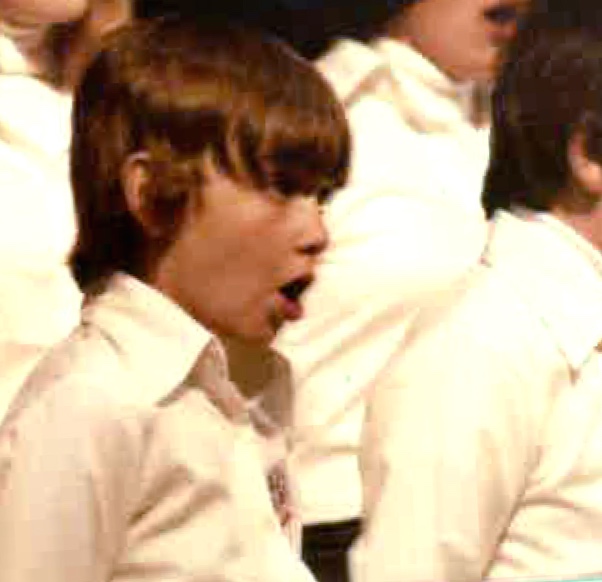
choirboy Pieter (photo: 1979) – Aarschot Youth Choir under the direction of Rev. Frans Breugelmans “My father encouraged me to make music, read or play outside instead of watching TV. ‘Turn off that greasy television’, he would repeat.” – Pieter
Accepit Jesus Calicem – by the Aarschot composer Arthur Meulemans (1884-1966) – his brother Herman was the music teacher of Frie’s aunts.
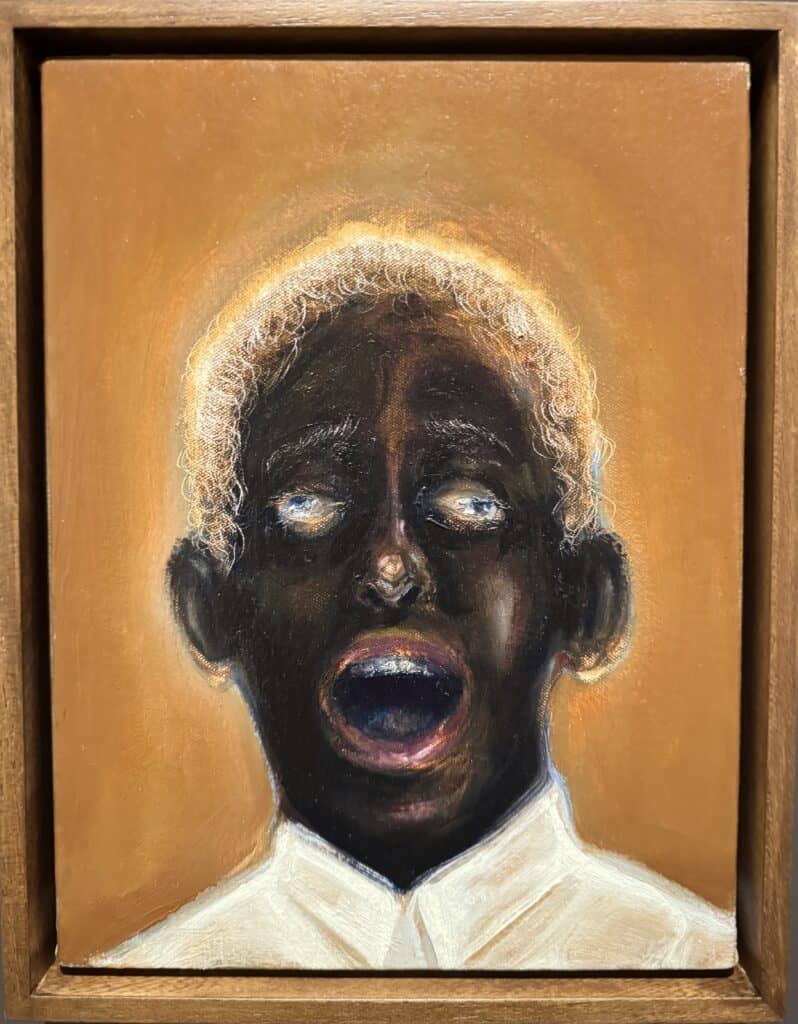
Cantor de coral – estudo, 2023 Antonio Obà – oil on canvas – Pinault Collection
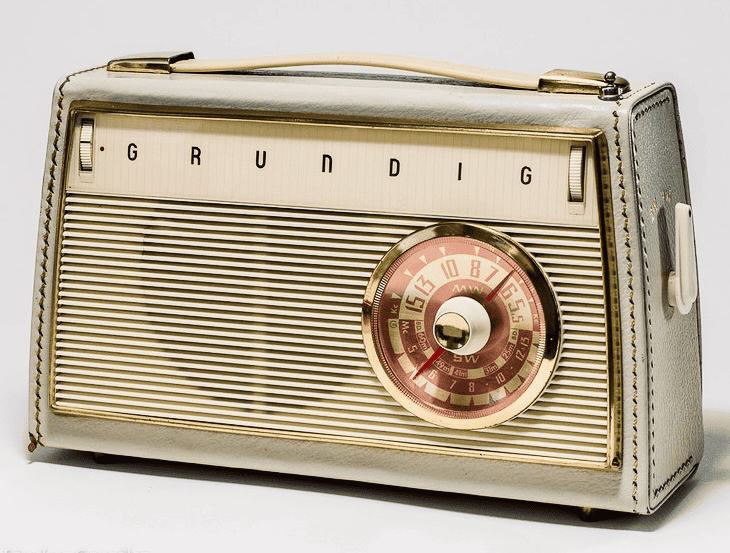
(1977) With this radio Frie follows the news and the review of the domestic press every day. The transistor stands on a bookshelf next to his armchair. When the batteries are flat, Pieter has to fetch new ones from Fons Lavaerts in the Diestsestraat. But Pieter can no longer bear to look at and listen to the wretched little radio. On his way home from the Bekaf school he passes the TV and audio shop “baa den Howazegems” (Huysegems, on the corner of the Gasthuisstraat and the Bogaardenlaan), where a magnificent installation for 2,500 Belgian francs stands in the window. Pieter wants to give it to Godfried as a present. For that budget he picks banknotes from Mia’s wallet. Once the 2,500 francs have been scraped together, he nervously goes to buy the smart radio as a gift for his father. When Pieter wants to pay the price, Mr Huysegems explains, touched, that the installation costs 25,000 francs and asks who his father is. The shop also sells music cassettes, and Mr Huysegems suggests choosing a few of those as a gift for the notary.
Frie is amazed and happy with the Haydn “Paris” symphonies and Beethoven’s 5th. “How did you come by these? We will keep them to listen to carefully together when we are in Champtercier.” – Frie But with that, the miserable radio is still standing there. Pieter turns the knob of the station selector all the way round until it breaks. Even so, Frie manages to find his station BRT 1 again. So then, pull a few wires out of the inner workings and let a little Dreft washing-up liquid run into them. Now the radio is definitively broken. Frie buys a new set, which is even smaller and whose sound is even worse than the old Grundig.
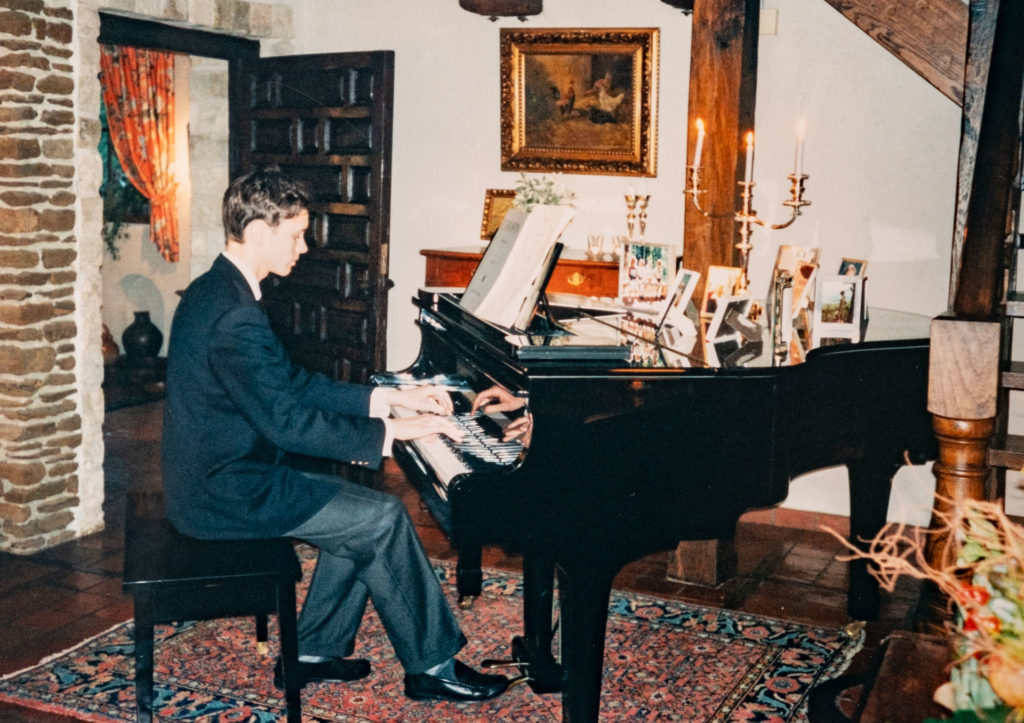
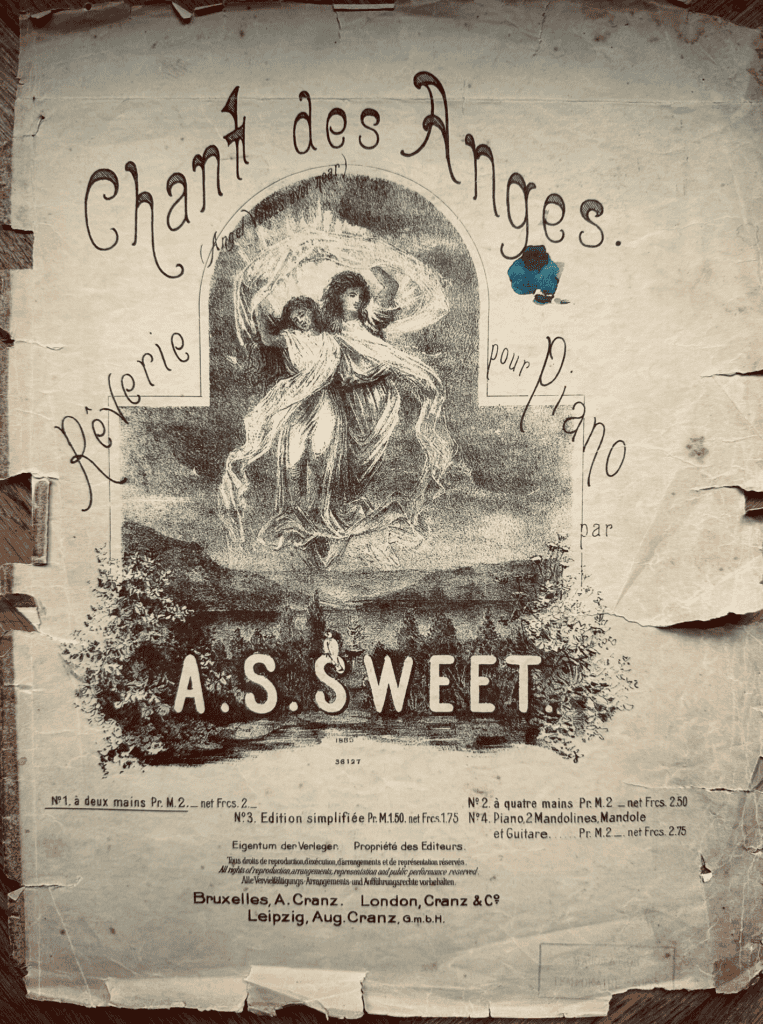
In the piano bench rest mostly “Belle Époque” (1870-1914) scores. Once played by Frie’s mother and aunts, then by Mia and Pieter.
Godfried follows the British series “All Creatures Great & Small” It is about a young vet who starts work in the countryside. He discovers that the profession of veterinarian in practice is very different from what he imagined during his studies.
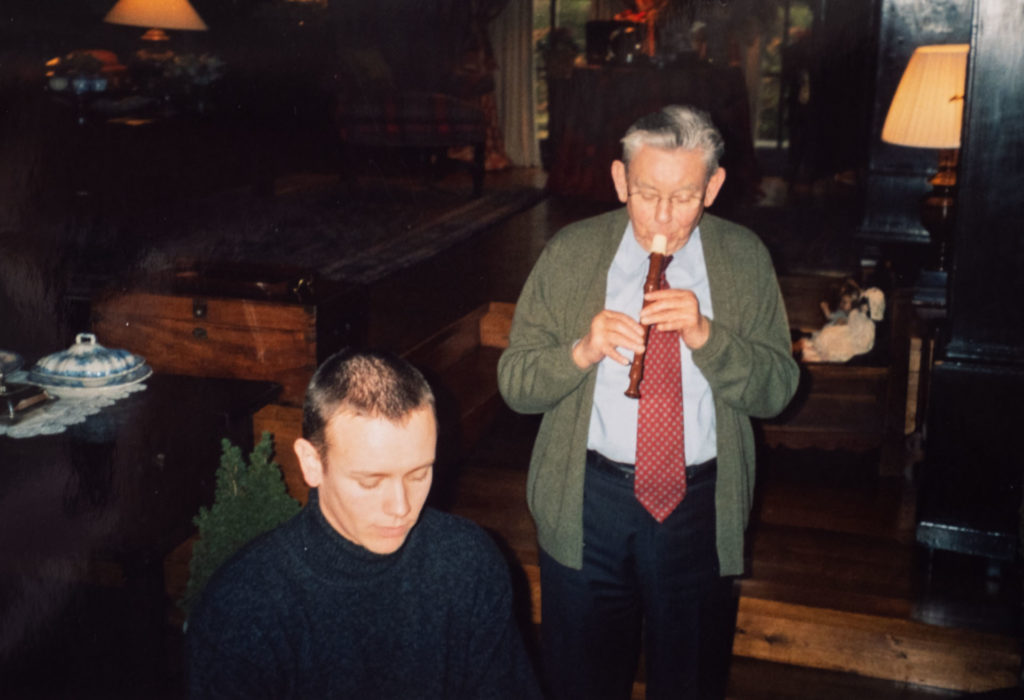
Frie and Pieter give a soulful Christmas performance. “In the old days we didn’t know any greasy television. We played a musical instrument, sang, played cards or a parlour game, and we were much happier!” – Frie
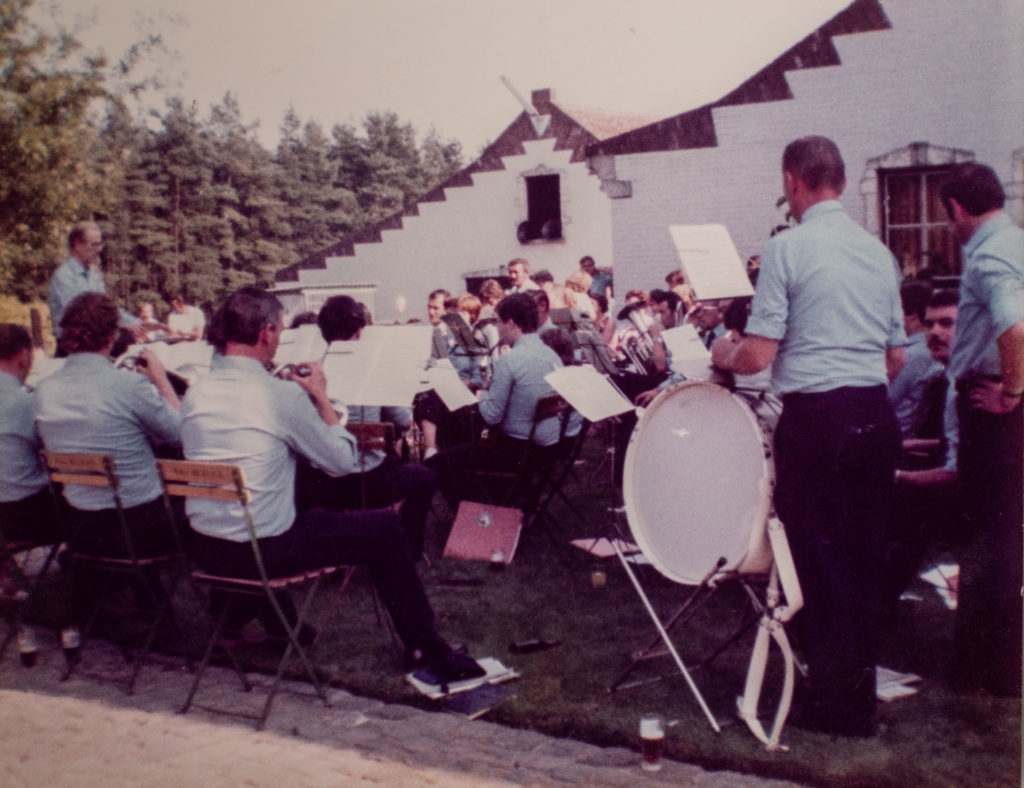
Godfried organises brass band concerts: twice he holds tremendous parties at his home in the garden with the Wolfsdonk fanfare. (photo: 1981)
Frie also loves Viennese waltzes and praises the Wiener Philharmoniker without female musicians: “That all comes from their fuss, with less concentration on the music as a result. And then, a woman with a violin or a drum, that’s no sight at all.” – Frie
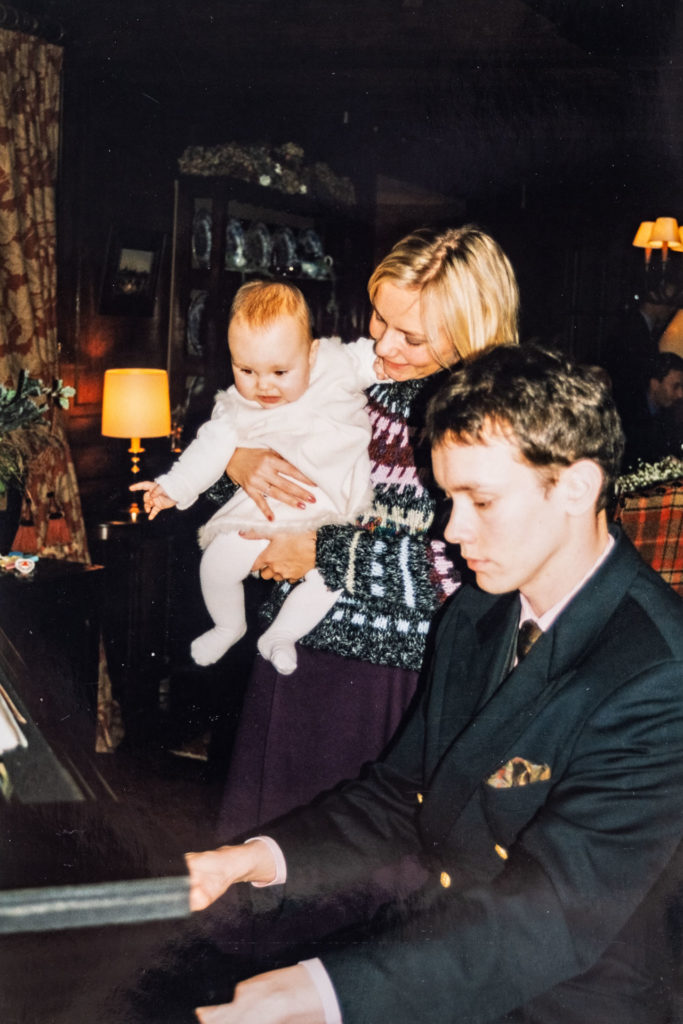
Roxane, Ilse, Pieter (foto: Wolfsdonk, 2000)
“If music be the food of love, play on.” – Shakespeare
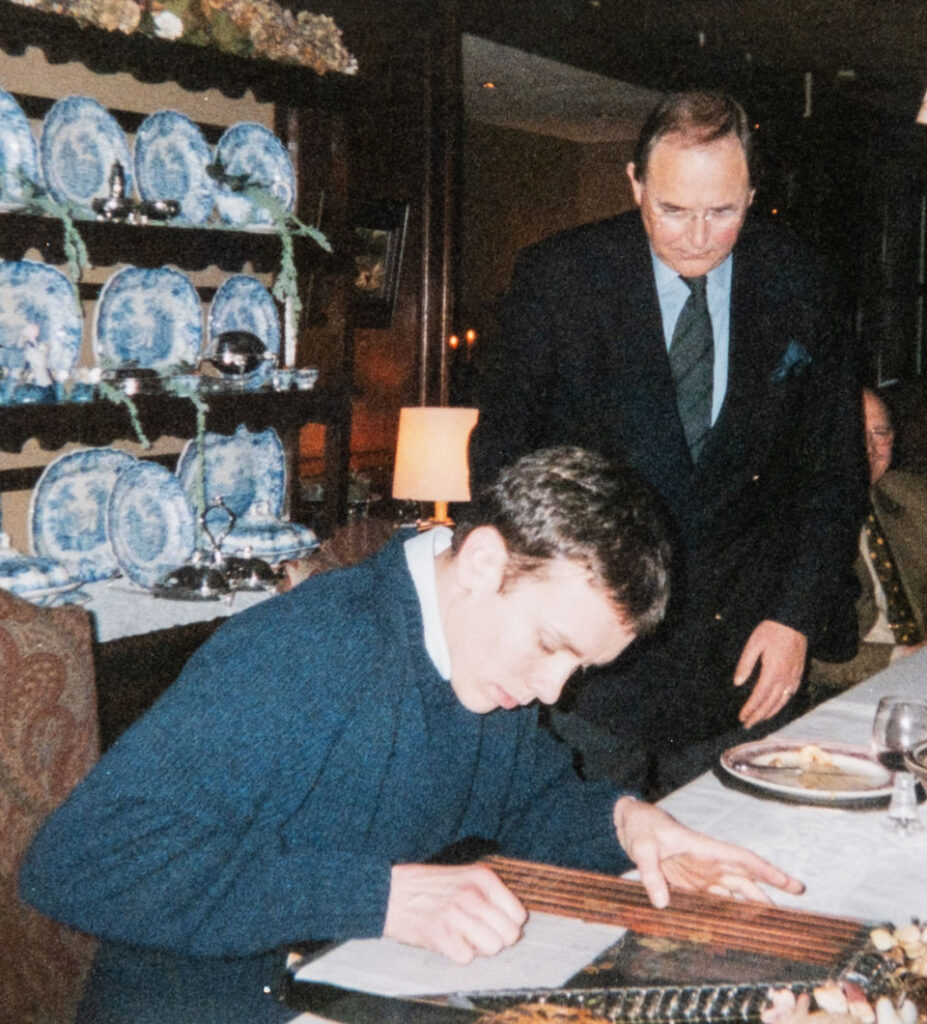
Witty and generous: a zither solo for Roger Blanpain (1932-2016), lecturer, dean of KU Leuven. (photo: 2001)
Professor Blanpain urges Pieter not to work for the money, but for something greater.
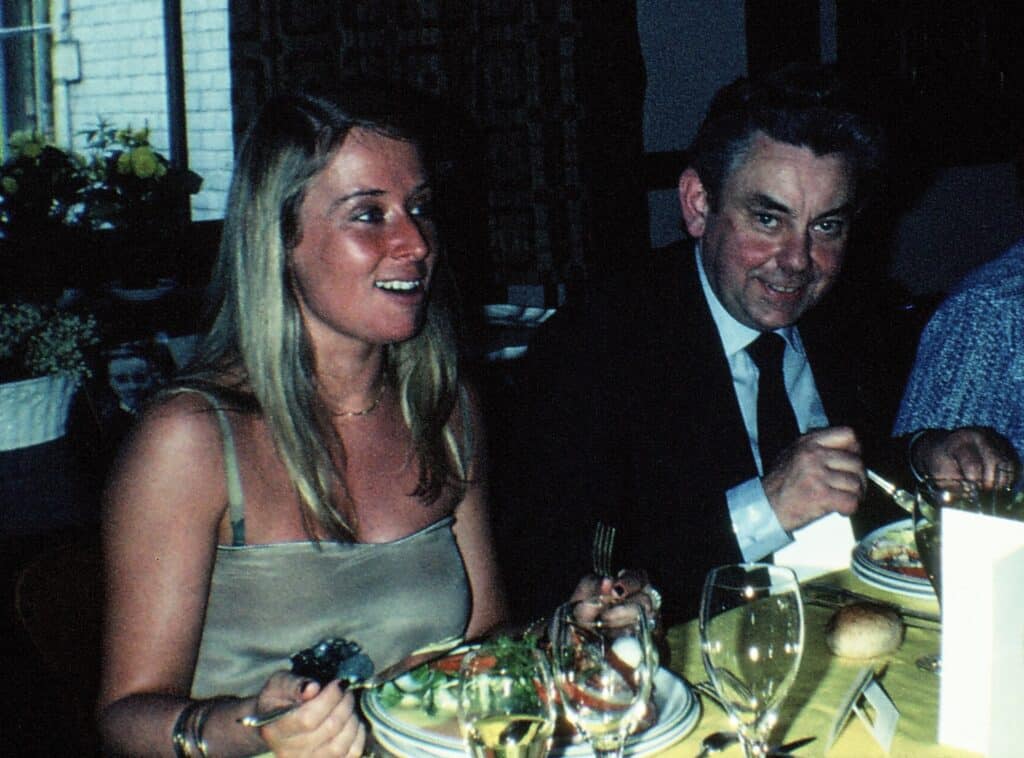
Lina, the later Mrs Blanpain, and Frie (photo: Wolfsdonk)
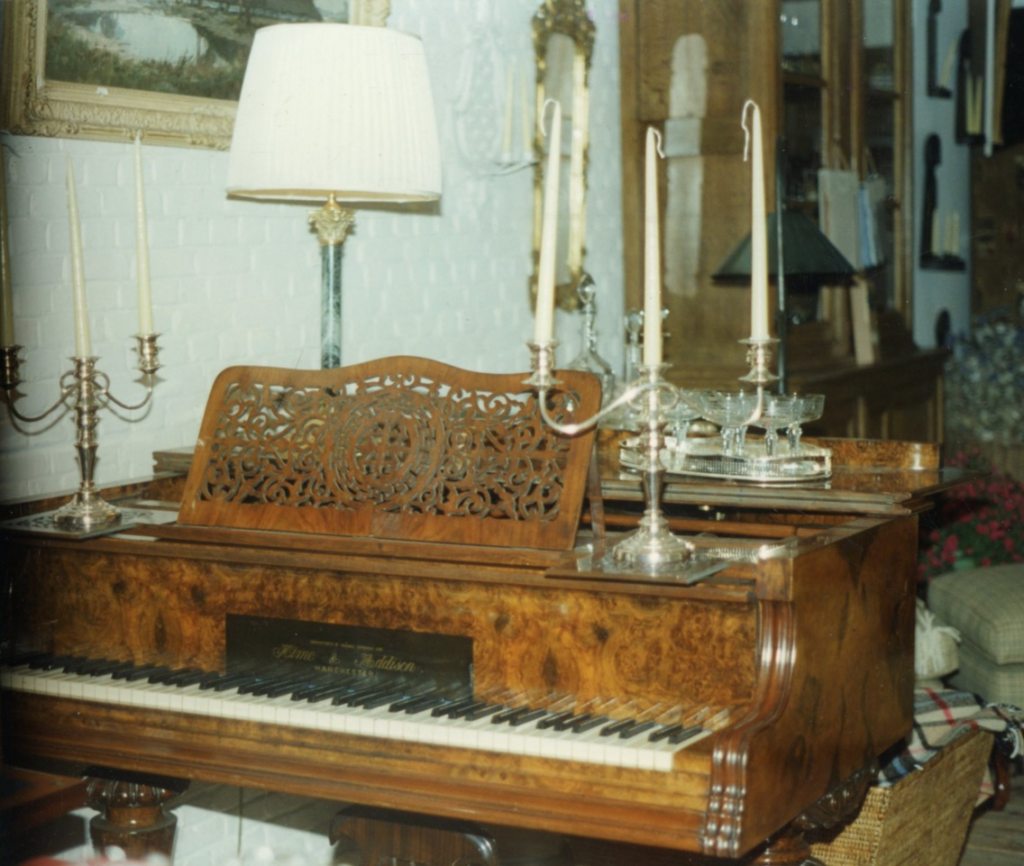
Wherever Pieter stays, he sets up a keyboard to practise a little. Here in his deco shop in the Bogaardenlaan in Aarschot (1997-2003)
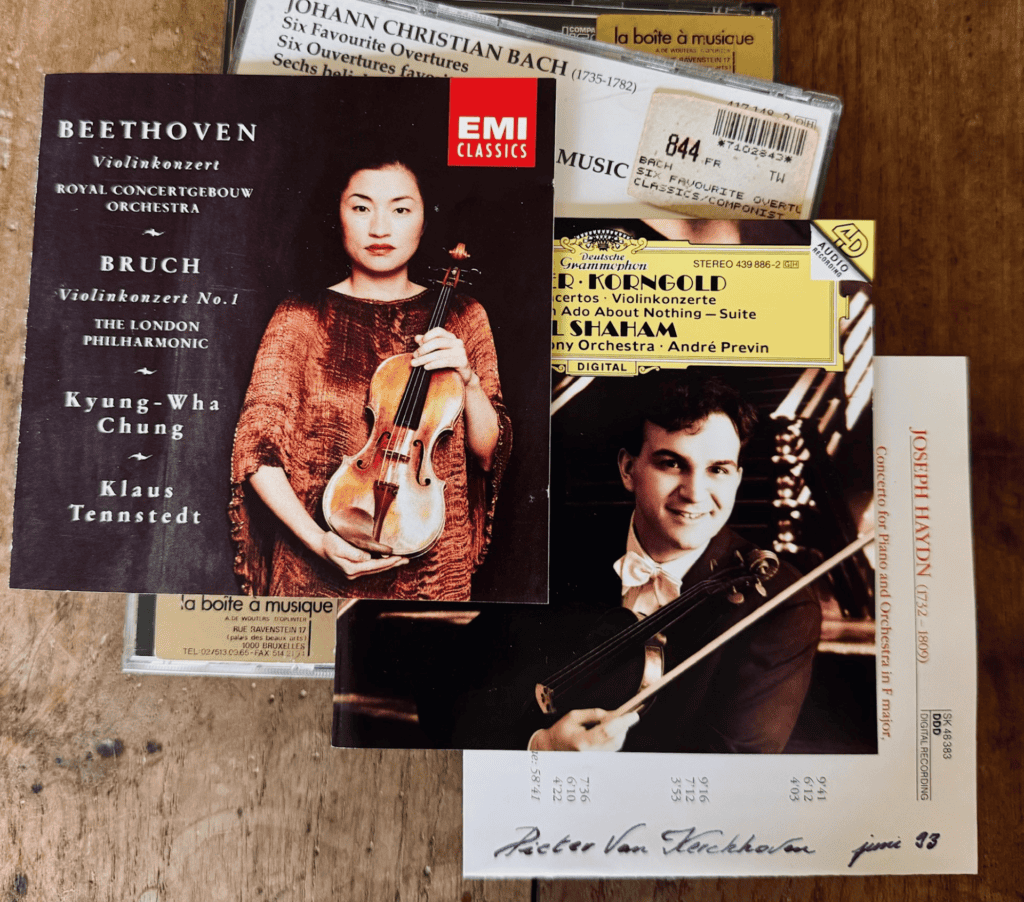
(Brussels, 1992) Pieter meets the musicologist Bertrand Brébois, who introduces him to the de Wouters d’Oplinter family, owners of the music shop ‘La boîte à musique’ at the Coudenberg. Bertrand teaches his friend to pick out the better interpretations and helps Pieter build up a collection of CDs. In turn, Pieter teaches his father to distinguish choice recordings. (photo: Hamburg 2025)
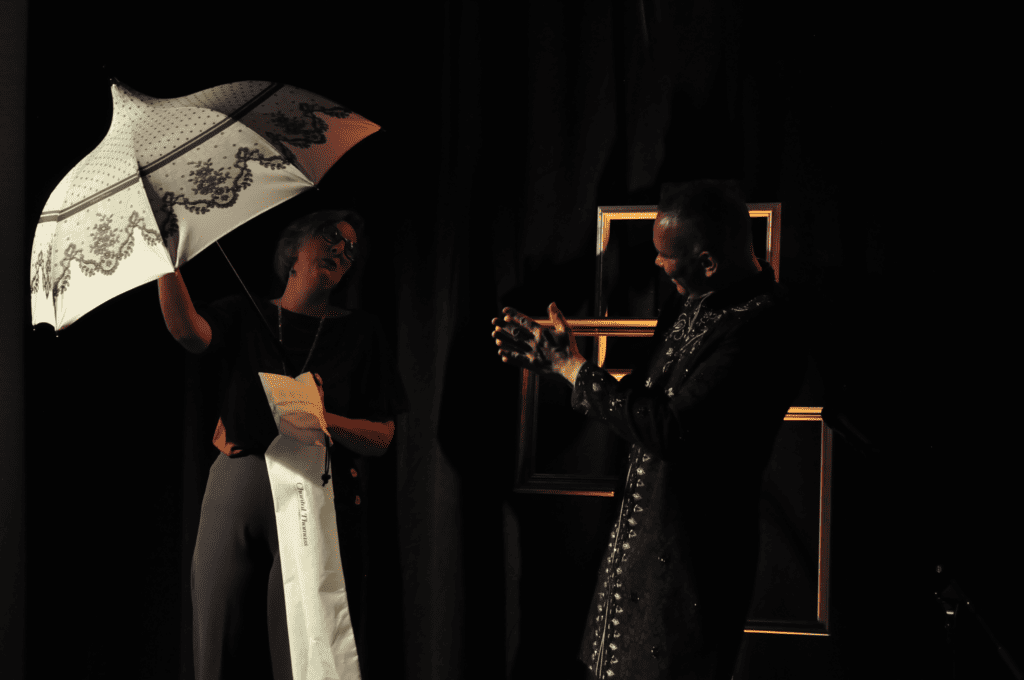
In the spotlight in Wolfsdonk with Els Bruyninckx (photo: 2018)
In ‘zaal Abt’, where Frie gave legal advice to the residents of Wolfsdonk, Pieter performed several times.
photo: Hamburg 2018
So he can do it after all. The question remains: why not always like this?
XXIV Dieu est un fumeur de Havanes >>>
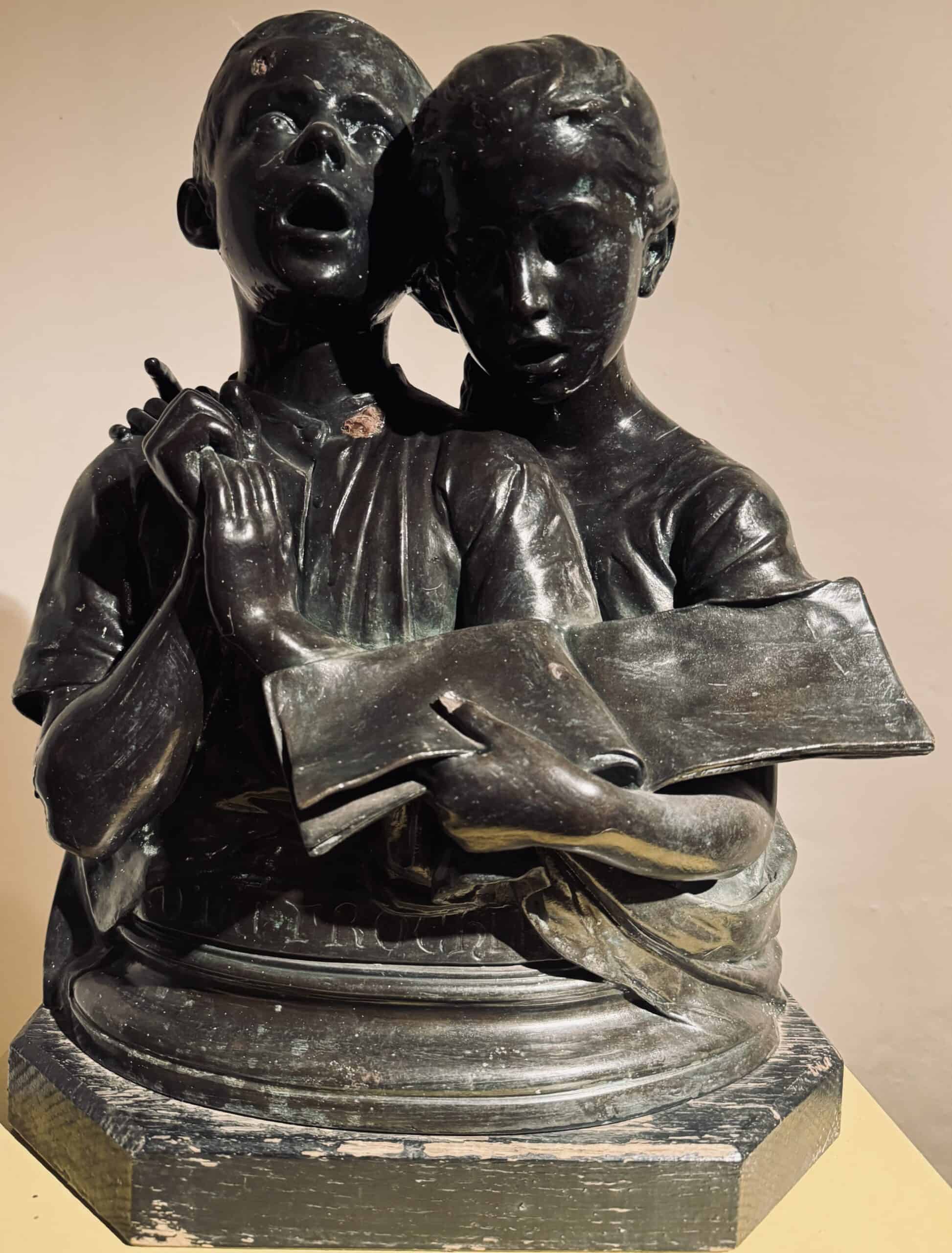
Singing Children – Bronze – Illegibly signed, inscribed: June 1906” On the base: “Oh du froeliche” The sculpture was donated to the school in 1906. Later it stood on the mantelpiece in the chapter house. The figure of the boy bears bullet impacts on the shoulder and head. From April 1945 to October 1946 the Red Army occupied the abbey. When it withdrew, it left a picture of devastation. According to eyewitnesses, the sculpture is said to have served the soldiers as a target. (photo: Pieter, Heiligengrabe 2026)